 Bellingham Exterior
 Why Storm Damage Hits Birch Bay Roofs Differently
Birch Bay sits close enough to open water that roofs here take a different kind of beating than homes further inland in Bellingham. Wind off the water tends to hit shorefront and near-shore properties at higher, steadier speeds, and it often carries salt-laden air that accelerates corrosion on metal flashing, fasteners, and gutter hardware over time. Add in driving, wind-blown rain that gets pushed sideways into roof edges, vents, and valleys, and you have a roof system that's working harder than a similar roof would in a more sheltered spot.
None of this means Birch Bay roofs are poorly built. It means the margin for small defects — a slightly lifted shingle tab, a flashing seal that's started to fail, a fastener that's corroded past its grip strength — is smaller here. A storm doesn't create these weak points out of nowhere; it finds them and turns a minor issue into a leak.
What Actually Counts as Storm Damage
Not every roof problem that shows up after a windstorm is technically "storm damage," and that distinction matters for both the repair scope and any insurance claim. Storm damage generally means damage tied to a specific weather event — wind, wind-driven rain, or falling debris — rather than damage that built up gradually from age, sun exposure, or lack of maintenance.
- Shingles that are torn, creased, or missing outright after a wind event
- Flashing around chimneys, skylights, or vent pipes that's been bent, lifted, or pulled loose
- Impact damage from tree limbs or wind-blown debris
- Sudden granule loss visible in gutters or downspouts after a storm
- Gutters pulled away from the fascia, which changes how water sheds off the roof edge
Moss buildup is a separate issue, but it's rarely unrelated. A roof already carrying a heavy moss mat holds moisture longer and can have shingle edges that are already lifted or weakened before a storm ever arrives. When we inspect storm damage in this area, we're almost always looking at moss and drainage at the same time, because the two problems tend to compound each other.
What a Correct Storm Repair Actually Involves
Checking the Deck, Not Just the Surface
A repair that only replaces visible shingles without checking the roof deck underneath is incomplete. Wind-driven rain that's been getting under damaged shingles for even a few weeks can leave the sheathing soft or discolored. We check for that before closing anything back up — patching over a wet deck just traps the problem.
Matching Underlayment and Flashing, Not Just Shingles
Shingles are the visible layer, but the underlayment and flashing underneath do most of the actual work of keeping water out during a wind-driven rain event. A proper repair restores that full system — correct underlayment lap and fastening, flashing that's re-bent or replaced (not just re-caulked), and valley and edge details rebuilt to shed water the way they were designed to.
Matching Materials Honestly
We match existing shingle type, profile, and color as closely as the market allows for a spot repair. On older roofs, an exact match sometimes isn't available, and we'll tell you that up front rather than let a patch stand out or, worse, use an incompatible product that shortens the life of the surrounding roof.
Our Process for a Birch Bay Storm Call
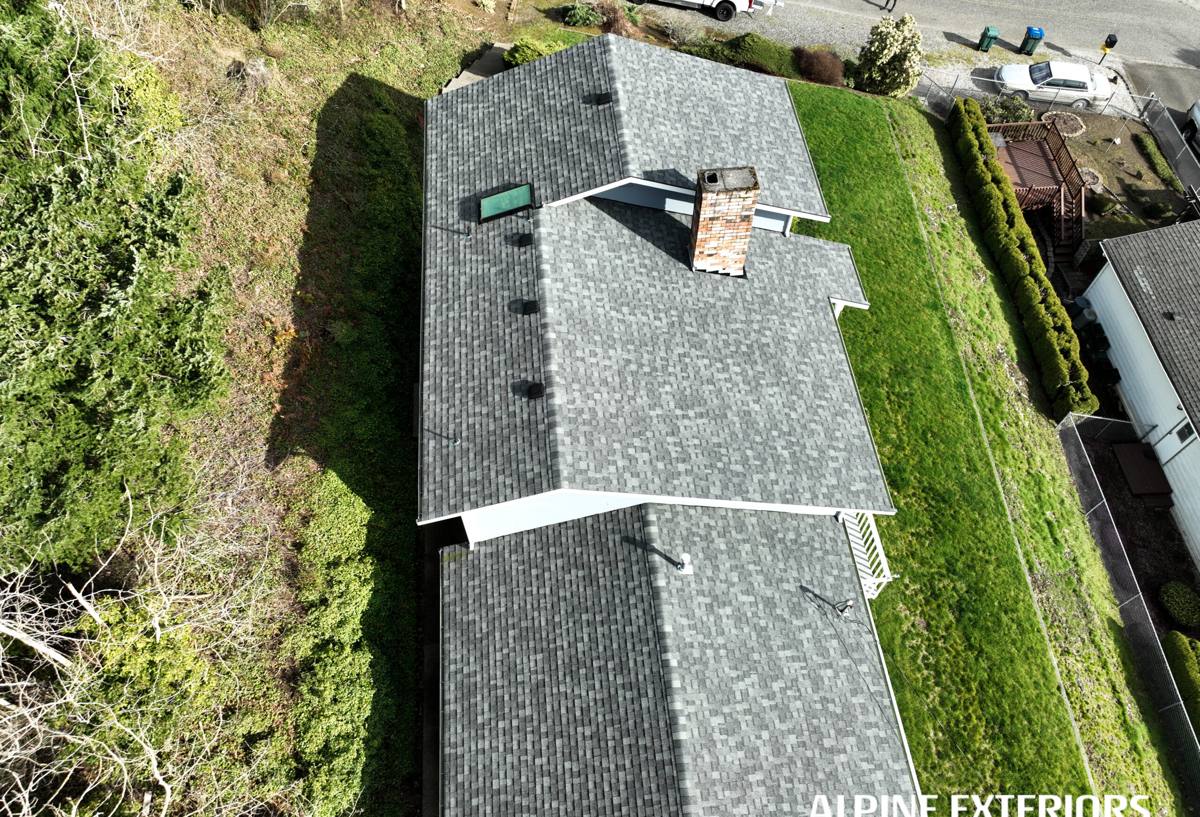
- Inspection and documentation. We walk the roof (or use a lift/drone where pitch or access makes that safer) and photograph the specific damage, which also gives you a documented record if you're filing an insurance claim.
- Temporary protection. If there's active water intrusion, we get a tarp or temporary seal in place the same visit so the problem doesn't get worse while a full repair is scheduled.
- Written scope and estimate. You get a clear, itemized description of what's being repaired and why — no vague "storm package" pricing.
- The repair itself. Deck check, underlayment and flashing restoration, shingle replacement matched to the existing roof.
- Cleanup and haul-away. All debris, old material, and fasteners are cleared from the property and gutters.
- Follow-up. We check back that the repair is holding, especially after the next significant rain event.
Working With Your Insurance Claim
Many homeowner policies cover roof damage tied to a specific wind or storm event, subject to your policy's terms and deductible. We're not your insurance adjuster and can't guarantee what a claim will cover, but we can provide clear photo documentation and a written repair scope that supports your claim. The most useful thing you can do is get an inspection soon after the storm — delayed documentation is one of the more common reasons claims get questioned.
Whatcom County's Moss Season and Why It's Part of This Conversation
Bellingham and the surrounding Whatcom County area have a long, mild, damp season that's close to ideal for moss growth — especially on north-facing slopes and roofs shaded by mature trees, which describes a lot of Birch Bay properties. Moss isn't just cosmetic. It holds moisture against the shingle surface far longer than bare shingles would, which accelerates granule loss and can lift shingle edges enough that wind gets underneath them more easily in the next storm.
That's why we don't treat storm repair and moss treatment as separate services when we're already on your roof. Repairing storm damage without addressing an active moss problem nearby often means we're back for a similar repair within a season or two.
Cost Factors in a Storm Damage Repair
| Factor | Why It Matters |
|---|---|
| Extent of damage | A few displaced shingles is a different job than a full slope with deck damage — cost scales with how much has to come off and go back on. |
| Roof deck condition | Wet or soft sheathing found during the repair adds material and labor that isn't visible until the shingles come off. |
| Roof pitch and access | Steep pitches or limited access (tight lot lines, shoreline setbacks) can require additional safety equipment and time. |
| Material match availability | An exact shingle match keeps cost predictable; a discontinued product may require a broader repair area. |
| Moss and moisture damage found | Addressing moss and drainage issues at the same time adds scope but avoids a repeat call. |
| Insurance involvement | Documentation requirements can add a short amount of time up front but don't typically change the physical repair itself. |
As a very rough guide, isolated repairs (a section of shingles, one flashing point) often land in the low hundreds to low thousands of dollars, while damage that involves deck replacement or a full slope can run well into the thousands. Every roof is different, which is why we give a written estimate after a real inspection rather than a number over the phone.
Signs You Need a Professional Look After a Storm
- Shingles or shingle pieces in the yard or gutters after a windstorm
- Visible granules collecting at downspout outlets
- A water stain on an interior ceiling or wall that appeared after a storm
- Flashing around a chimney, vent, or skylight that looks bent, lifted, or gapped
- A soft or spongy feel underfoot near a valley or roof edge
- Gutters pulled away from the roofline or sagging after heavy wind
- Daylight visible through the roof deck from inside an attic
Why a Crew That Already Works Birch Bay Matters
Storm repair isn't just about roofing skill in general — it's about knowing the specific conditions a roof in this area has been dealing with. A crew that already works Birch Bay regularly knows the common roof pitches and material types in the neighborhood, understands how shoreline wind exposure differs from a repair three miles inland in Bellingham, and is familiar with what Whatcom County generally expects for permitting on larger repair scopes (most straightforward shingle and flashing repairs don't require a separate permit, but larger structural or full-slope work often does — worth confirming with the local building department before work starts).
There's also a practical timing benefit. After a regional storm, response time matters — a tarp that goes up same-day is worth far more than a perfect repair scheduled two weeks out. A local crew that isn't driving in from across the county is simply able to respond faster when it counts.
If you've got storm damage on a Birch Bay roof, or you're not sure whether what you're seeing is storm-related or just wear that's finally caught up with the roof, we're happy to take a look. Fill out the form below for a free, no-pressure estimate.