 Bellingham Exterior
 Why Birch Bay's Waterfront Setting Is Hard on Roofs
Birch Bay sits right on the water, and that location changes what a roof has to deal with compared to homes further inland in Whatcom County. Wind off the bay carries salt-laden moisture that settles on every exposed surface, including your roof. Add in the region's long, wet winters and heavy tree cover in many yards, and you've got a combination that ages a roof faster than most homeowners expect.
Salt Air and Corrosion
Salt air doesn't just affect boats and cars near the water. It accelerates corrosion on exposed metal — nail heads, flashing, gutter hardware, and vent caps — well before the shingles themselves wear out. Once fasteners or flashing start to corrode, you can end up with leaks around penetrations even though the roofing material still looks fine from the ground.
Driving Rain and Wind
Storms moving in off the water tend to push rain sideways rather than straight down. That wind-driven rain can find its way under shingles, around chimneys, and into valleys in ways that a calmer inland rain never would. A roof built for average conditions, without extra attention at those vulnerable points, is more likely to leak in a Birch Bay wind event.
Moss and Shade
Between the marine humidity and the shade many Birch Bay lots get from mature trees, roofs here hold onto moisture longer than they would in drier, more open settings. That's exactly what moss needs to take hold. Moss mats trap water against the shingle surface and decking, which shortens the life of the roofing material and can lead to rot underneath if it's left unaddressed for years.
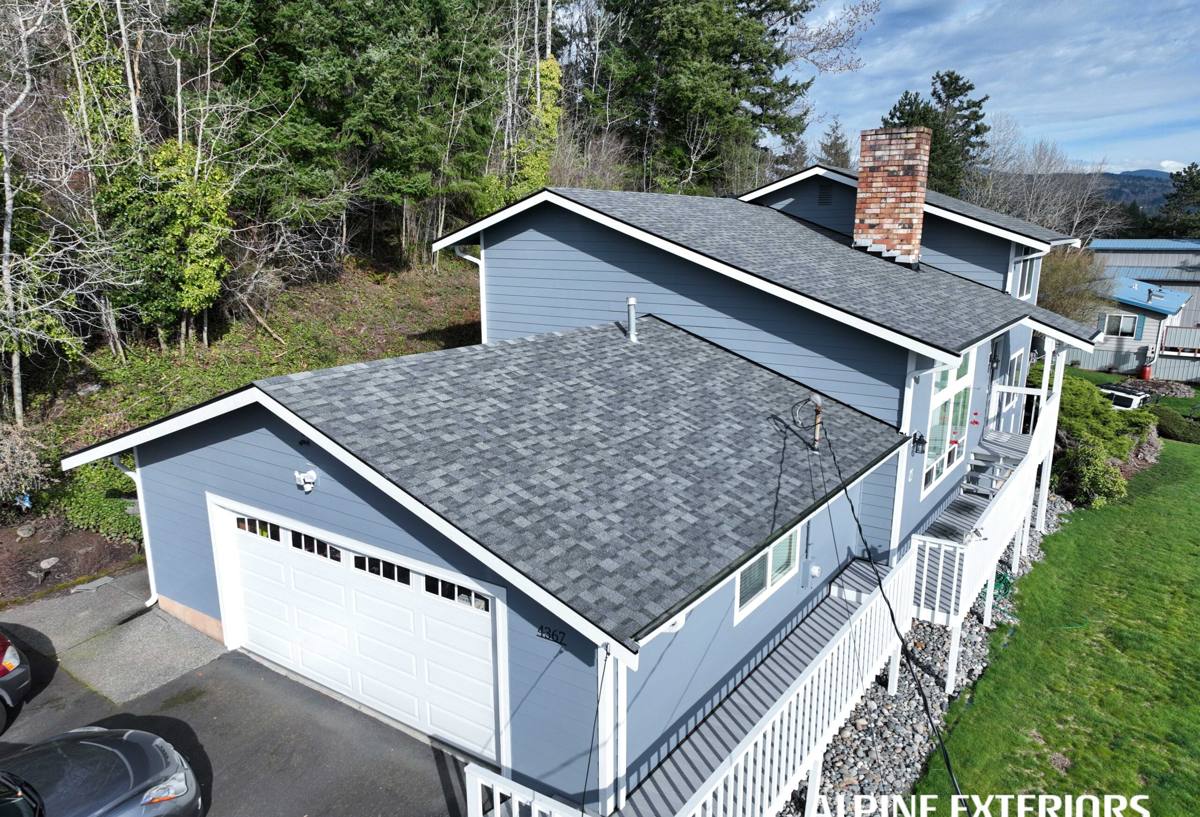
Signs a Birch Bay Roof Has Reached the End of Its Life
Not every roof problem means you need a full replacement. Plenty of issues — a cracked pipe boot, a few lifted shingles after a windstorm, a small flashing leak — are legitimate repairs. But there's a point where patching stops making sense and a full tear-off and replacement is the honest recommendation. Signs worth taking seriously include:
- Granule loss heavy enough that you can see bare, shiny patches on the shingle surface
- Shingles that are curling, cupping, or cracking across large sections of the roof, not just one spot
- Moss or algae mats covering significant roof area, especially on north-facing or shaded slopes
- Soft or spongy spots underfoot, which usually mean the decking underneath is already compromised
- Rust staining or visible corrosion at flashing, vent caps, or exposed fasteners
- Interior ceiling stains, attic moisture, or daylight visible through the roof deck
- A history of repeated repairs in the same areas without the leaks fully stopping
If you're seeing more than one or two of these, it's worth having someone look at the whole roof system rather than chasing individual leaks one at a time.
What a Correct Roof Replacement Actually Involves
A roof replacement is more than swapping out old shingles for new ones. Done right, it's a full rebuild of the roof system, and skipping steps is where most premature failures come from — especially in a climate as demanding as Whatcom County's coastal areas.
Tear-Off and Decking Inspection
We remove the old roofing down to the deck rather than layering new shingles over old ones. That's the only way to actually see the condition of the plywood or plank decking underneath. Any wood that's soft, delaminated, or rotted from long-term moss or moisture exposure gets replaced before anything new goes down — installing new shingles over compromised decking just hides the problem.
Underlayment and Water Protection
Given how much wind-driven rain a bay-facing roof can see, underlayment choice matters. We use synthetic underlayment across the full roof and self-adhering ice-and-water shield membrane at the eaves, valleys, and any low-slope transitions — the areas most likely to see water pushed uphill by wind rather than simply running off.
Flashing and Fasteners
Every chimney, vent pipe, skylight, and wall-to-roof transition needs new flashing, not reused flashing tucked under new shingles. In a salt-air environment, we pay close attention to fastener and flashing material so corrosion doesn't become the next leak source in a few years. This is one of the details that separates a roof built for this specific location from a generic install.
Ventilation Basics
Balanced intake and exhaust ventilation keeps the attic space at a temperature and humidity level that discourages both condensation and moss regrowth from the underside up. We check existing ventilation as part of every replacement and correct it where it's undersized or blocked — a detail that's easy to skip but expensive to ignore.
Choosing Materials That Hold Up Near the Water
There's no single "best" roofing material for every home — it depends on the roof's exposure, slope, budget, and how the home is used. For Birch Bay specifically, we weigh how each option handles salt air and sustained moisture, not just upfront cost.
| Material | Salt Air / Moisture Behavior | Maintenance Needs |
|---|---|---|
| Asphalt composition shingle | Performs well with corrosion-resistant fasteners and proper flashing; the most common, cost-effective choice for the area | Periodic moss treatment and gutter clearing recommended |
| Standing seam metal | Sheds wind-driven rain very effectively; requires marine-grade or coated fasteners and finishes to resist salt corrosion long-term | Low maintenance once properly installed, but repairs require a specialist |
| Synthetic / composite shingle | Resists moisture absorption well; good option where moss and algae have been a recurring issue | Moderate; still benefits from periodic cleaning |
Whatever material a homeowner chooses, we treat the fastener and flashing spec as seriously as the shingle or panel itself. In a coastal environment, the visible roofing material is often not what fails first — the hardware holding it together is.
Our Roof Replacement Process, Start to Finish
- On-site assessment. We walk the roof and attic, check decking condition where accessible, and note existing ventilation, flashing, and any moss or moisture damage.
- Proposal and material selection. We walk through material options in plain terms, including trade-offs for this specific home and its exposure to wind and water.
- Permitting. We handle the Whatcom County permit process so the job is inspected and documented correctly.
- Site protection. Landscaping, siding, and gutters get covered or protected, and we run a magnetic sweep for stray nails once tear-off is complete.
- Tear-off and decking repair. Old roofing comes off down to the deck; any compromised sheathing is replaced before moving forward.
- Underlayment, flashing, and ventilation. These get installed and corrected to the standard the location actually demands, not just code minimum.
- Roofing installation. The new material goes on following manufacturer specifications, with attention to wind-rated fastening patterns.
- Final inspection and cleanup. We walk the finished roof, clean the site thoroughly, and confirm everything meets the agreed scope before we call it done.
Ventilation and Moisture: The Quiet Factor in Moss Season
Homeowners tend to focus on the shingles themselves, but the moisture management happening underneath the roofing material is just as important — arguably more so in a place with as much shade and marine humidity as Birch Bay. Trapped attic moisture from poor ventilation doesn't just shorten the life of insulation; it keeps the underside of the decking damp, which is exactly the environment that feeds rot and encourages moss to reestablish from below as well as above. Correcting ventilation during a replacement is one of the more cost-effective moves a homeowner can make against future moss and moisture problems.
What Drives the Cost of a Birch Bay Roof Replacement
Every roof is different, so exact pricing depends on a site visit. In general, most full tear-off-and-replace projects on typical single-family homes in this area fall in a broad mid-to-upper four-figure to low five-figure range, with the specifics shaped by the factors below.
| Factor | Why It Moves the Price |
|---|---|
| Roof size and number of squares | More material and labor hours directly increase cost |
| Pitch and accessibility | Steep or hard-to-access roofs take longer and require more safety setup |
| Number of existing layers | Multiple old layers mean more tear-off labor and disposal |
| Decking condition | Rot from long-term moss or leaks means replacing sheathing, which adds material and labor |
| Material choice | Asphalt, metal, and synthetic options carry different material and installation costs |
| Roof complexity | Valleys, dormers, skylights, and multiple chimneys add flashing and labor time |
We break these factors down clearly in every estimate so homeowners can see exactly what they're paying for and why.
Why Hiring a Crew That Already Works Birch Bay Matters
A roof replacement isn't a place to guess. Crews that regularly work Birch Bay and the surrounding Whatcom County coastline already know which fastener and flashing specs actually hold up against salt air over the long run, how to sequence a job around this region's rain patterns instead of getting caught mid-tear-off in a squall, and what the Whatcom County permitting process requires. That local experience shows up in fewer callbacks and a roof that's actually built for the conditions it faces, not just installed to a generic standard.
After the Install: Keeping a Coastal Roof Performing
A correctly installed roof still benefits from a little regular attention, especially this close to the water. A short annual routine goes a long way toward protecting the investment:
- Clear gutters and downspouts of debris and moss buildup at least once or twice a year
- Do a visual check after major windstorms for lifted shingles, displaced flashing, or debris damage
- Trim back overhanging branches to improve airflow and reduce shade-driven moss growth
- Keep an eye on attic ventilation and make sure vents stay unblocked by insulation or debris
- Address any moss regrowth early, before it has time to mat and hold moisture against the surface
- Schedule a periodic visual roof inspection rather than waiting for an interior leak to show up
If you're weighing a repair against a full replacement, or just want an honest read on where your roof stands, we're happy to take a look. Reach out for a free, no-pressure estimate using the form below.