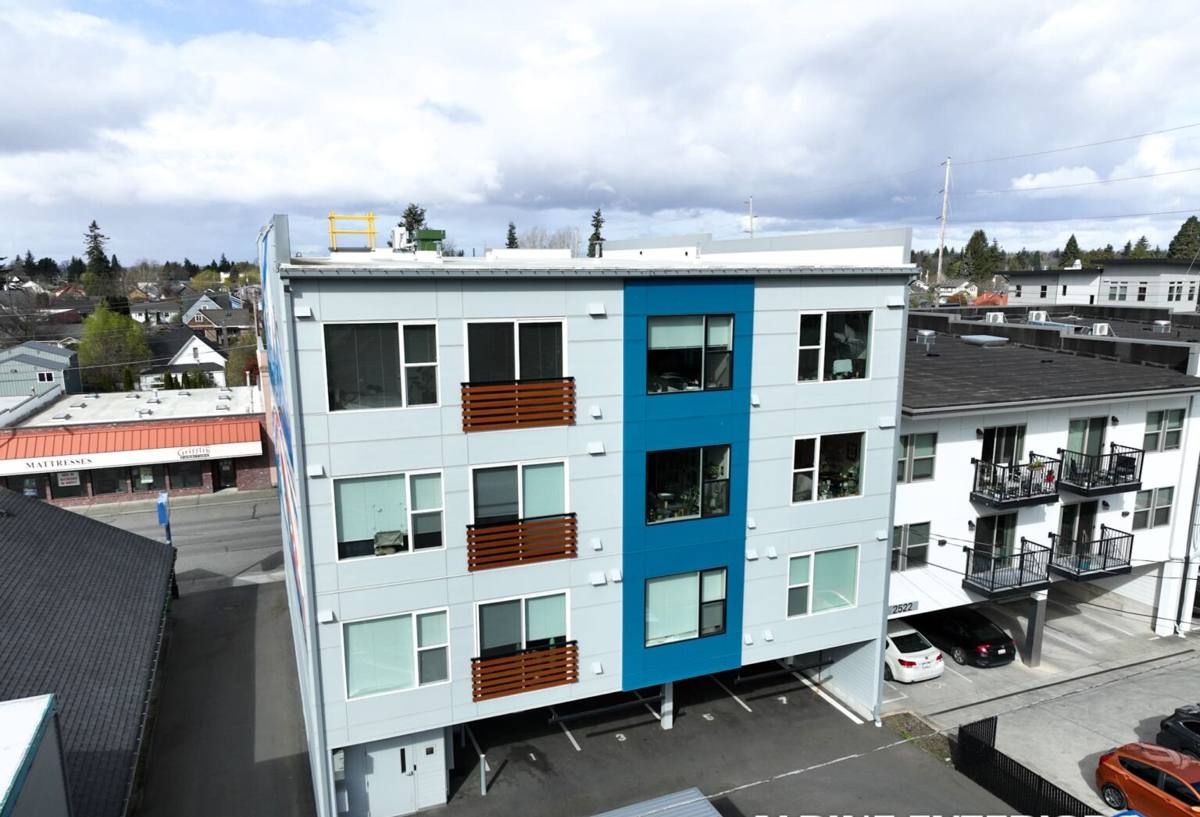
 Bellingham Exterior
 Birch Bay Homes Take a Different Kind of Weather Beating
Birch Bay sits right on the water, and that changes what a window has to survive. A window on a home a few miles inland in Bellingham deals with typical Pacific Northwest rain and gray winters. A window on a home along Birch Bay's shoreline deals with all of that plus salt-laden air, wind-driven rain that hits the glass sideways instead of falling straight down, and a long stretch of the year where surfaces stay damp enough for moss and algae to take hold. None of that is dramatic on its own, but over years it adds up to failed seals, corroded hardware, and water finding its way into places it shouldn't be.
We install windows across Whatcom County, and the jobs we do in Birch Bay get treated differently from a standard inland replacement. The materials, the flashing detail, and the sealants all get chosen with the bay's climate in mind, not just the opening's dimensions.
What Salt Air and Driving Rain Actually Do to a Window
Corrosion You Don't See Until It's a Problem
Salt air is corrosive to metal, full stop. Window hardware — hinges, locks, balance mechanisms, and screws — is usually the first thing to show it. On a standard inland install, mid-grade fasteners and hardware hold up fine for decades. Close to Birch Bay's water, the same components can start pitting or seizing years earlier. It's rarely visible from across the room, which is why a window can look fine while the mechanism that opens and locks it is already failing underneath the finish.
Wind-Driven Rain Finds the Weak Point
Straight-down rain is forgiving of minor installation shortcuts. Wind-driven rain off the bay is not — it gets pushed sideways and upward into gaps that would never see water on a calmer site. That means the flashing, sill pan, and sealant joints around a Birch Bay window need to be built to shed water from multiple directions, not just from above. A window that was installed correctly for an inland home can still leak on a waterfront property if it wasn't detailed for wind-driven exposure.
Moss Season and Your Window Openings
Whatcom County's long wet season is well known for what it does to roofs, but it affects window openings too. Shaded sills, north-facing exposures, and any spot where water sits instead of draining are prone to moss and algae growth over the fall and winter months. On an older window, that moisture-holding growth sits right against wood trim and sill material, keeping it damp for months at a stretch. That's a slow but steady path to rot, and it's one more reason drainage detailing at the sill matters as much as the window unit itself.
What a Correct Window Installation Actually Involves
A window installation is more than setting a unit into a hole and running a bead of caulk around the outside. Done right, it's a sequence, and skipping steps is exactly how water intrusion problems start — sometimes not for a year or two, which is part of why cutting corners is so common and so hard to catch afterward.
The Flashing Sequence
Before the window ever goes in, the opening needs a sill pan to catch and direct any water that gets past the window, plus flashing tape or membrane integrated with the home's weather-resistant barrier — lapped correctly so water sheds outward and downward, never into the wall cavity. This step matters everywhere, but it matters more on a site that regularly takes wind-driven rain.
Sealants and Fasteners That Hold Up Near Salt Water
We use sealants rated for exterior, UV, and moisture exposure, and we pay attention to hardware material near the coast — stainless or coated fasteners instead of standard-grade ones, and hardware finishes that resist salt corrosion rather than just looking good on install day. It costs a little more up front and saves a callback five years later.
Insulation and Air Sealing Around the Frame
The gap between the window frame and the rough opening needs to be filled with a compressible, non-expanding insulation — not just spray foam packed in tight, which can bow the frame and cause the window to operate poorly. This step affects both energy performance and how well the window resists condensation in Birch Bay's cool, humid winters.
Choosing Window Materials for a Birch Bay Home
Material choice matters more on a waterfront property than almost anywhere else we work. Here's how the common options hold up in a salt-air, high-moisture environment:
| Material | Coastal Durability | Maintenance | Typical Cost Tier |
|---|---|---|---|
| Vinyl | Good — won't corrode or rot, handles moisture well | Low — occasional cleaning | Lower |
| Fiberglass | Very good — dimensionally stable, resists warping in temperature swings | Low | Mid to higher |
| Aluminum-clad wood | Good on the exterior face if hardware and cladding seams are properly sealed | Moderate — cladding protects the wood, but seams need periodic inspection | Higher |
| Bare wood | Weakest choice this close to the water — prone to moisture absorption and rot without diligent upkeep | High — regular painting/sealing required | Mid to higher |
We're honest with Birch Bay homeowners that bare wood windows, while attractive, ask a lot of a home sitting in salt air and a long damp season. If the look of wood matters to you, an aluminum-clad or fiberglass option gets you closer to that appearance with far less exposure risk.
Glass Package Matters Too
Most homes in this area do well with dual-pane, low-E glass with an argon gas fill — it cuts down on heat loss and helps manage condensation on cold, humid mornings. Triple-pane glass is worth discussing for homes with more direct wind exposure or where road or bay noise is a factor, though it adds weight and cost.
Signs Your Birch Bay Windows Are Due for Replacement
Because coastal wear happens gradually, it's easy to miss until a window is already failing. Walk your exterior and check for these:
- Hardware — locks, cranks, or hinges — that feels stiff, gritty, or corroded
- Visible pitting, chalky residue, or rust streaks on metal components
- Fogging or moisture trapped between panes on dual-pane units (a sign the seal has failed)
- Soft or discolored wood trim or sill material, especially on shaded or north-facing windows
- Drafts or a noticeable temperature difference near the window on a windy day
- Moss, algae, or persistent green staining building up on the sill or frame
- Difficulty opening, closing, or latching a window that used to operate smoothly
Any one of these on its own isn't necessarily urgent. Several of them together, especially on windows facing the bay, usually means it's time for a closer look.
Our Installation Process
- On-site assessment. We look at each window's exposure — which face the wind and rain most directly — and the condition of the existing opening, framing, and trim.
- Material and glass recommendation. Based on that exposure and your budget, we recommend materials and a glass package suited to a Birch Bay site rather than a one-size-fits-all default.
- Removal and opening inspection. Once the old window is out, we check the framing and sheathing underneath for hidden moisture damage before anything new goes in.
- Sill pan and flashing installation. This is the step that determines whether the window sheds water correctly for the next twenty-plus years.
- Window installation and air sealing. The unit is set, shimmed level and plumb, insulated, and sealed with coastal-grade sealant.
- Exterior trim and finish work. Trim is reinstalled or replaced and finished to match the home.
- Final operation check. Every window is opened, closed, and locked to confirm smooth operation before we consider the job done.
Cost Factors to Expect
Every Birch Bay window job is a little different, but the main things that move the price are window size and count, material choice, whether the opening needs framing or moisture repair, and how much trim and finish work is involved. A straightforward swap into a sound opening costs less than a job where we're also fixing rot behind the trim — which is common enough on older shoreline homes that we always budget time to check for it before quoting a final number.
Why Local Experience in Birch Bay Matters
A contractor who mostly works inland can install a technically sound window and still miss the details that matter on the water — sill pan drainage angled for wind-driven rain, hardware upgraded for salt exposure, sealant rated for the moisture cycle this area sees. We work throughout Whatcom County, including Birch Bay's shoreline properties, and we build our process around what actually fails out here, not around a generic checklist. That's the difference between a window that looks right on install day and one that's still performing correctly in ten years.
Caring for New Windows Through Bellingham's Wet Season
Even a correctly installed window benefits from a little seasonal attention in this climate. Rinse salt residue off exterior frames periodically, keep an eye on sills for early moss or algae growth and clean it off before it takes hold, and check that weep holes (the small drainage openings along the bottom of the frame) stay clear of debris so water can drain as designed. None of this is heavy maintenance — it's a few minutes, a couple of times a year — but it goes a long way toward getting the full lifespan out of a coastal window installation.
If your Birch Bay home's windows are showing their age, or you're just not sure whether what you're seeing is normal wear or something worth addressing, we're happy to take a look. Reach out for a free, no-pressure estimate using the form below.