 Bellingham Exterior
 Lynden Siding Has to Handle a Specific Kind of Weather
Lynden sits close enough to Bellingham Bay and the Nooksack lowlands that homes here deal with a combination most siding products were never designed for: salt-tinged marine air, long stretches of driving rain off the Strait, and a moss season that can run from October well into spring. None of these factors is dramatic on its own. Together, over years, they're what separates siding that looks good at year two from siding that still looks good at year twenty.
Salt air accelerates corrosion on fasteners and trim, and it degrades cheap paint finishes faster than inland homes ever experience. Driving rain doesn't just wet a wall — wind-driven moisture finds every gap in flashing, every under-caulked seam, and every place where siding wasn't held off the wall correctly. And Whatcom County's moss and algae season means anything with a porous or wood-based surface starts collecting green growth in shaded, north-facing areas within a couple of years if it isn't installed and finished correctly.
A siding installation in Lynden isn't just a cosmetic upgrade. It's a decision about what's going to stand between this specific climate and the framing of your house for the next several decades.
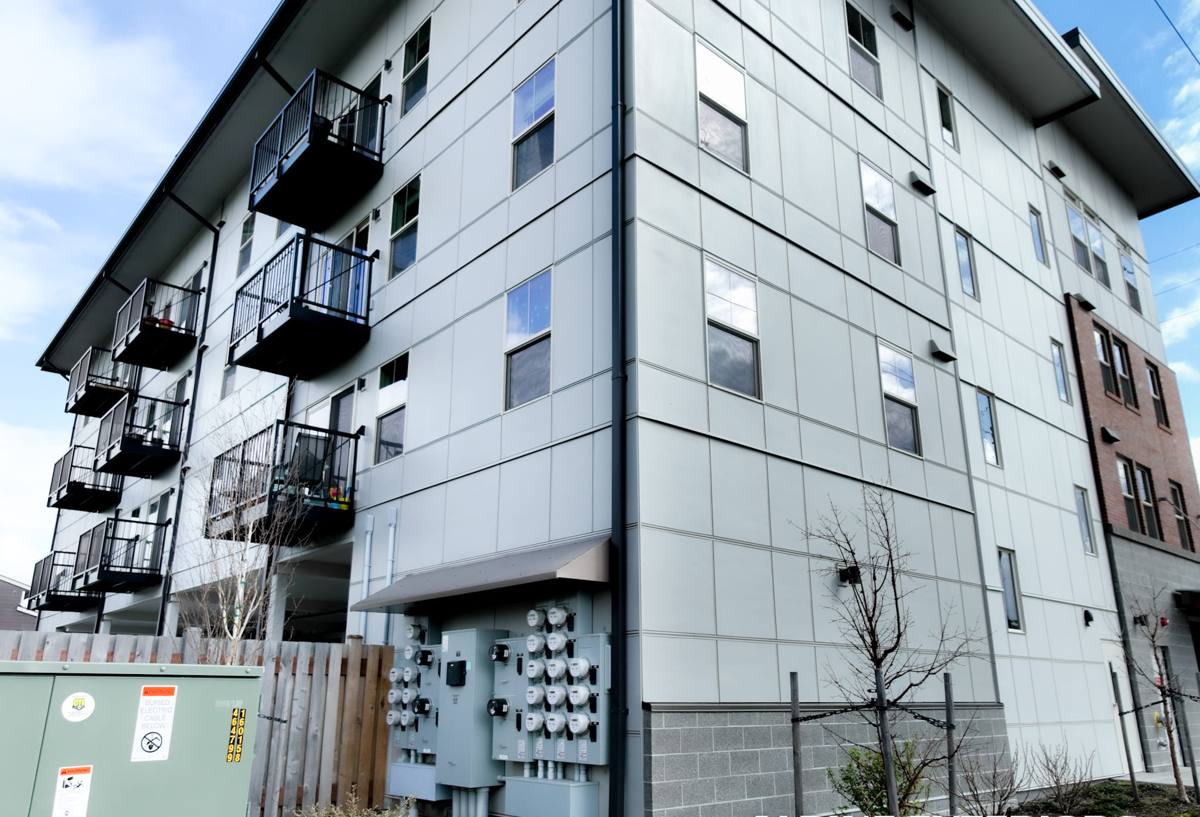
What Local Homes Actually Need From Their Siding
Whatcom County's building stock includes a mix of older farmhouses, mid-century ranches, and newer construction spread across Lynden and the surrounding county roads. Regardless of age, the siding systems that hold up best around here share a few traits:
- A water-resistive barrier and flashing detail that actually manages driving rain, not just vertical rain
- A material that doesn't rely on paint film alone to stay dry — because paint film is the first thing salt air and UV exposure break down
- Dimensional stability, so seams and butt joints don't open up as the material expands and contracts through wet winters and dry summer stretches
- A factory finish that resists moss and mildew staining better than a field-applied coat
- Fire performance that matters more each year, as wildfire smoke and drought stress become a bigger part of Pacific Northwest summers
That list rules out a lot of products that work fine in drier, milder climates. It's also exactly why we standardized on one material rather than offering a menu of options.
Why We Install Only James Hardie Fiber Cement
We don't install vinyl, LP SmartSide, Cemplank, Allura, or primed wood siding. That's a deliberate professional standard, not a sales pitch, and it's worth explaining honestly.
Vinyl is inexpensive and low-maintenance in mild climates, but it's a petroleum-based product that expands and contracts significantly with temperature swings, can warp or crack in cold snaps, and offers essentially no fire resistance. In a marine climate with real rain volume, vinyl's overlapping-panel design also depends heavily on correct installation to shed water — done wrong, it traps moisture behind it.
Engineered wood products like LP SmartSide use wood strand technology with a resin-saturated overlay, which performs reasonably well when installed and maintained exactly to spec. The trade-off is that it's still a wood-based substrate — the overlay is what protects it, and any breach (a missed caulk joint, a fastener installed wrong, prolonged moisture contact at the bottom edge) gives water a path into a material that can swell and deteriorate.
Other fiber cement brands, including Cemplank and Allura, are chemically similar to James Hardie's product — cement, sand, and cellulose fiber. Where they differ is in the specifics: the factory finish system, the climate-specific engineering of the product line, the warranty structure, and the manufacturing consistency that determines how the boards actually behave on a wall over 20-plus years. We've made James Hardie our standard because of how those specifics hold up, not because the underlying material category is unique to them.
Primed cedar and spruce siding can look excellent and many homeowners love the aesthetic, but raw wood siding requires an ongoing maintenance commitment — recoating on a schedule, careful caulking maintenance, and vigilance about moss and mildew — that most homeowners underestimate when they choose it. In Whatcom County's moss season, that maintenance burden is real, not theoretical.
James Hardie fiber cement is non-combustible, holds its factory ColorPlus finish far longer than field-applied paint, is engineered in HZ5 and HZ10 versions specifically for climates like ours, and carries a strong transferable warranty when installed by a certified crew. It's not the cheapest option on day one. It's the option we're willing to put our name behind for the long haul.
What Correct Installation Looks Like
Fiber cement siding is only as good as the installation underneath it. A quality Hardie job in Lynden includes:
- Full removal of old siding down to the sheathing, so we can actually inspect for hidden rot or moisture damage before covering it back up
- Repair of any compromised sheathing or framing found during tear-off — not siding over a known problem
- A correctly lapped water-resistive barrier with properly integrated window and door flashing, sequenced so water is always directed outward and down
- Manufacturer-specified fastening — correct nail type, spacing, and placement, since Hardie's warranty is conditioned on installation to their published instructions
- Proper clearance at grade, decks, and roof lines, since siding installed too close to the ground or to horizontal surfaces is one of the most common causes of premature moisture damage
- Caulking and joint treatment at seams, corners, and penetrations that's built to last, not just to look clean on installation day
Skipping any one of these steps can void a warranty or create a moisture problem that won't show up for a few years — right around the time it's expensive to fix.
Our Process for a Lynden Siding Project
1. On-site assessment
We walk the exterior with you, look at your current siding's condition, check trim and flashing details, and talk through what your home's exposure looks like — shaded north walls, wind exposure, proximity to sprinklers or landscaping that keeps siding damp.
2. Product and color selection
We help you choose the right Hardie board profile and ColorPlus finish for your home's style and your maintenance preferences, factoring in how each color and texture performs against moss staining and sun exposure on this property specifically.
3. Tear-off and sheathing inspection
Old siding comes off, sheathing gets inspected and repaired as needed, and you get told what we find — good or bad — before anything gets covered up.
4. Weather barrier, flashing, and installation
We install the water-resistive barrier and flashing system first, then install the Hardie siding to manufacturer spec, with the fastening and clearance details that keep the warranty valid and the wall dry.
5. Final walkthrough
We review the finished work with you, cover care and maintenance basics, and make sure you know what warranty coverage applies and how to register it.
Comparing Siding Options for a Whatcom County Home
| Factor | James Hardie Fiber Cement | Vinyl | Engineered Wood | Cedar/Spruce |
|---|---|---|---|---|
| Fire resistance | Non-combustible | Combustible | Combustible | Combustible |
| Moisture tolerance | Engineered for wet climates (HZ5/HZ10) | Can trap moisture if misinstalled | Depends on overlay integrity | Requires diligent maintenance |
| Finish longevity | Factory ColorPlus, long fade resistance | Color molded in, can fade/chalk | Factory-coated, moderate lifespan | Field-applied, needs recoating |
| Moss/mildew resistance | Strong with correct finish | Moderate | Moderate, depends on maintenance | Prone without upkeep |
| Typical maintenance | Low | Low | Moderate | High, ongoing |
| Warranty structure | Strong, transferable | Varies by manufacturer | Varies, installation-sensitive | Typically none on the material |
This isn't a knock on the other categories — each has legitimate use cases in the right climate and budget. It's why, for a Lynden home dealing with salt air, driving rain, and moss season, we consistently point homeowners toward fiber cement.
Why Hiring a Crew That Already Works Lynden Matters
Siding installation quality comes down to details that don't show up in a sales brochure: how flashing is sequenced around windows, how much clearance is left at grade, how fasteners are driven. A crew that works Whatcom County regularly has already seen how those details play out over years in this specific climate — which corners of a house take the worst wind-driven rain, which siding colors hold up best against moss on shaded elevations, and what tear-off usually reveals on homes of a certain age in this area.
That local pattern recognition doesn't replace manufacturer specs, but it means fewer surprises during the project and a finished job that's built for the weather it's actually going to face, not generic weather.
Maintaining Your New Siding
James Hardie siding is low-maintenance, not no-maintenance. A simple annual routine keeps it performing for decades:
- Rinse the exterior with a garden hose once or twice a year, focusing on shaded, moss-prone areas
- Inspect caulking at trim, corners, and penetrations annually and touch up as needed
- Keep sprinklers and landscaping from spraying directly on siding long-term
- Trim back vegetation that's shading siding and keeping it damp
- Address any impact damage or chipped finish promptly rather than letting moisture find its way in
Get a Straightforward Estimate
If your Lynden home's siding is showing its age — cracking, moss staining, soft spots, or paint that won't hold anymore — we'll come take an honest look and walk you through what a James Hardie installation would involve for your specific house. No pressure, no inflated urgency, just a clear picture of the work and the cost. Reach out using the form below for a free estimate.