 Bellingham Exterior
 Lynden's Weather Is Harder on Windows Than Most Homeowners Realize
Lynden sits inland from Bellingham Bay, but that doesn't spare it from the weather patterns that define this corner of Washington. Whatcom County gets long stretches of driving rain off the Pacific, humid marine air that never fully dries out between storms, and a moss season that can run most of the year on shaded or north-facing exteriors. Windows take the brunt of it. They're the part of the building envelope with the most seams, the most moving parts, and the most opportunities for water to find a way in if the installation wasn't done right the first time.
Older wood-frame windows in particular struggle here. Wood swells and contracts with the moisture swings, finishes fail faster under constant damp-dry cycling, and once water gets behind a poorly flashed frame, it can sit there for months before anyone notices a soft spot on the interior sill. Aluminum-frame windows from past decades have their own issue: they conduct cold straight through the frame, which means condensation and eventually rot in the surrounding wood trim. None of this is unique to any one house — it's just what this climate does to windows over time, and it's why installation quality matters more here than it would in a drier part of the country.
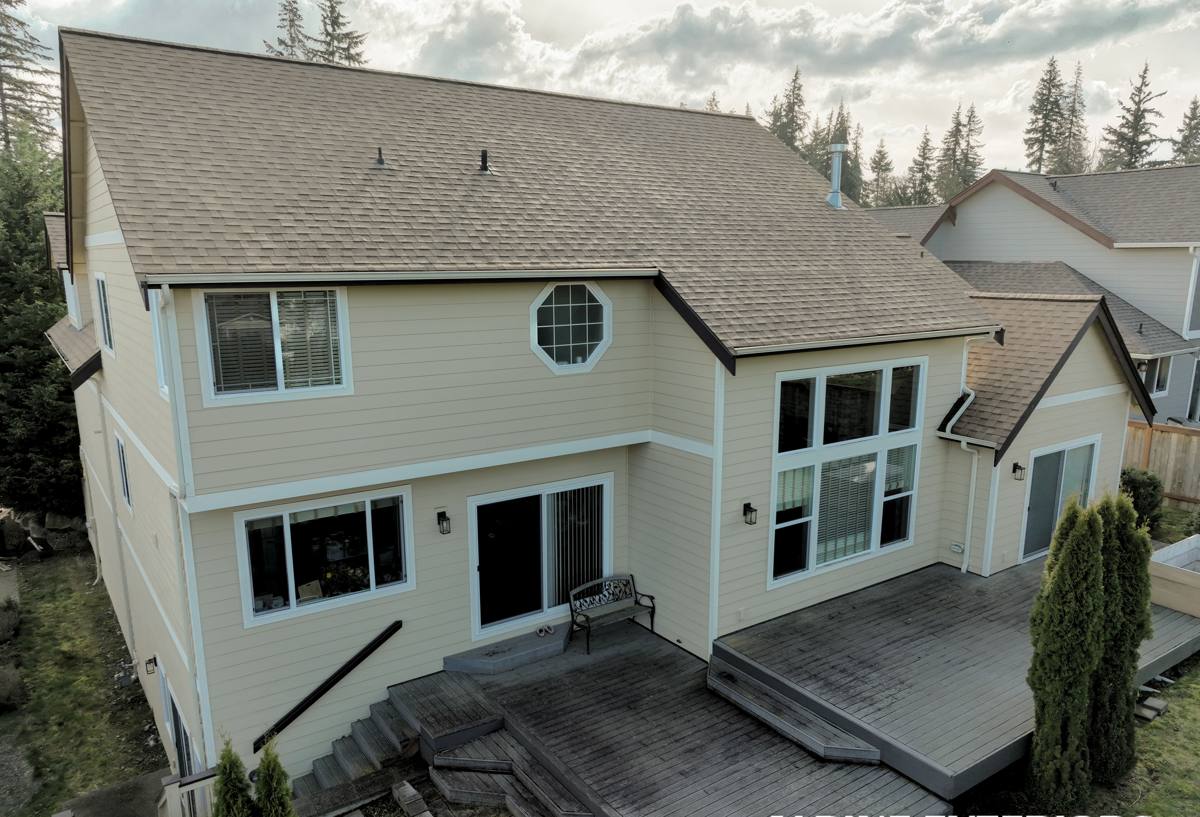
Signs a Lynden Home's Windows Are Falling Behind
Most homeowners don't replace windows because they woke up one day and decided to — they replace them because something started bothering them. In this climate, the usual culprits are:
- Fogging or a permanent haze between the panes, which means the seal on a double-pane unit has failed and the gas fill is gone
- Visible moss or dark streaking on the sill or frame that keeps coming back no matter how often it's cleaned
- Drafts you can feel near the frame, especially during the driving rain and wind events that roll through in fall and winter
- Wood trim or sill that feels soft, spongy, or shows paint bubbling — a sign moisture has already gotten behind the surface
- Windows that are difficult to open, close, or lock, often from swollen frames or failed hardware
- A noticeable rise in heating costs with no other explanation, which usually points to failed seals or thin, older glass
Any one of these on its own might not be urgent. Several of them together, especially on the same wall or elevation, usually means the window system in that area has reached the end of its useful life and is worth addressing before the damage spreads into the surrounding framing.
What a Correct Window Installation Actually Involves
The window unit itself gets most of the attention, but in this climate the installation details matter more than the brand on the label. A window is only as good as the flashing, sealing, and framing work around it. We treat every opening as a water-management problem first and a window-fitting job second.
Flashing and Water Management
Proper installation means integrating the window with a weather-resistant barrier so water sheds down and out, never in. That means correctly lapped flashing tape at the sill, jambs, and head, a sloped sill pan to carry away any water that does get past the outer seal, and head flashing that directs runoff clear of the frame instead of letting it pool. Skipping or rushing this step is the single most common reason windows leak within a few years of installation, regardless of how good the window itself is.
Air Sealing and Insulation
The gap between the window frame and the rough opening needs to be filled with an appropriate low-expansion foam or backer rod and sealant — not stuffed with fiberglass insulation alone, which does nothing to stop air movement and can actually hold moisture against the frame. Done correctly, this step is what keeps driving rain and wind from finding their way through the gaps that surround every window opening.
Fastening and Structural Fit
Windows need to be plumb, level, and square before they're fastened, and shimmed correctly so the frame isn't under stress that will eventually crack a seal or bind the sash. A window that's slightly out of square might still open and close fine on day one, but it will wear unevenly and leak sooner than one that was set correctly.
Exterior Trim and Sealant
The final sealant bead around the trim is the last line of defense, not the first. It needs to be a product rated for this climate's temperature swings and constant moisture, applied over properly prepped surfaces so it actually bonds and stays flexible instead of cracking within a season or two.
Choosing the Right Window for a Whatcom County Home
There's no single "best" window material — the right choice depends on the home, the budget, and how much upkeep an owner wants to take on. Here's how the common options compare for a climate like this one:
| Frame Material | Moisture Performance | Maintenance | Typical Fit |
|---|---|---|---|
| Vinyl | Excellent — won't rot, rust, or absorb water | Low; occasional cleaning | Most homes; strong value for the climate |
| Fiberglass | Excellent; very stable through temperature and moisture swings | Low | Homes wanting durability and a slimmer frame profile |
| Wood (clad exterior) | Good on the exterior face; interior wood still needs protection from condensation | Moderate to high; finish upkeep over time | Homes prioritizing a traditional wood interior look |
| Aluminum | Poor in this climate; conducts cold and invites condensation | Moderate | Limited use cases; generally not our recommendation here |
We don't push one brand or material on every job. What we do insist on is glass and frame combinations rated for sustained wind-driven rain and the humidity swings typical of Whatcom County, with warranty terms that actually hold up if a seal fails a few years down the road. If a product looks good on paper but has a track record of installation sensitivity or a thin warranty structure, we'll tell you that upfront rather than let you find out after it's installed.
Double-Pane vs. Triple-Pane
Double-pane, gas-filled windows with a low-E coating are the standard for most homes in this area and perform well against both the cold and the marine humidity. Triple-pane adds another layer of insulation and sound dampening, which some homeowners value on busier roads or exposed elevations, but it comes at a higher cost and added weight that affects frame and hardware choices. For most Lynden homes, a quality double-pane unit is the more practical choice; triple-pane is worth discussing case by case.
How Our Installation Process Works
- On-site assessment. We look at each window opening individually — not every wall on a house has the same exposure to wind and rain, and the assessment reflects that.
- Product selection. We walk through frame material, glass package, and style options based on your budget and how that elevation of the house is exposed to weather.
- Opening prep. Old windows come out carefully, and we inspect the rough opening and surrounding framing for any hidden moisture damage before anything new goes in.
- Flashing and sealing. Sill pans, flashing tape, and air sealing go in per manufacturer specification and the water-management approach described above — this is the step that determines whether the window performs for the next twenty years.
- Setting and fastening. Each unit is shimmed, leveled, and fastened for a proper structural fit, not just eyeballed into place.
- Exterior finish work. Trim, sealant, and any siding tie-in are completed and cleaned up so the finished opening looks and performs correctly.
- Final walkthrough. We test operation, check the seal, and go over care basics before we consider the job done.
What Affects the Cost of Window Installation
Costs vary by project, and we'll always give you a specific number after seeing the actual openings — but these are the main factors that move the price up or down on most jobs:
| Factor | Why It Matters |
|---|---|
| Number and size of openings | More or larger windows mean more material and labor |
| Frame material and glass package | Vinyl, fiberglass, and wood carry different material costs; triple-pane and specialty coatings add cost |
| Condition of the existing opening | Hidden rot or framing damage found during removal adds repair time before the new window can go in |
| Replacement vs. new construction | Replacement into an existing opening is generally more straightforward than a full new-construction install |
| Access and elevation | Upper-story or hard-to-reach windows take more time and equipment |
| Trim and finish work | Matching existing exterior trim or siding profiles adds labor beyond the window itself |
Be cautious of a quote that's dramatically lower than everyone else's — in our experience, that gap usually comes out of the flashing and sealing details, which are exactly the steps that determine whether the window still performs in five years, not just on install day.
Why a Crew That Already Works Lynden Matters
Window installation isn't a one-size-fits-all trade. A crew that's worked mostly in drier climates or on simpler tract housing isn't automatically prepared for what Whatcom County throws at a building envelope. Working in and around Lynden and the greater Bellingham area regularly means we've seen how local homes of different ages and construction styles actually hold up to the rain, wind, and moss cycles year over year — and we adjust our approach on flashing, sealant selection, and frame recommendations accordingly instead of applying a generic checklist.
It also means straightforward logistics: realistic scheduling around the wetter months, timing installation work so sealants get proper cure conditions, and being close enough to come back quickly if you ever have a question after the job is done.
Keeping New Windows Performing for the Long Run
A correct installation does most of the work, but a little homeowner maintenance goes a long way in this climate. A simple seasonal routine helps new windows perform for their full expected lifespan:
- Rinse frames and sills periodically to clear moss spores and organic buildup before they take hold
- Check exterior sealant beads once a year for cracking or separation, especially after a hard winter
- Keep gutters and downspouts clear so roof runoff isn't dumping extra water directly onto window heads
- Trim back vegetation that keeps a window shaded and damp longer than the rest of the house
- Operate each window a few times a season so hardware and weatherstripping don't seize up from disuse
- Address any soft trim, bubbling paint, or interior condensation early, before it spreads into the framing
If your Lynden home's windows are showing their age, or you're planning ahead for a remodel, we're happy to take a look and give you an honest, no-pressure assessment of what your home actually needs. Use the form below to request a free estimate — there's no obligation, just a straight answer about your options.