 Bellingham Exterior
 Decks Built for a Sunnyland Backyard, Not a Catalog Photo
Sunnyland sits in one of Bellingham's older, established residential pockets, with mature trees, established landscaping, and homes that range from mid-century ramblers to newer infill construction. A deck here has to do more than look good in June. It has to shed water efficiently for most of the year, resist the moss and algae that thrive under Bellingham's tree canopy, and hold up to the salt-tinged air that drifts in off Bellingham Bay. We build and repair custom decks specifically with that combination of conditions in mind, not a generic Pacific Northwest deck spec pulled from a big-box plan book.
This page covers what a Sunnyland deck actually needs, what separates a correctly built deck from one that will need major work in five years, and how our process works from first estimate to final walk-through.
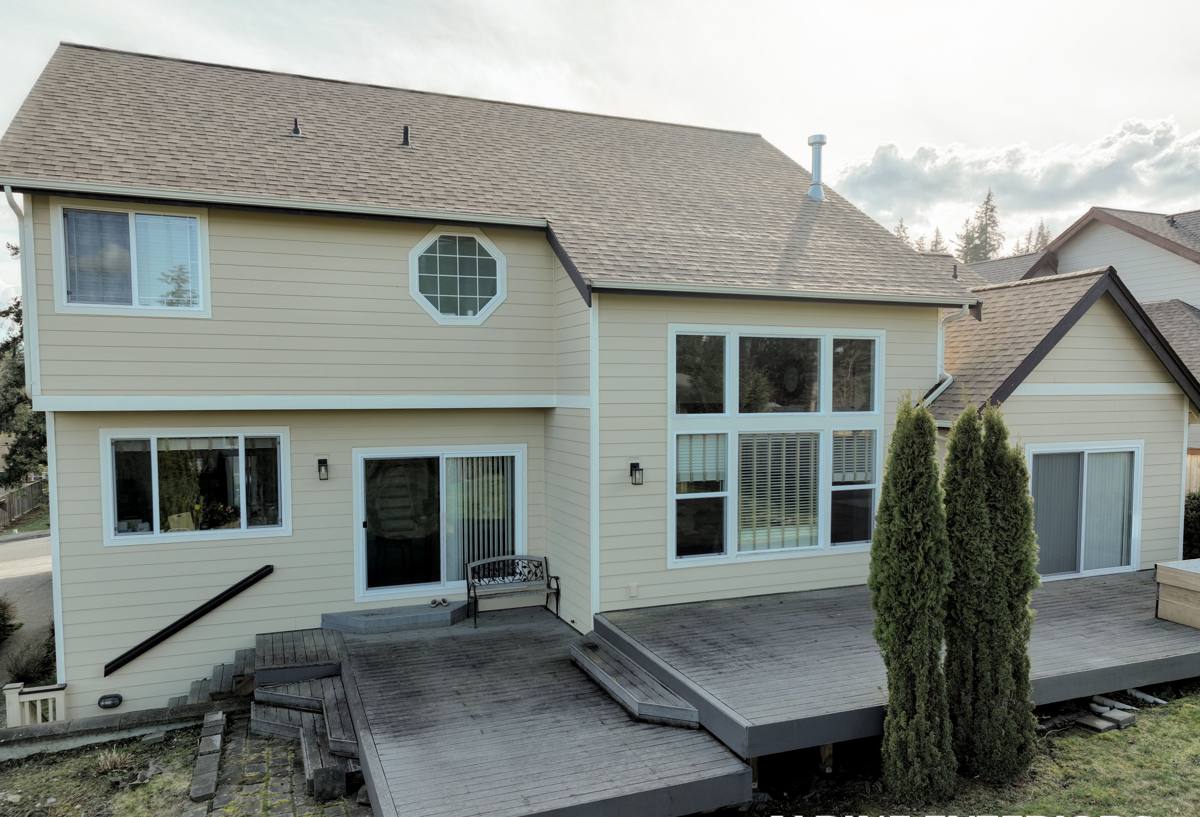
What Salt Air, Driving Rain, and Moss Season Do to a Deck
Whatcom County's climate is generally mild, but "mild" doesn't mean gentle on wood, fasteners, or coatings. Three specific conditions matter most for a deck in this neighborhood:
Salt Air
Proximity to Bellingham Bay means a fine layer of salt-laden moisture settles on exterior surfaces over time, even a few miles inland. On a deck, this shows up as accelerated corrosion in cheap or improperly rated fasteners, pitting on lower-grade hardware, and premature breakdown of finishes that weren't chosen with coastal exposure in mind.
Driving Rain
Bellingham doesn't get the heaviest rainfall in the state, but a good stretch of the year brings sustained, wind-driven rain rather than gentle showers. That matters for how water moves across and through a deck structure — horizontal rain gets pushed under railings, into ledger connections, and behind fascia boards in ways that straight-down rain doesn't.
Moss and Algae Season
Shaded yards, tree cover, and long stretches of damp, mild weather are ideal moss conditions for much of the fall through spring. Moss and algae aren't just cosmetic — they hold moisture against decking boards and framing, and on stairs and ramps they create a real slip hazard. A deck built without airflow and drainage in mind will grow moss faster and stay wetter longer than one designed to shed water and dry out between rain events.
Choosing the Right Decking Material for This Neighborhood
There's no single "best" decking material — the right choice depends on budget, how much upkeep you want to do, and how shaded your lot is. Here's how the common options compare for a moss-prone, salt-air property like most in Sunnyland.
| Material | Moisture & Moss Behavior | Maintenance | Typical Lifespan |
|---|---|---|---|
| Pressure-treated pine | Absorbs moisture readily; needs good airflow underneath to avoid trapping dampness | Annual cleaning and re-sealing recommended | 15-20 years with upkeep |
| Western red cedar | Naturally decay-resistant; still needs periodic sealing to hold color and resist moss | Cleaning and refinishing every 1-3 years | 20-25 years with upkeep |
| Capped composite | Doesn't absorb water into the board core; moss/algae growth mostly stays on the surface and cleans off | Periodic washing, no staining or sealing | 25-30+ years, manufacturer-dependent |
| PVC/polymer decking | Fully non-porous; best resistance to moisture-driven degradation | Occasional washing | 25-30+ years, manufacturer-dependent |
We don't push composite or PVC on every job — a well-detailed cedar or pressure-treated deck can perform for decades in this climate if it's framed and finished correctly. Where we steer clients away from certain products, it's about trade-offs we've seen firsthand: some low-cost composite lines have had inconsistent moisture behavior at cut edges, and some cedar grades sold as "clear" locally aren't tight enough grain to hold up without more frequent maintenance than most homeowners want to commit to. We'll walk you through the honest maintenance commitment for whatever material you're leaning toward before you commit to it.
What a Correctly Built Deck Actually Involves
A deck that lasts in this climate isn't about upgrading materials — it's about getting the structure and drainage details right underneath, where nobody looks after the ribbon-cutting.
Footings and Framing
Footings need to go below frost depth and bear on solid, undisturbed soil — a real concern on some Sunnyland lots with mixed fill or sloped grading. Joists and beams should be sized for the actual span and load, not the minimum the lumber will technically allow, and framing hardware should be corrosion-rated for the coastal exposure this area gets, not just standard interior-grade galvanized.
Ledger Attachment
The ledger board — where the deck attaches to the house — is the single most common source of serious deck failures nationally, usually from water intrusion behind an improperly flashed ledger. Correct flashing, proper fasteners, and a drainage gap between the ledger and the house band board are non-negotiable details, not upgrades.
Drainage and Airflow
Boards need consistent gapping for water to shed through rather than pool on the surface, and the space underneath the deck needs enough airflow to actually dry out between rain events. Decks built low to the ground with poor ventilation underneath are the ones we see with the worst moss buildup and the earliest board failure, regardless of material.
Fasteners and Hardware
Stainless steel or heavily coated, coastal-rated fasteners cost more up front than standard hardware, but in an area with salt air off the bay, cheaper fasteners corrode, streak the decking, and loosen structural connections years before they should.
Design Considerations Specific to Sunnyland Properties
Sunnyland's mix of home ages and lot styles means there's no single "standard" deck layout that fits every property. A few things we routinely factor into design here:
- Mature trees on many lots mean more shade, more debris, and more moss pressure than a full-sun property — this affects both material choice and board spacing decisions
- Older homes may have ledger connections, siding, or framing that need repair or reinforcement before a new deck can be safely attached
- Sloped or uneven lots common in parts of the neighborhood may require engineered footings or a stepped/multi-level design rather than a simple single-plane deck
- Covered or partially covered deck sections can meaningfully reduce moss buildup and extend finish life on the most exposed areas
- Railing style and height need to meet current code, especially on decks with any real elevation change from grade
Our Process, Start to Finish
We keep the process straightforward and try not to waste your time with a sales pitch before you have real information to work with.
- On-site assessment: we look at your existing deck (if there is one), the ledger and house connection, grading, shade cover, and drainage on your specific lot
- Design and material discussion: honest trade-offs between material options based on your budget, shade exposure, and how much maintenance you actually want to do
- Written estimate: clear scope, materials, and cost — no vague allowances that turn into surprise change orders
- Permitting: we handle the permit process where required so the structure is inspected and documented correctly
- Construction: footings, framing, decking, and railing installed in sequence with attention to the drainage and flashing details that determine how long the deck actually lasts
- Final walk-through: we go over care and maintenance expectations for your specific material so there are no surprises in year two or three
Keeping a Sunnyland Deck Performing Long-Term
Even a correctly built deck needs some seasonal attention in this climate. A short annual routine goes a long way toward avoiding moss buildup, slip hazards, and premature wear:
- Sweep leaves and debris off the deck surface regularly through fall, especially under tree cover
- Wash the deck surface at least once a year to remove early moss and algae growth before it takes hold
- Check and clear gaps between boards so water can drain rather than pool
- Inspect railings and stair connections annually for movement or loosening hardware
- Re-seal or re-stain wood decking on the schedule appropriate to that material — don't wait until it's visibly gray and worn
- Confirm the area underneath the deck stays clear of stored materials that block airflow
Composite and PVC decks need far less of this routine, which is part of why many Sunnyland homeowners choose them despite the higher upfront cost — but even those materials benefit from an annual wash to keep moss from taking hold in shaded spots.
Why a Crew That Already Works This Neighborhood Matters
Deck-building fundamentals don't change from one Bellingham neighborhood to the next, but the practical details do. A crew that already works in Sunnyland has a working sense of which lots tend to have drainage or fill issues, how much shade and moss pressure to expect from the tree cover typical here, and what older homes in this part of the city usually need at the ledger connection before new framing goes up. That's not a substitute for doing the assessment on your specific property — every lot is different — but it means fewer surprises mid-project and a more accurate estimate from the start.
If you're planning a new deck, replacing one that's failing, or just want an honest read on whether your current deck is holding up the way it should, we're happy to come take a look. Reach out for a free, no-pressure estimate using the form below.