 Bellingham Exterior
 Board & Batten Siding in Lynden: A Look That Fits the Landscape
Board and batten has a long history in this part of Whatcom County. The vertical lines, the wide flat panels broken up by narrow battens, the clean farmhouse-and-craftsman look — it suits the rural and semi-rural character around Lynden better than almost any other siding profile. It reads as sturdy and unfussy, which matches the way a lot of homes out here are actually built and lived in.
But board and batten is a profile, not a material guarantee. The look can be built out of cedar, engineered wood, vinyl panel systems, or fiber cement — and the material you choose determines whether that look survives twenty years of Whatcom County weather or starts failing at the seams within five. This page is about what board and batten siding needs to hold up on a Lynden home specifically, and what a correct installation actually involves.
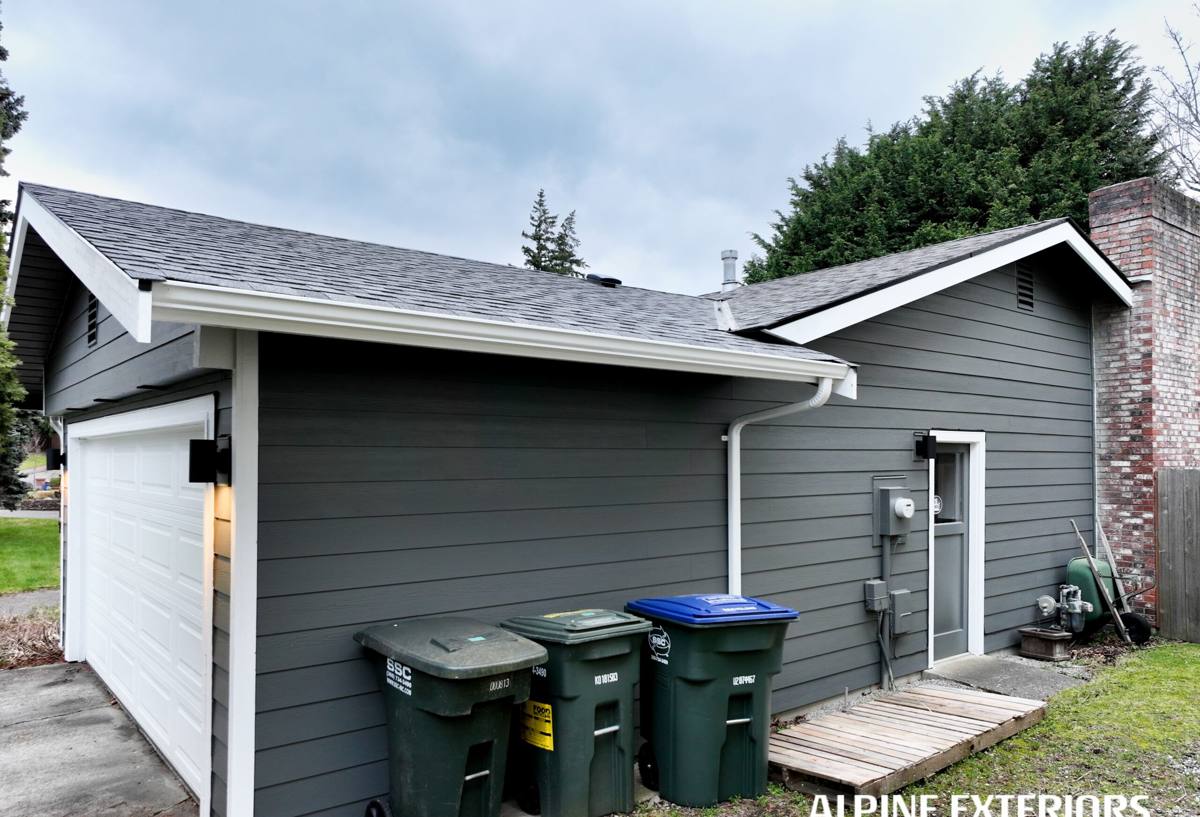
What Lynden's Climate Actually Does to Vertical Siding
Lynden sits close enough to the coast to catch salt-laden air on windier days, and it gets the same long, wet, gray stretch of fall-through-spring weather as the rest of Bellingham and Whatcom County. Add in a shaded lot, a north-facing wall, or trees close to the house, and you get extended moss and algae growth on any surface that stays damp too long. None of that is unusual for this region — but it is hard on siding, and vertical board and batten has a couple of weak points that make it more sensitive than horizontal lap siding if it's not built right.
- Driving rain hits vertical seams differently than horizontal laps — water runs down the battens and can find its way behind a panel if the laps and gaps aren't sealed and flashed correctly.
- Salt air accelerates corrosion on exposed fasteners and low-grade trim hardware, which is one reason fastener choice matters as much as the siding panel itself.
- Moss and algae take hold fastest on porous or absorbent materials, especially on shaded elevations, and they hold moisture against the wall once established.
- Freeze-thaw swings in winter stress any siding that's already absorbed water, which is where wood-based products lose ground fastest.
A board and batten job that looks good on installation day but wasn't built for these conditions tends to show its age around year five to eight — cupping boards, swelling at the battens, moss lines under every horizontal trim piece, and paint that needs redoing well ahead of schedule.
What a Correct Board & Batten Installation Involves
Clearances and Flashing
Vertical siding needs proper clearance off grade, off roof lines, and off decks and patios — typically several inches minimum, more in areas that collect runoff. Every horizontal transition (window heads, band boards, roof-to-wall intersections) needs flashing that actually sheds water forward, not trim that just looks finished. This is the single most common corner cut on board and batten jobs, and it's invisible until moisture starts working its way in behind the wall.
Fastening and Panel Layout
Battens need to land on solid backing, with fastener spacing and placement that matches the manufacturer's engineering — not just "close enough." Panel and batten layout also needs to account for expansion gaps appropriate to the material, since a board and batten wall with no room to move will eventually telegraph stress cracks at every seam.
Moisture Management Behind the Siding
Correct water-resistive barrier detailing and drainage behind the panel matters more on vertical siding than people expect, because any water that does get past the face needs a clear path down and out — not a place to sit against the sheathing. This is wall-assembly work, not siding-panel work, and it's where an experienced crew shows its value most.
Why We Only Install Board & Batten in James Hardie Fiber Cement
We get asked from time to time about board and batten in cedar, LP SmartSide, or vinyl panel systems. All of them can look the part on day one. Our standard is James Hardie fiber cement, and here's the honest reasoning behind it — not a knock on other products, just the trade-offs that matter in this climate.
| Material | Behavior in Salt Air & Long Wet Seasons | Moss & Algae Resistance | Long-Term Maintenance |
|---|---|---|---|
| Cedar board & batten | Attractive natural material, but absorbs moisture and is sensitive to correct back-priming and sealing at every cut edge | Prone to moss and mildew without regular cleaning and refinishing | Repainting/staining on a recurring cycle; edge sealing needs upkeep |
| Engineered wood (e.g. LP SmartSide) | Engineered core is more moisture-tolerant than raw wood but still an organic substrate that depends on intact factory coating and sealed edges | Better than raw cedar, still needs clean edges and good drainage detailing | Field-cut edges need sealant maintenance; coating touch-up over time |
| Vinyl board & batten panel | Won't rot, but can warp or fade with UV and temperature swings; seams rely on interlocking panel fit rather than a solid substrate | Smooth surface resists some growth, but shaded/damp walls still collect moss in panel channels | Low upkeep, but damaged panels are hard to color-match and repair invisibly |
| James Hardie fiber cement | Non-combustible, dimensionally stable cement-based material engineered for wet Pacific Northwest-style climates (HZ5 product line) | Dense, factory-finished surface resists moisture absorption better than wood-based products | ColorPlus factory finish is designed to hold color and resist fading without a repaint cycle |
Fiber cement isn't magic — it still has to be installed with correct clearances, flashing, and fastening to perform. But as a base material for a vertical board and batten wall in this climate, it gives us a product that doesn't rely on paint film alone to keep water out, and that carries a manufacturer warranty backing the material itself. That's why it's the only board and batten system we put on a home.
Our Process for a Lynden Board & Batten Project
- On-site assessment: we look at wall orientation, drainage, existing moisture damage, and how much shade and moss exposure each elevation actually gets.
- Detailing plan: we plan flashing, clearances, and panel layout before a single board goes up — not as an afterthought.
- Tear-off and inspection: once old siding is off, we check sheathing and framing for hidden rot or moisture damage before closing the wall back up.
- Weather barrier and drainage layer: installed to manufacturer spec, with attention to how water will actually move if it gets behind the panel.
- Hardie board & batten installation: panels and battens fastened to spec, with correct gaps and backing.
- Trim, caulking, and final detail work: the finishing details that determine whether the wall sheds water for the next several decades.
- Walkthrough: we go over the finished work with the homeowner and explain any maintenance specific to that home's exposure.
Maintenance That Actually Matters After Installation
Even the right material benefits from a little seasonal attention, especially with Whatcom County's moss season. A correctly installed Hardie board and batten wall needs far less than wood, but it's not zero-maintenance.
- Rinse shaded or north-facing walls periodically to keep moss and algae from establishing.
- Keep gutters clear so overflow isn't running down the siding face.
- Trim back vegetation and tree cover that keeps a wall section damp longer than the rest of the house.
- Have caulking and trim joints checked every few years, since sealant is the one component that does wear over time.
- Address any impact damage promptly rather than letting a chip sit exposed through a wet season.
Why Hiring a Crew That Already Works in Lynden Matters
Board and batten installation isn't complicated in theory, but the details that make it last — flashing sequence, drainage behind the panel, fastener choice for salt-air exposure — are the kind of thing a crew gets right consistently only after doing it repeatedly in this exact climate. A crew that mostly installs in drier inland regions doesn't build the same habits around moisture management that a crew working Whatcom County year-round does. Local experience shows up in the small decisions: how much clearance to leave at grade, how to detail a roof-to-wall transition that catches runoff, which elevations need extra attention because of shade and moss exposure.
We work on homes throughout the Bellingham area, including Lynden, and we bring the same standard to every one: James Hardie fiber cement, installed to spec, with the flashing and drainage details that this climate actually requires — not just the ones that are easiest to skip.
If you're considering board and batten siding for a Lynden home, we're happy to take a look and give you a straightforward, no-pressure estimate — just fill out the form below.