 Bellingham Exterior
 Roof Repair Built Around How Lynden Actually Weathers
Lynden sits inland from Bellingham Bay, out toward the farmland and river bottoms of Whatcom County, and that position changes what a roof deals with over the years. You get less direct salt exposure than homes right on the water, but you make up for it with heavy tree cover, low-lying moisture, and long stretches of overcast, drizzly weather that never quite dries a roof out. Add in the driving rain that comes through with fall and winter storms off the Sound, and you have a climate that's tough on roofs in a quiet, cumulative way rather than through any single dramatic event.
Most of the roof repair calls we get in this area aren't from wind ripping shingles off in one afternoon. They're from small problems — a cracked pipe boot, a lifted shingle tab, moss holding water against a ridge — that sat unnoticed through one wet season too many and turned into a leak. Repair work here is really about catching and correcting that slow damage before it reaches the decking or the interior of the house.
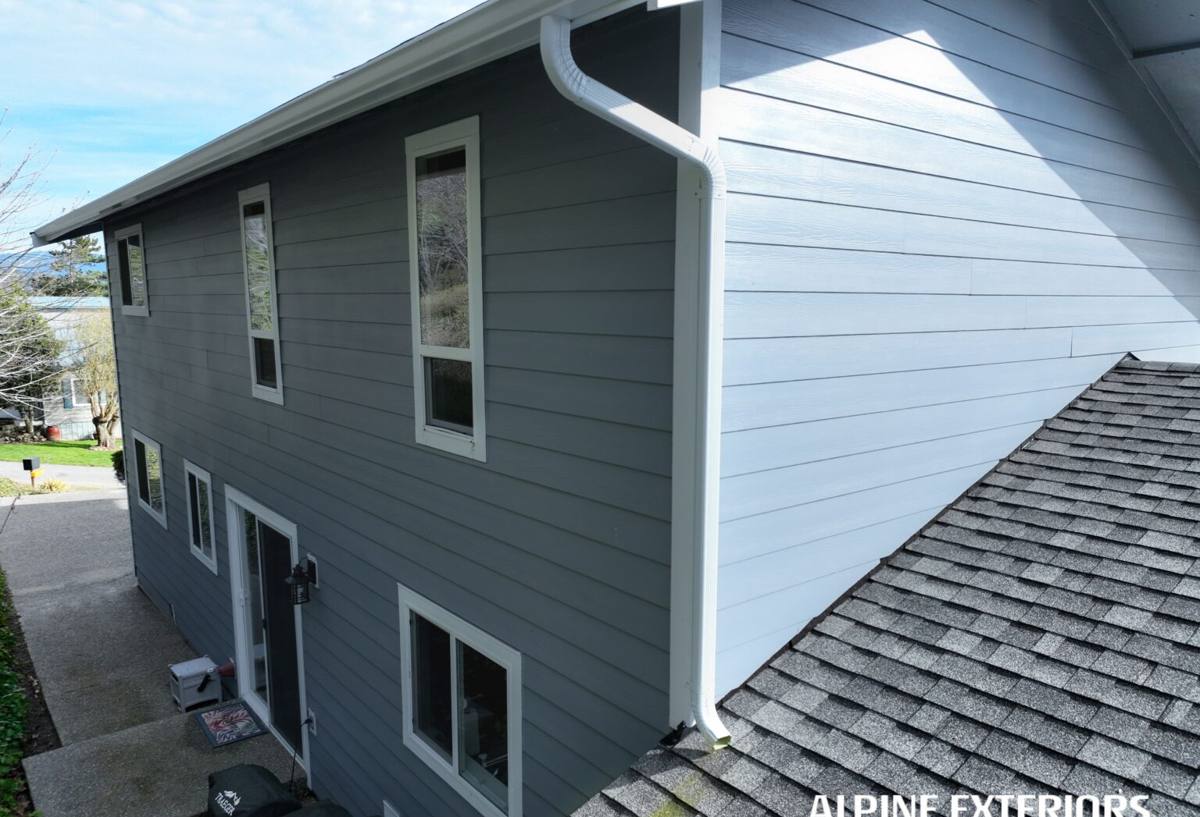
What Lynden's Climate Actually Does to a Roof
A Long, Wet Moss Season
Whatcom County's moss season runs long — realistically most of the fall through spring on a north-facing slope or a roof shaded by mature trees. Moss holds moisture against shingles and roofing felt far longer than open air would, which softens granule adhesion, degrades the mat underneath, and eventually works its way under tabs and along ridge caps. It also blocks proper water flow at valleys, which is one of the more common leak points we find on repair calls.
Driving Rain and Wind-Driven Water
Rain that comes in at an angle behaves differently than straight-down rain. It can push up under shingle tabs, find its way behind poorly lapped flashing, and drive water sideways into vents, skylights, and chimney counterflashing that would otherwise shed water fine in calmer weather. This is why so many "mystery leaks" in this area trace back to flashing and edge details rather than the shingle field itself.
Humidity and Slow Drying
Even without salt air being the primary factor here, the general marine-influenced humidity of the region means roofs dry slowly after rain. Trapped moisture under debris, in valleys, or around poorly sealed penetrations has more time to do damage before it ever fully dries out, which is part of why regular inspection matters more here than in a drier climate.
What a Correct Roof Repair Actually Involves
A repair that actually holds up in this climate isn't just patching the spot where water showed up inside the house. Water travels — a stain on a ceiling can originate several feet away at a valley, vent, or ridge. A correct repair process looks like this:
- Locate the true entry point, not just the visible symptom, by tracing the roof deck and framing from the interior stain or damage outward
- Inspect surrounding shingles, flashing, and underlayment for secondary damage, not just the immediate failure point
- Remove and replace damaged materials down to sound decking — never patch over wet or compromised wood
- Re-flash penetrations (vents, chimneys, skylights) with correct step and counterflashing, not just fresh sealant over old metal
- Match replacement shingles as closely as possible in profile and color so the repair doesn't stand out or create a weak seam
- Clear moss and debris from the surrounding area so the repair isn't immediately undermined by the same conditions that caused the original failure
Sealant alone is rarely a real fix. It's a reasonable short-term measure in a few situations, but if a repair is "sealant over the problem" without addressing flashing or decking underneath, it's going to fail again — usually within a season or two, often at the worst possible time of year.
How Our Process Works
1. On-Site Inspection
We walk the roof (or inspect from a lift or ladder when pitch or condition makes walking it unsafe) and look at the whole system — shingles, flashing, vents, valleys, gutters, and any visible moss or debris buildup — not just the spot the homeowner called about.
2. Honest Diagnosis
We tell you what's actually wrong, what caused it, and whether it's a straightforward repair or a sign of broader wear that means repair is only buying time. We'd rather tell you a repair is the right call and mean it, than upsell a replacement you don't need yet — or the reverse.
3. Written Estimate
You get a clear scope of work and price before anything starts. No verbal-only quotes, no surprise add-ons once we're on the roof.
4. The Repair Itself
We remove damaged material, address the deck if needed, re-flash correctly, and install matched materials. We clean up moss and debris in the repair area as part of the job, not as a separate upsell.
5. Final Walkthrough
We show you what was done and why, and flag anything else on the roof worth keeping an eye on going forward.
What Roof Repair Typically Costs — and What Drives the Range
Every repair is different, but the price is generally driven by a handful of factors rather than square footage alone. Here's how those factors typically play out:
| Factor | Lower End | Higher End |
|---|---|---|
| Scope | Single flashing or small shingle patch | Multiple leak points or deck replacement needed |
| Access | Simple, walkable low-slope area | Steep pitch or multi-story access requiring lift/staging |
| Material match | Common shingle still available/matches easily | Discontinued or unusual shingle profile requiring blending |
| Underlying damage | Deck is sound, surface repair only | Rot or moisture damage requiring deck replacement |
| Roof age/condition | Isolated issue on an otherwise sound roof | Roof nearing end of life, repair is one of several needed |
As a very rough guide, small isolated repairs (a boot, a section of flashing, a handful of shingles) often land in the low hundreds of dollars, while repairs involving deck replacement, multiple leak points, or difficult access can run into the low thousands. The only way to get a real number is a site visit — anything quoted without seeing the roof is a guess.
Moss and Debris: The Maintenance That Prevents the Next Repair Call
Given how long moss season runs here, the single most effective thing a Lynden homeowner can do between repairs is keep the roof clear. A repair fixes what's already broken; maintenance is what keeps the next repair from happening on schedule instead of by surprise.
- Have moss treated or removed at least once a year, more often on shaded or north-facing slopes
- Keep gutters and valleys clear of needles and leaf debris, especially heading into fall storms
- Trim back overhanging branches to reduce shade, debris, and physical abrasion on the roof surface
- Check attic ventilation — poor airflow traps moisture and accelerates decking and shingle wear from underneath
- Schedule a walk-through inspection every year or two, even with no visible leak, so small issues get caught while they're still small repairs
Why It Matters That We Already Work in Lynden
A crew that regularly works roofs in this part of Whatcom County has already seen how the local moss cycle, tree cover, and rain patterns play out on real houses, not just in general roofing theory. That familiarity shows up in a few concrete ways: knowing which flashing details tend to fail first in this climate, knowing what a normal versus problematic moss buildup looks like for this area's typical shade and exposure, and being able to respond promptly when a storm exposes a weak spot rather than treating every job as unfamiliar territory.
It also matters for accountability. A local crew has a reputation in the community to protect and is easy to reach again if a question comes up after the work is done — which matters more with roofing than almost any other exterior trade, since problems don't always show up the same day.
When Repair Is the Right Call — and When It Isn't
Repair makes sense when the roof is fundamentally sound and the damage is isolated: a failed flashing detail, storm damage to a section, a leak traced to one clear source. It stops making sense when a roof has multiple aging systems failing around the same time, when shingles are broadly brittle or granule-worn rather than damaged in one spot, or when repair costs start approaching a meaningful fraction of what replacement would cost. We'll always tell you honestly which situation you're in rather than defaulting to whichever answer is more profitable for us.
If you're dealing with a leak, a soft spot, visible moss buildup, or storm damage on a Lynden-area roof, we're glad to take a look. The estimate is free, there's no pressure to move forward, and you'll get a straight answer about what your roof actually needs.