 Bellingham Exterior
 Lynden Roofs Face Whatcom County's Marine Climate Head-On
Lynden sits in the farm country north of Bellingham, but the roof over a Lynden home deals with the same weather system as everywhere else in Whatcom County: long stretches of low pressure moving in off the Salish Sea, months of steady drizzle, driving rain that comes in sideways during winter storms, and enough shade and moisture to keep moss and algae established for most of the year. That combination is harder on a roof than most homeowners realize. A roof that would last thirty years in a dry climate can start failing at twenty here if it wasn't built or maintained with our conditions in mind.
A roof replacement in Lynden isn't just about swapping old shingles for new ones. It's about correcting the details that let moisture in over the life of the old roof — the underlayment, the ventilation, the flashing — so the new roof actually holds up through the next few decades of Whatcom County winters.
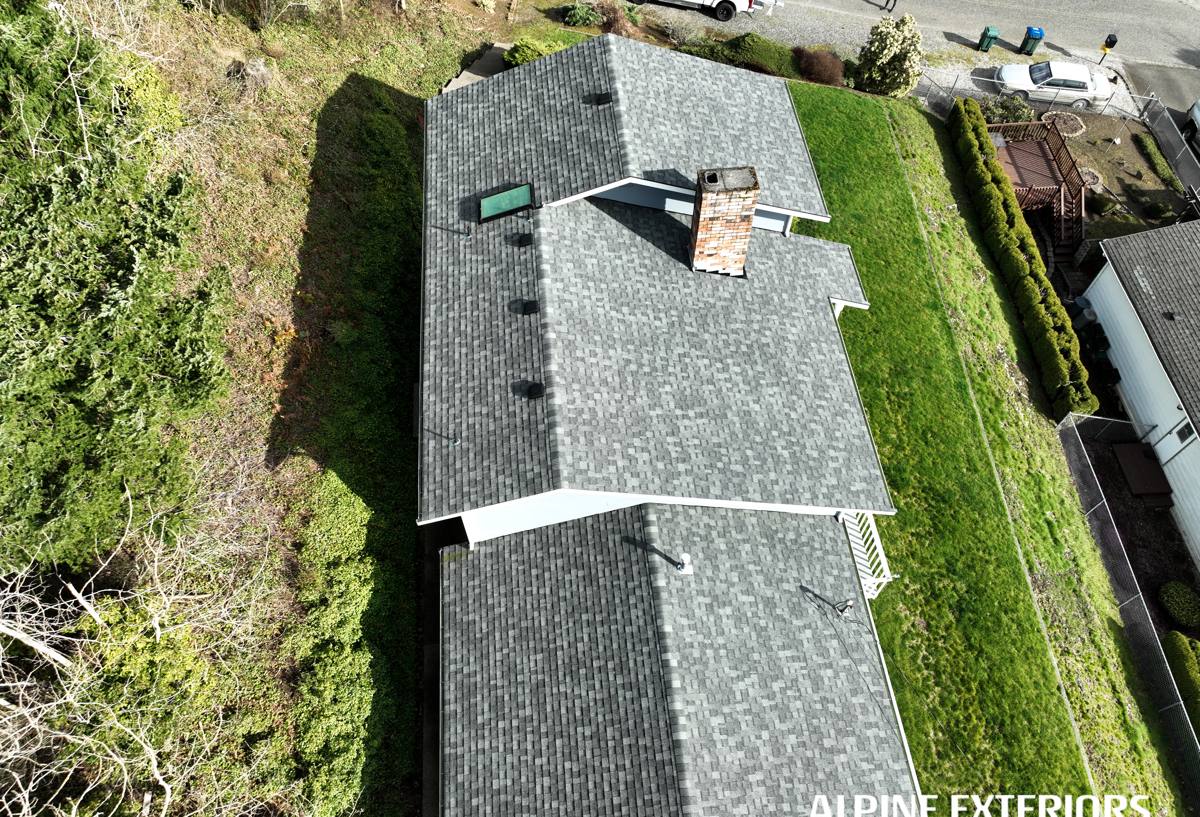
What Constant Moisture Does to an Aging Roof
Moss and Trapped Moisture
Moss doesn't just look bad. Once it takes hold on shingles, it holds water against the roof surface long after the rain stops, which keeps the shingles damp and speeds up granule loss and shingle curling. Moss also grows under shingle edges and lifts them slightly, creating a path for wind-driven rain to work its way underneath. On roofs with heavy tree cover or north-facing slopes that don't get much sun, moss can establish within a couple of seasons of a roof being cleaned.
Driving Rain and Wind-Driven Leaks
Most leaks on older Whatcom County roofs aren't from rain falling straight down — they're from rain being pushed sideways by wind, finding its way under shingle tabs, around flashing, or through nail holes that have backed out slightly over the years. This is why flashing quality and shingle sealing matter more here than in calmer, drier climates. A roof that looks fine from the ground can still be letting water in at the valleys, chimney, or vent penetrations.
Signs Your Lynden Home Needs a Full Replacement
Not every roof problem calls for full replacement — sometimes a repair is genuinely the right call. But certain signs mean patching is just delaying a bigger cost:
- Shingles that are cupping, curling, or missing granules across large sections, not just one spot
- Moss or algae that returns within a year or two of cleaning
- Daylight visible through the roof deck from inside the attic
- Soft or spongy spots when walking the roof, which usually means the decking underneath is wet
- Multiple past repairs in different areas rather than one isolated issue
- A roof approaching or past 20-25 years old, which is the realistic ceiling for asphalt shingles in this climate
- Rising energy bills alongside visible attic moisture or poor insulation performance
What a Correct Roof Replacement Actually Involves
Tear-Off and Deck Inspection
A proper replacement starts with a full tear-off down to the decking, not a layover on top of old shingles. This is the only way to see the actual condition of the plywood or OSB underneath — which matters a lot here, since a roof that's been holding a slow leak for years often has soft or rotted decking that needs to be replaced before anything new goes on. Skipping this step is one of the most common shortcuts that leads to problems five or ten years down the road.
Underlayment Built for a Wet Climate
Underlayment is the layer between the decking and the shingles, and it's your last line of defense if water does get past the surface. In a climate like Lynden's, synthetic underlayment and ice-and-water shield at eaves, valleys, and penetrations are worth the extra material cost — they handle sustained moisture far better than basic felt paper, which can absorb water and lose integrity over time.
Ventilation That Actually Moves Air
A roof deck that can't breathe traps moisture from inside the house, which condenses on the underside of the decking and rots it from below — a problem that has nothing to do with rain at all. Balanced intake and exhaust ventilation is part of doing a replacement correctly, not an optional upgrade.
Flashing and Edge Detail
Chimneys, skylights, valleys, and roof-to-wall transitions are where the vast majority of leaks originate. Correct flashing work — properly lapped, sealed, and tied into the underlayment — is what separates a roof that holds up through Whatcom County storms from one that starts leaking in the first hard winter.
Choosing a Roofing Material for Lynden's Weather
Material choice affects how a roof handles moss, moisture, and wind over its lifespan. Here's how the common options compare for a Lynden home:
| Material | Typical Lifespan Here | Moss/Moisture Behavior | Notes |
|---|---|---|---|
| Architectural asphalt shingles | 20-30 years | Good with proper ventilation and periodic cleaning; algae-resistant granules help | Most common choice; wide range of price points and colors |
| Metal (standing seam or panel) | 40-60+ years | Sheds moisture and moss struggles to establish on smooth surfaces | Higher upfront cost; performs very well in driving rain |
| Synthetic/composite shingles | 30-50 years | Resists moisture absorption better than standard asphalt | Good middle ground on cost and durability |
| Wood shake | 15-25 years in this climate | Holds moisture and is prone to moss and rot without diligent upkeep | Requires the most ongoing maintenance in a wet climate |
There's no single "best" answer — it depends on your budget, how long you plan to stay in the home, and how much ongoing maintenance you want to take on. We'll walk through the honest trade-offs for your specific roof rather than pushing one product for everyone.
How We Handle a Roof Replacement in Lynden
Inspection and Estimate
We start by getting on the roof, not just looking at it from the ground. That means checking the decking condition where accessible, the state of the flashing, ventilation setup, and how the current roof has actually performed through past storms. The estimate we give reflects what your roof needs, not a generic package.
Protecting Your Property
Tear-off is messy work. We protect landscaping, gutters, and the ground around the house, and we run a magnetic sweep for nails and debris before we consider the job finished.
Installation
Tear-off, deck repair where needed, underlayment, flashing, and the new roofing material go on in sequence, with attention paid to the details — valleys, penetrations, ventilation — that determine whether the roof holds up through years of Whatcom County winters, not just how it looks on day one.
Final Walkthrough
We walk the property with you at the end, review the work, and go over any manufacturer warranty paperwork and basic maintenance expectations so there are no surprises later.
What Drives the Cost of a Lynden Roof Replacement
Every roof is different, so we won't quote a number without seeing yours, but these are the factors that move the price up or down:
- Roof size and the number of facets, valleys, and penetrations
- Pitch and accessibility — steeper or harder-to-reach roofs take more time and safety setup
- Whether the decking underneath needs partial or full replacement
- Material choice, from standard architectural asphalt up through metal or synthetic products
- Underlayment and ventilation upgrades needed to bring an older roof up to current standards
- Layers of existing roofing to remove during tear-off
We break these out clearly in any estimate so you know what you're paying for and why, rather than getting a single lump-sum number with no explanation.
Why Local Experience on Lynden Roofs Matters
A crew that works Whatcom County regularly has already seen how different products and details hold up through our specific weather — the moss, the wind-driven rain off the Salish Sea, the long stretches of gray, damp weather that never quite dries a roof out completely. That experience shows up in small decisions: how much ice-and-water shield to use and where, how to detail a valley for our rain patterns, which ventilation setup actually keeps a deck dry through a Whatcom County winter. Those are the details that separate a roof that needs attention again in eight years from one that goes the full distance.
If you're weighing a repair against a full replacement, or just want a straight assessment of where your roof actually stands, we're happy to take a look. Fill out the form below for a free, no-pressure estimate on your Lynden home.