 Bellingham Exterior
 Storm Damage in Lynden: What Makes It Different
Lynden sits out in the Nooksack River valley, in the open farmland of Whatcom County, which means roofs here take wind from a different angle than homes closer to Bellingham Bay. When a Pacific storm system pushes through, it can bring sustained wind across open fields with almost nothing to slow it down before it hits a roofline. That's a different stress pattern than what a roof in a sheltered, tree-lined neighborhood deals with, and it's why storm damage in Lynden often shows up as lifted or torn shingle edges along entire slopes rather than a single isolated spot.
At the same time, Lynden shares the same marine-influenced weather as the rest of Whatcom County. Storms rolling in off the Strait bring driving rain that doesn't fall straight down — it gets pushed sideways into laps, seams, and flashing that were never designed to handle water moving in that direction. Combine that with the long stretches of damp, low-sun weather typical of a Pacific Northwest fall and winter, and you get a roof that's under near-constant pressure even between named storms.
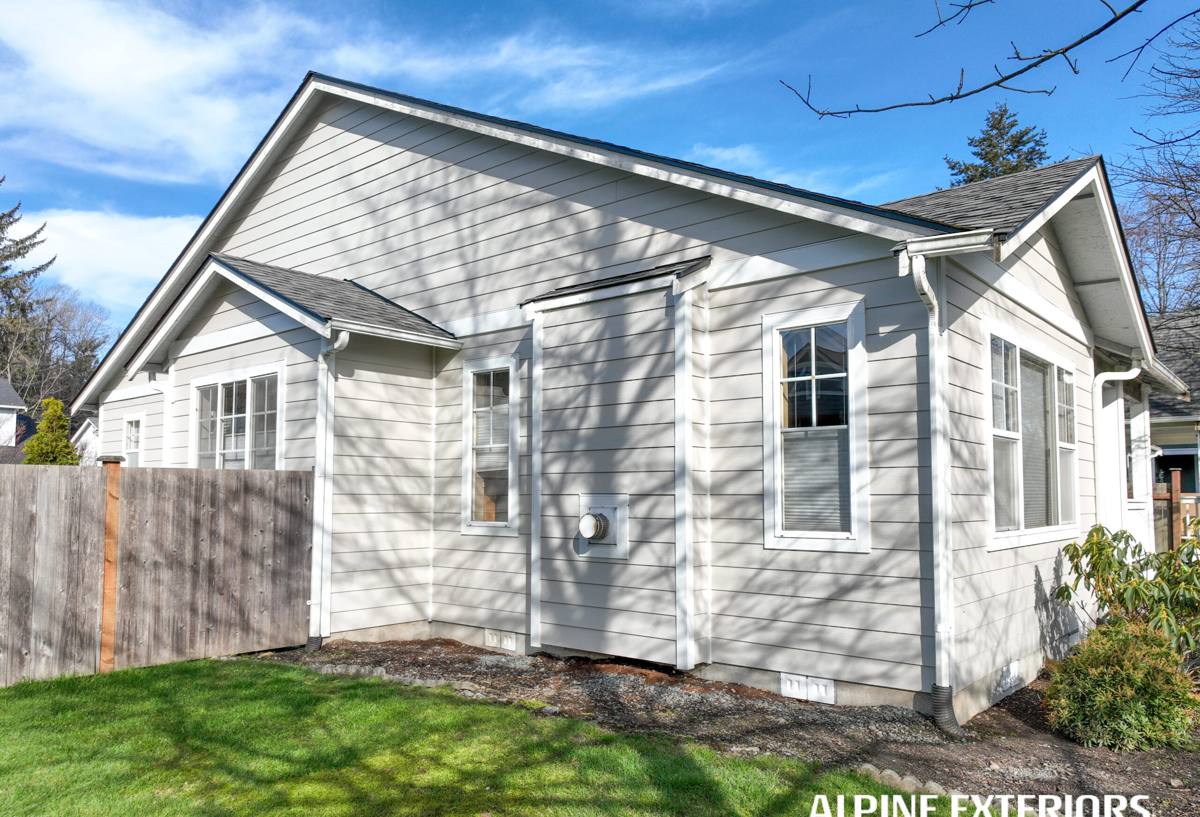
What Actually Counts as Storm Damage
Not all storm damage is obvious from the ground, and not every roof problem after a windy week is actually storm-related. Here's what we're specifically looking for on a storm damage call:
- Shingles that are lifted, creased, torn, or missing outright, especially along ridges, edges, and slopes facing the prevailing wind
- Cracked or bruised shingle mats from wind-driven debris or, less commonly in this area, hail
- Flashing knocked loose or bent around chimneys, skylights, and vent pipes
- Granule loss heavy enough to expose the underlying asphalt mat
- Punctures or dents from falling branches or debris
- Gutters pulled loose or clogged in a way that's backing water up under the roof edge
- Water stains, dampness, or daylight visible from inside the attic
Some of this is easy to spot with binoculars from the yard. Some of it only shows up once someone is actually on the roof or in the attic looking for it, which is why we don't recommend guessing based on a driveway inspection alone.
Why Whatcom County's Climate Makes Small Damage Get Worse Fast
A small storm injury on a roof rarely stays small here. Whatcom County's long moss season is part of the problem — moss doesn't just look bad, it holds moisture directly against the shingle surface and works its way under lifted edges, prying them up further and giving water a path underneath. A shingle that was just barely dislodged in a windstorm can be fully compromised within a season or two if moss gets a foothold in the gap.
Driving rain adds to it. Water pushed sideways by wind finds the smallest opening — a lifted tab, a gap in flashing, a nail that backed out — and works its way in well before it ever shows up as a stain on your ceiling. Closer to Bellingham Bay, salt-laden air also speeds up corrosion on exposed fasteners and metal flashing; Lynden is far enough inland that this is less of a factor, but the general humidity and near-constant dampness across the county still shortens the life of any metal component that's already been compromised by storm impact.
Then there's freeze-thaw. It doesn't happen often here, but when a wet stretch is followed by a hard overnight freeze, any water that's already worked its way into a crack or seam expands and pushes the damage further. A repair that gets handled before the next freeze is a lot cheaper than one that gets handled after.
What a Correct Storm Damage Repair Actually Involves
Emergency Mitigation
If a roof is actively leaking or has an open section exposed to weather, the first job is stopping water from getting further into the structure — tarping, temporary flashing, or a quick patch — not a full repair. This buys time to do the real work correctly instead of rushing it in bad weather.
A Full Inspection, Not Just the Obvious Spot
Storm damage rarely stays confined to the spot you can see from the ground. A proper inspection covers the full roof, not just the damaged section, and includes a look at the attic side for staining, damp decking, or daylight coming through anywhere it shouldn't.
Matching Materials and Correct Tie-In
A repair is only as good as how it ties into the existing roof. That means matching shingle profile and color as closely as possible, reinstalling step and counter flashing correctly rather than just caulking over a gap, and using proper underlayment at the repair zone so the new section sheds water the same way the rest of the roof does. Caulk and sealant have their place, but they're not a substitute for flashing done right — sealant fails quietly, and it usually fails from the inside out where you can't see it happening.
Cleanup and Verification
The job isn't done until the debris is cleared, the gutters are checked for granules and debris from the repair, and someone has confirmed — from the attic side if needed — that the fix actually stopped the water.
Our Process for Storm Calls in Lynden
- Initial call and triage — we ask what happened, when, and whether there's active water intrusion, so we can prioritize genuine emergencies.
- On-site inspection with documentation — we photograph and measure the damage in a way that holds up if you end up filing an insurance claim, not just a verbal assessment.
- A written scope of work — what's damaged, what needs to be done, and what it will cost, before any repair work starts.
- Repair or temporary protection, then scheduled repair — if materials need to be ordered or weather won't cooperate, we tarp properly first rather than leaving a roof exposed while we wait.
- Final walkthrough — we confirm the repair with you before considering the job finished, including a look at the attic side if that's where the damage was showing up.
What Drives the Cost of a Storm Damage Repair
| Factor | Why It Matters |
|---|---|
| Extent of damage | A handful of shingles is a different job than an entire wind-damaged slope |
| Roofing material | Matching an existing asphalt shingle is usually straightforward; matching an older or discontinued product can require blending or a larger repair area |
| Roof pitch and access | Steeper or harder-to-reach roofs take more time and safety setup |
| Deck condition underneath | If water has already reached the sheathing, that gets addressed before new shingles go down — patching over soft decking doesn't hold |
| Insurance involvement | Claims add a documentation step but can significantly offset your out-of-pocket cost |
| Timing | True emergency work during active weather costs more than a scheduled repair once the storm has passed |
Working With Your Insurance Company
Most storm damage claims come down to documentation. Adjusters want clear photos, a specific description of what happened and when, and a scope of work that matches what they're seeing — not a padded estimate. We write our scopes the same way whether insurance is involved or not, because an honest scope is the one that actually holds up under review. If an adjuster wants to meet on-site, we're glad to walk the roof with them and point out exactly what we found.
After the Storm: What to Check Before You Call
- Do not climb onto the roof yourself, especially in wet or windy conditions
- Photograph any visible damage from the ground, including missing shingles or debris in the yard
- Check your attic for damp insulation, water stains, or visible light coming through the roof deck
- Look in the gutters for an unusual amount of granules or shingle fragments
- Note any large branches or trees that came into contact with the roof, even if they didn't fall
- If there's an active interior leak, place a bucket and move anything valuable out of the way
- Hold off on permanent patches until a full inspection has been done — a quick fix can hide the real extent of the damage
Why Hiring a Crew That Already Works Lynden Matters
After a bad windstorm, it's common for crews from well outside the area to show up going door to door offering fast repairs. Some of that work is fine. A lot of it isn't, and once that crew has moved on to the next storm in the next county, there's often nobody local to call if the repair doesn't hold. A crew based here in Whatcom County has a reason to stand behind the work — we're not driving off after the check clears, and if a repair needs a follow-up visit, we're a short drive away, not a phone number that stops answering.
We also already know what this climate does to a roof over time, because we see it on homes across Bellingham and the surrounding communities every year. That familiarity means less guesswork on your roof and a repair that's built for how weather actually behaves here, not a generic fix pulled from a different climate.
If a recent storm left your Lynden home with damage, we're happy to take a look and give you an honest, no-pressure assessment of what it needs. There's a free estimate form below — reach out and we'll get you scheduled.