 Bellingham Exterior
 Composite Decking Built for Birchwood's Weather, Not Against It
Birchwood homeowners deal with a specific combination of conditions: salt-tinged air drifting in off the water, driving rain that comes in sideways more often than straight down, and a moss season that seems to stretch longer every year. A deck built without those conditions in mind will show it within a few seasons — soft spots, green film, fastener corrosion, boards that cup or gap unevenly. Composite decking, installed correctly for this climate, is one of the few deck systems that can shrug off all three without demanding constant upkeep from you.
This page is about one thing: composite decking for homes in and around Birchwood. Not a national overview of decking products, not a generic "why composite is great" pitch. Just what actually matters for a deck built in this part of Bellingham, and what a correct installation looks like here.
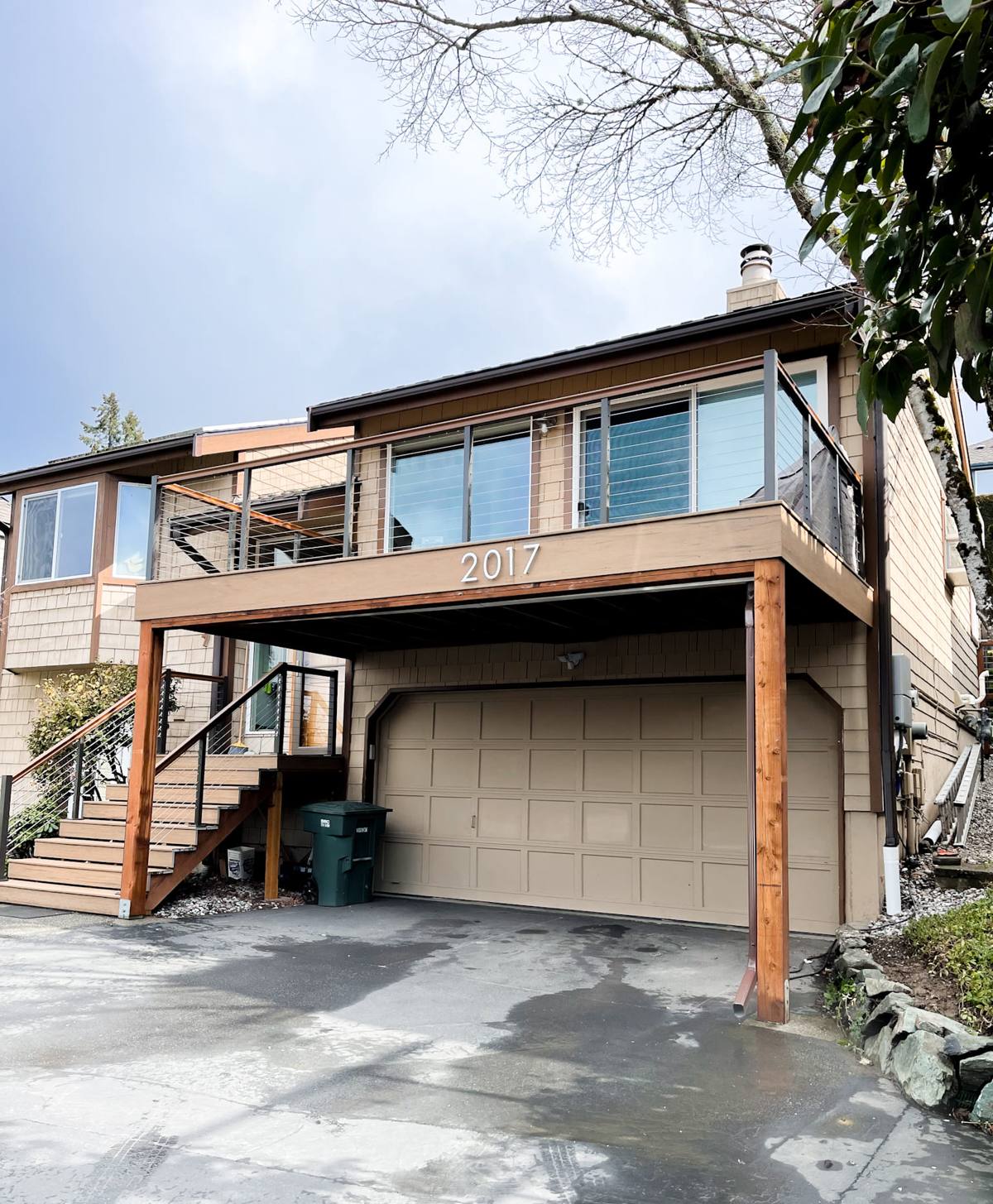
Why Whatcom County Weather Is Hard on Decks
Bellingham's marine climate is mild compared to a lot of the country, but "mild" doesn't mean easy on building materials. A few things stack up against decks specifically:
- Salt air: Proximity to the water means airborne salt settles on every exterior surface, including fasteners, flashing, and railing hardware. Over time this accelerates corrosion on anything not rated for coastal exposure.
- Driving rain: Wind-driven rain doesn't just fall on a deck surface — it gets pushed underneath railings, into board gaps, and against ledger connections. Drainage and gapping have to be planned for wind-blown water, not just vertical rainfall.
- Long moss season: Shade, moisture, and cool temperatures are exactly what moss and algae need. A north-facing deck or one shaded by mature trees can stay damp for days after a storm, which is prime moss territory if the board surface and airflow underneath aren't right.
- Freeze-thaw swings: Whatcom County doesn't get brutal winters, but it does get repeated freeze-thaw cycles. Moisture that gets trapped in a joint or fastener hole and then freezes will work that connection loose over a few seasons.
None of this is unique to Birchwood, but it's more pronounced the closer a home sits to open water or low-lying, shaded ground — both common in this part of Bellingham.
What a Correct Composite Deck Installation Actually Involves
Composite boards themselves are low-maintenance, but the deck as a system is only as good as what's underneath and around them. This is where most of the long-term performance — or long-term problems — get decided.
Substructure and Framing
Composite is heavier than most people expect, and it doesn't add structural strength the way solid wood decking can in some spans. We frame to the joist spacing the manufacturer specifies for composite (often tighter than standard wood-deck spacing), and we use framing lumber or coated fasteners rated to resist the moisture load this climate puts on a substructure year-round.
Ventilation and Drainage
A composite deck built low to the ground, over a patio, or in a shaded yard needs real airflow underneath it. Without it, moisture sits, temperatures stay cool, and moss and mildew get a head start on the underside of the boards and the framing itself. We plan gapping, joist height, and skirting with airflow in mind, not just appearance.
Fastening and Hidden Clips
Most composite systems use hidden fastener clips rather than face screws, which gives a cleaner look and avoids the exposed metal points where corrosion and water intrusion typically start. In a salt-air environment, we use fasteners and clips rated for coastal or high-corrosion exposure — not just what's cheapest at the yard.
Flashing at the Ledger Board
If the deck attaches to the house, the ledger board connection is the single most common source of hidden water damage on any deck, wood or composite. Correct flashing here — installed so water sheds away from the house framing, not into it — matters more in a driving-rain climate than almost anything else on the project.
Choosing the Right Decking Material for a Birchwood Home
We install composite because, for this climate, it holds up with the least amount of homeowner effort over time. But it's worth understanding the honest trade-offs against the alternatives so you know what you're choosing.
| Material | Upfront Cost | Maintenance | Salt Air / Moisture Behavior | Typical Lifespan |
|---|---|---|---|---|
| Pressure-treated wood | Lowest | Annual staining or sealing required | Prone to warping, splitting, and fastener corrosion near the coast | 10-15 years before major repairs |
| Composite (capped) | Mid to upper-mid | Occasional washing, no staining/sealing | Resists moisture absorption; caps resist salt residue and moss staining | 25-30+ years, manufacturer warranty backed |
| PVC decking | Highest | Very low | Fully moisture-proof but can flex/expand more with temperature swings | 25-30+ years |
Within composite specifically, board quality varies. We favor capped composite boards — where a protective polymer shell wraps the wood-composite core — over uncapped or budget composite, because the cap is what actually resists moss staining, moisture absorption, and salt residue over the long run. Uncapped composite can still absorb enough moisture in this climate to swell, discolor, or support surface growth well before the board's rated lifespan is up.
Our Installation Process
- On-site assessment: We look at sun exposure, drainage slope, proximity to mature trees or shaded areas, and how close the site sits to salt air exposure, then walk you through what that means for board choice, framing, and fastener hardware.
- Structural plan: Ledger connection, joist layout, footings, and ventilation are planned to the composite manufacturer's specs and to what this ground and climate actually require — not a generic template.
- Framing and flashing: We build and flash the substructure first, checking drainage paths before a single composite board goes down.
- Board installation: Boards are installed with correct gapping for expansion, drainage, and airflow, using coastal-rated hidden fasteners.
- Railing, stairs, and trim: Hardware is matched to the same corrosion-resistance standard as the deck fasteners — mismatched hardware is a common source of early rust staining.
- Final walkthrough: We go over basic care with you, including what to expect from the specific board line installed, before we call the job done.
Living With a Composite Deck in a Salt Air, High-Moss Climate
Composite decking dramatically cuts down on maintenance compared to wood, but "low-maintenance" isn't "no-maintenance," especially this close to the water and under this much rain and shade. A little seasonal attention keeps a composite deck looking and draining the way it should for its full warranty life.
- Rinse the deck surface periodically to clear salt residue and airborne grime before it builds up in the board texture.
- Sweep or blow off fallen leaves and needles promptly — trapped organic debris is what actually feeds moss and algae growth, not the board material itself.
- Clean visible moss or algae with a soft-bristle brush and a cleaner rated for composite decking; avoid pressure washing at close range, which can damage the cap surface.
- Check that gaps between boards and any under-deck vents stay clear of debris so airflow keeps working as designed.
- Inspect railing posts and fastener points once a year for any early rust staining, which usually signals a hardware issue worth catching early rather than living with.
Mistakes We Commonly Find on Older or DIY Decks in This Area
When we're called out to repair or replace an existing deck in this part of Bellingham, a handful of issues show up again and again:
- Standard interior-grade fasteners used instead of coastal-rated hardware, leading to rust streaking within a few years.
- Decks built tight to the ground or over solid patios with no ventilation path, trapping moisture and accelerating moss growth on the underside.
- Ledger boards flashed incorrectly or not at all, with water damage discovered only after it reached the house framing.
- Uncapped or budget composite boards chosen for upfront savings, then replaced early once staining and surface wear set in faster than expected.
Every one of these is preventable with correct planning at the framing stage — which is also why a deck's long-term performance is decided long before the composite boards themselves ever go down.
Why It Matters to Hire a Crew That Already Works in Birchwood
Composite decking installation isn't exotic work, but doing it right in this specific climate takes more than following a generic manufacturer diagram. A crew that regularly works Birchwood and the surrounding Bellingham area already knows how far the salt air reaches inland on a given lot, which yards hold moisture longest through the moss season, and which fastener and flashing details actually hold up here versus what merely meets code on paper. That local pattern recognition is what keeps small decisions — joist spacing, gap width, hardware grade — from turning into callbacks two winters later.
It also means we're accountable locally. If something about your deck needs attention after installation, we're not a crew that drove in from out of the area for one job and moved on.
Get a Free, No-Pressure Estimate
If you're planning a new composite deck or replacing one that hasn't held up to Birchwood's weather, we're happy to take a look and walk you through what your specific site needs — no pressure, no obligation. Use the form below to request a free estimate.