 Bellingham Exterior
 Board & Batten Siding for Cordata Homes
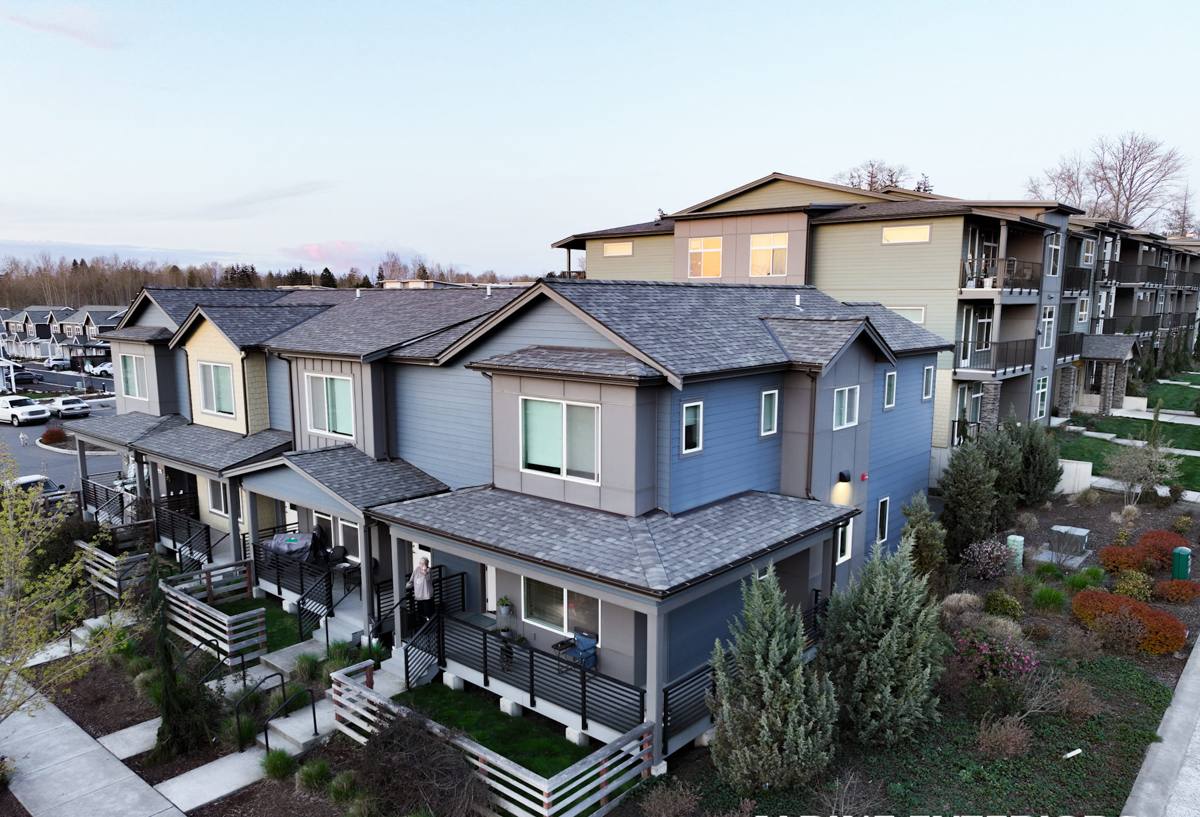
Cordata sits in north Bellingham, a mix of newer construction, mid-century ranches, and craftsman-style homes where board & batten is a popular way to add vertical texture — whether as a full exterior treatment or an accent on gables, entries, and dormers. The look is simple: wide flat boards run vertically with narrower battens covering the seams between them. Done right, it gives a home a clean, modern-farmhouse or craftsman character that holds up in Whatcom County weather. Done wrong, it's one of the more failure-prone siding profiles in our region, because every seam and batten strip is a place water can get behind the cladding.
This page covers what board & batten actually needs to survive Bellingham's climate, what a correct installation looks like, and why we install it exclusively in James Hardie fiber cement rather than wood, vinyl, or engineered wood products.
What Bellingham's Climate Does to Board & Batten Siding
Whatcom County sits right on Bellingham Bay, and homes in and around Cordata deal with a specific combination of stresses that board & batten siding is more sensitive to than standard horizontal lap siding:
- Salt air: Proximity to Puget Sound means airborne salt accelerates corrosion on fasteners, flashing, and any exposed metal trim — a real issue on a profile with more vertical seams and more fastener penetrations than lap siding.
- Driving rain: Wind-driven rain off the water doesn't just fall straight down — it pushes sideways into vertical seams and batten joints, which is exactly where board & batten is weakest if the water-resistive barrier and flashing details aren't done correctly.
- Long moss season: Tree cover and persistent damp shade common in this part of Whatcom County keep north- and east-facing walls wet for long stretches of the year, which feeds moss and mildew growth on any surface that can't dry out between rains.
None of this makes board & batten a bad choice for a Cordata home. It means the material and the installation both have to be matched to the exposure the wall actually gets.
Why the Material Choice Matters More on This Profile
Board & batten has roughly twice the vertical seams of the same wall run in lap siding, and every batten strip is fastened through the field of the board below it. That's more penetrations, more joints, and more opportunities for water to find a path behind the cladding if the material swells, cups, or the caulk joint fails.
This is why we don't offer board & batten in primed spruce, cedar, LP SmartSide, vinyl, or other fiber cement brands. Real wood and engineered wood products move with moisture, and in a vertical-seam profile that movement telegraphs into open joints and paint or coating failure faster than it does on a lap profile. Vinyl board & batten is dimensionally stable in a different way — it's flexible enough to hide minor wall irregularities, but it's a thin, hollow-backed product that doesn't hold paint, dents easily, and reads as plastic up close, which undercuts the whole reason someone chooses this style. We install James Hardie fiber cement board & batten because it holds a crisp, flat profile in Whatcom County's wet-dry cycling without the swelling, cupping, or repainting cycle that wood and engineered wood products eventually need.
How the Materials Actually Compare
| Factor | James Hardie Fiber Cement | Wood / Cedar | LP SmartSide | Vinyl |
|---|---|---|---|---|
| Moisture behavior | Non-combustible, dimensionally stable; engineered for wet climates | Absorbs moisture, swells and cups at seams | Engineered wood core can swell if edges aren't sealed | Won't rot, but traps moisture behind panels if not vented |
| Finish life on vertical seams | Factory ColorPlus finish, does not need repainting on the same cycle | Repaint/reseal every few years, more often on exposed walls | Factory finish, but touch-up matching can be difficult | Color molded in, fades and chalks over time |
| Fastener corrosion resistance | Stainless/coated fasteners hold up to salt air with correct spec | Standard fasteners can bleed or corrode near the water | Similar exposure to standard fasteners | Fewer through-fasteners, but trim screws still corrode |
| Moss and mildew resistance | Inorganic material, doesn't feed organic growth | Organic material, feeds moss/mildew in shaded damp spots | Wood-based core, similar organic exposure | Non-organic, but traps moisture that promotes growth behind it |
| Typical lifespan when installed to spec | Multiple decades, backed by a strong transferable warranty | Shorter before major maintenance is needed | Manufacturer-warrantied but shorter track record in this climate | Long-lived but appearance degrades and can't be refinished |
What a Correct Board & Batten Installation Involves
The style is simple to look at, but the assembly behind it is not. On a Cordata home, we treat these as non-negotiable:
- A drainage plane behind the siding. A rain screen gap or properly lapped water-resistive barrier lets any moisture that does get past the cladding drain and dry out, instead of sitting against the sheathing.
- Correct flashing at every horizontal break. Window heads, door heads, and any transition where board & batten meets a different material need step and head flashing that actually sheds water outward, not just caulk.
- Fastening into the correct layer. Boards and battens fastened per the manufacturer's engineering — not just "close enough" — so the panel doesn't work loose or crack over time.
- Batten spacing that matches the board width. Undersized battens or inconsistent spacing isn't just a cosmetic problem — it changes how the joint below is protected from driving rain.
- Sealant used only where specified. Over-caulking a board & batten wall can trap moisture that should be draining out; under-caulking leaves gaps open to wind-driven rain. Both are common mistakes from crews that don't install this profile often.
James Hardie Options for This Profile
James Hardie makes board & batten a straightforward, climate-engineered assembly rather than a site-built compromise. Panels and battens come in a factory ColorPlus finish, so the color and texture match wall to wall without relying on field painting to hide seams. For homes in this part of Whatcom County, we spec Hardie's HZ5 formulation, engineered for wetter, harsher climates like the Pacific Northwest, rather than the standard formulation built for drier regions. Color and texture options run from smooth modern finishes to more traditional cedar-grain textures, so board & batten can be matched to a farmhouse look or a more understated craftsman exterior.
Our Process for Cordata Board & Batten Projects
- Wall assessment. Before we talk finish colors, we check what's actually behind the existing siding — sheathing condition, existing moisture damage, and how the current wall handles water, especially on north- and shade-facing sides that hold onto Bellingham's damp season longest.
- Drainage and flashing plan. We plan the rain screen strategy and flashing details for every window, door, and horizontal transition before a single board goes up.
- Install to Hardie's fastening and spacing specification. Not a generalized approach — the specific engineering for board & batten, including panel and batten fastening schedules.
- Final detailing. Trim, corners, and sealant applied only where the assembly calls for it, so the wall can drain and dry the way it's designed to.
- Warranty documentation. Installation is logged so the manufacturer's transferable warranty is valid if the home changes hands.
Questions Worth Asking Any Board & Batten Contractor
- Do you install a rain screen or drainage gap behind vertical siding, or fasten directly to the sheathing?
- What flashing detail do you use at window and door heads under board & batten?
- Is the fastening schedule specific to board & batten, or the same as your lap siding jobs?
- What formulation of fiber cement do you spec for a Puget Sound-exposure wall versus an interior, drier-climate wall?
- Will the installation be documented for manufacturer warranty registration?
Why Hiring a Crew That Already Works Cordata Matters
Board & batten failures we're called to diagnose almost always trace back to one of two things: a crew that doesn't install this profile often enough to know its specific fastening and drainage requirements, or a material that wasn't built for wet-climate cycling in the first place. A crew that already works Bellingham and greater Whatcom County has seen how local exposure — salt air off the bay, driving rain, shaded walls that hold moss and moisture longer than most — plays out on this specific siding profile, and builds the wall assembly around it instead of using a one-size-fits-all approach borrowed from drier regions.
Local familiarity also matters for the practical side of a project: knowing what the City of Bellingham and Whatcom County expect for permitting on exterior work, and pacing installation around the region's wetter months so the wall isn't left exposed during a stretch of driving rain.
Get a Straight Answer for Your Cordata Home
If you're weighing board & batten for a Cordata home, we're glad to come take a look, tell you honestly whether it's a good fit for your walls and exposure, and give you a clear, no-pressure estimate using James Hardie fiber cement built for this climate. Fill out the form below to get started.