 Bellingham Exterior
 Decking Built for the Puget Neighborhood's Weather
Homes in the Puget area of Bellingham sit in one of the more demanding microclimates for exterior wood and composite surfaces in Whatcom County. You get salt-tinged air moving off the Sound, long stretches of driving rain in the fall and winter, and a moss season that can run eight months or more if a deck never gets direct sun. None of that is unusual for this part of Washington, but it means a deck built the way it would be in a dry inland climate will not hold up the same way here. We install composite decking specifically accounting for these conditions, not as an afterthought.
This page is about one job in one area: composite deck installation for homes in and around the Puget neighborhood. We are not going to give you a generic national rundown of composite decking. We are going to tell you what actually matters for a deck that has to survive a Bellingham winter and still look good in July.
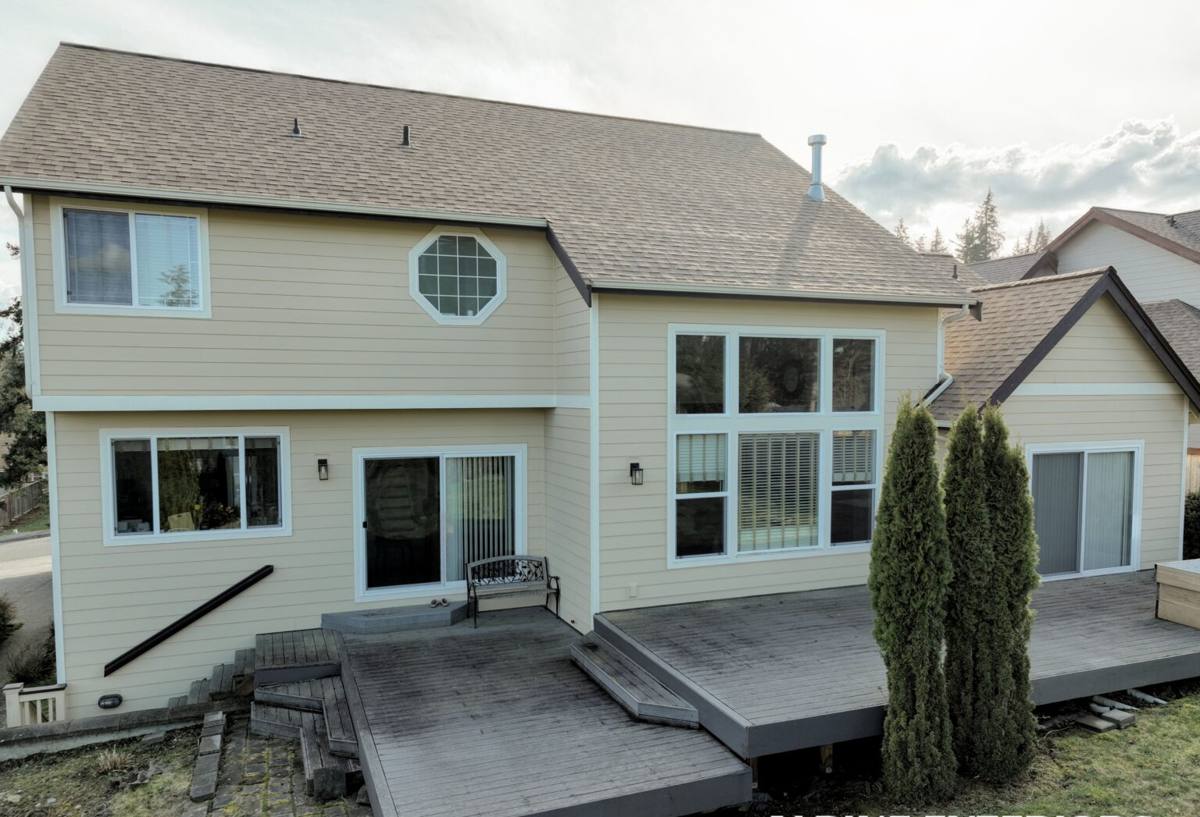
What Salt Air, Rain, and Moss Actually Do to a Deck
Each of these three factors stresses a deck differently, and a correct build addresses all three at once rather than picking one and ignoring the others.
Salt Air
Proximity to Bellingham Bay and the Sound means airborne salt settles on every exterior surface, including deck boards and fasteners. On wood decks this accelerates fastener corrosion and finish breakdown. On composite decking, the boards themselves are largely unaffected by salt, but the fasteners, flashing, and any exposed metal hardware are not — which is why hardware selection matters more here than in a dry inland install.
Driving Rain
Whatcom County's rain doesn't just fall straight down — wind-driven rain gets pushed sideways into ledger connections, under rail posts, and into any gap where flashing was skipped. A deck that looks fine the first dry summer can develop rot at the house connection within a few wet seasons if that detail was rushed.
Moss and Algae
Shaded, north-facing, or tree-covered decks in this area grow moss and algae far faster than boards in full sun. Moss holds moisture against the deck surface, and on lower-quality composite boards that moisture retention can lead to surface staining, slickness, and in worst cases, mold in board cores that don't drain well.
Choosing the Right Composite Board for This Climate
Not all composite decking is built the same, and the differences matter more in a wet, low-sun climate like ours than they would somewhere dry. The table below covers the main distinctions we walk homeowners through.
| Board Type | Moisture Behavior | Moss/Algae Resistance | Best Fit |
|---|---|---|---|
| Capped composite (full wrap) | Sealed core, minimal water absorption | Higher — smooth cap resists organic growth | Shaded yards, ground-level decks, high-rain exposure |
| Capped composite (3-side cap) | Exposed cut ends can wick moisture if not sealed | Good on capped faces | Most standard installs where end caps are properly finished |
| Uncapped wood-plastic composite | More porous, absorbs some moisture | Lower — more prone to surface mildew in shade | Sunny, well-ventilated decks only; not our default recommendation here |
| Solid PVC decking | No wood content, essentially waterproof | Highest | Deeply shaded or moss-prone lots, decks near sprinklers or low drainage |
For most Puget-area lots, especially anything with tree cover or a north/east-facing exposure, we steer homeowners toward fully capped composite or PVC. It costs more up front than uncapped composite, but the maintenance burden difference over a wet Bellingham decade is significant enough that we consider it the honest recommendation, not an upsell.
What a Correct Installation Involves Here
The board is maybe a third of what determines whether a deck lasts. The other two-thirds is substructure, drainage, and connection details — and this is where a lot of decks in wetter climates fail early, regardless of which composite brand went on top.
Substructure and Ventilation
Composite boards need consistent airflow underneath to shed the moisture that rain and morning dew put into the joist bay. We follow manufacturer-spec joist spacing (typically tighter than standard wood framing) and make sure there's real clearance between the deck framing and the ground or any grade below — not just code minimum, but enough that a wet Bellingham fall doesn't leave standing moisture trapped under the boards.
Ledger Board Connection
Where the deck attaches to the house is the single most common failure point we see on older decks in this area, composite or wood. Wind-driven rain finds any gap in the ledger flashing over time. We flash this connection properly and use a water-resistive barrier detail behind the ledger, not just lag bolts and caulk.
Fasteners and Hardware
Given the salt air, we use stainless steel or high-grade coated fasteners rated for coastal exposure, along with hidden fastener clip systems where the board profile supports it. Cheaper fasteners are the part of a deck build that fails first in this climate, and it's an easy thing to under-spec if you're not building for coastal Whatcom County specifically.
Drainage and Slope
Every deck surface needs a slight slope away from the house — usually a small fraction of an inch per foot — so water sheets off rather than pooling. On composite decking this also reduces the standing-water conditions that encourage moss growth on the board surface itself.
Our Process for a Puget-Area Deck Build
The steps are straightforward, but the order and attention to detail is where the climate-specific judgment comes in.
- Site assessment — we look at sun exposure, tree cover, existing drainage patterns, and how close the site is to salt air exposure to inform board selection and hardware.
- Structural check — existing footings, ledger condition, and framing get evaluated; anything undersized or already showing rot gets flagged before we build on top of it.
- Framing and flashing — joists set to composite-rated spacing, ledger flashed properly, hardware upgraded to coastal-rated fasteners.
- Board installation — hidden-fastener or face-screw installation per the board manufacturer's spec, with attention to expansion gaps since composite moves more with temperature and moisture than people expect.
- Rail and edge detailing — post connections and stair stringers get the same fastener and flashing standard as the ledger, since these are secondary points where water intrusion shows up years later.
- Final walkthrough — we go over board care, what to expect in year one as the deck weathers in, and a realistic cleaning schedule given the site's shade and moss exposure.
Living With Composite Decking in a Moss-Prone Climate
Composite decking resists rot the way wood never will, but "low maintenance" doesn't mean "no maintenance" in this climate. A shaded Puget-area deck still needs periodic attention to stay ahead of moss and surface grime.
- Sweep debris and needles off the deck regularly in fall — trapped organic matter is what moss and algae actually feed on.
- Rinse the deck surface a few times a year with a garden hose or low-pressure wash; avoid high-pressure washing directly into board seams.
- Use a cleaner rated for composite decking (not a wood deck cleaner or bleach-heavy product) if moss does establish — this protects the cap layer.
- Keep gutters and downspouts near the deck clear so runoff isn't dumping extra water onto one section of the deck surface.
- Trim back overhanging branches where reasonable to get more sun and airflow onto shaded sections.
- Check rail posts and stair connections annually for any movement, which can signal a fastener or flashing issue underneath.
What Drives the Cost
Every deck is different, but these are the main factors that move the price on a composite deck build in this area, in roughly the order they matter.
| Factor | Why It Matters Here |
|---|---|
| Board tier (capped vs. PVC vs. entry composite) | Moisture and moss resistance vary significantly; shaded lots benefit from higher-tier boards |
| Substructure condition | Rotted framing or undersized footings found during assessment add rebuild cost before decking even starts |
| Height and railing complexity | Elevated decks need code-compliant guardrails, which add material and labor |
| Ledger and flashing work | Proper flashing takes more time than a shortcut install, but it's the piece that prevents rot later |
| Site access and drainage grading | Sloped or tight-access Bellingham lots can add labor for material staging and grading |
We don't quote decking off a generic square-footage number without seeing the site, because the substructure condition and drainage situation change the scope more than the board choice usually does.
Why a Crew That Already Works This Area Matters
A deck built by a crew unfamiliar with Bellingham's specific rain, wind, and moss patterns can still look correct on installation day and start showing problems within a couple of wet seasons. We work in Whatcom County regularly, which means we're not guessing at joist spacing for this climate, we're not surprised by how fast a shaded deck moss over here, and we know which fastener and flashing details actually hold up through a Puget Sound winter versus which ones are fine somewhere drier. That local pattern recognition is the difference between a deck that needs board replacement in year six and one that's still solid at year twenty.
We also know the practical side of building here — permitting expectations in Bellingham and unincorporated Whatcom County, typical soil and drainage conditions on lots near the water, and how to sequence a build around our wetter months so framing isn't sitting exposed through a stretch of driving rain.
Get a Straightforward Estimate
If you're considering composite decking for a home in the Puget area, we're glad to come take a look, walk the site with you, and give you a straightforward assessment of what your yard's sun, shade, and drainage situation calls for. There's no pressure and no obligation — just a clear read on the job and honest numbers. Use the form below to request a free estimate.