 Bellingham Exterior
 Deck Replacement Built for Cordata's Weather, Not Just Its Looks
Cordata sits in north Bellingham, close enough to Bellingham Bay that salt-laden air is part of daily life for anything left outdoors. Add in Whatcom County's long stretch of driving rain from fall through spring, plus a moss season that can run eight months or more, and a deck here takes on a very different workload than one built inland or in a drier climate. A deck replacement in this neighborhood isn't just about swapping old boards for new ones — it's about building something that sheds water instead of trapping it, resists corrosion instead of rusting out from underneath, and doesn't turn into a slip hazard every time the moss comes back.
We've replaced enough decks in this part of Bellingham to know where the shortcuts show up years later: fasteners that weren't rated for coastal exposure, ledger boards installed without proper flashing, and decking laid tight with no drainage gap. None of those problems are visible on install day. They show up two or three winters in, as soft spots, rust streaks, or a deck that never quite dries out between rains.
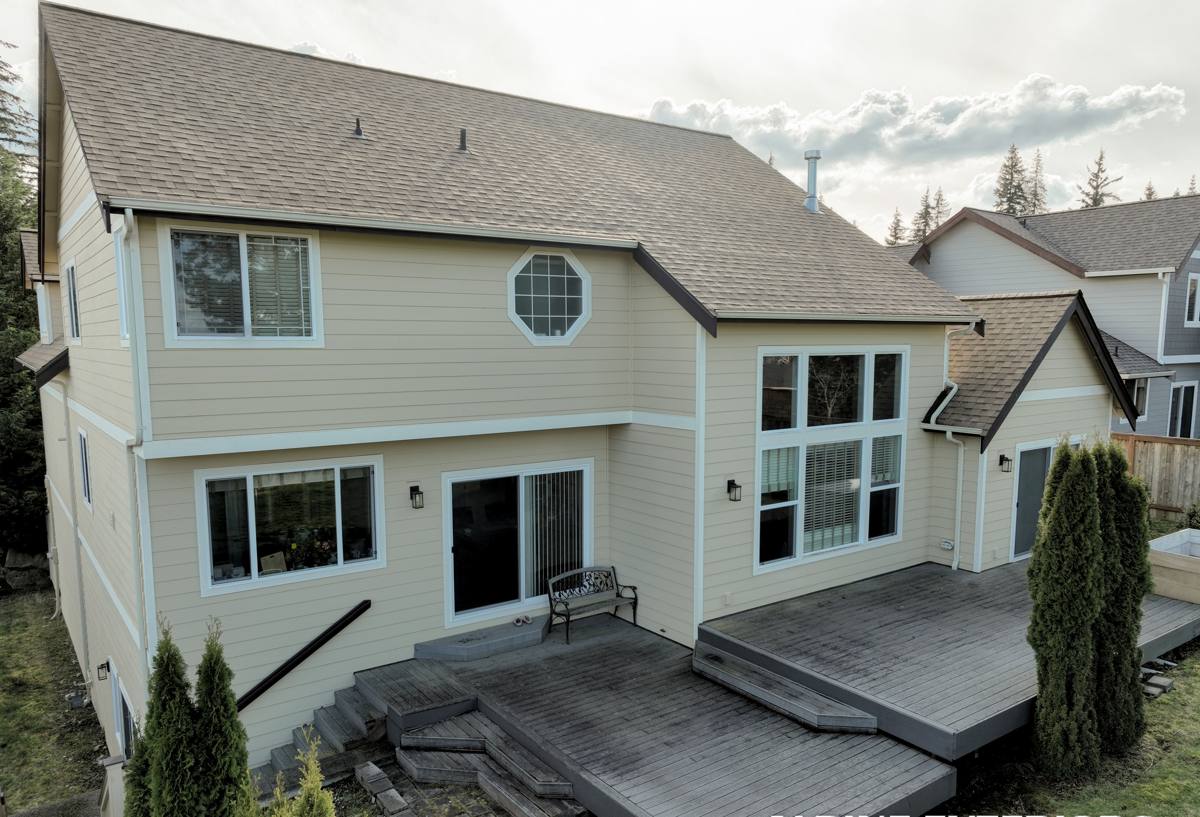
Signs a Cordata Deck Needs Replacement, Not Just Repair
Not every deck problem calls for a full tear-off. But in this climate, surface fixes on a structurally compromised deck usually buy a year or two at most before the same issues return. Here's what tells us a deck has moved past the point of patching:
- Soft, spongy, or spalling boards near the ledger board (the beam bolted to the house) — often the first place rot starts because it stays wet longest
- Rust streaks bleeding out from fastener heads or joist hangers, a sign the hardware is failing, not just staining the wood
- Persistent moss or dark algae growth that comes back within weeks of cleaning, even after a deck wash
- Visible gaps or movement where the deck framing meets the house, which can point to ledger flashing failure and water getting behind the siding
- Railings or posts that flex or wobble under normal weight — a structural issue, not a cosmetic one
- A deck older than 15-20 years with pressure-treated framing that's never been inspected underneath
If you're only seeing one or two of these, a repair or partial rebuild might still make sense. If you're seeing several at once, especially anything at the ledger connection, replacement is usually the more honest recommendation — patching around a compromised structural connection just delays the real fix.
What a Correct Deck Replacement Involves Here
Framing and Structure
Whatcom County's frost depth and soil conditions matter for footing placement — footings set too shallow can heave over time as the ground freezes and thaws, which eventually shows up as a deck that's no longer level. Joist spacing and beam sizing need to match the actual span and the decking material you choose, since composite and wood carry weight differently over the same distance. We frame to support the decking you're installing, not a generic spec.
Fasteners and Hardware
This is where salt air does the most damage, and it's the detail homeowners are least likely to see until it's already a problem. Standard electro-galvanized screws and nails corrode faster this close to Bellingham Bay. We use stainless steel or hot-dip galvanized fasteners and hardware rated for coastal exposure, along with joist hangers and structural connectors built for the same conditions. It costs more up front than hardware-store fasteners, but it's the difference between hardware that lasts the life of the deck and hardware that starts rusting through in five or six years.
Moisture Management
Proper ledger board flashing is non-negotiable — it's the single most common point of failure we find on older decks in this area, and it's also the hardest to inspect without removing boards. A correct install includes flashing that directs water away from the house framing, joist tape or protective membrane on top of the framing to slow rot, and a deck board layout with consistent drainage gaps so water doesn't pool and sit through a wet Whatcom County winter.
Choosing a Decking Material for This Climate
There's no single "best" decking material — it depends on how much maintenance you want to do and how the moss and moisture in this area affect each option over time. Here's how the common choices compare for a Cordata deck specifically:
| Material | Moss & Moisture Behavior | Maintenance | Typical Lifespan Here |
|---|---|---|---|
| Pressure-treated lumber | Absorbs moisture; needs regular sealing to resist moss staining and swelling | Annual cleaning, re-sealing every 1-2 years | 15-20 years with upkeep |
| Cedar | Naturally rot-resistant but still needs finish maintenance; can gray and stain without care | Cleaning and re-staining every 1-3 years | 15-25 years with upkeep |
| Composite (capped) | Doesn't absorb water like wood; moss and algae still grow on the surface and need washing off | Periodic washing, no sealing or staining | 25-30+ years, per manufacturer warranty |
We install all three, and we'll give you a straight answer on trade-offs rather than push whichever one has the best margin. Pressure-treated and cedar cost less upfront but ask more of you every year. Composite costs more to install but trades ongoing maintenance for a higher initial price — for a lot of Cordata homeowners who don't want to be out re-sealing a deck every spring, that trade makes sense. For others who prefer the look and lower upfront cost of real wood and don't mind the maintenance, that's a legitimate choice too.
Permits and Code Considerations in Whatcom County
Most deck replacements that involve structural changes — new footings, a rebuilt ledger connection, or a deck attached at a different height or footprint than the original — require a permit through the local jurisdiction. Setback requirements, guardrail height, and baluster spacing are all governed by code, and they get checked during inspection. Reusing an old deck's footprint without inspecting what's underneath is a common way projects run into problems mid-build, since you don't always know what condition the original ledger flashing or footings are in until the old decking comes off.
We handle the permit process as part of the job so you're not the one tracking down inspections, and we build to current code rather than just matching what was there before — especially on railings and stair details, which are the areas most likely to have changed since an older deck was originally built.
Our Deck Replacement Process
- On-site assessment — we look at the existing deck, ledger connection, framing condition, and footing placement before quoting anything
- Material and layout discussion — we walk through decking options, railing style, and any layout changes based on how you actually use the space
- Permit and planning — we pull the required permits and schedule inspections where applicable
- Demo and structural inspection — once old decking is off, we inspect framing and ledger flashing that wasn't visible before, and flag anything that changes the scope
- Rebuild — new footings or framing as needed, corrosion-rated fasteners and hardware, proper ledger flashing, and correctly spaced decking
- Final walkthrough — we go over the finished deck with you, including what maintenance (if any) it needs going forward
Keeping a New Deck Ahead of Moss Season
Even a well-built deck will grow moss and algae in this climate if it's never cleaned — it's less about preventing growth entirely and more about not letting it sit long enough to stain or hold moisture against the boards. A few habits go a long way: keep gutters and downspouts clear so runoff isn't draining directly onto the deck, sweep leaves and debris off before the wet season settles in, and plan on a wash-down once or twice a year depending on how shaded the deck is. Shaded, north-facing decks under trees hold moss longest and may need more frequent attention than a deck that gets more sun through the day.
Why Local Experience Matters for This Job
A deck replacement done by a crew unfamiliar with this area tends to treat Bellingham like anywhere else — standard fasteners, standard flashing details, standard maintenance advice. On a deck exposed to Bellingham Bay's salt air and Whatcom County's rain for years at a time, those shortcuts age badly. Working in and around Cordata regularly means we already know which details matter most here: corrosion-rated hardware, ledger flashing that actually sheds water, and material choices that account for how long this area stays wet each year. That's not something you can fully substitute with a generic install, no matter how good the workmanship is otherwise.
If your deck in Cordata is showing its age, or you're planning a replacement and want it built to hold up through Bellingham's weather rather than just look good on day one, we're happy to take a look and give you a straightforward, no-pressure estimate. Use the form below to get started.