 Bellingham Exterior
 Windows Built for the Way South Hill Actually Weathers
South Hill sits up above the flatter parts of Bellingham, and that elevation is a mixed blessing. The views are part of what makes the neighborhood what it is, but that same exposure means homes up here take a more direct hit from wind and weather than houses tucked into lower, more sheltered parts of the city. Add in the salt air drifting up from Bellingham Bay, the long stretches of driving rain that define a Whatcom County winter, and a moss season that seems to run longer every year, and you've got a climate that is genuinely hard on windows — especially older ones that were never built to handle it.
We've replaced and installed windows across a lot of South Hill homes, from older character houses with original wood sash to newer construction that just needs an upgrade. What we've learned working this specific neighborhood is that a generic window job doesn't hold up here. The install details that don't matter much in a sheltered inland location matter a great deal on an exposed hillside lot. This page is about what that actually means in practice.
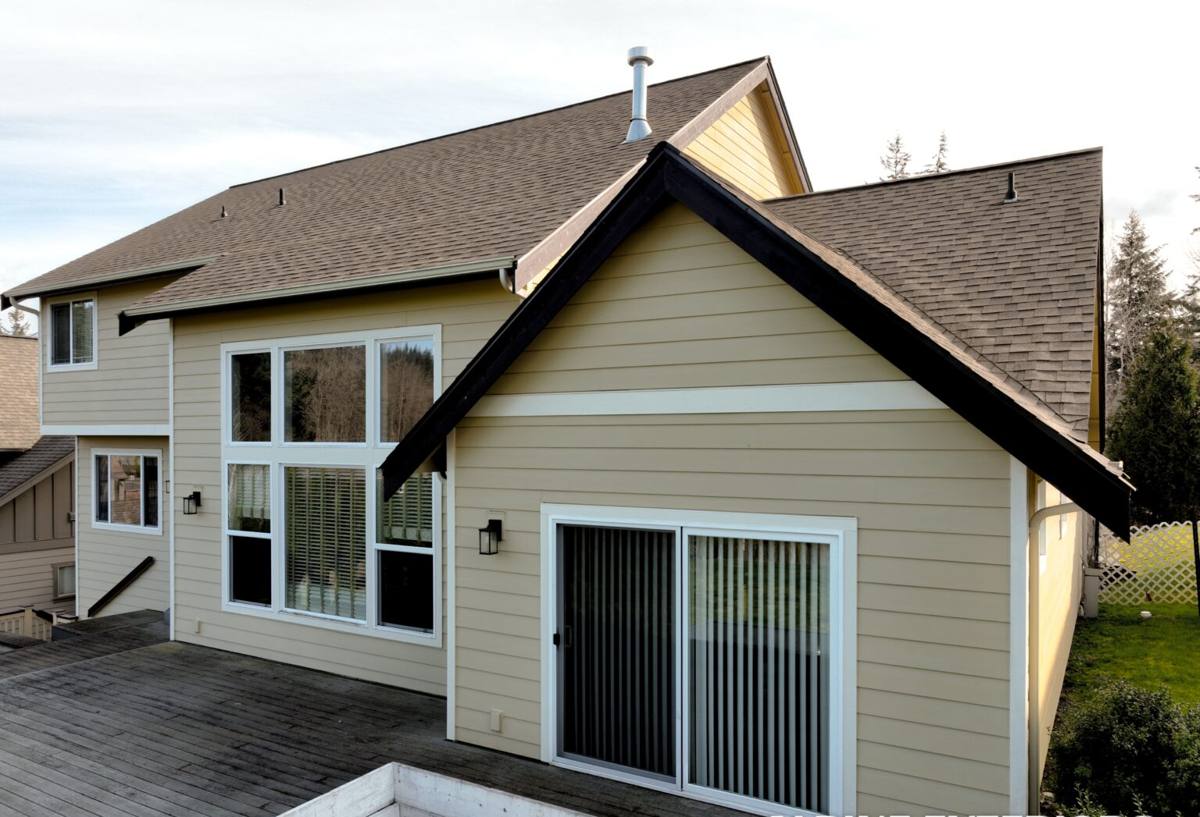
The Climate Problems Custom Windows on South Hill Need to Solve
Wind-Driven Rain
Rain that falls straight down is one thing. Rain that's being pushed sideways by wind off the bay is another problem entirely, and it's a normal condition on elevated, exposed lots. Wind-driven rain finds any weakness in a window's flashing, sealant, or sill design and pushes water where it doesn't belong — behind trim, into framing, under sills. A window that's rated fine on paper can still leak here if it wasn't installed with that exposure in mind.
Salt Air and Corrosion
Proximity to the bay means a steady, low-level exposure to salt in the air. Over years, that salt content accelerates corrosion on lower-grade hardware, fasteners, and some aluminum components. It's rarely dramatic — it shows up slowly, as stiff locks, pitted hardware, or finish that fails early. Material and hardware choice matters more here than it would further inland.
A Long, Wet Moss Season
Whatcom County's moss season stretches long, and shaded or north-facing exposures on a hillside lot barely dry out between storms. Moss and algae don't just grow on roofs — they take hold on window sills, in track channels, and in any spot where wood or vinyl stays damp. That constant moisture is hard on caulking, wood trim, and any gaps in the weatherproofing envelope.
Temperature Swings and Condensation
Bellingham's marine climate keeps temperature swings relatively mild, but the humidity is constant. Older single-pane or poorly sealed double-pane windows fog up, sweat on the interior, and can feed moisture into surrounding wood framing over time. That's a comfort issue and a slow-building structural one.
Signs Your Current Windows Are Losing That Fight
Homeowners often live with a failing window for years before addressing it, mostly because the signs show up gradually. Worth checking for:
- Visible fogging or moisture trapped between panes of a double-pane window
- Soft or discolored wood trim around the window frame, especially on the exterior sill
- Drafts you can feel near the frame even with the window fully closed and latched
- Moss or dark green staining building up in the track or on the exterior sill
- Difficulty opening, closing, or latching a window that used to operate smoothly
- Paint or finish peeling or bubbling near the window frame, inside or out
- A noticeably colder spot in the room whenever it's windy outside
One or two of these can just mean a window needs maintenance. Several at once, especially on a home's weather-exposed side, usually means the window and its installation are done.
What a Correct Window Installation Actually Involves
The window unit itself is only part of the job. Most leaks and premature failures we get called out to fix trace back to installation shortcuts, not a bad window. On an exposed South Hill lot, these details aren't optional extras — they're the difference between a window that lasts and one that leaks within a few winters.
Sill Pan and Flashing
Every opening should get a sloped sill pan and properly layered flashing tape, integrated with the home's existing weather-resistive barrier — not just caulked over it. Flashing has to shed water down and out, in the correct shingle-lap order, so that any water that does get past the window sheds harmlessly to the exterior instead of pooling against framing.
Shimming and Squaring
A window that isn't shimmed level, plumb, and square will bind, won't seal evenly against its weatherstripping, and will fail earlier than it should. This is a slower, more careful step than it sounds, and it's one of the first things skipped on a rushed job.
Insulation Without Gaps
The gap between the window frame and the rough opening needs to be filled with a low-expansion foam or backer rod and sealant designed for that job — not stuffed with fiberglass batting, which does little to stop air and moisture movement.
Exterior Sealant and Trim
The final exterior seal has to account for wind-driven rain specifically: a continuous bead in the right locations, not just where it's visible, and trim details that shed water away from the joint rather than trapping it.
Choosing Window Materials and Styles for a South Hill Exposure
There's no single "best" window material — the right choice depends on the home, its exposure, and the budget. Here's how the common options generally compare for a hillside, bay-exposed property:
| Material | Moisture & Salt Air Performance | Maintenance | Typical Fit |
|---|---|---|---|
| Vinyl | Good — won't rot or corrode, handles moisture well | Low | Most homes, best value |
| Fiberglass | Very good — dimensionally stable, resists warping in swings between wet and dry | Low | Larger openings, higher-exposure walls |
| Wood | Requires diligent upkeep to resist rot and moss growth in a wet climate | High | Historic or character homes wanting original wood sightlines |
| Wood-clad (wood interior, metal/vinyl exterior) | Good — exterior shell resists the weather, interior keeps traditional look | Moderate | Character homes wanting wood look inside without full wood upkeep outside |
| Aluminum | Prone to corrosion in salt air unless a marine-grade finish is specified | Moderate | Modern styling, best when finish is matched to the exposure |
Many South Hill homes have older character worth preserving — original proportions, muntin patterns, or sightlines that give the house its look. Custom windows let us match those visual details in a modern, weathertight unit, which is usually the better path over a full-custom historic wood replica, both for cost and for long-term moisture performance.
Our Process, Start to Finish
On-Site Assessment
We start by walking the home, checking existing window condition, framing, and any moisture or rot already present around openings. On a South Hill property we're also looking specifically at which elevations take the most direct wind and rain exposure, since that can change our recommendation window by window.
Measuring and Custom Fabrication
Few older homes have perfectly standard, square openings, and that's especially true of older South Hill housing stock. We measure each opening individually and order or fabricate windows to that exact size rather than forcing a stock size into an opening it doesn't fit.
Removal and Installation
Old windows come out carefully to protect surrounding siding and trim. New units go in with full sill pan flashing, correct shimming, low-expansion foam, and exterior sealant detailed for wind-driven rain — the steps covered above, done in the right order every time, not just on the parts that show.
Walkthrough and Cleanup
Every window gets operated and checked before we consider the job done, and the site is cleaned up so you're not left dealing with old materials or debris.
Why It Matters That We Already Work South Hill
A crew that mostly works flatter, more sheltered parts of Whatcom County can still do a technically fine window install and have it underperform on a South Hill lot, simply because they weren't planning for the exposure. Knowing which walls of a hillside home take the worst of the wind-driven rain, how long moss actually takes to build up on a shaded north sill in this climate, and how older South Hill framing tends to be built changes real decisions — flashing details, sealant choice, even which elevations get prioritized first when a homeowner is replacing windows in phases. That's the kind of judgment that comes from doing this work in this specific neighborhood, not from a manufacturer's install manual.
Living With Your New Windows Through Moss Season
Even the best-installed windows benefit from a little seasonal attention in a climate like this one:
- Clear debris and moss buildup from tracks and sills a couple of times during the wet season
- Rinse salt air residue off exterior frames periodically, especially on bay-facing walls
- Check exterior caulk lines annually for cracking or separation and address small gaps early
- Keep weep holes on vinyl and fiberglass frames clear so water can drain as designed
- Operate every window at least occasionally through the winter to keep hardware and weatherstripping working properly
None of this is heavy maintenance — it's the kind of upkeep that protects a good installation for the long run, rather than fighting a bad one.
Get a Straight Answer for Your Home
Every South Hill property is a little different — the exposure, the age of the home, which walls take the worst weather. If you're dealing with drafty, foggy, or moss-lined windows, or you're planning a full replacement, we're glad to come take a look and give you a clear, no-pressure estimate. There's a form below — reach out and we'll walk the property with you and talk through what actually makes sense for your home.