 Bellingham Exterior
 Building Decks for Edgemoor's Specific Conditions
Edgemoor sits among the more heavily wooded, elevated lots in the Bellingham area, with many homes tucked under mature conifer canopy and a number of properties close enough to Bellingham Bay to catch salt-laden air off the water. That combination — shade, moisture, and marine exposure — puts more stress on a deck here than it does on a similar structure built inland or in full sun. A deck built without accounting for those conditions can look fine for a season or two and then start showing problems: soft spots, black staining, loose fasteners, slick surfaces. A deck built for Edgemoor's actual site conditions holds up for decades instead.
This page covers what we look at when we build or replace a deck in Edgemoor specifically — not a generic overview of deck building, but the details that matter for wooded, shaded, coastal-influenced lots in Whatcom County.
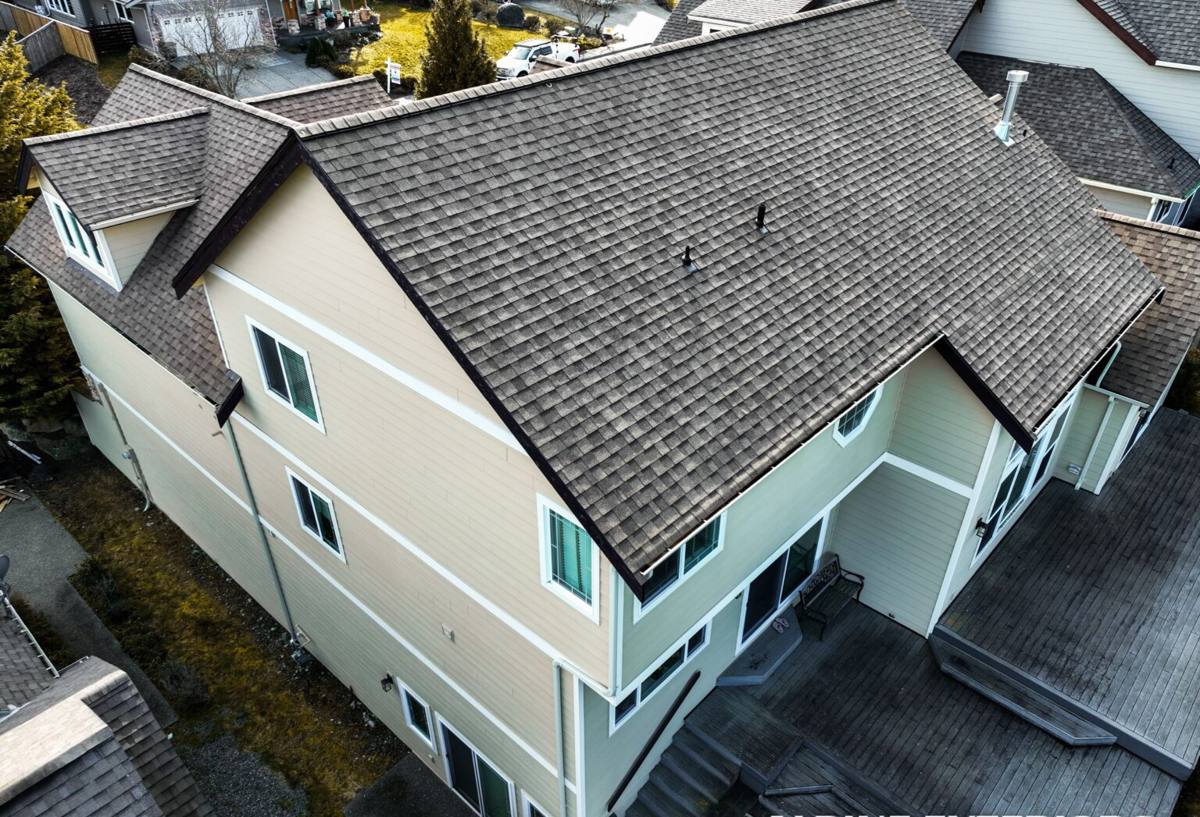
Why Edgemoor's Climate Is Hard on Decks
Whatcom County's marine climate means long wet seasons, driving rain that comes in sideways during winter storms, and stretches where surfaces barely dry out between rain events. Edgemoor adds two more variables on top of that: tree cover that keeps large sections of a deck shaded and damp well after the rain stops, and proximity to salt water that accelerates corrosion on anything metal.
Moss and Algae Growth
Shaded decking under fir and cedar canopy stays wet longer than decking in the open, and that extended dampness is exactly what moss and algae need to take hold. Once moss establishes on a deck surface, it holds moisture against the boards, breaks down finishes faster, and turns the surface slick and genuinely dangerous underfoot — especially on stairs. A deck design that ignores drainage, airflow, and gap spacing in a shaded Edgemoor yard will fight moss every single year.
Wind-Driven Rain and Water Intrusion
Storms off the bay don't just drop rain straight down — they push it sideways into ledger boards, stair stringers, and any place decking meets the house. Flashing and water management at that ledger connection is one of the most common places we find rot on older Edgemoor decks, because it's the one spot where wind-driven rain gets forced against the structure repeatedly.
Salt Air and Metal Fasteners
Homes closer to the water deal with airborne salt that speeds up corrosion on unprotected steel. Fasteners, brackets, and hardware that aren't rated for coastal exposure can start rusting years before they should, which weakens connections long before the visible decking shows any sign of trouble. This is a detail that's easy to skip on the front end and expensive to fix later, because by the time rust is visible on the surface, it's often further along underneath.
Choosing the Right Decking Material for a Shaded, Coastal-Influenced Lot
There's no single "best" decking material — the right choice depends on how much sun and shade a particular Edgemoor lot gets, how close it sits to the water, and how much upkeep the homeowner actually wants to do. We walk every site and give an honest read on what will perform well there, not just what's popular.
| Material | Performance in shade/moisture | Salt air exposure | Maintenance |
|---|---|---|---|
| Pressure-treated wood | Prone to moss/algae in deep shade if not maintained; needs regular cleaning and sealing | Fine with corrosion-resistant fasteners | Annual cleaning, periodic sealing/staining |
| Cedar | Naturally more decay-resistant, but still needs care in constant shade | Handles salt air well | Periodic cleaning and finish maintenance to hold color |
| Composite decking | Resists rot; some capped composites still need cleaning to prevent surface algae in deep shade | Excellent — no corrosion of the board itself | Low — periodic washing, no sealing/staining |
| PVC decking | Fully resists moisture damage; good choice for the shadiest, dampest lots | Excellent | Low — occasional washing |
For heavily shaded Edgemoor lots, we lean toward capped composite or PVC decking when the homeowner wants to minimize the moss-and-mildew fight long-term. For homeowners who want a natural wood look and are willing to do annual upkeep, cedar with the right fastener package still performs well here — it's a matter of matching the material to how much maintenance you actually want to sign up for, not one product being universally "right."
Framing and Substructure: Where Edgemoor Decks Actually Fail
Most deck problems we get called out for aren't decking-surface problems — they're substructure problems that started underneath and worked their way up. On wooded, shaded lots, the framing stays damper longer than the visible boards, so it's the first place to check and the first place to build correctly.
- Ledger board flashing and proper gap between the house and deck framing to let water and air move instead of pooling against the wall
- Joist protection — flashing tape or equivalent over the top of every joist, not just at the ledger
- Corrosion-resistant, coastal-rated fasteners and structural hardware throughout, not just at visible connections
- Post footings sized and set for the actual soil conditions on sloped, wooded lots, which can differ block to block in Edgemoor
- Adequate airflow underneath the deck so the substructure can dry between rain events instead of staying wet for weeks
Skipping any one of these doesn't show up immediately. It shows up in year five or six as soft framing, rust streaks, or a deck that starts to feel less solid underfoot — usually right around when a homeowner assumed it was still "new."
Our Deck Building Process
We keep the process straightforward and give you a clear look at what's happening at each stage:
- Site walk and assessment — we look at sun/shade exposure, slope, drainage, tree cover, and proximity to salt air to understand what that specific lot will demand of the deck.
- Material and design conversation — honest recommendations on decking material, railing style, and layout based on the site, not a one-size-fits-all pitch.
- Permitting — we handle the permit application and coordinate inspections with the City of Bellingham or Whatcom County, depending on the property's jurisdiction.
- Demolition or prep — removal of an existing deck if applicable, with attention to what's underneath before we build over it.
- Framing and structural work — ledger flashing, joist protection, footings, and hardware built to hold up under Edgemoor's wet, shaded conditions.
- Decking, railing, and stairs — installed with proper gapping and fastening for drainage and long-term stability.
- Final walkthrough and inspection — we review the finished deck with you and make sure it passes final inspection before we call the job done.
Permits, Setbacks, and Code Basics
Deck construction in Bellingham and unincorporated Whatcom County generally requires a permit once a deck exceeds a certain height or size, and inspections typically cover footings, framing, and guardrail construction before the project is signed off. Guardrails on elevated decks are generally required at a minimum height with baluster spacing tight enough to prevent a small child from passing through — standard residential code requirements that apply regardless of neighborhood. Because Edgemoor includes both sloped, elevated lots and properties near the water, setback and height requirements can vary by parcel, so we confirm the specifics for your property before design work locks in rather than assuming a standard lot layout applies.
Deck Maintenance Checklist for Edgemoor Homeowners
- Sweep and clear needles/debris off the deck surface regularly, especially in fall and through the wet season
- Clean moss and algae off boards and stairs before they build up a slick film — a stiff brush and a deck-safe cleaner, not a pressure washer set too aggressively
- Check and clear gaps between boards so water keeps draining instead of pooling
- Inspect ledger flashing and the house connection point once a year for any signs of staining or softness
- Look underneath the deck periodically for rust on hardware or softness in framing, particularly on shaded, low-airflow sections
- Re-seal or re-stain wood decking on the schedule the product calls for — don't wait until it's visibly gray and worn
Why Hire a Crew That Already Works in Edgemoor
A deck built to a generic spec sheet, without accounting for a shaded canopy lot or salt air off the bay, is a deck that will need premature repairs. Working in Edgemoor regularly means we already know to check drainage on sloped, wooded lots, to spec fasteners for coastal exposure without being asked, and to plan around a tree canopy that keeps sections of a deck wet longer than a homeowner might expect. That's the difference between a deck that needs attention every year and one that quietly does its job for decades.
We're a Bellingham-based crew, not a company dispatching from out of the area, and Whatcom County's rain, salt air, and moss season are conditions we build for every day, not exceptions we're figuring out on your project.
Get a Free, No-Pressure Estimate
If you're planning a new deck or replacing one that's showing its age in Edgemoor, we're happy to walk the site, look at your specific sun, shade, and exposure conditions, and give you an honest recommendation — no pressure, no hard sell. Use the form below to request a free estimate.