 Bellingham Exterior
 Decking on the Bluff: Why Edgemoor Wears Differently Than Inland Bellingham
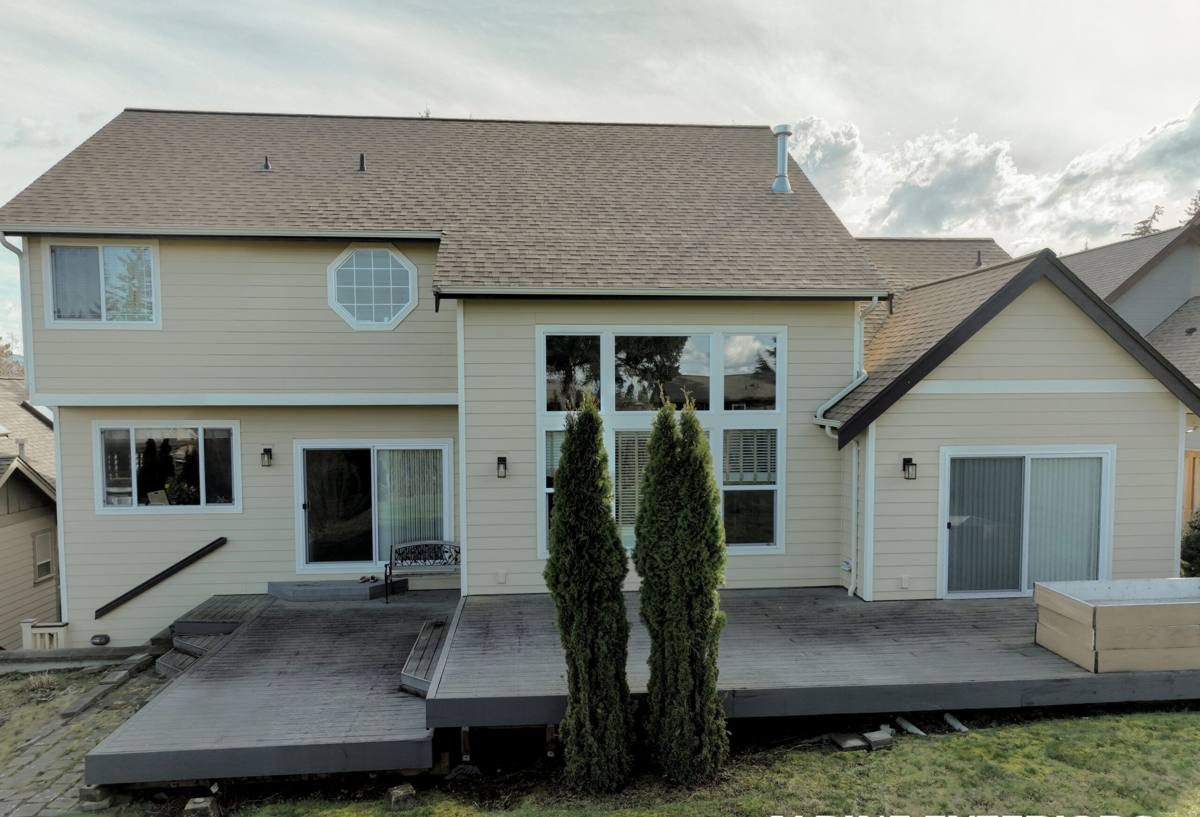
Edgemoor sits close to Bellingham Bay, and that proximity to the water changes what a deck goes through year to year. Homes here catch salt-laden air off the water, take on driving rain angled by wind coming across the bay, and often sit under tree canopy that keeps decks shaded and damp longer than a yard a few miles inland. That combination — salt, moisture, and shade — is exactly the mix that breaks down decking materials fastest, and it's why a deck built the same way you'd build one in a dry, sunny neighborhood often disappoints an Edgemoor homeowner within a few seasons.
None of this means composite decking is a poor fit for the neighborhood. It means the build has to account for the environment instead of ignoring it. Board selection, fastener choice, substructure detail, and drainage planning all shift when a deck sits this close to saltwater and under a wet Pacific Northwest sky most of the year.
What Salt Air, Rain, and Moss Actually Do to a Deck
Salt Air and Metal Hardware
Airborne salt accelerates corrosion on anything metal — screws, joist hangers, railing brackets, post bases. On a standard-grade fastener, that corrosion can start showing as staining or weeping around screw heads well before the boards themselves show any wear. Once hardware starts failing, the structural connections holding the deck together are compromised even if the decking surface still looks fine.
Driving Rain and Trapped Moisture
Rain that comes in sideways off the water finds its way into gaps, end grain, and any spot where boards sit tight against a house wall or ledger. The issue isn't the rain hitting the surface — composite boards shed surface water without trouble. The issue is what happens when water can't escape from underneath: trapped moisture between boards and joists, or behind rim boards and ledgers, is where rot and mold problems start, even on a composite deck, because the substructure below the composite is almost always still wood.
Moss and Shade
Whatcom County's long wet season and Edgemoor's tree cover give moss and algae a real head start on shaded decks. Moss holds moisture against the board surface and can make composite decking dangerously slippery, especially on stairs and north-facing sections that rarely see direct sun. A deck built without airflow underneath, or with boards installed too tight, gives moss more to grab onto.
What a Correct Composite Deck Build Looks Like Here
A composite deck built for this environment isn't just "install the boards and trim it out." The parts that matter most are the ones you don't see once the project is finished.
- Pressure-treated or naturally rot-resistant framing lumber, rated for ground contact where applicable
- Stainless steel or coated, marine-rated fasteners and joist hangers — not standard exterior-grade hardware
- Joist tape or a flashing membrane over the top of every joist, so fasteners don't create a direct path for water into the wood
- Proper board spacing for drainage and airflow, not just for looks
- Ledger flashing that actually sheds water away from the house band board, not just caulk at the seam
- Post bases set above grade with a drainage gap, not buried or sitting flush in soil that holds water
- A substructure pitched slightly away from the house for positive drainage
Skip any one of these and the deck can still look correct for a year or two. The problems that show up later — soft spots near the ledger, corroded hardware, boards that never quite dry out — almost always trace back to a shortcut taken at this stage.
Composite vs. Other Decking Materials for a Waterfront-Adjacent Yard
Homeowners in Edgemoor usually compare composite against pressure-treated wood or cedar, and occasionally PVC. Here's how they tend to hold up under this neighborhood's conditions specifically.
| Material | Behavior in Salt Air & Rain | Maintenance Load | Typical Lifespan Here |
|---|---|---|---|
| Composite decking | Resists rot and doesn't absorb water into the board itself; performance depends heavily on the substructure below it | Occasional wash-down to keep moss and algae from taking hold; no staining or sealing | 25–30+ years for the boards, with hardware and substructure as the limiting factor |
| Cedar or pressure-treated wood | Absorbs moisture directly; prone to cupping, splitting, and rot in shaded, damp sections | Annual or biennial cleaning, sealing, and staining to keep water out | 10–15 years before major boards need replacing, often sooner in full shade |
| PVC decking | Fully moisture-resistant, similar to composite in wet performance | Low, similar to composite | 25–30+ years; tends to run warmer and flex more with temperature swings than composite |
We recommend composite as our default for Edgemoor decks because it strikes a good balance of low maintenance and long-term moisture resistance without the higher material cost of PVC. That said, any of these materials can perform well here if the substructure and hardware underneath are built correctly for the climate — the material on top matters less than what's holding it up.
Our Process for an Edgemoor Composite Decking Project
1. On-Site Assessment
We walk the site and look at sun exposure, wind direction, drainage slope, and how close the deck sits to mature trees or the house's roofline. This tells us where moss risk is highest and where extra drainage detail is worth building in.
2. Structural Plan
We size and lay out the substructure to current code, factoring in joist spacing appropriate for composite boards specifically — composite has different span requirements than wood, and undersized framing is a common source of bounce and premature board sag.
3. Demo and Substructure Build
If we're replacing an existing deck, we check the ledger and rim board for hidden water damage before building over it — a new composite surface on a rotten substructure just hides the problem for a while. Framing goes in with the marine-rated hardware and joist protection described above.
4. Composite Installation
Boards are installed with manufacturer-specified spacing and hidden or color-matched fastening systems, with attention to consistent drainage gaps rather than a tight, gapless look that traps moisture.
5. Railings, Stairs, and Finish Details
Railing posts and stair stringers get the same corrosion-resistant hardware treatment as the deck framing, since these components take direct weather exposure and see the most hand contact.
6. Walkthrough
We go over drainage, gaps, and transitions, and explain what normal composite maintenance looks like versus what would be a sign of a problem down the road.
Maintenance: What Composite Actually Needs in This Climate
One appeal of composite decking is how little it asks for compared to wood, but "low maintenance" doesn't mean "no maintenance," especially this close to the water.
- Sweep off leaves, needles, and debris regularly so moisture and organic material don't sit against the boards
- Wash the deck surface a couple of times a year with mild soap and a soft-bristle brush to keep moss and algae from establishing, more often on shaded or north-facing sections
- Check railings and stair connections periodically for movement, which can signal hardware corrosion before it becomes a safety issue
- Keep gutters and downspouts near the deck clear so roof runoff isn't dumping extra water onto or under the deck
- Trim back overhanging branches where practical to reduce shade and debris load
Cost Factors for an Edgemoor Composite Deck
Every project is different, but the same handful of variables drive most of the cost difference between jobs in this neighborhood.
| Factor | Why It Matters Here |
|---|---|
| Deck size and shape | More linear footage of framing and board cuts, plus more complex layouts around stairs or multiple levels |
| Substructure condition | Replacing rotten ledger boards or rim joists found during demo adds cost but is not optional for a safe deck |
| Height and railing requirements | Elevated decks common on sloped Edgemoor lots need taller posts, additional bracing, and code-compliant railings |
| Board tier and color | Composite lines vary in price by capping technology and color depth, which also affects long-term fade and stain resistance |
| Site access | Tight side yards or limited equipment access on some lots can add labor time for material handling |
We give straightforward, itemized estimates so you can see where the cost is going rather than a single lump number — that's especially useful on older decks where nobody knows the substructure condition until we open it up.
Signs Your Current Deck May Need Attention
- Boards feel spongy or flex noticeably underfoot, especially near the house
- Persistent moss or dark staining that comes back within weeks of cleaning
- Rust streaks running from screw heads or hardware connections
- Gaps opening up around the ledger where the deck meets the house
- Railings or stair posts that wiggle more than they used to
Why It Matters That We Already Work in Edgemoor
A crew that's done decking work around Bellingham Bay knows which framing details actually hold up here and which ones are just extra cost in a drier climate. That's the difference between a spec written for a national average and one written for what this specific stretch of Whatcom County throws at a deck year-round — the salt air, the driving rain, and the long moss season that inland neighborhoods deal with less. We're not guessing at how a product performs near saltwater; we're building to what we've already seen hold up and what we've seen fail.
It also means faster, more accurate estimates. We're not relearning local drainage patterns or guessing at how exposed a given lot is to wind off the bay — we already have that context walking in the door.
Ready to Talk Through Your Deck
Whether you're replacing an aging wood deck or planning a new composite deck for an Edgemoor property, we're happy to walk the site, look at your specific exposure and drainage situation, and give you a straightforward, no-pressure estimate. Use the form below to get started.