 Bellingham Exterior
 Windows Built for Cordata's Climate, Not a Catalog Average
Cordata sits close enough to Bellingham Bay and the Salish Sea that homes here take on a slightly different weather load than houses further inland in Whatcom County. Salt-laden air corrodes hardware faster, wind-driven rain gets pushed sideways into gaps that would stay dry elsewhere, and the long grey stretch from fall through spring keeps everything damp long enough for moss and algae to take hold on sills, tracks, and trim. A window that's rated "energy efficient" on a spec sheet doesn't automatically hold up to that combination. The efficiency numbers matter, but so does how the unit is built, sealed, and installed against this specific set of conditions.
This page is about one job, done right, for one type of home: replacing or upgrading windows in Cordata so they actually perform — lower energy bills, no drafts, no fogged glass, no rot creeping in around the frame five years later.
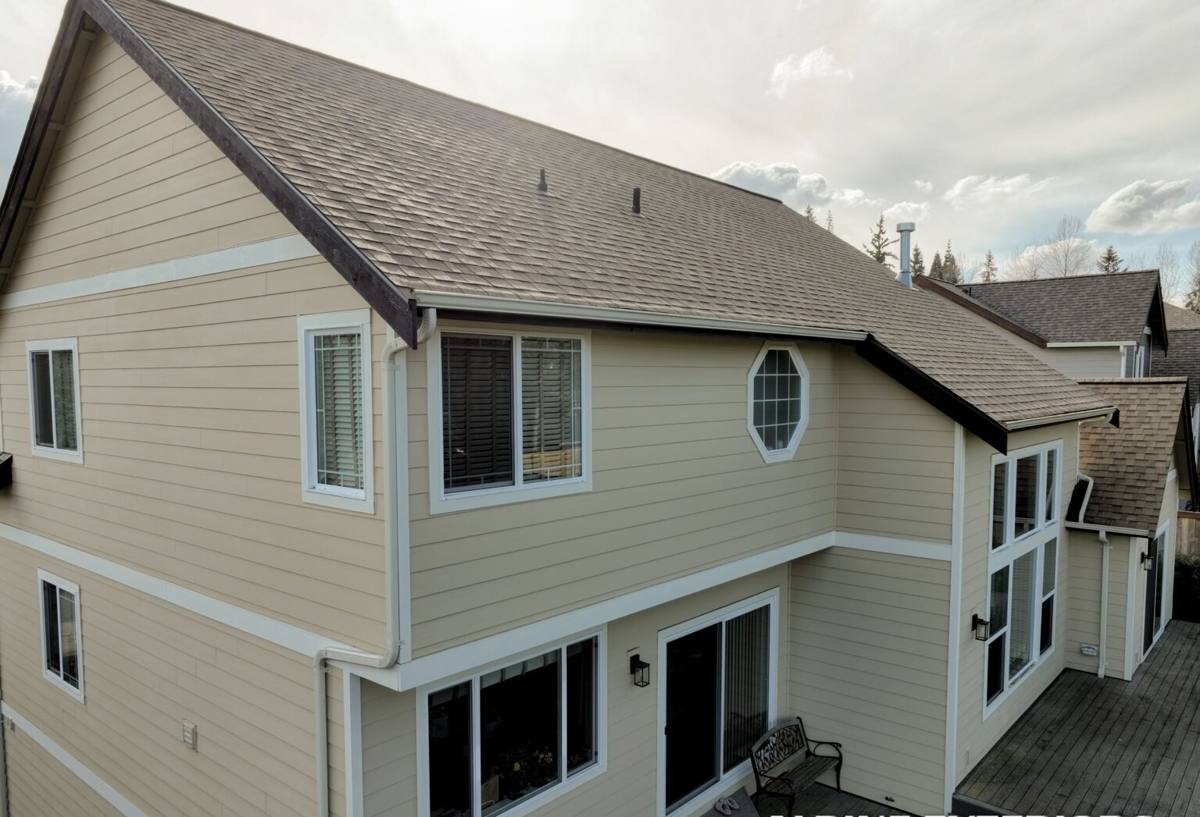
What "Energy-Efficient" Actually Means Here
Energy efficiency in a window comes down to a handful of measurable things, and in a marine climate like ours, some matter more than others.
U-Factor and Solar Heat Gain
U-factor measures how well a window resists heat loss — lower is better, and it's the number that matters most for our climate, where the bigger cost is keeping heat in during long wet winters, not keeping heat out. Solar Heat Gain Coefficient (SHGC) matters less here than it would in a sunnier climate, but it's still worth checking on south- and west-facing rooms that get more direct light through the year.
Glazing and Gas Fill
Double-pane windows with a low-E coating and an argon or krypton gas fill between the panes are the standard for a reason — they cut heat transfer significantly over a basic dual-pane unit without gas fill. Triple-pane can make sense on north-facing walls or homes right along exposed wind corridors, but it adds weight and cost, and for most Cordata homes, a good double-pane low-E window is the right balance.
Frame Material and Thermal Break
The frame is often where efficiency quietly leaks away. A frame without a proper thermal break — the internal barrier that stops heat from conducting straight through the material — will undercut an otherwise good glass package. Vinyl and fiberglass frames handle this well and shrug off moisture; wood frames need a cladding or careful maintenance plan to hold up against our rain season.
What We See Go Wrong on Cordata Homes
Because we work in this specific area regularly, certain failure patterns show up over and over:
- Condensation forming between panes — a sign the seal has failed and the gas fill has escaped, even if the window still looks fine
- Soft, spongy trim or sill wood from years of moisture wicking in around a poorly sealed frame
- Green or black staining on north-facing and shaded windows from moss and algae taking hold in a spot that never fully dries
- Drafts around the frame that weren't there when the house was newer, usually from sealant that's shrunk, cracked, or was never installed correctly
- Corroded hardware — hinges, locks, and cranks — that stick or fail years before they should because of salt-air exposure
None of these are unusual or a sign of a "bad" house. They're what happens to windows in this climate over time, especially if the original installation wasn't done with local conditions in mind.
What a Correct Installation Actually Involves
The window unit itself is maybe half the equation. The other half is how it's installed, and this is where corners get cut most often.
| Step | Why it matters in Cordata |
|---|---|
| Removing old flashing and inspecting the rough opening for hidden rot | Wind-driven rain finds any gap in the water management layer over time |
| Installing new flashing tape and a proper drainage plane | Directs water that gets behind the siding back out, instead of into the wall |
| Shimming and leveling the unit precisely before fastening | A racked frame stresses seals and hardware, shortening the window's life |
| Sealing with the correct sealant for the substrate and gap size | Wrong sealant shrinks or cracks faster in our freeze-thaw and wet-dry cycles |
| Interior air-sealing with low-expansion foam or backer rod | Stops the draft and condensation issues that show up in year two or three |
Skipping or rushing any one of these steps is usually invisible on install day and shows up as a problem two, five, or ten years later — often as water damage that costs far more to fix than the window did.
Signs an Old Installation Was Done Poorly
| Signal | What it usually means |
|---|---|
| Caulk is the only thing sealing the exterior edge | No proper flashing was installed — water is likely getting behind the trim |
| Interior sill shows staining or a musty smell | Moisture has been tracking in for some time |
| Window feels drafty even when fully latched | Frame may be out of square, or interior sealing was skipped |
Frame Material Options for This Area
We install a range of frame materials, and the right choice depends on the home's style, budget, and how exposed the window location is to wind and salt air.
| Frame Type | Moisture/Salt Resistance | Maintenance | Best Fit |
|---|---|---|---|
| Vinyl | Excellent — won't rot or corrode | Low — occasional cleaning | Most Cordata homes, best value |
| Fiberglass | Excellent, very stable in temperature swings | Low | Larger openings, higher-exposure walls |
| Wood-clad | Good on the clad exterior, wood interior needs care | Moderate to high | Homes prioritizing a wood interior look |
| Aluminum | Poor thermal performance unless thermally broken | Moderate | We generally steer homeowners away from it for efficiency-focused replacements |
We don't push one brand or material on every home. What we do insist on is a frame and glass package that's actually suited to a marine climate, and we'll tell you plainly if a product a homeowner is considering isn't a good match for a given wall or exposure — better to hear that upfront than deal with a maintenance headache later.
Our Process, Start to Finish
- On-site assessment — we look at the existing windows, the wall assembly where visible, and note exposure to wind, rain, and sun for each opening
- Honest recommendation — which openings need full replacement, which could be repaired, and what glass/frame combination makes sense for the budget
- Precise measurement and ordering — correct sizing avoids gaps that undermine efficiency from day one
- Installation with full flashing and air-sealing — the steps outlined above, done the same way regardless of whether it's one window or a whole house
- Walkthrough and cleanup — operation check on every window, debris hauled off, and a clear explanation of any warranty coverage on the unit and the labor
Why a Crew That Already Works Cordata Matters
A window installer who mostly works drier inland areas doesn't always think first about flashing details for wind-driven coastal rain, or about how quickly moss establishes itself on a shaded north wall here. Working regularly in Bellingham and the surrounding Whatcom County neighborhoods means we're used to sizing up a home's specific exposure — which walls take the brunt of the weather, which openings are more prone to condensation, and how the local building department expects window replacements to be permitted and inspected. That local familiarity shows up in fewer surprises during the job and fewer callbacks after it.
What Affects Cost
We don't post fixed pricing because every home and opening is different, but the main factors that move the number are consistent:
- Number of windows and their size — larger and custom-shaped units cost more than standard sizes
- Frame material chosen — vinyl is typically the most budget-friendly, fiberglass and wood-clad run higher
- Condition of the existing opening — hidden rot or old flashing failures add repair work before the new window goes in
- Access and height — second-story or hard-to-reach windows take more labor time
- Glass upgrades — triple-pane, tinted, or impact-resistant glass adds cost over standard double-pane low-E
A straightforward single-window swap is a modest job. A whole-house replacement with upgraded glass and frame repair is a much bigger project — we'll walk through where a given home falls on that range during the assessment, in plain numbers, before any work starts.
Keeping New Windows Performing for the Long Run
Even a well-installed window needs a small amount of upkeep in this climate. Rinsing tracks and sills a couple of times a year cuts down on moss and algae buildup before it stains or holds moisture against the frame. Checking that exterior sealant hasn't cracked or pulled away, especially after a hard winter, catches small gaps before they become water intrusion. Lubricating hardware occasionally helps offset the corrosion effect of salt air. None of this is heavy maintenance — it's the kind of thing that takes a window from performing well for a few years to performing well for decades.
If your Cordata home has drafty, foggy, or aging windows, we're happy to take a look and give you a straightforward assessment — no pressure, no upsell, just an honest read on what your windows need. Use the form below to request a free estimate.