 Bellingham Exterior
 Siding That Actually Holds Up in Fairhaven
Fairhaven sits close enough to Bellingham Bay that salt-laden air, wind-driven rain, and a long, damp moss season are just part of owning a home here. Older siding in this neighborhood — whether it's original wood, aging vinyl, or a patched-together mix from past remodels — tends to show its age faster than siding on the same house set a few miles inland. We install James Hardie fiber cement siding exclusively, and on Fairhaven homes specifically, that choice comes down to how the material handles moisture, salt exposure, and the freeze-thaw swings that define a Whatcom County winter.
This page isn't a general siding pitch. It's about what a correct James Hardie installation looks like on a Fairhaven property, why the local climate makes certain details non-negotiable, and how our crew — which already works this part of Bellingham — approaches the job.
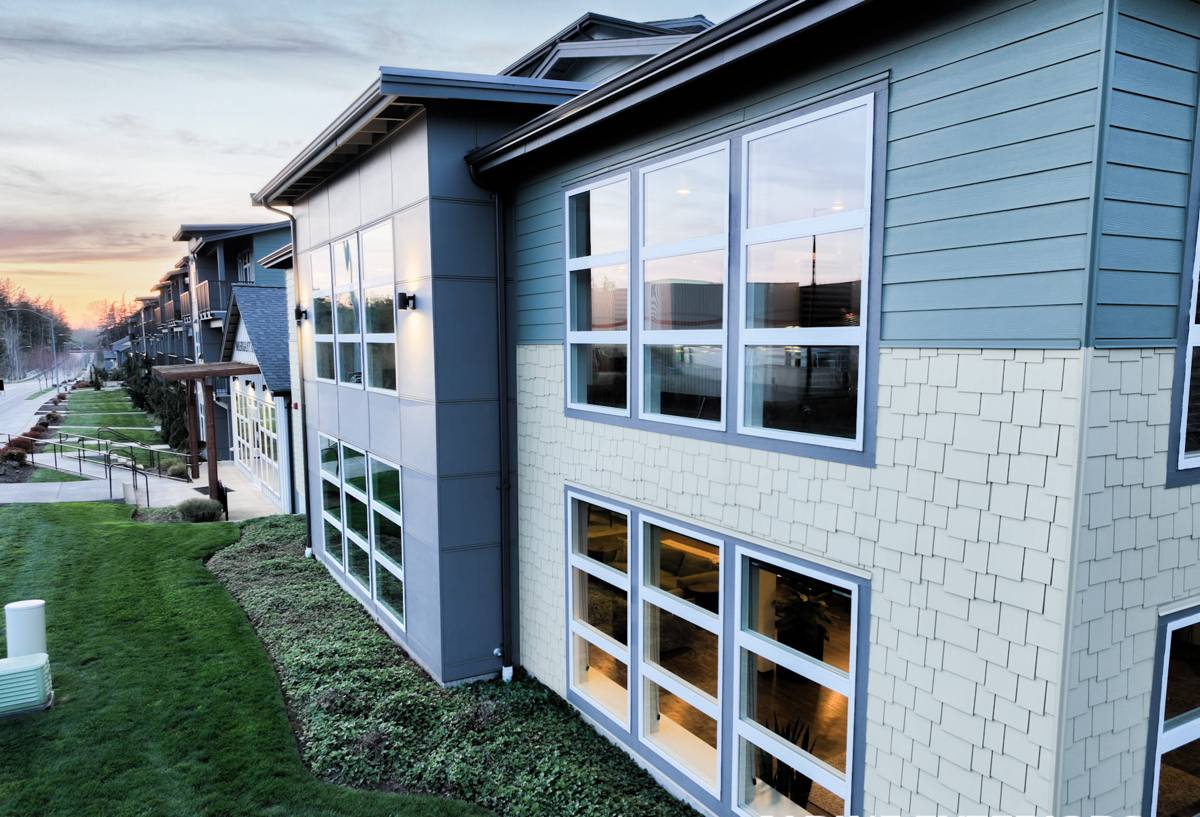
What Fairhaven's Climate Actually Does to Siding
Three conditions do most of the damage to exterior siding in this neighborhood, and they compound each other:
- Salt air: Proximity to the bay means airborne salt settles on exterior surfaces year-round. Salt accelerates corrosion of fasteners and metal trim, and it can degrade paint films that aren't designed to resist it.
- Driving rain: Storms off the water frequently come with sideways rain, not just vertical rainfall. That pushes water into laps, seams, and trim joints that a calmer climate would never test.
- Moss and prolonged dampness: Bellingham's wet season runs long, and shaded, north-facing walls in tree-covered lots can stay damp for weeks at a stretch. Moss and algae growth thrive in that environment, and organic material sitting against siding traps moisture against the surface.
Wood siding absorbs and releases moisture with every one of these cycles, which is where rot starts. Vinyl doesn't rot, but it flexes and gaps in wind, giving wind-driven rain a path behind the cladding. Engineered wood products (LP SmartSide and similar) resist moisture better than raw wood but are still wood-fiber based, meaning the edges and cut ends remain vulnerable if not sealed correctly during install. James Hardie fiber cement is made from sand, cement, and cellulose fiber — it doesn't rot, doesn't feed moss the way organic material can, and doesn't expand and contract with humidity the way wood-based products do.
Why We Install Only James Hardie
We don't carry LP SmartSide, vinyl, Cemplank, Allura, primed spruce, or cedar. That's a deliberate standard, not a limitation of what we're capable of installing. Here's the honest reasoning:
| Material | What it gets right | Why it's not what we put on Fairhaven homes |
|---|---|---|
| Vinyl siding | Low upfront cost, no painting required | Flexes and can crack in cold snaps; seams and panel gaps give wind-driven rain an entry point in exposed coastal locations |
| LP SmartSide / engineered wood | Lighter weight, easier to install than fiber cement | Still wood-fiber based; cut edges and fastener points need perfect sealing to resist the long damp season here — one missed detail and moisture gets in |
| Cedar / primed spruce | Natural look, traditional appeal | Needs ongoing refinishing and is genuinely combustible; salt air and moss speed up weathering on unfinished or under-maintained wood |
| Cemplank / Allura (other fiber cement) | Similar core material to Hardie, non-combustible | We standardized on one manufacturer so our crews, warranty process, and color-matching stay consistent — Hardie's HZ5 climate engineering and factory finish are built specifically for this kind of marine exposure |
James Hardie isn't the cheapest option on that list, and it's heavier and more labor-intensive to install correctly. What it offers in exchange is a non-combustible material that doesn't rot, holds paint far longer than wood, and comes engineered specifically for high-moisture climates through Hardie's HZ5 product line — which is what we spec for anything within reach of bay-driven weather, including Fairhaven.
ColorPlus Finish: Why It Matters More Here Than Inland
Salt air is hard on paint. Job-site painted siding — whatever the substrate — starts breaking down faster near the water because salt residue interferes with how paint adheres and cures over time. James Hardie's ColorPlus finish is baked on in a factory-controlled process, not brushed or sprayed on site, which gives it a more consistent, durable bond than field-applied paint. For a Fairhaven home, that translates to fewer repaint cycles and a finish that holds its color better against salt exposure and UV.
We also pay close attention to caulking and touch-up paint matching at trim and joint lines, since ColorPlus is engineered as a system — the factory finish, the touch-up paint, and the caulk are meant to work together, not be substituted with generic materials.
What a Correct Installation Involves
Fiber cement performs the way it's rated to perform only when it's installed to Hardie's published specifications. A rushed or generic install is where most siding failures — regardless of brand — actually originate. On a Fairhaven job, our process includes:
Moisture Management Behind the Siding
Correct water-resistive barrier installation and integrated flashing at every window, door, and penetration point. Given how much wind-driven rain this area sees, the drainage plane behind the siding matters as much as the siding itself.
Proper Clearances
Hardie specifies minimum clearances between the bottom of the siding and grade, roof lines, decks, and patios. These clearances exist specifically to keep splashback and standing moisture away from the material's edge — the most vulnerable point on any fiber cement installation.
Fastener Selection
Given the salt air here, fastener corrosion resistance isn't optional. We use fasteners rated for the exposure conditions, placed according to Hardie's fastening schedule — not just "enough nails to hold it up."
Joint and Seam Treatment
Every horizontal and vertical joint gets treated per Hardie's installation guide, including proper caulking at butt joints and correct overlap on lap siding, so wind-driven rain can't find a path behind the assembly.
Ventilation and Rainscreen Considerations
On shaded, moisture-prone walls — common on tree-covered Fairhaven lots — a rainscreen gap behind the siding helps the wall assembly dry out between wet stretches instead of staying damp against the sheathing.
Moss Season: What Homeowners Can Do Between Now and a Future Install
Whether or not a re-side is imminent, a few habits reduce moss buildup and extend the life of any exterior:
- Keep gutters clear so overflow doesn't run down the face of the siding, since standing water on a wall is what feeds moss growth.
- Trim back vegetation and tree cover where possible to let sun and airflow reach shaded wall sections.
- Avoid pressure-washing siding directly — it can force water behind laps and seams, especially on older or already-compromised siding.
- Address any soft spots, bubbling paint, or visible gaps promptly; on wood or engineered wood siding, these are early signs of moisture intrusion, not just cosmetic issues.
Our Process for a Fairhaven Job
- On-site assessment: We walk the exterior, check for existing moisture damage, note grade clearances, drainage patterns, and shaded/exposed wall zones specific to the lot.
- Product and color selection: We help select the right Hardie panel or lap profile and ColorPlus color, factoring in HOA or neighborhood character where relevant.
- Preparation: Removal of existing siding, inspection and repair of sheathing, and correct water-resistive barrier and flashing installation before a single piece of Hardie goes up.
- Installation to spec: Fastening, clearances, joint treatment, and trim work done to Hardie's published installation guidelines — not shortcuts.
- Final walkthrough: We review the completed job with the homeowner and cover warranty registration.
Cost Factors for a Fairhaven Project
Every home is different, but the line items that most affect price on a Fairhaven job are consistent:
| Factor | Why it affects cost |
|---|---|
| Extent of existing damage | Rot or moisture damage found under old siding requires sheathing repair before new siding goes on |
| Home size and wall complexity | More corners, dormers, and trim details mean more labor and material cuts |
| Panel vs. lap profile choice | Different Hardie profiles carry different material and labor costs |
| Accessibility | Steep lots, tight setbacks, or limited staging area common in older Fairhaven neighborhoods can affect labor time |
| Trim and accessory scope | Full trim replacement versus keeping existing trim changes both material cost and finished appearance |
We provide a written, itemized estimate after the on-site assessment — not a ballpark over the phone — because the condition of what's underneath the existing siding genuinely changes the scope.
Why a Local Crew Matters for This Job
A crew that already works Fairhaven and greater Bellingham has a practical sense of which walls on this type of lot take the worst weather, where moss tends to build up fastest, and how local moisture patterns actually behave through a wet season — not just what a spec sheet says in theory. That local familiarity shows up in small decisions during install: where to be extra careful with flashing, which clearances need attention on a sloped lot, and how to sequence the job around Whatcom County's weather windows.
It also matters for warranty support after the job is done. A crew based in the area is positioned to actually respond if a warranty question comes up years down the road, rather than a company that installed once and moved on.
Signs a Fairhaven Home May Be Ready for a Siding Reassessment
- Visible moss or algae streaking on north-facing or shaded walls
- Peeling, bubbling, or chalky paint on wood or engineered wood siding
- Soft spots or give when pressing on siding near the bottom edge or around windows
- Visible gaps, warping, or cracked panels
- Rusted or discolored fastener heads showing through the siding surface
- Rising energy bills that may point to a compromised wall assembly behind the siding
None of these on their own mean a full re-side is urgent, but together they're worth a professional look before a wet Bellingham winter makes small problems bigger.
If you're in Fairhaven and want a straight answer on what your siding needs — whether that's a full James Hardie install or just an honest assessment of what shape your current siding is in — we're glad to come take a look. Use the form below to request a free, no-pressure estimate.