 Bellingham Exterior
 Why Ferndale's Climate Is Hard on Siding
Ferndale sits close enough to Bellingham Bay and the Strait of Georgia that salt-laden air is a constant, low-grade factor in how exterior materials age here. Add Whatcom County's long wet season, where driving rain off the water can push moisture sideways into wall assemblies, and you have a climate that punishes any siding product with a weak point in its water management. Then there's moss. Ferndale's tree cover, humidity, and mild temperatures create a moss season that can stretch nine months out of the year on north-facing walls and anywhere shade lingers.
None of this is exotic weather. It's just persistent. Siding here doesn't usually fail from one dramatic storm — it fails slowly, from years of small moisture cycles finding a gap in the caulking, a seam that wasn't flashed correctly, or a surface that stays damp long enough for moss and algae to take hold and hold moisture against the wall. A correct installation has to account for all three factors from day one, not patch around them later.
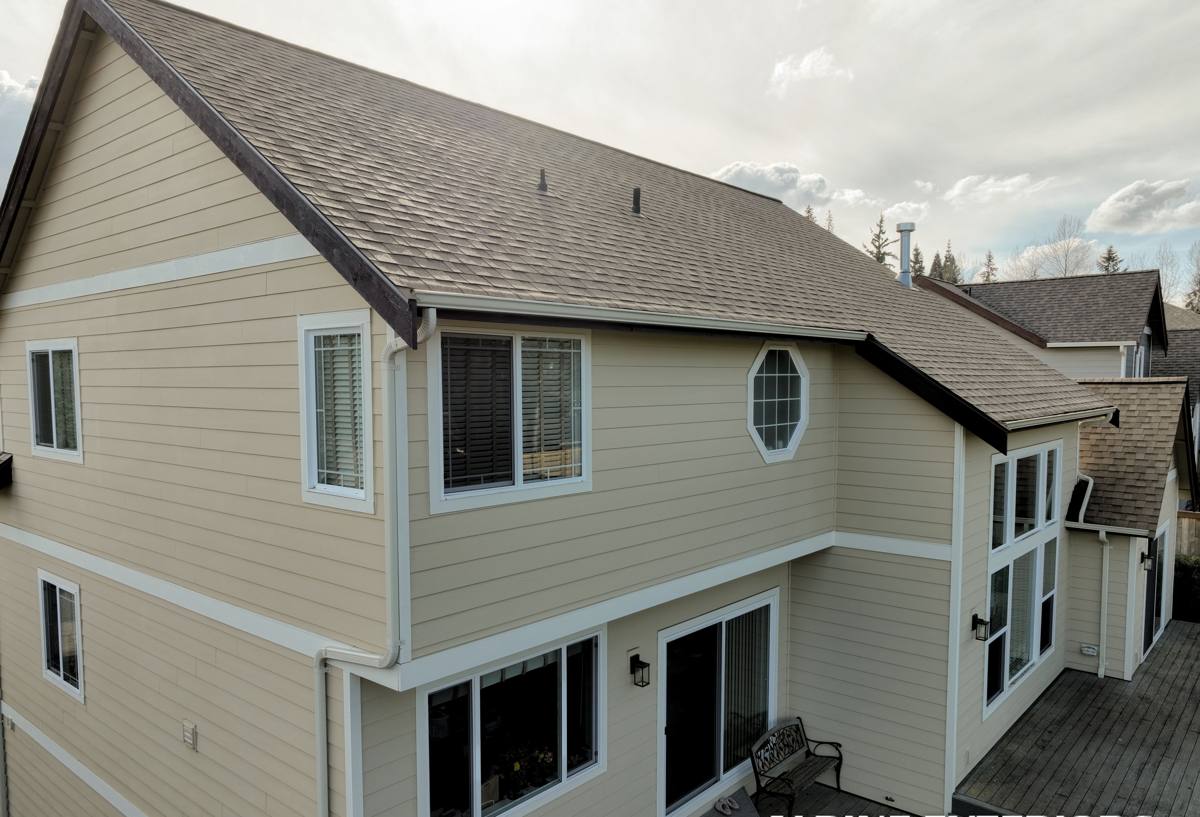
What Correct Siding Installation Actually Involves
Siding is a water management system, not just a finish layer. The visible boards get the attention, but the parts that determine whether a job lasts 10 years or 40 are mostly hidden once the job is done.
Water-Resistive Barrier and Flashing
Every wall needs a continuous water-resistive barrier behind the siding, with flashing integrated at every penetration — windows, doors, hose bibs, light fixtures, and the transitions where roof meets wall. In a driving-rain climate like ours, flashing details at horizontal trim and window heads matter more than almost anything else on the job. Skip or rush these and water gets behind the cladding regardless of how good the siding itself is.
Rainscreen Gap
A rainscreen — a small ventilated gap between the back of the siding and the water-resistive barrier — lets any moisture that does get past the outer layer drain and dry out instead of sitting against the sheathing. This is especially valuable in a place like Ferndale where humidity stays elevated for long stretches and walls don't get much of a chance to fully dry between rain events.
Fastening and Clearances
Manufacturer-specified nailing patterns, proper fastener penetration into framing, and correct clearances from grade, roof lines, and decks all affect long-term performance. Siding installed tight to grade or butted directly against a deck surface will hold moisture and invite rot and moss growth regardless of the material.
Why We Install Only James Hardie Fiber Cement
Bellingham Exterior Contractors made a deliberate decision to install James Hardie fiber cement siding exclusively — we don't install vinyl, LP SmartSide, Cemplank, Allura, primed spruce, or cedar. That's not a marketing position; it's a standard we hold because of what we've seen matter over time in this specific climate.
Vinyl siding is affordable and low-maintenance in mild conditions, but it's a plastic product that expands and contracts with temperature swings, can crack in cold snaps, and isn't a good match against the region's damp, mossy exposure — algae and moss show readily on its surface and it doesn't hold up well to impact. Wood-based products, including primed spruce and cedar, look great initially but require ongoing maintenance — repainting, caulking, and moisture monitoring — that most homeowners underestimate, and wood is inherently more vulnerable to the rot and moss issues that define our climate. Other fiber cement brands compete reasonably with Hardie on paper, but we've standardized our crews, training, and warranty relationships around one manufacturer so that every detail — from starter strips to caulking specs — is handled the same correct way on every job.
James Hardie fiber cement is non-combustible, dimensionally stable across temperature and moisture swings, and factory-finished with ColorPlus technology, so the color coat is baked on rather than field-applied — which matters in a climate where field-applied paint has less time to cure between rain events. Hardie also engineers specific product lines (HZ5 and HZ10) for different climate zones, and Whatcom County falls into a zone where that engineering is relevant, not a marketing footnote.
Choosing the Right Hardie Product Line for Ferndale
James Hardie's HZ10 line is engineered for wetter, harsher climate zones and is generally the better fit for homes with more direct exposure to wind-driven rain — waterfront-adjacent properties, open lots, and homes without much tree or structure buffering. HZ5 performs well in more moderate, sheltered conditions. Part of a correct installation is assessing your specific lot's exposure — sun, wind direction, tree cover, proximity to open water — and matching the product line to that reality rather than defaulting to whichever is cheaper.
Our Installation Process
- On-site assessment. We walk the property, check existing siding and sheathing condition, note moisture staining, moss patterns, and exposure direction, and identify any rot or water intrusion that needs to be addressed before new siding goes on.
- Tear-off and sheathing inspection. Old siding comes off and we inspect the sheathing and framing underneath. Any soft or water-damaged wood gets replaced — covering over existing damage is how small problems become expensive ones.
- Water-resistive barrier and flashing. We install a continuous barrier with correctly lapped and sealed flashing at every window, door, and penetration, following manufacturer flashing details rather than shortcuts.
- Rainscreen and fastening. Furring strips or a rainscreen product create the drainage gap, and Hardie boards go on with manufacturer-specified fasteners, spacing, and clearances from grade, roofline, and decks.
- Trim, caulking, and finish details. Corners, trim boards, and joints are finished per Hardie's installation guidelines to keep the warranty intact and keep water out of every seam.
- Final walkthrough. We review the finished job with the homeowner, point out anything to keep an eye on, and answer questions about care going forward.
Signs Your Ferndale Home May Need New Siding
- Persistent moss or algae growth that returns quickly after cleaning, especially on north- or shade-facing walls
- Soft spots, bubbling, or visible warping in existing siding boards
- Paint that's peeling or failing faster than expected, which often points to moisture trapped behind the siding
- Visible gaps at trim, corners, or window edges where caulking has failed
- Interior signs like musty smells, staining on interior walls near exterior corners, or unexplained drafts
- Siding that's simply reached the end of its practical service life and is original to an older home
Cost Factors for a Ferndale Siding Project
Every home is different, but these are the main variables that move the price of a siding installation up or down. We provide a specific written quote after an on-site assessment rather than a number pulled from a general range.
| Factor | Why It Matters |
|---|---|
| Home size and wall complexity | More square footage, dormers, and cut-in corners mean more material and labor |
| Existing sheathing condition | Rot or water damage found during tear-off requires repair before new siding can go on |
| Hardie product line and profile | HZ10 versus HZ5, and lap versus panel or shingle profiles, carry different material costs |
| Exposure and product line match | Higher-exposure lots may need HZ10 and additional flashing detail, adding some cost but reducing long-term risk |
| Trim and accessory scope | Full trim replacement, fascia work, or accent details add to the overall project |
| Access and site conditions | Multi-story homes, tight lots, or difficult staging areas affect labor time |
What to Ask Before Hiring a Siding Contractor
- Are you a certified or preferred installer for the specific siding product being proposed?
- Will you inspect and repair sheathing before installing new siding, and is that itemized in the quote?
- What water-resistive barrier and flashing details will you use, specifically?
- Does the installation include a rainscreen or drainage gap?
- What warranty applies to materials versus workmanship, and who backs each one?
- Can you provide a written, itemized quote rather than a rough verbal estimate?
Why a Crew That Already Works Ferndale Matters
Siding installation isn't just a spec sheet — it's judgment calls made on-site about exposure, flashing sequencing, and how a particular wall behaves in wind-driven rain. A crew that already works in and around Ferndale has seen how homes in this area actually age, which walls take the worst of the weather, and where moss and moisture problems tend to start. That local pattern recognition shows up in better decisions on your job, not just in a faster response time for follow-up questions.
If you're weighing a siding replacement or repair for a Ferndale home, we'd be glad to take a look and give you a straightforward, no-pressure assessment and estimate — just fill out the form below.