 Bellingham Exterior
 Fairhaven's Siding Sits Closer to the Weather Than Most
Fairhaven's spot along Bellingham Bay gives it some of the most exposed siding conditions in Whatcom County. Homes near the water take on salt-laden air that never fully lets up, southwest storms drive rain sideways into wall assemblies for months at a stretch, and the tree cover that makes the neighborhood shady and green also keeps north- and west-facing walls damp enough to grow moss for a good chunk of the year. None of that is unusual for Bellingham. But it adds up faster in Fairhaven than in drier, more sheltered parts of the city, and it shows up first in the siding.
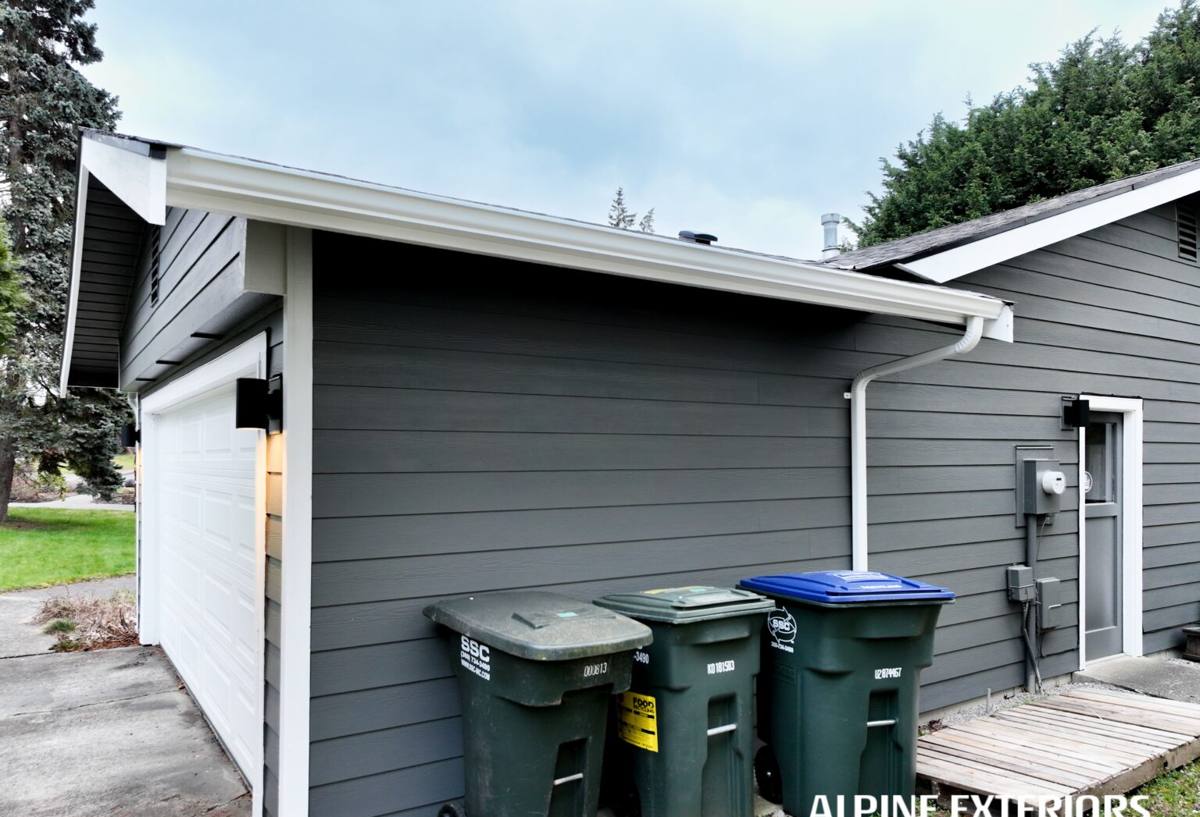
We install fiber cement siding for homeowners across Fairhaven because it's built to take that kind of sustained exposure without the maintenance treadmill that wood and engineered wood products require here. This page covers what Fairhaven's climate actually does to exterior walls, what a correct fiber cement installation involves, and how our process is set up specifically for homes in this kind of marine, moss-prone environment.
What Salt Air, Rain, and Moss Actually Do to Siding
Salt air
Airborne salt from Bellingham Bay settles on exterior surfaces and accelerates corrosion of anything metal — fasteners, flashing, trim caps. On wood and engineered wood siding, that corrosion often shows up as rust streaking and fastener failure years before the siding itself would otherwise need replacing. Fiber cement doesn't stop salt from reaching the fasteners, but the panel material itself doesn't corrode, swell, or pit the way wood-based products can once moisture and salt work into the surface.
Driving rain
Wind-driven rain doesn't just wet the face of the siding — it pushes water sideways and upward, testing every seam, joint, and piece of flashing on the wall. A siding product's water resistance matters less here than how well it was installed, because most rain-related siding failures in Fairhaven trace back to a lap, corner, or penetration that wasn't detailed correctly, not to the material itself failing on its own.
Moss and prolonged dampness
Shaded, tree-covered lots hold moisture longer after a storm, and moss takes hold on any surface that stays damp and doesn't get much direct sun. Wood siding gives moss something to root into over time as the surface texture breaks down; fiber cement's factory-cured surface doesn't feed moss growth the same way, though moss and grime will still sit on top of it if walls aren't ever rinsed off.
Why Fiber Cement Is the Right Call for This Neighborhood
Fiber cement is a mix of cement, sand, and cellulose fiber, cured into a dense, stable board. For a neighborhood dealing with salt exposure, wind-driven rain, and near-constant shade in places, that combination solves several problems at once:
- It's dimensionally stable, so it doesn't swell, cup, or crack the way wood does when it cycles between soaked and dry through a Whatcom County winter.
- It's non-combustible, which matters as much for insurance conversations as it does for fire safety.
- It holds a factory-applied finish far longer than field-painted wood, so it isn't relying on a paint film as its only line of defense against moisture.
- It doesn't provide organic material for moss, mildew, or rot fungi to feed on the way wood and wood-fiber products do.
That said, fiber cement isn't magic — it still needs to be installed with correct clearances, flashing, and fastening to perform the way it's designed to. We'll get into that below, because in a climate like Fairhaven's, installation quality matters as much as the product choice.
Why We Install Only James Hardie
We standardized on James Hardie fiber cement products and don't install LP SmartSide, vinyl, Cemplank, Allura, or bare wood siding. That's not a marketing position — it's a decision based on what we've seen hold up under repeated exposure to Pacific Northwest weather, and what stands behind the product if something does go wrong.
Hardie's HZ5 product line is engineered specifically for climates like ours, with freeze-thaw cycling and prolonged moisture exposure in mind. The ColorPlus factory finish is baked on under controlled conditions, which gives it better adhesion and UV resistance than a field-applied paint job, and it comes backed by a real finish warranty in addition to the product warranty. For a neighborhood where siding is going to spend a lot of its life wet, that combination of engineered material and factory finish is what we're willing to put our name behind.
Siding profiles that suit Fairhaven's housing mix
Fairhaven has a real mix of home styles — older craftsman and cottage-style houses along with newer infill construction. Hardie's lineup covers that range without forcing a mismatch:
- HardiePlank lap siding — the standard horizontal lap look, available in smooth or cedar-textured finishes, works well on most home styles in the area.
- HardieShingle siding — staggered or straight-edge shingle panels for homes going for a more traditional or cottage look.
- HardiePanel vertical siding — often used as an accent on gables or as a full treatment on more modern builds.
- HardieTrim — matching trim boards so fascia, corners, and window surrounds age at the same rate as the field siding instead of becoming the weak point.
What a Correct Installation Actually Involves
Most siding problems we get called out to inspect in this area aren't material failures — they're installation shortcuts that let water get behind the siding. In a climate that drives rain sideways for a good part of the year, the details matter more than they would somewhere drier.
The parts that don't show once the job is done
- A weather-resistant barrier installed and lapped correctly behind the siding, so any water that does get past the surface has somewhere to drain.
- Correct flashing at every window, door, and roofline intersection — this is where the majority of leaks originate.
- Proper clearance between the bottom edge of the siding and grade, decks, and roof lines, so splashback and standing water don't sit against the board.
- Fasteners driven to Hardie's specified pattern and depth — overdriven or underdriven nails are a common cause of premature failure.
- Field-cut edges sealed or primed per manufacturer spec, since a raw cut edge is the most vulnerable point on any fiber cement board.
Common mistakes that cause problems here specifically
In a wet, shaded climate like Fairhaven's, the mistakes that don't matter much in a drier region become real problems fast: siding installed tight to grade or hardscaping, caulk used in place of proper flashing, panels face-nailed instead of blind-nailed where blind-nailing is specified, and gaps at butt joints left unsealed. Any one of these can let moisture behind the siding, and once it's behind the cladding, it's working on the sheathing and framing, not just the surface finish.
Our Process for a Fairhaven Job
| Step | What we're checking or doing |
|---|---|
| Assessment | Walk the exterior, check current siding condition, look for signs of moisture intrusion, moss buildup, and existing flashing issues before quoting anything |
| Tear-off | Remove existing siding and trim, inspect the sheathing and weather barrier underneath for hidden rot or damage |
| Repair | Address any damaged sheathing or framing found during tear-off before anything new goes back on the wall |
| Weather barrier | Install or repair the water-resistive barrier and flashing at every penetration, window, door, and roofline |
| Installation | Install Hardie siding, trim, and accessories to manufacturer spec — clearances, fastener pattern, and sealed cut edges |
| Final walkthrough | Check caulking, touch-up paint on cut edges, and site cleanup before calling the job done |
Cost Factors for Fairhaven Homes
Every job is different, but the same handful of factors drive most of the variation in price for Fairhaven properties specifically:
| Factor | Why it matters here |
|---|---|
| Home age and current siding | Older homes may have hidden moisture damage under the existing siding that needs repair before new siding goes on |
| Wall exposure | Sides facing the bay or prevailing storms may need extra attention to flashing and weather barrier detail |
| Tree cover and access | Heavily shaded, tree-lined lots common in Fairhaven can complicate staging and access, and often show more existing moss and moisture damage |
| Siding profile chosen | Lap, shingle, and panel products carry different material and labor costs |
| Trim and detail work | Homes with more windows, gables, and architectural detail take more time to flash and trim correctly |
We give honest, itemized estimates after seeing the home in person — broad online price ranges rarely account for what's actually going on behind the existing siding.
Living With Fiber Cement Siding in This Climate
Fiber cement is genuinely low-maintenance compared to wood, but "low-maintenance" doesn't mean "no maintenance," especially with the moss and grime that build up on shaded Fairhaven walls. A simple seasonal routine keeps it looking right and catches small issues before they become expensive ones:
- Rinse siding with a garden hose once or twice a year, focusing on shaded, north-facing walls where moss and algae build up fastest.
- Walk the exterior after major windstorms to check for loose trim, damaged flashing, or debris caught against the wall line.
- Keep gutters clear so overflow doesn't run down the siding face repeatedly in one spot.
- Trim back vegetation and tree branches that keep a wall section shaded and damp longer than the rest of the house.
- Recaulk any joints that show gaps or cracking before the next wet season starts.
- Watch for chalking or fading on the ColorPlus finish over the years — it's covered by Hardie's finish warranty if it happens outside normal expectations.
Why Local Fairhaven Experience Matters
Fairhaven isn't a generic Bellingham neighborhood from a siding standpoint — it's a mix of older housing stock, heavy tree cover, and direct exposure to the bay, sitting inside a historic district where a lot of homes have architectural character worth matching rather than covering over. A crew that's worked this specific area knows which walls tend to hold moisture longest, where moss shows up first, and how to detail flashing for houses that catch driving rain off the water. That's different knowledge than what a crew working inland subdivisions builds up, and it shows in how the job holds up five and ten years out, not just on install day.
If you're dealing with aging siding, visible moss, or you're just planning ahead for a home in Fairhaven, we're happy to take a look and give you a straight assessment — no pressure, no upsell. Reach out for a free estimate using the form below.