 Bellingham Exterior
 Fiber Cement Siding for a Lake Whatcom Neighborhood
Silver Beach sits along the western shore of Lake Whatcom in northeast Bellingham, and the housing stock reflects that setting — older lake cottages that have been converted into year-round homes sit alongside newer construction built up the slope for a lake view. Whatever the vintage, most of these homes share the same exterior challenge: wooded, often shaded lots, a steady draw of lake humidity, and a Whatcom County climate that adds wind-driven rain, salt-tinged marine air, and a moss season that can run most of the year on top of it. This page is specifically about fiber cement siding for that setting — what the material needs to do here, what a correct installation involves, and how we approach the work on a Silver Beach property, without wandering into roofing, windows, or decks.
We install James Hardie fiber cement siding exclusively. Not a lineup of brands, not whatever happens to be cheapest to source that week — one system, installed to spec, because of what we've consistently seen hold up on lakeside and marine-influenced properties like the ones in this neighborhood.
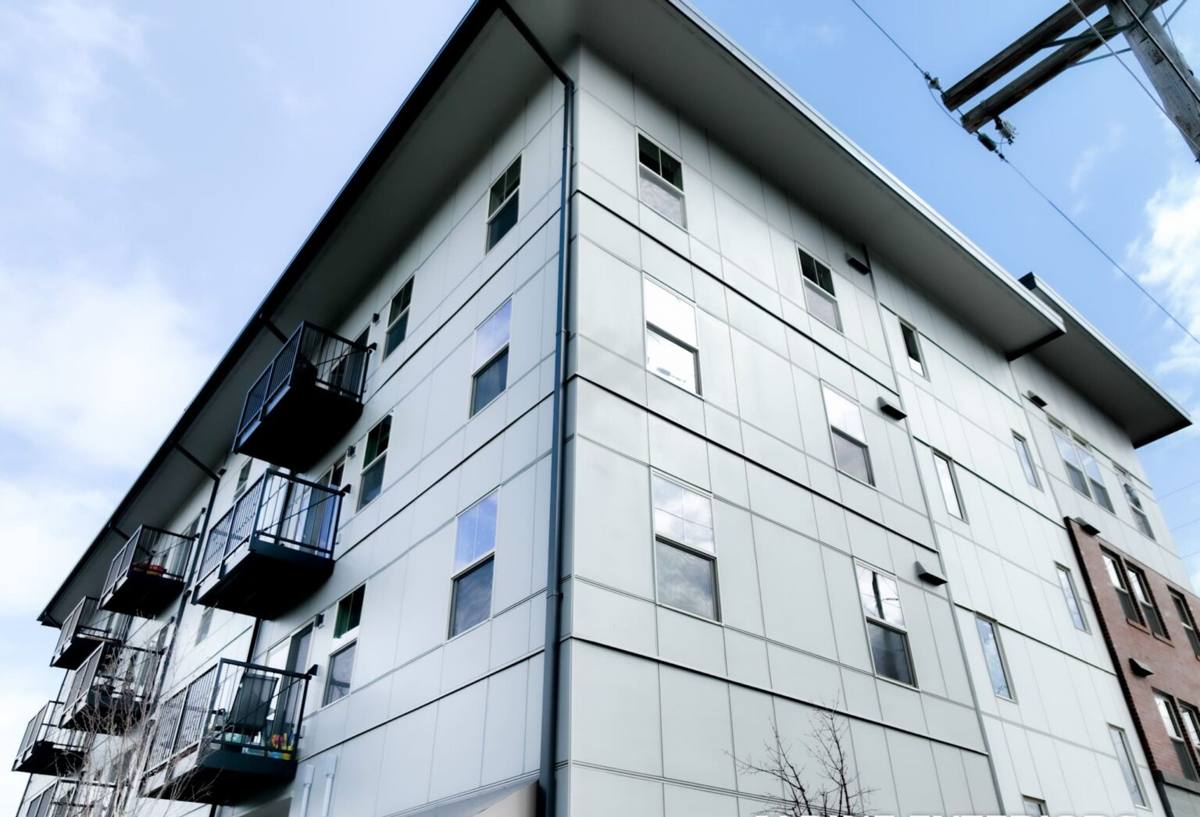
What This Setting Actually Asks of a Siding Material
Tree Cover and a Long Moss Season
Many Silver Beach lots carry mature tree cover, which is part of what makes the neighborhood feel established, but it also means large sections of siding rarely get direct sun. Shaded walls dry more slowly after every rain event, and in a climate that already delivers rain through most of the year, that slower drying window is exactly what moss and mildew need to get established. A siding material that holds moisture at its surface, rather than shedding it quickly, spends more time in that damp window every single cycle.
Lake Humidity and Uneven Exposure
Lake Whatcom adds its own humidity to the immediate area, and a wall that faces the open water directly deals with a different moisture load than a wall shaded by trees on the uphill side of the same house. That unevenness matters for siding more than most homeowners expect — a single specification applied blindly to all four walls will underperform on the exposed side and add unnecessary cost on the sheltered side.
Wind-Driven Rain and Marine Air
Storms crossing open water on the lake pick up speed and push rain into lake-facing walls at an angle, driving it into laps, trim lines, and seams that a straight-down rain would never test. Add in the salt-tinged marine air that moves across Whatcom County from Bellingham Bay and the Sound, and fasteners, trim hardware, and lower-grade finishes take on more corrosive and moisture stress here than they would on a dry inland lot.
Sloped, Wooded Lots
A lot of Silver Beach housing sits on sloped ground leading down toward the lake, which affects how water moves around the foundation and up the base of the wall during heavy rain. On these lots, the bottom courses of siding and the clearance from grade deserve as much attention as the material choice itself.
The James Hardie Product Lines We Install
Fiber cement isn't a single product — Hardie makes several distinct siding profiles, and choosing the right one for a given wall and architectural style is part of getting the job right.
| Product Line | What It Is | Where It Fits Best |
|---|---|---|
| HardiePlank lap siding | Horizontal overlapping boards, the most common fiber cement profile | Traditional and craftsman-style homes, the majority of Silver Beach's housing stock |
| HardiePanel vertical siding | Large flat panels, typically run with battens over the seams | Board-and-batten looks, accent walls, gable ends |
| HardieShingle siding | Individual or panelized shingles in straight-edge or staggered patterns | Cottage-style homes, a common look on older lakeside properties |
| HardieTrim boards | Fiber cement trim for corners, window and door casing, and fascia | Pairs with any of the above so the whole exterior is one consistent material |
Most of these are available in Hardie's ColorPlus factory finish, a color coat that's baked on under controlled conditions rather than brushed on after installation. That matters here specifically because a field-applied finish is the first thing to break down under sustained lake humidity and salt-tinged air, while a factory-cured finish resists fading and moisture intrusion at the coating level for years longer.
What a Correct Installation Actually Involves
The material only performs the way it's engineered to when it's installed to Hardie's published specifications, and on a lake-exposed or shaded, slow-drying wall, those details carry more weight than they would on a sheltered inland home.
- Fastener type, spacing, and depth: Overdriven or wrong-gauge fasteners crack the board or lose holding strength over time, and corrosion-resistant fasteners matter more given the marine air moving through the region.
- Clearance from grade and roofline: Hardie specifies minimum clearances at the bottom of the wall and at roof-to-wall transitions; skipping them lets splash-back and standing moisture wick into the board's cut edge.
- Rainscreen or drainage gap: A furred-out air gap behind the siding lets any moisture that does get past the surface drain and dry instead of sitting against the house wrap, which matters more on a wall that stays damp longer than most.
- Joint and seam treatment: Butt joints, corners, and penetrations need to be lapped, flashed, or sealed exactly to spec; a caulked joint that's skipped or done carelessly is one of the most common places we find moisture tracking in on tear-offs.
- House wrap and flashing integration: Siding, house wrap, and window or door flashing have to work as one continuous water-management system, not separate steps installed in isolation from each other.
A quality board installed loosely still develops problems. A correctly detailed installation is what actually earns fiber cement's long service life, and it's the standard we hold every Silver Beach project to.
Our Process for a Silver Beach Fiber Cement Project
- On-site wall-by-wall walk: We look at exposure separately for each side of the house, since a lake-facing wall and a tree-shaded wall on the same home are dealing with different moisture loads.
- Tear-off assessment: We check what's behind the existing siding for hidden rot or moisture damage before quoting, rather than pricing blind off square footage.
- Substrate and flashing repair: Any compromised sheathing, house wrap, or flashing gets corrected before new siding goes on top of it.
- Product and color selection: We help match the right Hardie profile and ColorPlus color to the home's style and to how each wall will actually be exposed.
- Installation to spec: Fastening, clearances, drainage gap, and joint treatment are handled to Hardie's published requirements on every wall, not just the ones that are easy to reach.
- Final walkthrough: We go over the finished work with the homeowner before calling the job done.
Cost Factors for a Fiber Cement Re-Side in Silver Beach
| Factor | What It Affects | Why It Matters Here |
|---|---|---|
| Tear-off vs. installing over existing siding | Labor scope and hidden-damage exposure | Tear-off is often the honest choice on older lakeside homes where moisture has had years to work behind the wall |
| Substrate condition | Repair cost before new siding goes on | Shaded, slow-drying walls common on wooded Silver Beach lots are more likely to have hidden sheathing damage |
| Wall exposure and orientation | Flashing and drainage detailing per wall | Lake-facing walls taking direct wind-driven rain need more attention than a sheltered, tree-shaded side |
| Profile and trim selection | Material cost and finish longevity | ColorPlus factory finishes outlast field-applied paint against salt air and lake humidity |
| Site access and slope | Labor time and staging needs | Sloped lots common near the shoreline can add setup and scaffolding time |
Every one of those factors depends on the actual house, which is why we walk the property in person before quoting rather than pricing off a generic per-square-foot number.
Signs Your Silver Beach Home's Siding Is Due for Replacement
- Hairline cracking at butt joints or cut ends, often the first sign of moisture working into an unsealed edge
- Soft or spongy sections, especially near the base of the wall or below window sills
- Moss or dark staining that returns within weeks of cleaning, particularly on shaded or lake-facing walls
- Visible gaps or separation at corners, trim, or seams
- Paint or finish that's chalking, peeling, or fading well ahead of schedule
- Rust streaking around fasteners or trim, a common early sign of marine air exposure
- Warping, buckling, or delamination on any older wood-based or engineered siding you're considering replacing
Why a Crew That Already Works Silver Beach Matters
Two homes on the same short stretch near the lake can have genuinely different exposure profiles — one sitting low with a full lake-facing wall, another set back and shaded by trees on the slope above. A crew that already installs fiber cement in this neighborhood recognizes that difference on sight and adjusts drainage detailing, fastener choice, and joint treatment wall by wall instead of running one generic spec across the whole house. That's the kind of judgment that comes from repeated work in this exact setting, not from a spec sheet, and it's the difference between siding that looks right for a season and siding that's still performing correctly fifteen or twenty years from now.
If your Silver Beach home needs new siding, a partial repair, or just an honest read on what's actually happening behind an aging wall, we're glad to take a look. Reach out using the form below to schedule a free, no-pressure estimate.