 Bellingham Exterior
 Windows Built for Happy Valley's Weather, Not Just Its Openings
Happy Valley sits close enough to Bellingham Bay and the Salish Sea that salt-laden air is a constant factor in how exterior materials age here, and the neighborhood's mature tree canopy means shade, damp ground-level air, and a moss season that runs longer than it does in drier parts of Whatcom County. Add in the driving, wind-pushed rain that comes through this part of the Pacific Northwest several months a year, and you have a climate that is genuinely hard on windows — not because any one factor is extreme, but because the combination never really lets up. A window that works fine in a dry inland climate can fail here years ahead of schedule if it wasn't selected and installed with this specific mix of conditions in mind.
Custom windows, in this context, isn't a marketing term. It means matching frame material, glass package, and flashing detail to the actual exposure a given wall faces — a west-facing wall catching prevailing rain needs different treatment than a shaded, moss-prone north wall — and it means building the window to fit openings that, especially in Happy Valley's older housing stock, are rarely perfectly square anymore.
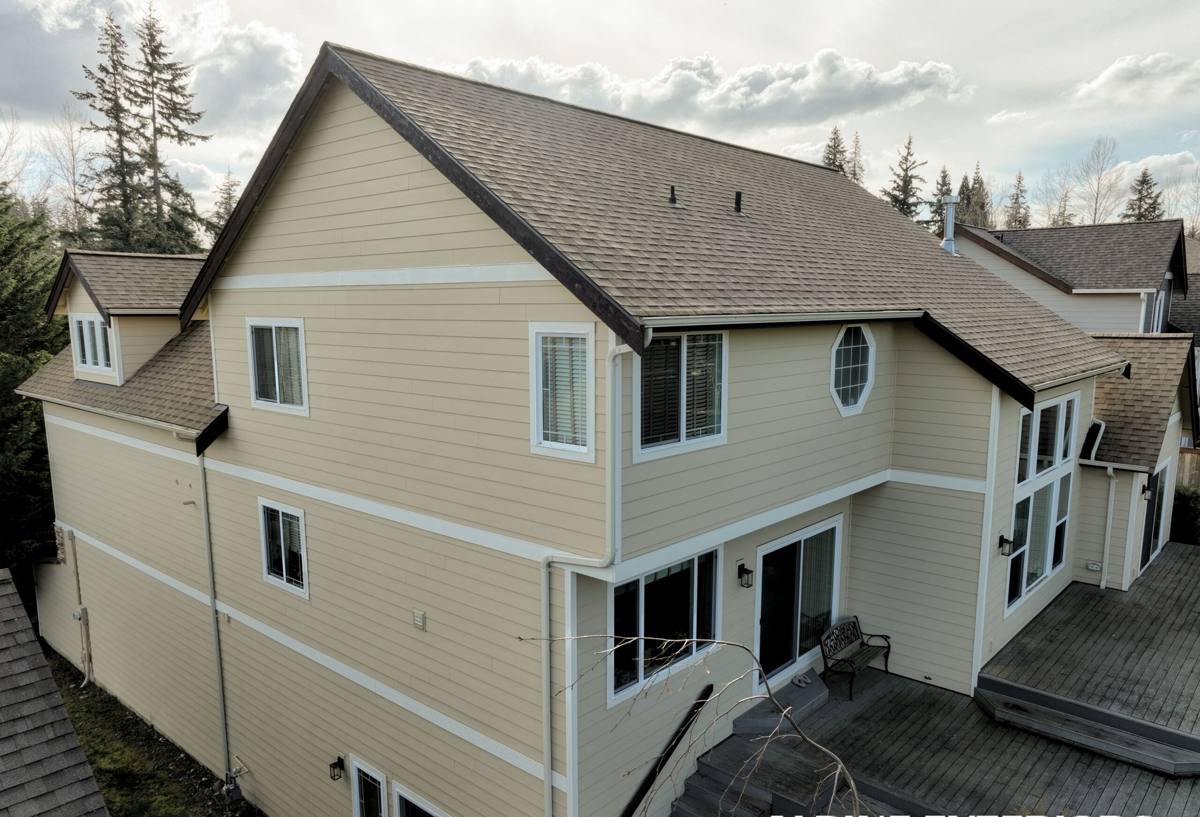
How Homes in This Area Show Window Wear
We see a fairly consistent pattern of failure in this neighborhood, and most of it traces back to moisture finding a way in over time rather than any single dramatic event.
What to look for
- Fogging or a permanent haze between panes — the sealed gas fill has failed and moist air has gotten into the airspace
- Soft or discolored wood trim around the frame, especially on shaded or north-facing walls
- Visible moss or dark green-black staining building up in the sill track or on exterior trim
- Drafts you can feel with a hand near the frame edge on a windy day
- Difficulty opening, closing, or latching — frames swelling or settling out of square
- Paint that's bubbling or peeling specifically around the window perimeter, not the wall generally
Any one of these on its own isn't an emergency. Several together, especially on a wall that takes direct weather, usually means the window and its flashing are due for a real look, not just a caulk touch-up.
What "Custom" Means for an Older or Irregular Home
A lot of homes in and around Happy Valley were built well before today's standard window sizes existed, and decades of settling, past remodels, or DIY trim work can leave openings that are slightly out of square or a nonstandard size. Stock replacement windows are manufactured to fit common rough openings — when the actual opening doesn't match, installers are sometimes tempted to force a fit, pack gaps with extra caulk or foam, or trim the opening down in a way that compromises the structure around it.
A properly custom window is manufactured to the actual measured dimensions of your opening, out-of-square included, so it seats correctly without shims doing work they weren't meant to do. That matters more here than in a drier climate, because any gap or uneven seal is an entry point for wind-driven rain, and once moisture gets behind a frame in a shaded, damp environment, it doesn't dry out quickly — it sits there and does damage.
Choosing the Right Frame Material
There's no single "best" window material — the right choice depends on the wall's exposure, the home's style, and how much upkeep you want to take on. Here's how the common options actually perform in this kind of coastal, moss-prone climate.
| Frame Material | Coastal/Moisture Performance | Maintenance | Best Fit |
|---|---|---|---|
| Vinyl | Won't rot or corrode from salt air; seams are the main long-term watch point | Low — occasional cleaning | Budget-conscious replacements, rental properties, most standard openings |
| Fiberglass | Excellent — dimensionally stable, doesn't expand/contract with damp-to-dry cycles the way vinyl can | Low | High-exposure walls, homes where long-term stability matters more than upfront cost |
| Wood-clad | Good if the cladding and flashing are done right, but the wood core is vulnerable if water ever gets behind the cladding | Higher — finish and seals need periodic attention | Historic or traditional-style homes where interior wood look matters |
| Aluminum | Weak thermal performance and prone to condensation in our wet climate unless thermally broken | Moderate | Specific architectural or commercial-style applications only |
For most Happy Valley homes we steer clients toward vinyl or fiberglass for general use, and we're upfront when a wood-clad option is being considered for a heavily shaded or rain-exposed wall — it can look great, but it puts more of the long-term performance burden on flashing quality and ongoing maintenance than a homeowner should take on without knowing that going in.
Glass and Coastal Air
Salt-laden coastal air can accelerate corrosion on lower-quality hardware and seal components over years, so we pay attention to the corrosion resistance of the hardware itself, not just the glass. For glass packages, double-pane with a low-E coating and argon fill is the standard baseline for this climate; triple-pane adds real value mainly on walls with heavy wind exposure or where street or neighbor noise is a factor, and it helps reduce interior condensation on cold, damp mornings — a common complaint in shaded, humid pockets of this neighborhood.
Our Installation Process
Because moisture management is the whole game in this climate, our process is built around getting the flashing and sealing details right, not just setting the window in the hole.
- On-site measurement and assessment — we measure the actual opening (not the old window) and check the surrounding framing, sill, and trim for any existing rot or moisture damage before ordering anything
- Custom manufacturing — windows are built to the true opening dimensions and the frame material/glass package selected for that wall's exposure
- Removal and opening prep — old units come out carefully so we can inspect and, if needed, repair the framing and sill underneath before the new window goes in
- Flashing and weather barrier integration — this is the step that determines whether the window stays dry for the next twenty years; flashing tape and building wrap are integrated in the correct shingled order so water is always directed outward, never trapped behind the frame
- Setting, shimming, and sealing — the window is set level and square, shimmed at the manufacturer's load points, and sealed with the appropriate sealant for the material and exposure
- Interior and exterior finish work — trim, caulking, and paint or stain matched to the surrounding siding or trim
- Final walkthrough — we check operation, latching, and seal on every window before we call the job done
Living With Moss and Salt Air After Install
Even a well-installed window benefits from a little seasonal attention in this environment. None of this is complicated, but skipping it lets small problems turn into bigger ones.
- Clear moss and debris out of sill tracks and weep holes at least once or twice a year — clogged weep holes trap water against the frame
- Rinse salt residue off exterior frames periodically if the home has direct exposure to bay-driven wind and spray
- Trim back tree branches and vegetation that keep a wall shaded and damp longer than it needs to be — this is often the single biggest factor in local moss buildup
- Check exterior caulking annually for cracking or separation, especially after a hard winter
- Operate every window through its full range a few times a year so hardware doesn't seize up from disuse
Why Local Experience in This Neighborhood Matters
Happy Valley's mix of older homes, hillside lots, and heavy tree cover means every property has its own combination of exposure, shade, and drainage quirks. A crew that regularly works in this specific part of Bellingham has already seen how these factors play out over time — which walls tend to hold moisture, which older framing details need extra care during removal, and which flashing approaches actually hold up through a full Whatcom County wet season rather than just looking right on install day. That's the kind of judgment that comes from doing the work here repeatedly, not from a general install checklist.
We also handle the practical side — permitting requirements and any applicable local code standards for window replacement in the City of Bellingham — so you're not left figuring that out on your own.
What Affects Cost
Every project is different, but the main cost drivers for custom window work in this area are consistent: the number and size of windows, frame material, glass package, and how much repair the existing opening needs once the old window comes out. Homes with rot or moisture damage discovered behind an old frame will cost more to do right than a straightforward swap into a sound opening — and we always show you what we find before proceeding, rather than surprising you at the end. Broadly, homeowners in this region should expect a wide range depending on these factors, from a modest per-window figure for a basic vinyl replacement up to significantly more for larger custom units in premium materials.
Get a Straight Answer for Your Home
If you're dealing with foggy glass, drafts, moss buildup, or a window that's simply past its working life, we're happy to come take a look and give you an honest read on what's actually needed — no pressure, no inflated scope. Fill out the form below for a free estimate on custom window work at your Happy Valley home.