 Bellingham Exterior
 Edgemoor's Setting Is Beautiful — and Hard on Siding
Edgemoor sits close to the water on the south side of Bellingham, with mature tree cover, older custom homes, and bluff-adjacent lots that catch weather coming off Bellingham Bay. That combination is exactly what makes exterior cladding fail early when the wrong material or the wrong installation detail is used. Salt-laden air corrodes fasteners and finishes over time, driving rain off the water pushes moisture into every gap and seam, and shaded, tree-lined lots stay damp long after a storm passes — which is exactly the environment moss and algae need to take hold on a wall.
None of this means Edgemoor is an unusually difficult place to keep a house looking good. It means the siding, the flashing details, and the installation sequence all have to be chosen with this specific microclimate in mind, not a generic Pacific Northwest checklist. That's the whole premise of this page: what Edgemoor homes specifically need from their siding, and what a correct James Hardie installation looks like when it's done for this neighborhood rather than for a spec sheet.
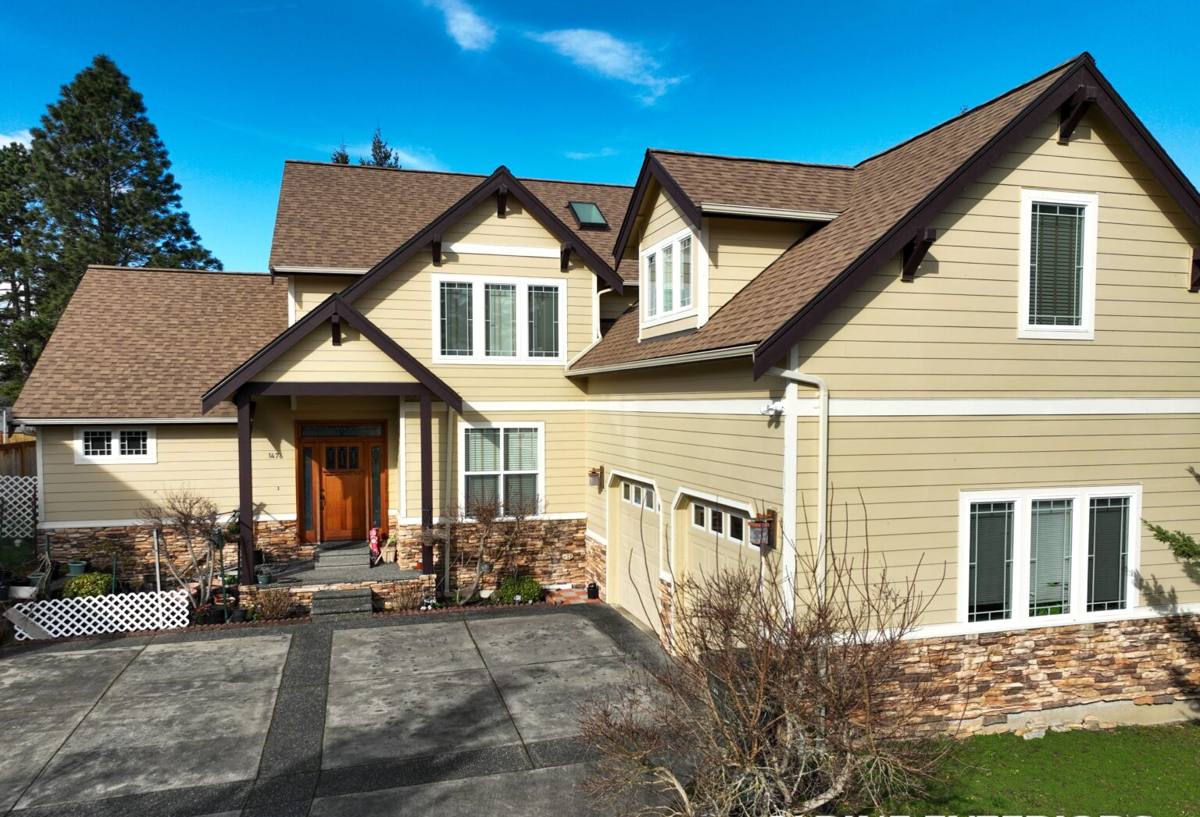
What Salt Air, Rain, and Moss Season Actually Do to a Wall
Salt air
Homes with any water exposure deal with airborne salt that settles on exterior surfaces and accelerates corrosion of fasteners, flashing, and lower-quality paint finishes. Over years, this shows up as rust streaking at nail heads, chalking or fading on cheaper coatings, and premature wear at the bottom courses closest to grade and hardscape, where salt-carrying moisture lingers longest.
Driving rain
Whatcom County storms often come in sideways off the water, which means siding isn't just shedding water downward — it's fighting wind-driven rain that gets pushed sideways and upward into laps, corners, and any penetration that isn't flashed correctly. A siding system that only performs well in calm, straight-down rain isn't built for this exposure.
Moss and algae season
Bellingham's wet season runs long, and Edgemoor's tree canopy keeps north-facing walls and shaded siding in shadow for extended stretches. Damp, shaded surfaces are where moss spores and algae establish first. Once organic growth gets a foothold in a porous or degraded finish, it holds moisture against the substrate and speeds up whatever damage is already happening underneath.
Why We Only Install James Hardie in This Kind of Climate
We install James Hardie fiber cement siding exclusively — not vinyl, not primed cedar or spruce, not engineered wood products like LP SmartSide, not other fiber cement brands. That's a deliberate standard, not a sales preference, and it matters more in a place like Edgemoor than almost anywhere else in Bellingham.
Fiber cement is non-combustible and dimensionally stable, meaning it doesn't swell, cup, or rot the way wood-based products can when they take on repeated moisture. James Hardie's ColorPlus factory finish is baked on and warranted separately from the substrate, which matters directly here: a finish that resists fading and holds its seal is a finish that keeps salt air and standing moisture from ever reaching the fiber cement underneath. Engineered wood products use wood fiber as their base material, which means any breach in the coating exposes a substrate that swells and deteriorates when it stays wet — a real risk on shaded, damp Edgemoor walls. Vinyl expands and contracts more with temperature and UV exposure, and its seams and J-channels are common points where wind-driven rain finds a way in over time.
How the main options compare for this climate
| Material | Moisture & rot resistance | Salt air / coastal durability | Moss & algae resistance | Typical maintenance |
|---|---|---|---|---|
| James Hardie fiber cement | High — cement-based, doesn't rot | Strong with correct fasteners and flashing | Finish resists organic growth; occasional cleaning still needed on shaded walls | Periodic washing; factory finish reduces repainting cycles |
| Vinyl siding | Sheds water but seams can allow intrusion | Can chalk and become brittle over time | Growth can establish in seams and behind panels | Low, but panels can warp or crack and are hard to spot-repair |
| Primed cedar or spruce | Wood substrate; vulnerable once coating fails | Salt accelerates coating breakdown | High risk on shaded, damp elevations | Regular repainting/restaining and inspection |
| Engineered wood (e.g. LP SmartSide) | Treated wood strand base; edge and cut-end sealing is critical | Coating maintenance is important in salt exposure | Moderate; depends on coating condition | Watch for swelling at joints and touch up coating as needed |
What a Correct James Hardie Installation Involves
Hardie siding performs the way it's designed to only when it's installed to the manufacturer's specification — and in a climate like this one, the details that get skipped on a rush job are the same details that cause problems in three to five years, not immediately.
- Proper drainage plane and rain screen gap behind the siding so any incidental moisture can drain and the wall can dry
- Correct flashing at every window, door, and horizontal trim transition, lapped so water is always directed outward and down
- Manufacturer-specified fastener type and placement — the wrong fastener in a salt-air environment corrodes and stains long before the siding itself fails
- Minimum clearance from grade, decks, and roof lines so splash-back and standing moisture don't sit against the bottom course
- Factory-cut, factory-sealed edges wherever possible, with field cuts primed or sealed per Hardie's installation guidelines
- Caulking only at the joints Hardie specifies — over-caulking traps moisture rather than shedding it
Skipping any one of these doesn't usually show up on install day. It shows up as a soft spot at a window head, a streak below a poorly lapped J-channel, or moss taking hold behind trim that was never flashed correctly — years later, when it's a repair instead of a five-minute detail.
Choosing the Right Hardie Line for a Bay-Adjacent Home
James Hardie engineers its products by climate zone, and homes with real moisture and salt exposure are exactly the case those engineered lines exist for. The HZ5 formulation is built for wetter, more variable climates like ours, with a substrate and finish combination designed to hold up under repeated wet-dry cycling rather than the drier conditions other regions deal with. For an Edgemoor home, that's the baseline — not an upgrade. Panel and plank profiles (lap siding, board-and-batten, shingle-style panels) can be chosen to match the character of the home, but the underlying climate-engineered formulation is what actually determines how the siding performs on a wall exposed to bay weather and long shaded stretches.
What Actually Drives the Cost of This Kind of Project
Every Edgemoor property is different — lot access, tree cover, existing siding condition, and roofline complexity all affect scope. Rather than quote a number that won't hold up house to house, here's what actually moves the price on a project like this:
| Factor | Why it matters here |
|---|---|
| Existing siding removal | Tear-off and disposal of old wood, vinyl, or damaged siding adds labor before new siding can go on |
| Sheathing and moisture damage found at tear-off | Long-shaded walls and past moisture intrusion sometimes mean repair or replacement of sheathing underneath |
| Access and lot conditions | Mature trees, slopes, and bluff-adjacent setbacks can affect staging, scaffolding, and equipment access |
| Trim, fascia, and detail work | Older custom homes often have more window and roofline detail, which adds flashing and trim time |
| Siding profile and finish selection | Lap, shingle-style, and board-and-batten profiles, plus ColorPlus finish selection, affect material cost |
How Our Process Works
We start with an on-site assessment of the existing siding, sheathing, and trim, paying particular attention to north-facing and tree-shaded elevations where moisture and organic growth tend to be worst. From there:
- We document siding, trim, and flashing condition, including any areas with existing moisture damage that need repair before new siding goes on
- We plan the drainage and flashing approach for the specific home — window heads, roof-to-wall transitions, and deck ledger areas get particular attention on bay-exposed homes
- We remove existing siding and address any sheathing repairs before anything new is installed
- We install James Hardie siding to manufacturer specification, including fastening schedule, clearances, and flashing sequence
- We do a final walk-through covering finish, caulking, and cleanup before the job is considered complete
Why a Crew That Already Works Edgemoor Makes a Difference
A contractor who already works this part of Bellingham knows which elevations on a bay-adjacent, tree-covered property need extra flashing attention before they ever climb a ladder. They've seen how moss establishes on shaded walls in this specific pocket of Whatcom County, they know how to sequence work around the wetter stretches of the year without leaving a wall exposed longer than it needs to be, and they're not learning the neighborhood's quirks on your project. That local familiarity shows up in fewer callbacks, not in anything you'd necessarily notice on install day.
Living With Hardie Siding Through Moss Season
Correctly installed Hardie siding with a proper factory finish needs far less upkeep than wood or aging vinyl, but no exterior material is maintenance-free in a climate like this. A simple seasonal routine keeps it looking right:
- Rinse shaded, north-facing walls periodically during the wet season to keep moss and algae from establishing
- Keep gutters clear so overflow doesn't run down the wall face and stay damp against the siding
- Trim back branches and foliage that hold moisture directly against the wall
- Have caulking and flashing points checked periodically, especially after major storms
- Address any impact damage or chipped finish promptly so the substrate underneath stays protected
If your Edgemoor home is due for new siding or you want a second opinion on what your current siding actually needs, we're happy to take a look. Reach out for a free, no-pressure estimate — the form below only takes a minute.