 Bellingham Exterior
 Metal Roofing Built for Sunnyland's Conditions
Sunnyland is one of Bellingham's older, tree-lined neighborhoods, and that combination of mature canopy, proximity to the water, and Whatcom County's wet climate puts real, ongoing stress on a roof. Homes here deal with a mix of shade-driven moisture retention, wind-blown salt air off Bellingham Bay, and long stretches of the year where the roof simply doesn't get a chance to dry out. Metal roofing is one of the few systems that holds up well against all three at once, provided it's specified and installed correctly for this specific area rather than treated as a generic product install.
This page focuses on metal roofing as it applies specifically to Sunnyland properties — what the climate demands, what a correct installation looks like, and how our process works when we take on a project in this neighborhood.
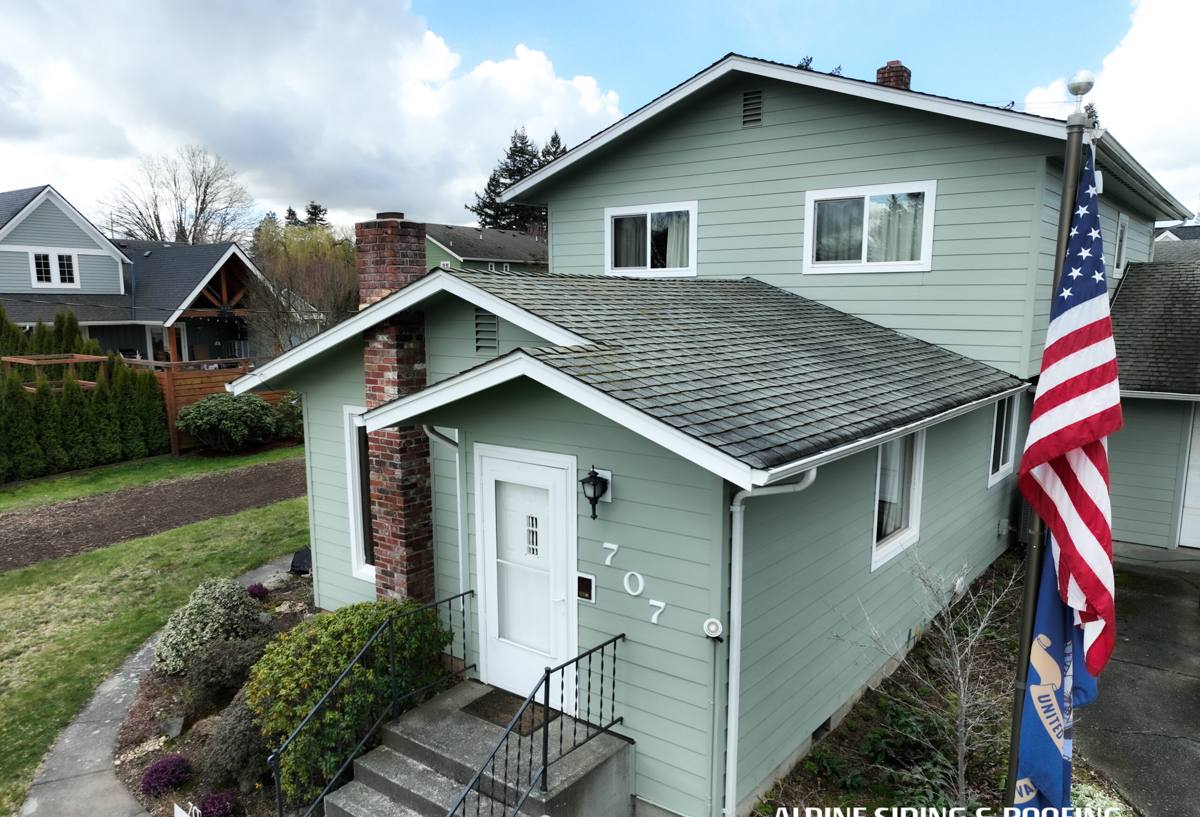
What Bellingham's Climate Does to a Roof Over Time
Three regional factors matter most for roofing decisions in Sunnyland:
Salt Air
Bellingham's coastal location means airborne salt is a real factor for homes anywhere near the water, and it accelerates corrosion on unprotected or poorly coated metal fasteners and flashing. This doesn't rule out metal roofing — it just means finish and fastener selection have to account for it rather than defaulting to whatever is cheapest.
Driving Rain
Whatcom County rain often comes in sideways during winter storms, which puts more load on flashing details, seam design, and underlayment than a simple straight-down downpour would. A roof that's fine in a dry climate can leak here if laps, seams, and penetrations aren't detailed for wind-driven water.
Long Moss Season
Shaded, tree-heavy lots — common throughout Sunnyland — stay damp longer after every rain event, which is exactly the condition moss and algae need to establish. On some roofing materials that means granule loss, staining, and trapped moisture under organic growth. Metal roofing sheds this material differently than a textured surface does, which is one of the practical advantages homeowners in shaded parts of the neighborhood often care about most.
Why Metal Roofing Performs Well in This Environment
Metal roofing isn't the right fit for every home or every budget, but for Sunnyland's mix of shade, moisture, and coastal exposure, it has a few real advantages worth naming honestly:
- A smooth, low-friction surface that sheds moss, needles, and debris more readily than a rough-textured roofing material, reducing the organic buildup that holds moisture against the deck.
- Fewer individual overlapping pieces than shingle roofing, which means fewer edges and laps for wind-driven rain to work into.
- Long service life when the coating system and fasteners are matched to a coastal-influenced climate, reducing how often the roof is touched at all — every penetration and repair is a chance to introduce a future leak point.
- Better resistance to the freeze-thaw and wet-dry cycling that gradually breaks down some other roofing materials over a Bellingham winter.
None of that means metal roofing is maintenance-free. It still needs correct detailing, periodic inspection, and attention to specific problem areas like valleys and penetrations, which we cover further down.
Panel and Finish Options
Homeowners in Sunnyland typically choose between a few standard metal roofing configurations. The right one depends on the home's style, budget, and how much shade and moisture exposure the specific lot has.
| Option | What It Is | Best Fit | Trade-Offs |
|---|---|---|---|
| Standing seam | Concealed-fastener panels with raised interlocking seams | Homes wanting the cleanest look and longest service life, shaded or exposed lots | Higher material and labor cost than exposed-fastener panels |
| Exposed-fastener panel | Ribbed metal panels attached through the face with screws | Budget-conscious projects, outbuildings, secondary roofs | Fasteners need periodic inspection and eventual re-torque or replacement as gaskets age |
| Metal shingle/shake panels | Interlocking panels formed to resemble shingle or shake profiles | Homeowners wanting a traditional look with metal's durability | More seams than standing seam; installation detail matters more |
| Galvalume vs. painted steel | Bare corrosion-resistant coating vs. factory paint finish | Painted finishes for color-matching and added UV/salt protection | Painted finishes cost more upfront but hold color and resist coastal corrosion longer |
For most Sunnyland homes near mature trees or within reach of coastal air, we steer homeowners toward standing seam with a quality painted finish and stainless or coated fasteners. It's a higher upfront investment, but it's the configuration that best matches what this specific climate does to a roof over 20-plus years.
What a Correct Metal Roof Installation Actually Involves
Metal roofing is unforgiving of shortcuts in a way that's easy to hide at first and expensive to fix later. A correct job for this climate includes:
Deck and Underlayment
The roof deck needs to be sound before any metal goes down — soft or delaminated sheathing found during tear-off gets replaced, not covered over. A high-temperature synthetic or ice-and-water-style underlayment goes down as a secondary moisture barrier, which matters here because wind-driven rain can occasionally work past the metal at seams and penetrations before it ever reaches the deck.
Fastener and Flashing Selection
Given the salt air exposure common around Bellingham, fasteners and flashing need corrosion-resistant coatings rated for coastal use, not generic hardware-store fasteners. Dissimilar metals in contact with each other can set up galvanic corrosion over time, so flashing, fasteners, and panel material need to be compatible, not just whatever was on hand.
Seam and Lap Detailing
Standing seam panels rely on properly formed, continuous seams to shed wind-driven rain; exposed-fastener systems rely on correct lap and screw pattern. Either way, valleys, ridges, and hips are where sideways rain tests a roof hardest, and that's where we spend the most attention.
Ventilation
Metal roofing performs best over a properly vented assembly. Trapped moisture under a roof deck in a shaded, damp neighborhood like Sunnyland can cause problems independent of what's happening on the roof surface, so ridge and soffit ventilation gets checked and corrected as part of the job, not treated as optional.
Penetration Detailing
Every vent pipe, chimney, and skylight curb is a place water wants to get in. Custom-formed flashing and boots rated for the panel profile — not universal one-size-fits-all parts — are what actually hold up over time in a climate that rarely gives a roof a long dry stretch to recover from a marginal seal.
Moss and Debris Management in a Shaded Neighborhood
Because parts of Sunnyland sit under heavier tree cover than newer, more open subdivisions, ongoing debris and moss management matters even with a metal roof. A few practical points:
- Gutters and valleys should be cleared at least twice a year — more often on heavily shaded lots — since trapped needles and leaves hold moisture against metal longer than an open, sun-exposed roof would.
- Moss on metal roofing usually indicates it's growing on trapped debris or in a low-flow area rather than on the panel itself; correcting drainage is often more effective long-term than repeated chemical treatment.
- Pressure washing metal roofing can damage finishes and force water under laps if done incorrectly — we recommend low-pressure rinsing and manual debris removal instead.
- Overhanging limbs should be kept trimmed back from the roofline both to reduce debris load and to limit abrasion on the panel finish during wind.
Our Process
When we take on a metal roofing project in Sunnyland, the process looks like this:
- On-site inspection of the existing roof, deck condition, ventilation, and any problem areas specific to the home's exposure and tree cover.
- A written estimate that spells out panel type, finish, fastener spec, and underlayment — not just a single lump-sum number.
- Tear-off and deck repair where needed, with any soft or damaged sheathing addressed before new material goes down.
- Underlayment, flashing, and panel installation following manufacturer specifications and details appropriate to Whatcom County's wind-driven rain exposure.
- Final walkthrough covering what maintenance the specific roof will need going forward, given its shade exposure and layout.
We're a local crew, which means the same team that gives the estimate is generally the one doing the work and the one you can reach afterward if a question comes up.
Cost Factors to Expect
Metal roofing costs more upfront than asphalt shingle roofing, and the range varies based on several factors specific to the project:
| Factor | Why It Affects Cost |
|---|---|
| Panel type | Standing seam runs higher than exposed-fastener panel due to labor and material |
| Roof complexity | More valleys, dormers, and penetrations mean more custom flashing labor |
| Deck condition | Sheathing repair or replacement adds cost but is not optional if the deck is compromised |
| Tear-off scope | Removing existing roofing versus roofing over (not recommended for most metal installs) affects labor |
| Finish and fastener grade | Coastal-rated coatings and fasteners cost more but reduce long-term corrosion risk |
We give homeowners a straightforward range during the estimate rather than a number that changes once work starts, because the deck condition and detailing needs are usually clear from an in-person inspection.
Why Hiring a Crew That Already Works in Sunnyland Matters
A roofing crew that regularly works in this neighborhood already understands how the tree cover, lot layout, and proximity to the water typically affect a given roof before ever climbing a ladder. That familiarity shows up in practical ways — knowing which flashing details tend to fail first on homes with heavy shade, sizing ventilation correctly for a damp microclimate, and specifying fasteners that hold up to Bellingham's coastal air rather than a generic spec sheet. It also means a shorter, more predictable path if a warranty question or maintenance issue comes up later, since we're not driving in from out of the area.
If you're weighing metal roofing for a Sunnyland home, we're happy to walk the roof, talk through what your specific lot and exposure call for, and give you a straightforward, no-pressure estimate using the form below.