 Bellingham Exterior
 Windows Built for the Puget Area, Not Just Any House
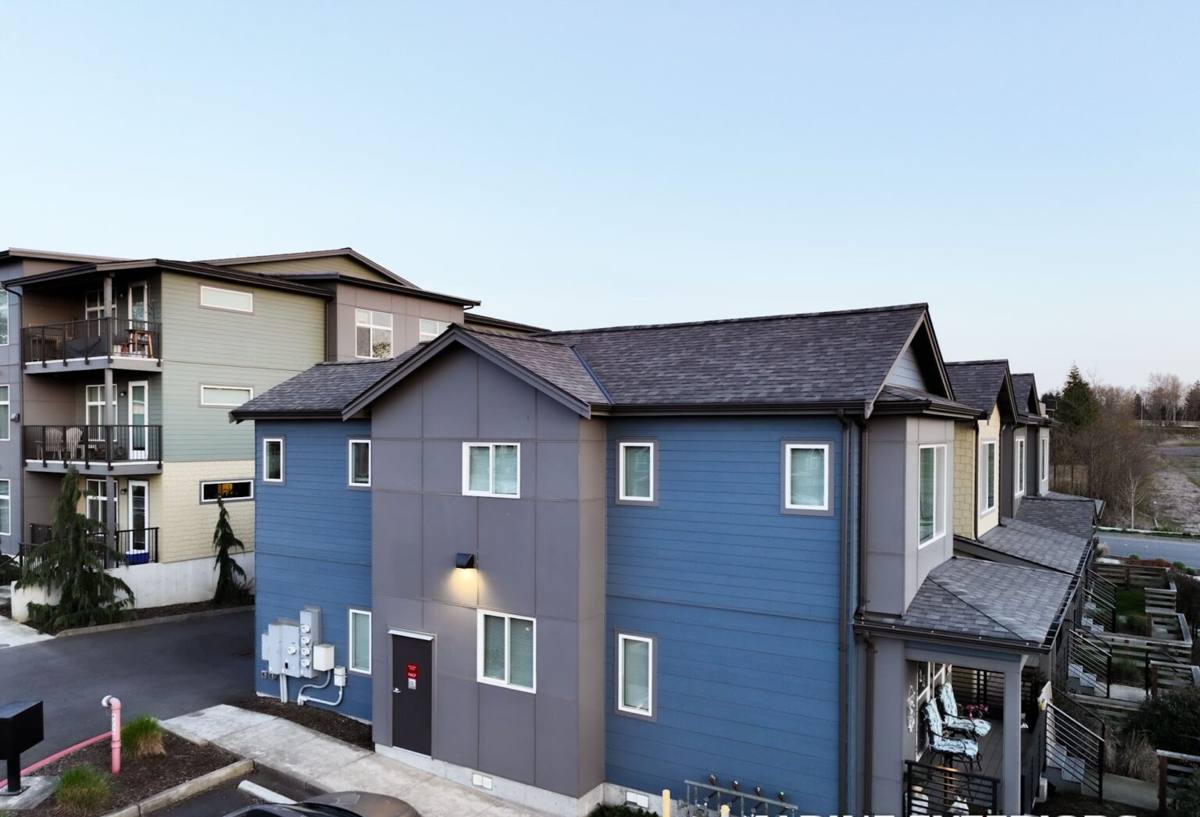
Puget sits close enough to the water that its homes take a different kind of weather beating than houses further inland in Whatcom County. Salt-laden air off the Sound works into window frames and hardware year-round. Driving rain, pushed sideways by wind off the water, finds every weak seal. And the long stretch of wet, low-sun months that Bellingham gets every year keeps north- and shade-facing walls damp long enough for moss and mildew to take hold on sills, tracks, and exterior trim. A window that would hold up fine in a drier part of the state can fail early here if it isn't installed with this specific environment in mind.
That's the difference between a generic window swap and a Puget-area window installation done right: the frame material, the flashing detail, the sealant choice, and even the hardware finish all need to account for salt exposure and near-constant moisture, not just fit the rough opening.
What Salt Air, Rain, and Moss Actually Do to Windows
Salt air and hardware
Salt in the air accelerates corrosion on window hardware — hinges, locks, balance mechanisms, and screws — faster than it would inland. Cheaper hardware finishes pit and seize up years before the glass or frame shows any wear, which is why hardware quality matters as much as the window brand itself for homes in this part of Bellingham.
Driving rain and water intrusion
Wind-driven rain doesn't just hit a window straight on — it gets pushed up and under trim, into gaps around the frame, and behind poorly lapped flashing. Most window failures we see in coastal-influenced neighborhoods aren't glass failures at all; they're water finding a path in through an installation detail that was fine for a calm, dry climate but wasn't built for sideways rain.
Moss and prolonged moisture
Whatcom County's moss season isn't limited to roofs. Moss and algae take hold on window sills, exterior trim, and anywhere water sits instead of draining. Over time that trapped moisture works into wood trim and caulking, breaking down seals from the outside in — often well before a homeowner notices anything wrong on the interior side of the glass.
What a Correct Window Installation Actually Involves
A window installation is judged by what's happening inside the wall, not just how the window looks once it's in. For a Puget-area home, the details that matter most are:
- Removing the old window down to the rough opening and inspecting the sheathing and framing underneath for hidden rot or moisture damage before anything new goes in
- Correctly lapped flashing and a sloped sill pan so any water that does get past the exterior sheds outward instead of pooling against the frame
- Sealant and backer rod at every joint, sized and placed for the specific gap — not just a bead of caulk run around the trim after the fact
- Shimming and fastening the frame so it's square and properly supported, since a racked frame stresses the glass seal and hardware over time
- Insulating the gap between the window frame and rough opening without over-packing it, which can bow the frame inward
- Reinstalling or replacing exterior trim and caulk lines so the whole assembly sheds water the way it's supposed to
Skip any one of these steps and the window itself can be excellent quality and still fail early — usually as a leak, fogged glass, or soft trim within a few wet seasons.
Choosing a Window That Fits This Environment
There's no single "best" window for every home, but some choices hold up better than others against salt air and constant rain. We walk homeowners through the real trade-offs rather than pushing one product line.
| Frame Material | Behavior Near Salt Air & Rain | Maintenance |
|---|---|---|
| Vinyl | Doesn't corrode or rot; performs consistently in wet, salt-exposed conditions | Low — occasional cleaning of tracks and weep holes |
| Fiberglass | Very stable in temperature and moisture swings; strong resistance to warping | Low — repaint or refinish only if a color change is wanted |
| Wood (clad or unclad) | Attractive but the most vulnerable to prolonged moisture and moss if trim isn't maintained | Higher — regular inspection and refinishing of exposed wood |
| Aluminum | Can corrode faster in salt air unless properly coated; conducts cold, so condensation risk is higher | Moderate — watch for pitting and corrosion at fasteners |
Glass package matters just as much as frame material. For Puget-area homes, we typically recommend a dual-pane, low-E glass unit with argon fill as the practical baseline — it manages condensation risk from the region's humidity and keeps heating costs down through the long, wet winters. Triple-pane is worth discussing for homes closest to the water or on exposed elevations, where wind-driven rain and temperature swings are more extreme.
Our Installation Process for This Area
1. On-site assessment
We look at each window's exposure — is it on a wall that takes direct wind and rain off the water, or a more sheltered side of the house — because that changes what flashing and sealant approach makes sense for that specific opening.
2. Checking for existing damage
Before any new window goes in, we check the framing and sheathing around the old one for rot, soft spots, or past water intrusion. This is the step that gets skipped by crews trying to move fast, and it's the step that determines whether the new window lasts.
3. Installation with weather-specific detailing
Sill pans, flashing laps, and sealant are installed to shed water outward under wind-driven conditions, not just under a garden-hose test on a calm day.
4. Finish work and water-testing
Trim is finished, caulk lines are tooled properly (a rough caulk line is one of the first places moss gets a foothold), and we check operation and seal quality before we consider the job done.
Signs Your Windows Are Losing the Fight Against the Climate
Homeowners in Puget often notice these signs well before a window fails completely. Worth checking for on a walk around the house:
- Fogging or moisture between panes — the seal on the insulated glass unit has failed
- Moss or dark staining building up on sills or exterior trim faster than the rest of the house
- Difficulty opening, closing, or locking — usually corroded or seized hardware
- Soft or spongy trim around the window frame when pressed
- Drafts or a noticeable temperature difference near the window in windy weather
- Peeling paint or bubbling finish on interior sills, which often points to water getting in from outside
Any one of these on its own isn't necessarily urgent, but two or more on the same window usually means water has already gotten past the seal.
What Affects the Cost of a Window Installation Here
Costs vary window to window, but the biggest factors we see on Puget-area jobs are consistent enough to plan around:
| Factor | Why It Changes the Price |
|---|---|
| Hidden framing damage | Rot or moisture damage found once the old window is out adds repair work before the new unit can go in |
| Frame material chosen | Vinyl, fiberglass, and wood carry different material and labor costs |
| Glass package | Upgrading from standard dual-pane to a higher-performance or triple-pane unit adds cost per window |
| Wall exposure | Windows on exposed, weather-facing walls sometimes need extra flashing detail or trim work |
| Number of windows and access | Whole-house projects and hard-to-access second-story windows affect labor time |
We give straightforward, itemized estimates rather than a single lump number, so homeowners can see exactly what's driving the cost and where there's room to adjust.
Why Local Experience in Puget Matters
A crew that mostly works drier inland areas can install a technically fine window that still isn't set up for what this specific location deals with. Knowing which walls in a Puget home typically take the worst of the wind-driven rain, how fast moss builds up on north-facing trim here, and which hardware finishes actually hold up against the salt air isn't something you learn from a manual — it's something you learn by doing this work in this area, season after season. That local knowledge shows up in small decisions during the job: an extra flashing lap on an exposed wall, a hardware upgrade that costs a little more up front but doesn't seize in three years, a sealant chosen for how it performs wet rather than how it performs in a showroom.
Get a Straightforward Estimate
If you're dealing with a drafty, fogged, or moss-stained window in Puget, or you're planning ahead for a full home update, we're happy to take a look and walk you through what we see — no pressure, no hard sell. Use the form below to request a free estimate, and we'll give you an honest read on what your windows need and what it'll cost to do it right.