 Bellingham Exterior
 Columbia's Housing Stock and What the Marine Climate Does to Siding
Columbia is one of Bellingham's older, close-in neighborhoods, and that shows in its housing stock — a mix of early-20th-century homes alongside newer infill construction, many of them sitting close enough to Bellingham Bay to feel its influence every day. That proximity to the water is exactly what makes siding choice and installation quality matter so much here. Salt-laden air moves in off the bay, driving rain comes through with the prevailing weather off the Sound, and the region's long, damp shoulder seasons mean moss and algae get months at a time to establish themselves on north-facing walls and shaded siding runs. None of that is unique to Columbia, but the combination is more concentrated near the water than it is a few miles inland.
Siding on a Columbia home isn't a cosmetic layer — it's the single biggest defense the structure has against that environment, day in and day out, for decades. Get the product or the installation wrong, and the consequences show up slowly: soft trim, stained fascia, swollen panel edges, moss creeping under laps. Get it right, and the same wall system can go the better part of a lifetime without a callback.
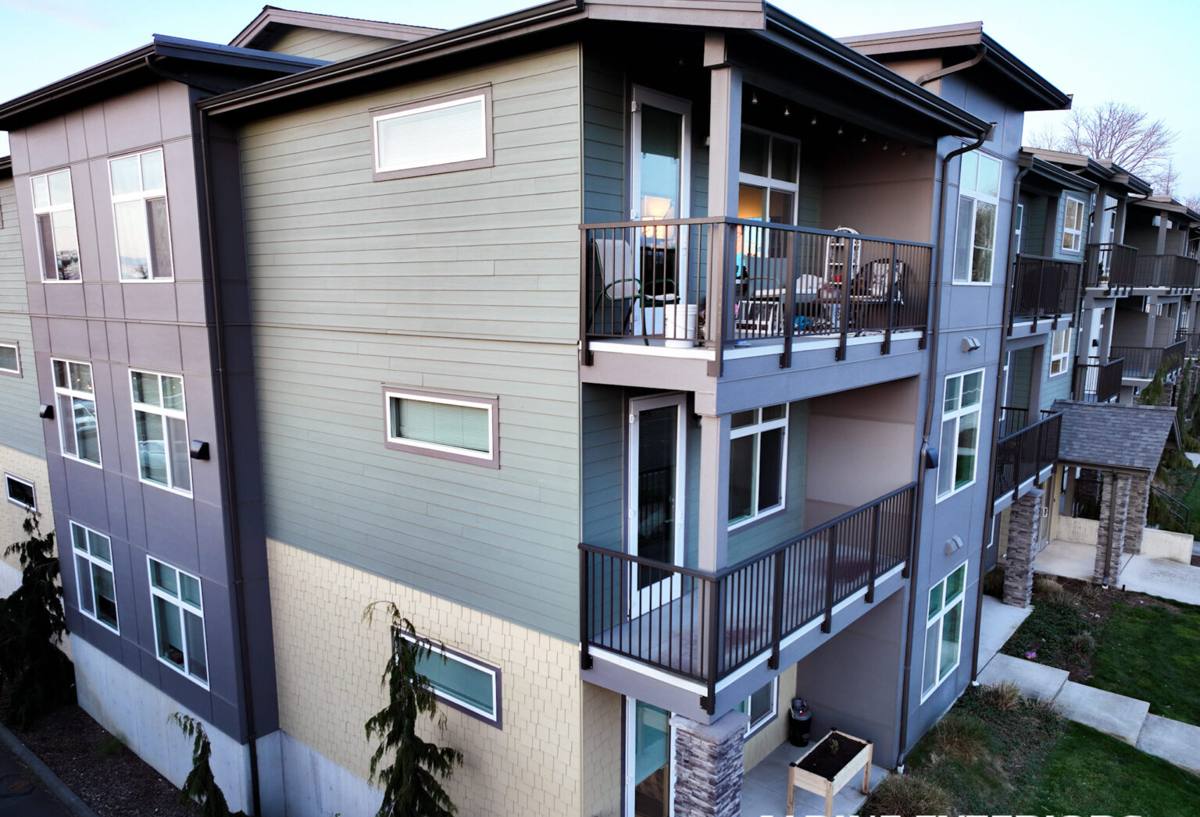
Why Standard Siding Struggles in This Environment
Salt Air and Corrosion
Airborne salt accelerates corrosion on fasteners, flashing, and any exposed metal trim. Siding systems that rely on a lot of exposed mechanical hardware, or that use fasteners not rated for coastal exposure, tend to show rust streaking and fastener failure years before an inland installation of the same product would.
Driving Rain and Water Intrusion
Whatcom County's weather doesn't just rain — it rains sideways often enough that siding has to be treated as a water-management system, not just a water-shedding surface. Wind-driven rain pushes moisture into laps, corners, and penetrations that a calmer climate would never test. A siding job that looks fine on a dry install day can fail its first real storm if the water isn't given a planned path back out.
Moss, Algae, and Prolonged Moisture Exposure
Bellingham's moss season isn't a few weeks — it's most of the year on shaded or north-facing walls. Siding materials that absorb and hold moisture give moss and mildew a foothold that's difficult to remove without damaging the surface underneath. Over time, that constant damp cycle is what drives rot in wood-based products and delamination in lower-grade composites.
What a Correct Siding Installation Actually Involves
Most siding failures we get called out to inspect in this area aren't a product problem — they're an installation problem. The material is only as good as the water-management system built behind it. A correct job includes:
- A continuous, properly lapped weather-resistant barrier behind the siding — not just building paper stapled up and forgotten
- Flashing integrated at every window, door, and roof intersection so water is directed out and down, never behind the barrier
- Proper clearance from grade, roof lines, decks, and patios — Hardie's own installation instructions specify minimum gaps, and skipping them is one of the most common causes of premature rot at the base of a wall
- Correct fastener type, spacing, and depth — over-driven or under-driven nails are a leading cause of panel cracking and blow-off in wind events
- A rainscreen or drainage gap where the wall assembly calls for it, so incidental moisture has somewhere to go besides sitting against the sheathing
- Factory-finished panels installed with minimal field cutting and caulking, since every field cut is a spot where a homeowner is depending on caulk rather than engineered material to keep water out
This is the part of the job that doesn't show up in a photo. Two houses can look identical from the sidewalk with completely different water-management systems behind the siding — and only one of them is going to hold up through a decade of Bellingham winters.
Why We Install Only James Hardie Fiber Cement Siding
We standardized on James Hardie fiber cement and don't install vinyl, LP SmartSide, Cemplank, Allura, primed spruce, or cedar. That's a deliberate call, not a brand preference, and it's rooted in what actually holds up in a marine climate like this one.
Fiber cement is non-combustible, which matters for insurance and fire-safety reasons independent of climate. More relevant to Columbia specifically: Hardie's ColorPlus factory finish is baked on under controlled conditions, which gives it far better resistance to moisture, salt exposure, and UV fading than field-applied paint — and it means far fewer field cuts need to be caulked and painted after the fact. Hardie also engineers its product lines by climate zone; the HZ5 formulation used in the Pacific Northwest is specifically designed to resist the moisture cycling and freeze-thaw swings common to our region, rather than being a one-size-fits-all product. On top of that, fiber cement doesn't provide the organic surface that wood-based sidings do, which slows moss and algae colonization compared to cedar or engineered wood.
None of this means other products are without merit — vinyl is inexpensive and low-maintenance in mild climates, engineered wood has a warmer look, cedar has real character. But when we weigh moisture behavior, maintenance burden, and long-term performance against a coastal Whatcom County climate, fiber cement is what we're willing to put our name behind and back with installation warranty coverage.
Our Siding Installation Process for Columbia Homes
- On-site assessment. We walk the exterior, check existing siding and trim condition, look at grade clearances, and identify any areas with signs of past moisture intrusion.
- Tear-off and sheathing inspection. Old siding comes off and the sheathing underneath gets inspected — this is often the first time hidden rot or water damage from a prior installation becomes visible, and it gets addressed before anything new goes up.
- Weather barrier and flashing. A continuous water-resistant barrier goes on, with flashing detailed at every window, door, and penetration.
- Panel and trim installation. James Hardie planks, panels, or shingles go up per manufacturer fastening specifications, with attention to clearances and expansion gaps.
- Finish work. Factory-finished edges and any necessary field-cut touch-up are handled with Hardie-approved caulk and matching ColorPlus touch-up paint.
- Cleanup and walkthrough. Site is cleaned, debris hauled, and we walk the finished job with the homeowner before calling it done.
Signs Your Columbia Home Needs New Siding
Because so much of what matters happens behind the siding, it's worth knowing which surface signs point to a deeper problem rather than a cosmetic one. Watch for:
- Soft or spongy spots when you press on siding or trim, especially near the bottom courses
- Persistent moss or algae growth that returns quickly after cleaning
- Visible cracking, warping, or panel separation at seams and corners
- Paint that's peeling or bubbling rather than just fading
- Rising energy bills that suggest the wall assembly is no longer doing its job
- Stained or discolored interior drywall near exterior walls, which can indicate water is already getting past the siding
Any one of these on its own might be minor. Several together, especially on a wall that faces prevailing weather, usually means it's time for a real evaluation rather than a patch.
What Siding Installation Costs Depend On
Every home is different, but the same handful of factors drive the price on nearly every siding job we quote in this area:
| Factor | Why It Matters |
|---|---|
| Home size and wall complexity | More square footage and more corners, gables, and dormers mean more material and more labor-intensive detail work |
| Existing siding removal | Tear-off of old material adds labor and disposal cost compared to installing over a properly prepared surface |
| Sheathing repair | Hidden rot or water damage found during tear-off has to be addressed before new siding goes on |
| Hardie product line chosen | Lap siding, shingle-style, and panel systems carry different material and labor costs |
| Trim and accessory work | Window and door trim, corner boards, and soffit or fascia replacement often get bundled into a full re-side |
| Access and site conditions | Tight lots, multi-story walls, and limited staging space all affect labor time |
We give firm, itemized quotes after an in-person assessment rather than ballpark numbers over the phone, since the tear-off and sheathing condition can shift the scope once we're actually into the wall.
Why Hiring a Crew That Already Works in Columbia Matters
Siding contractors who don't regularly work close to the water in Bellingham tend to under-detail flashing and clearances for the conditions this neighborhood actually sees — they're used to drier, less exposed jobs and it shows up in callbacks a few years out. A crew that already works Columbia and the surrounding waterfront-adjacent neighborhoods knows which walls take the worst of the driving rain, which yards hold moss year-round, and how to sequence a tear-off around Whatcom County's wetter months so sheathing isn't left exposed longer than it has to be. That local pattern recognition is hard to replace with a generic installation checklist, and it's the difference between a siding job that performs as designed and one that looks right for a season or two before problems start.
Caring for Hardie Siding After Installation
Fiber cement is low-maintenance compared to wood, but "low-maintenance" isn't "no-maintenance" in a climate like this one. A periodic gentle wash to keep moss and grime from building up on shaded walls goes a long way, and any field-cut edge that gets nicked or damaged should be touched up with matching paint to keep the cut edge sealed. Beyond that, an annual walk-around to check caulk lines at windows, doors, and trim intersections catches small issues — a hairline gap, a shrinking bead of caulk — before they become water-intrusion problems. Because the ColorPlus finish is factory-applied and baked on, homeowners generally aren't repainting the field of the siding the way they would with wood or field-painted products; the maintenance that remains is mostly about keeping the details at seams and penetrations sealed.
If you're weighing a siding replacement or new install for a Columbia home, we're happy to walk the property, look at what's there now, and give you a straight assessment and a free, no-pressure estimate — no obligation either way.