 Bellingham Exterior
 Why Siding Repair Looks Different in Barkley
Barkley sits inside the same marine climate that shapes every neighborhood in Bellingham, but that doesn't mean every siding problem looks the same across town. Homes here deal with a steady mix of salt-laden air drifting in off Bellingham Bay, long stretches of driving rain through fall and winter, and a moss season that can run eight months or longer in shaded, tree-lined lots. That combination is hard on any exterior cladding, and it's especially unforgiving toward siding that was installed with shortcuts, gaps in flashing, or the wrong material for a wet Pacific Northwest climate.
When we get a repair call in Barkley, we're rarely looking at one isolated problem. Moisture damage tends to compound: a small gap lets water in, moss and algae hold that moisture against the wall longer, and by the time a homeowner notices a soft spot or a stain, the damage has usually been building for a season or two. Repairing siding correctly in this area means understanding that chain of cause and effect, not just patching the visible symptom.
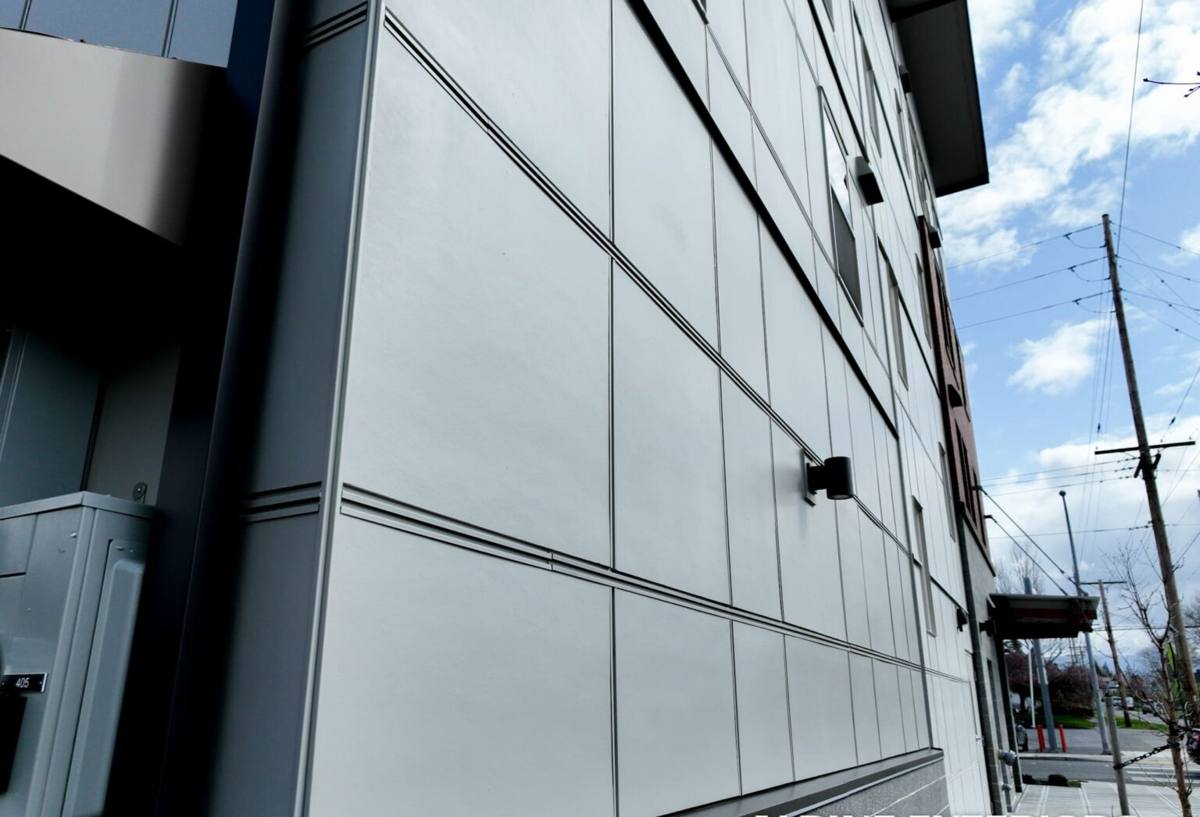
Signs Your Siding Needs Repair, Not Replacement
Most siding problems we see in Barkley don't require tearing off the whole exterior. Caught early, they're a repair — targeted, affordable, and effective. Here's what we typically look for during an inspection:
- Soft, spongy, or discolored panels, especially near the bottom courses or around window and door trim
- Visible cracking, buckling, or separation at seams and butt joints
- Persistent moss, algae, or dark streaking that keeps returning after cleaning
- Paint that's bubbling, peeling, or failing faster than it should on one side of the house
- Gaps or missing caulk around penetrations — hose bibs, vents, light fixtures, and utility lines
- Damage from a specific event: a wind-driven branch, a ladder scrape, hail, or a pressure-washing mistake
- Interior signs that trace back to the exterior wall — musty smell, staining on drywall, or trim that's swelling
If what you're seeing is limited to a few boards, one wall exposed to prevailing weather, or damage around a specific detail, repair is almost always the right call. Widespread soft siding across multiple walls, or repeated failures in the same spots, usually points to a bigger moisture or installation problem underneath.
What's Actually Causing the Damage
Moisture Intrusion
Water rarely comes straight through a wall — it works its way in through gaps: failed caulk joints, siding that was face-nailed too tight or too loose, missing kick-out flashing at roof-to-wall intersections, or trim that was never properly sealed at the factory cut edges. In Barkley's rain pattern, even small gaps get repeated exposure for months at a time, so minor installation flaws that might be tolerable in a drier climate become real problems here.
Moss and Organic Growth
Shaded lots, mature trees, and the region's humidity give moss and algae everything they need to establish themselves on siding, especially on north-facing walls and anywhere debris collects in a J-channel or behind a downspout. Left alone, that growth holds moisture against the surface long after a storm has passed, which accelerates rot in wood-based products and undermines paint adhesion on nearly anything.
Wind, Impact, and Age-Related Wear
Occasional windstorms move debris and branches into siding, and older siding — particularly wood, hardboard, or early-generation composite products — simply loses its ability to shed water as caulk shrinks and finishes chalk out over the years. Age-related wear is often the reason a 15- or 20-year-old exterior suddenly starts showing problems it didn't have five years earlier.
Repair or Replace? How We Decide
We don't default to "replace everything" because it's a bigger job — we look at scope, cause, and what's actually salvageable. This is the general framework we walk through with homeowners:
| Factor | Points Toward Repair | Points Toward Replacement |
|---|---|---|
| Extent of damage | Isolated to a few boards or one section | Spread across multiple walls or the whole house |
| Underlying cause | One-time event (impact, isolated flashing failure) | Systemic moisture problem behind the siding |
| Material condition | Rest of the siding is sound and holding paint well | Siding is brittle, delaminating, or failing broadly |
| Product type | Existing material can be reasonably matched | Discontinued or mismatched product, or a material we don't stand behind |
| Age of siding | Well within expected service life | At or past the age where wholesale failure is common |
That last row matters more than most homeowners expect. If your siding is a product with known long-term moisture or durability trade-offs, a repair can buy you time, but it's fair for us to tell you honestly when you're patching a system that's going to keep giving you this same call every few years.
What a Correct Siding Repair Actually Involves
A repair that lasts starts with diagnosis, not demolition. We remove the affected material carefully, trace the water path back to its source, and check the sheathing and house wrap underneath before closing anything back up. Repairing the visible board without addressing what let water in behind it just delays the next call.
Checking What's Behind the Siding
Once panels are pulled, we look at the weather-resistive barrier, flashing details, and framing for soft spots or staining. If the sheathing has taken on moisture, that gets addressed before new siding goes back on — covering damaged sheathing with new siding is exactly the kind of shortcut that causes repeat failures.
Matching Materials and Finish
For homes already sided in James Hardie fiber cement, we match the plank profile and, where possible, the factory ColorPlus finish so the repair blends in rather than standing out as an obvious patch. For homes with other siding materials, we'll be upfront if an exact match isn't realistic and talk through the honest options.
Sealing, Flashing, and Detailing
Every repair gets proper flashing at horizontal joints, correctly lapped house wrap, and sealant only where sealant belongs — not as a substitute for flashing. This is the detail work that determines whether a repair holds up through another Whatcom County winter or fails again in two years.
Our James Hardie Standard — Even for Repairs
We install exclusively James Hardie fiber cement siding, and that standard shapes how we approach repairs too. When a home is already sided in Hardie, repairs are straightforward: the product is engineered for this exact climate, it doesn't rot, and factory-finished ColorPlus panels give us a real shot at a color match instead of a guessing game with weathered paint.
When a home has vinyl, wood, or another fiber cement product and needs a repair, we'll fix what can reasonably be fixed and tell you plainly if the underlying material is the actual problem. We won't tell you a failing product just needs a patch when what it needs is a long-term plan — and if that conversation leads to a siding replacement down the road, Hardie's climate-engineered HZ product line, non-combustible composition, and transferable warranty are why it's the only system we put our name behind.
Our Repair Process in Barkley
1. On-Site Inspection
We walk the exterior with you, identify every area of concern, and explain what we're seeing in plain terms — no pressure toward a bigger job than what's needed.
2. A Clear, Written Scope
You get a repair plan that spells out what's being replaced, what's being sealed, and why — so there are no surprises once work starts.
3. Careful Removal and Repair
We remove only what needs to come off, protect landscaping and windows, and check the wall assembly underneath before closing it back up.
4. Finish and Cleanup
New material is matched as closely as possible to the existing siding, all fasteners and joints are properly sealed, and the site is cleaned of debris and old material before we call the job done.
Why Local Experience in Barkley Matters
A crew that regularly works in Barkley and the surrounding Bellingham area already knows how this climate behaves against different siding materials, roof pitches, and lot conditions — which sides of a house tend to take the worst weather, which construction eras in the area are more likely to have specific flashing details, and how moss and moisture patterns typically show up here versus a drier inland region. That local pattern recognition shortens the diagnostic process and helps us catch a small problem before it becomes a bigger one.
It also means accountability. A contractor based in and around Bellingham isn't disappearing after the invoice clears — if a repair doesn't perform the way it should through the next wet season, we're a phone call away, not a company that worked the region for one project and moved on.
If you're seeing soft spots, recurring moss, cracked boards, or storm damage on your Barkley home, we're happy to take a look and give you a straight answer about what it actually needs. Reach out for a free, no-pressure estimate using the form below.