 Bellingham Exterior
 Siding Built for Sehome's Particular Kind of Weather
Sehome sits close enough to the water and the hillside tree cover to get a mix of exposures most neighborhoods don't deal with at once: salt-tinged marine air rolling in off Bellingham Bay, driving rain that comes in sideways during fall and winter storms, and a shaded, moisture-holding canopy in the pockets of the neighborhood near wooded slopes. That combination is hard on exterior siding. It's also why a siding replacement in this part of Bellingham needs to be specified differently than the same job would be inland or on a fully sun-exposed lot.
We've replaced siding on homes throughout Sehome and the surrounding Bellingham neighborhoods, and the pattern repeats: siding fails first at the details, not the field. Corners, butt joints, penetrations, and anything shaded and slow to dry are where problems start. A correct replacement addresses those details on purpose, rather than repeating whatever was there before.
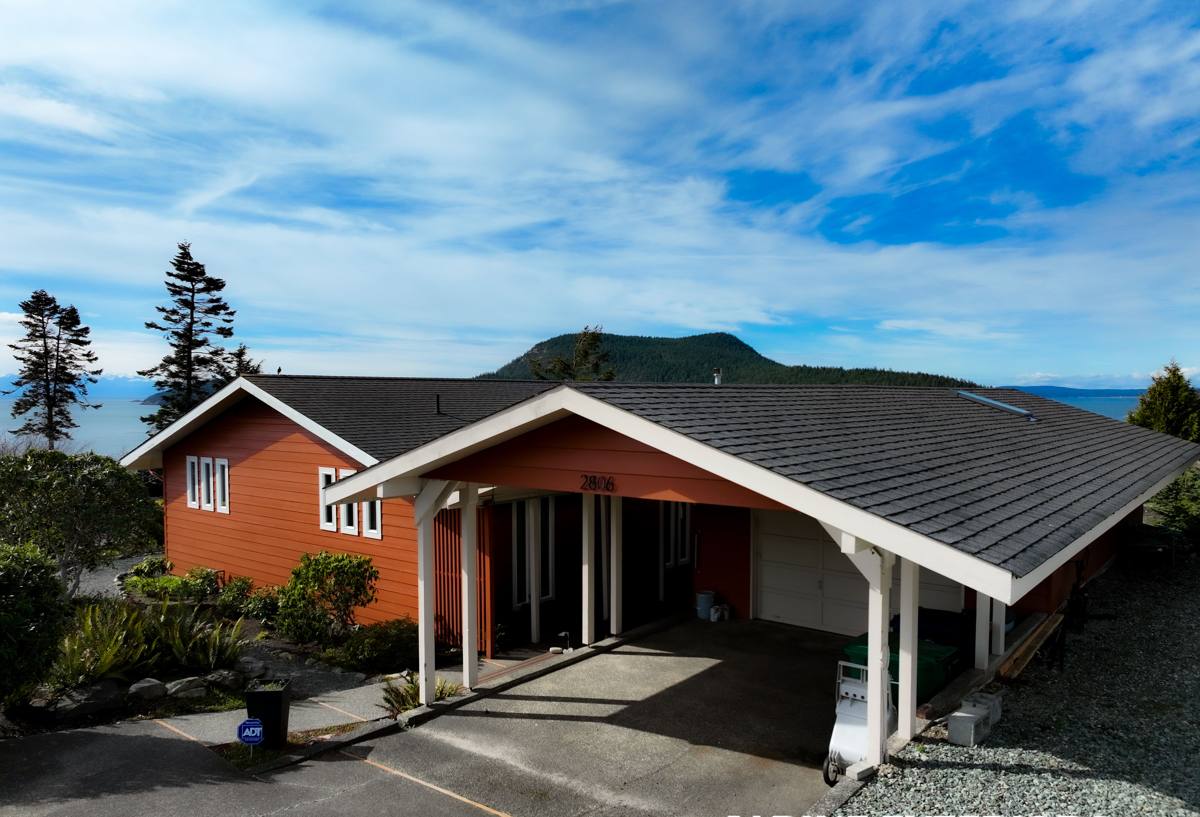
What Salt Air, Driving Rain, and Moss Do to Siding Over Time
Salt Air
Homes within a few miles of Bellingham Bay get a steady, low-grade dose of salt-laden air. It accelerates corrosion on exposed fasteners and metal trim, and over years it can degrade paint film and caulk faster than a purely inland location would see. Siding materials and finishes that aren't formulated to resist this kind of exposure tend to chalk, fade, or corrode at the hardware level before the field material itself gives out.
Driving Rain
Whatcom County's storms don't just fall straight down — wind-driven rain gets pushed sideways into laps, joints, and anywhere the water-resistive barrier and flashing details aren't doing their job. Siding that relies on face-sealing (caulk alone, with no drainage plane behind it) is the first to let water in during a real driving-rain event, and once water gets behind siding it often travels before it shows itself as a stain or soft spot.
The Long Moss Season
Shaded areas, north-facing walls, and anything near mature trees in Sehome stay damp for a large part of the year. Moss and algae don't just look bad — they hold moisture against the siding surface for extended periods, which is exactly the condition that causes wood-based products to swell, delaminate, or rot, and it's what causes paint and factory finishes to break down early if they're not engineered to shed it.
Signs a Sehome Home Actually Needs Replacement (Not Just a Repair)
Not every siding problem calls for a full tear-off. But in a climate like this, small issues tend to compound quickly because the damp season is so long. Here's what we look for when we're deciding whether repair or replacement makes sense:
- Soft, spongy, or visibly swollen spots when you press on the siding, especially near the bottom courses and around windows
- Paint that's failing in patches rather than evenly across the wall — often a sign of moisture moving behind the material in that spot
- Persistent moss or dark streaking that comes back within a season or two of cleaning
- Visible gaps, warping, or buckling at butt joints and corners
- Rust staining running down from nail heads or trim fasteners
- Interior signs — musty smell, peeling interior paint, or soft drywall near exterior walls — that suggest moisture has already gotten past the siding
- Siding that's simply past its practical service life and now requires repainting or caulk touch-ups every year or two just to hold the line
If you're only seeing one or two of these in a limited area, a targeted repair may be the honest answer. We'll tell you that if it's true. Full replacement makes sense when the damage is spread across multiple elevations, when the underlying water-resistive barrier is likely compromised, or when the home is due anyway and it makes more sense to fix it right once than patch it repeatedly through another wet season.
Why We Install Only James Hardie Fiber Cement
We standardized on James Hardie fiber cement siding for every home we side, including replacements in Sehome, and we don't install vinyl, LP SmartSide, or other fiber cement brands. That's a deliberate choice, not a sales position. Fiber cement doesn't feed moss and algae the way wood-based products can, it's non-combustible, and it holds paint and factory-applied finish far longer in a wet, shaded climate than most alternatives. Hardie's ColorPlus factory finish in particular is baked on and cured under controlled conditions, which gives it more resistance to fading and UV breakdown than field-applied paint — a real advantage in a climate that keeps siding damp for months at a time.
Hardie also builds region-specific HZ5 product formulations engineered for the kind of freeze-thaw and moisture cycling the Pacific Northwest sees, and backs installations with a strong, transferable limited warranty. We only stand behind one product because we've seen what happens when the wrong material meets this climate, and we'd rather install one system correctly than offer several and hope.
What a Correct Siding Replacement Actually Involves
A siding replacement is only as good as what's underneath it. On every tear-off, our process includes:
- Full removal of the old siding and trim, down to the sheathing, so we can actually see the condition of the wall.
- Sheathing inspection and repair — any rot, soft spots, or water damage gets addressed before anything new goes on. This is the step that gets skipped on rushed jobs, and it's the one that matters most in a wet climate.
- New water-resistive barrier, installed shingle-style (upper layers overlapping lower ones) so water is directed out and down, not trapped behind the siding.
- Correct flashing at every window, door, deck ledger, and penetration — the single biggest factor in whether driving rain stays out or gets in.
- Proper fastening and gapping per James Hardie's published installation instructions, including correct nail placement, clearance from grade and roof lines, and joint treatment.
- Trim and caulking details that account for expansion and drainage rather than just sealing everything shut.
- Final inspection of every elevation before we consider the job finished.
Skipping any one of these steps is how a siding job looks fine for a year or two and then fails early — usually right where the shortcuts were taken.
How Our Process Works, Start to Finish
| Stage | What Happens |
|---|---|
| Initial estimate | On-site walk-around, inspection of current siding condition, and a straightforward conversation about repair vs. replacement |
| Scope and proposal | Written scope covering tear-off, sheathing allowance, Hardie product line and color, and timeline |
| Scheduling | Work planned around Whatcom County's weather patterns to avoid opening up walls during extended wet stretches |
| Tear-off and inspection | Old siding removed, sheathing checked and repaired as needed |
| Barrier and flashing | New WRB and flashing installed at every opening and penetration |
| Hardie installation | Fiber cement siding and trim installed to manufacturer specification |
| Final walkthrough | Joint inspection with the homeowner before the job is closed out |
What Drives Cost on a Sehome Siding Replacement
Every home is different, so we don't publish a flat price, but the main factors that move a bid up or down are consistent:
| Factor | Why It Matters |
|---|---|
| Sheathing condition | Hidden rot found during tear-off adds repair scope — this is the biggest source of change orders on older homes |
| Home size and complexity | Multiple stories, dormers, and cut-up walls take longer per square foot than simple rectangular elevations |
| Hardie product line chosen | Lap siding, shingle-style panels, and board-and-batten carry different material and labor costs |
| Access and site conditions | Steep lots, tight setbacks, or limited staging area near shared property lines add time |
| Trim and detail work | Window and door surrounds, corner boards, and fascia detail add labor beyond the flat wall area |
| Removal and disposal | Volume and type of old siding being torn off and hauled away |
Why It Matters That We Already Work in Sehome
A crew that mostly works inland or in drier parts of Whatcom County doesn't necessarily build in the same margins for a shaded, salt-air, high-rainfall lot. We've priced and installed siding on homes with this exact exposure profile enough times to know where water tends to find its way in, which elevations need extra attention to moss and algae resistance, and how to sequence a tear-off around the region's wetter months so open walls aren't sitting exposed longer than necessary. That local pattern-recognition is worth more than it sounds — it's the difference between a flashing detail that gets extra attention because we've seen it fail before, and one that gets the generic treatment.
Get a Straightforward Estimate for Your Sehome Home
If your siding is showing wear, holding moisture, or you're just past due for a replacement, we're happy to take a look and give you an honest read on repair versus full replacement — no pressure, no inflated scope. Use the form below to request a free estimate for your Sehome home.