 Bellingham Exterior
 Siding Replacement for South Hill's Hillside Homes
South Hill sits above downtown Bellingham on a slope that catches weather most flatland neighborhoods never see. The elevation and tree cover that make it a desirable place to live also mean homes here take a specific kind of beating: wind-driven rain off Bellingham Bay, deep shade under mature trees, and long stretches of damp air that never fully dries out between storms. A lot of the housing stock on South Hill predates today's building codes, which means the siding on many of these homes was never designed for the moisture load it's actually carrying. When that siding starts to fail, it's rarely a cosmetic problem — it's a sign the wall behind it has been absorbing water for longer than it should have.
This page is specifically about replacing siding on South Hill homes — not a general overview of siding options. If you live on the hill and you're seeing paint failure, soft spots, or moss creeping up your exterior walls, this is what we look for, why it happens here, and how we fix it correctly.
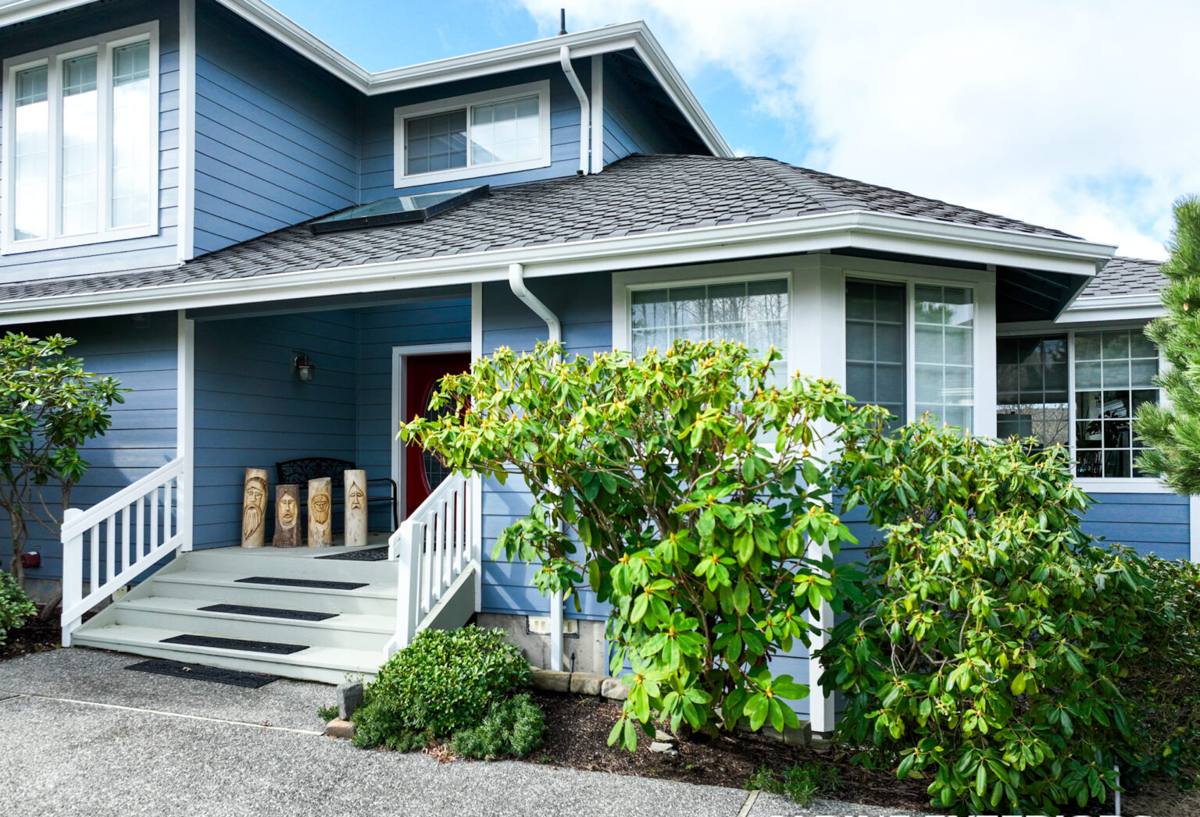
Why Bellingham's Climate Is Hard on Exterior Walls
Whatcom County doesn't get the flooding rain totals of some coastal areas, but it makes up for it with duration. Marine air off the Salish Sea keeps humidity high for months at a time, and South Hill's tree canopy — a big part of the neighborhood's character — also keeps siding shaded and slow to dry after every storm. That combination of moisture and shade is exactly the recipe moss and mildew need.
- Driving rain: Wind off the bay pushes rain sideways into walls, not just down onto roofs, which stresses siding laps, seams, and trim joints.
- Salt air: Homes closer to the water deal with airborne salt that accelerates corrosion on fasteners, flashing, and any exposed metal trim.
- Extended moss season: Shaded, north-facing walls on tree-covered lots can stay damp for weeks, giving moss and algae time to establish and hold moisture against the surface.
- Freeze-thaw cycling: Bellingham gets enough cold snaps each winter that any siding already holding water will see that water expand and contract, widening cracks over time.
None of this means South Hill is an unusually harsh place to build — it means the materials and installation details matter more here than they would somewhere drier. A product that performs fine in a low-humidity climate can fail years early under these conditions if it's the wrong choice or installed without attention to water management.
Signs Your South Hill Home Needs Siding Replacement
Siding failure is usually gradual, and homeowners often notice the symptoms — peeling paint, a musty smell in a bedroom — before they connect them to the siding itself. Here's what we look for during an inspection:
- Paint that's bubbling, peeling, or won't hold a new coat for more than a couple of years
- Soft, spongy, or crumbling spots when you press on the siding, especially near the bottom courses
- Visible swelling, delamination, or warping in wood-based or composite siding
- Persistent moss or dark streaking on shaded walls that comes back soon after cleaning
- Cracked or missing caulk at seams, corners, and trim joints
- Rust staining below nail heads or metal trim pieces
- Musty odors, visible mold, or unexplained humidity in rooms along an exterior wall
- Siding that's noticeably older than the roof and hasn't been touched since the home was built
Any one of these on its own might just need a repair. Several at once, especially combined with an original siding system that's 20-plus years old, usually points to full replacement being the more honest recommendation.
Why We Install Only James Hardie Fiber Cement
We standardized on James Hardie fiber cement siding and don't install vinyl, LP SmartSide, Cemplank, Allura, or unprimed wood siding like cedar or spruce. That's a deliberate professional standard, not a sales pitch, and it matters even more on a site like South Hill where the climate is unforgiving of the wrong choice.
Fiber cement is non-combustible, which matters in a wildfire-aware region, and it doesn't rot, swell, or attract insects the way wood-based products can. James Hardie's HZ5 product line is engineered for climates like ours — freeze-thaw cycles, sustained moisture, and coastal air — with a moisture-resistant formulation and a factory-applied ColorPlus finish that holds color far longer than field-applied paint. That finish is the detail that matters most on shaded South Hill lots: a factory finish resists the fading and chalking that field-painted siding shows first, and it comes with its own finish warranty separate from the product warranty.
We're not saying every other product is bad — vinyl is inexpensive and low-maintenance in the right application, and wood siding has real curb appeal. But we've made a professional call that on Whatcom County homes exposed to this much sustained moisture, fiber cement with a factory finish is the material that holds up with the least callback risk and the longest real-world track record. When siding replacement comes up on a South Hill home, Hardie is what we recommend and what we install.
What a Correct Siding Replacement Job Actually Involves
Siding replacement is more than swapping old boards for new ones. The siding itself is the least important layer for keeping water out — the layers behind it do the real work. A correct job on a South Hill home includes:
Full Tear-Off and Sheathing Inspection
We remove the old siding down to the sheathing so we can actually see the wall, not guess at its condition. Any soft, rotted, or water-damaged sheathing gets identified and repaired before anything new goes on — covering damaged sheathing with new siding just hides a problem that keeps getting worse.
Weather-Resistive Barrier
A new water-resistive barrier goes over the sheathing, lapped correctly from bottom to top so any water that gets behind the siding drains down and out instead of pooling behind it.
Flashing at Every Penetration
Windows, doors, hose bibs, vents, and any other wall penetration get proper flashing integrated with the weather barrier. This is where the majority of siding-related leaks originate, and it's the detail that's easiest to shortcut and hardest to fix after the fact.
Rainscreen Drainage Gap
Especially on shaded, tree-covered lots like much of South Hill, we build in a drainage gap behind the siding so moisture that gets past the surface can dry out instead of sitting against the wall. This is one of the biggest differences between a durable install and one that fails early.
Fastening to Manufacturer Spec
James Hardie's warranty depends on correct fastener type, spacing, and placement. We follow the manufacturer's installation spec exactly — not because a customer would notice the difference on day one, but because it's the difference between a 30-plus-year install and a callback five years in.
Our Process From Estimate to Finished Wall
- On-site inspection: We walk the exterior, check soft spots, and look at trim, flashing, and roofline transitions — not just the siding surface.
- Written estimate: You get a clear scope of work and price, including what's being replaced and what's being repaired underneath.
- Scheduling around weather: Given how much rain Bellingham sees, we plan tear-off in sections so your home is never left exposed to the weather overnight.
- Tear-off and sheathing repair: Old siding comes off, damaged sheathing gets replaced, and the wall gets a real inspection.
- Weather barrier, flashing, and drainage gap installation: The parts you won't see again once the job is done, done correctly.
- Hardie installation and finish: Siding, trim, and caulking installed to manufacturer spec.
- Final walkthrough: We go over the finished work with you before calling the job complete.
What Siding Replacement Costs Depend On
Every home is different, and a firm number only comes from an on-site look. But these are the factors that move the price up or down on most South Hill projects:
| Factor | Why It Matters |
|---|---|
| Home size and wall complexity | More corners, dormers, and trim detail mean more labor and cut waste |
| Sheathing condition | Rot discovered during tear-off adds repair scope that can't be known until the old siding is off |
| Siding profile and accessories | Lap width, trim style, and corner details all affect material cost |
| Site access | Steep or tight hillside lots can require extra staging, scaffolding, or hand-carrying of material |
| Existing paint or coating removal | Older lead-paint-era homes may require additional containment and disposal steps |
| Story height | Two- and three-story walls take longer and require more safety setup than single-story work |
We'd rather walk your home and give you a real number than guess at one here — a broad range without seeing the site tends to be more misleading than useful.
Why a Crew That Already Works South Hill Matters
South Hill's mix of older homes, hillside grades, and mature landscaping means access and staging often take real planning — narrow driveways, retaining walls, and trees close to the house all affect how a crew sets up scaffolding and material staging. A crew that's worked the neighborhood before knows to plan for that up front instead of discovering it mid-job. Local experience also means we're familiar with the age range of homes on the hill and the kind of sheathing and wall assembly problems that tend to show up once the old siding comes off, so there are fewer surprises and a more accurate estimate from the start.
We also carry Washington L&I contractor registration and stand behind our installation — for James Hardie product specifically, correct installation is also what keeps the manufacturer's warranty intact, which is one more reason installation quality isn't a place to cut corners.
Ready to Talk About Your South Hill Home?
If your siding is showing its age — peeling paint, moss that won't stay gone, soft spots, or just years of Bellingham weather catching up with it — we're happy to take a look and give you an honest assessment of what's going on and what it would take to fix it right. Request a free, no-pressure estimate using the form below.