 Bellingham Exterior
 Decks Built for Silver Beach's Lake-and-Tree Setting
Silver Beach sits on Bellingham's east side near Lake Whatcom, and it's a different kind of building site than a lot of the city. Mature tree canopy, sloped yards, and homes tucked close to the water mean a deck here spends most of the year in some combination of shade, dampness, and standing moisture. A deck built the same way you'd build one on an open, sunny lot in another part of Whatcom County won't hold up the same way in Silver Beach — and we've seen the difference in the repair calls we get from this neighborhood versus others.
This page is about one job, in one place: building a deck in Silver Beach that's designed for the conditions actually present here, not a generic spec sheet. We'll walk through what the local climate does to outdoor structures, what a properly built deck needs to resist it, how we approach the work, and what it takes to keep a deck sound for the long haul in this particular setting.
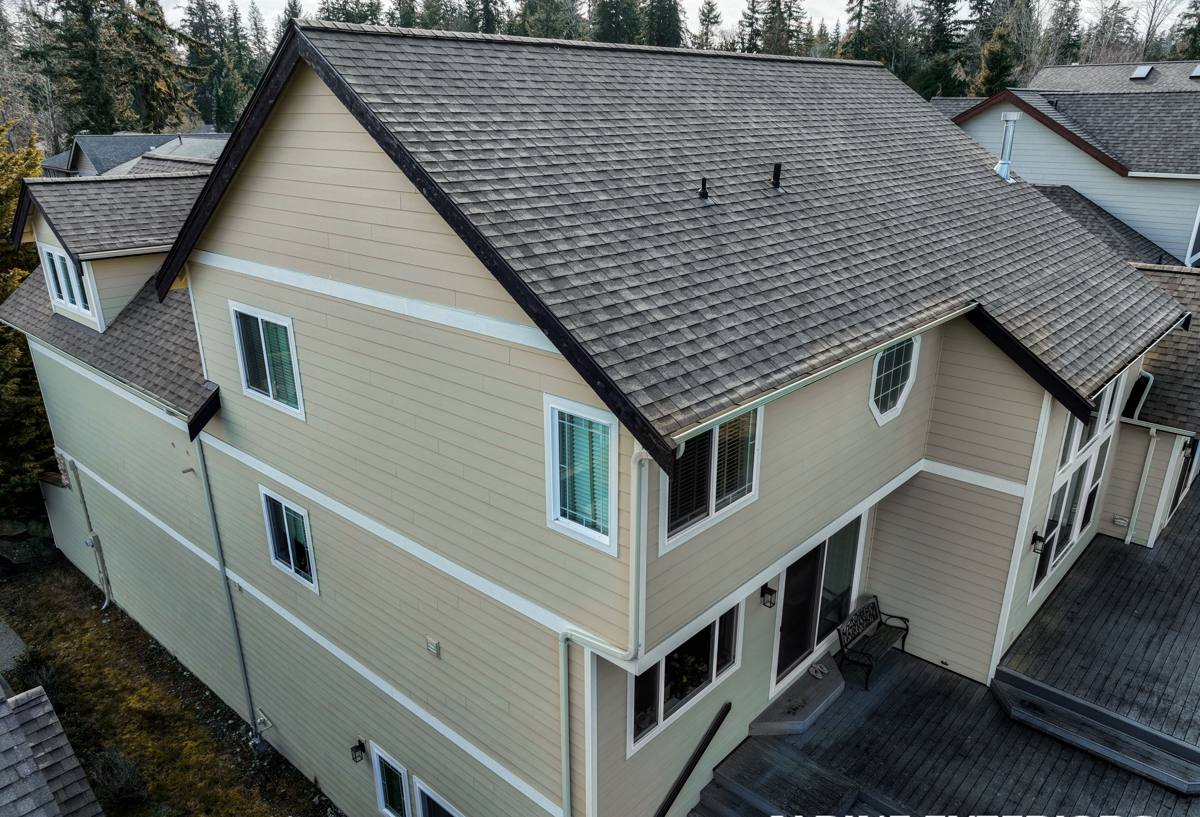
What This Climate Does to an Outdoor Deck
Whatcom County's marine climate brings a long wet season, driving rain that comes in sideways more often than people expect, and air carrying enough moisture and salt influence off the Sound that bare metal doesn't stay bright for long. Silver Beach adds its own layer on top of that: tree cover and proximity to the lake keep the air and the wood surfaces damp longer after a storm than they would be on an exposed lot a few miles away.
Moisture That Doesn't Leave
On a shaded, tree-lined lot, a deck can stay wet for days after the rain stops. Sun and wind are what dry lumber out between storms, and Silver Beach gets less of both than most of Bellingham. That extended dampness is what drives rot at ledger boards, post bases, and anywhere water can sit instead of shed.
Moss, Algae, and the Slip Risk
Whatcom County's moss season already runs long compared to most of the country. Add shade from mature trees and you get boards that stay green and slick well into what should be dry months elsewhere. Moss isn't just cosmetic — it holds moisture against the decking surface and turns stairs and low spots into a real slip hazard, especially on composite or painted surfaces that don't have much texture to begin with.
Marine Air and Fasteners
The salt-tinged marine air common to this part of the coast accelerates corrosion on anything that isn't rated for it — cheap screws, uncoated brackets, and standard nails all suffer here faster than they would inland. A deck that looks fine for the first couple of years can develop rust streaks and weakening connections underneath if the hardware wasn't chosen for this exposure from the start.
Decking Material Options for a Shaded, Damp Lot
There's no single "best" decking material for every yard — the right call depends on how much sun and airflow your specific lot gets, your maintenance appetite, and your budget. Here's how the common options actually perform under Silver Beach conditions:
| Material | Upfront Cost | Moss/Moisture Behavior | Maintenance Needed |
|---|---|---|---|
| Pressure-treated pine | Lowest | Absorbs moisture readily; needs sealing to resist rot and moss growth in shade | Annual cleaning and re-sealing recommended in shaded areas |
| Cedar | Mid-range | Naturally rot-resistant, but still needs airflow and cleaning to prevent moss in low-sun spots | Periodic cleaning and oiling to maintain color and resistance |
| Capped composite | Higher | Doesn't absorb moisture, but moss and algae still grow on the surface film in shade | Occasional wash-down; no sealing or staining required |
| PVC decking | Highest | Fully moisture-resistant board; surface growth is possible but doesn't affect the material itself | Lowest ongoing maintenance |
In a heavily shaded Silver Beach yard, we'll often steer homeowners away from the cheapest pressure-treated option unless they're genuinely committed to yearly maintenance — the labor cost of keeping untreated wood ahead of moss and moisture in constant shade tends to erase the upfront savings within a few years. That's a maintenance-burden trade-off we're honest about, not a knock on wood as a material.
What a Correctly Built Deck Involves
Materials only matter if the structure underneath is done right. A deck that's going to hold up through Whatcom County winters needs attention to details that don't show up in a quick visual inspection:
- Footings sized and set to the correct depth for the soil and load, not just poured to whatever's convenient
- Ledger board flashing that actually sheds water away from the house rim joist, sealed before the decking goes down
- Joist tape or equivalent protection on top of every joist to stop standing water from soaking into end grain
- Corrosion-resistant, coated fasteners and structural hardware rated for the moisture and salt exposure here
- Consistent board gapping for airflow and drainage, not tight-fit boards that trap water between them
- A slight slope built into the frame so water runs off the deck instead of pooling
- Stair and guardrail dimensions that meet current code, including rail height and baluster spacing
Skipping any one of these doesn't usually show up as a problem in year one. It shows up in year four or five, as soft spots near the house, rusted brackets, or boards that never quite dry out between rains. Getting it right the first time costs less than opening the deck back up later to fix a structural issue.
Permits and Site Factors Around Silver Beach
Most attached and elevated decks in Bellingham require a building permit, and lots near Lake Whatcom can carry additional site considerations depending on slope, setbacks, and how close the structure sits to the shoreline or a steep grade. Every lot in this neighborhood is a little different — some are flat and open, others have real grade change from the street down toward the water — so we treat permitting and site review as part of the job, not an afterthought. We handle the permit application and any required engineering review as part of our process, so you're not the one tracking down what the city or county needs.
Our Deck Building Process
Site Visit and Design
We walk the actual lot — checking slope, sun exposure, tree proximity, and how water currently moves across the yard — before recommending a layout or material. A design that ignores where the shade and drainage patterns actually fall is a design that fights the site for its whole life.
Permitting and Engineering
Once the design is set, we handle the permit submission and any engineering that's required for the footings, framing, or site conditions, so the project is built to what's actually approved rather than guessed at.
Construction
Framing, flashing, and fastening are done to the standard described above, not the minimum that would pass a casual glance. We build the parts that get covered up — footings, ledger connections, joist protection — the same way whether or not anyone's watching, because that's the part that determines whether the deck is still solid in ten years.
Final Walkthrough
We go over the finished deck with you directly: how it's built, what maintenance it needs given your yard's specific sun and shade situation, and what to watch for as the seasons turn.
Living With a Deck Through a Long Moss Season
No decking material in Silver Beach is fully maintenance-free given the shade and moisture here — some just need less than others. A simple seasonal routine keeps a properly built deck performing the way it should:
- Sweep debris and fallen needles or leaves off the deck regularly through fall — trapped organic material is what feeds moss growth
- Rinse or lightly scrub visible moss and algae off the surface before it builds up, rather than after it's established
- Check that gaps between boards are clear of debris so water and air can still move through
- Look at fastener heads and visible brackets once a year for early rust or corrosion signs
- Confirm gutters and downspouts near the deck are directing roof runoff away from it, not onto it
- Re-seal or re-stain wood decking on the schedule appropriate to the product, sooner in heavily shaded areas
Why Hire a Crew That Already Works in Silver Beach
A contractor who's built and maintained decks in this specific neighborhood already knows which lots hold water longest, which yards need extra attention to airflow, and how the local permitting process handles sites with slope or shoreline proximity. That's knowledge you don't get from a general spec sheet — it comes from having actually worked this ground. It also means fewer surprises mid-project, because the site conditions common to Silver Beach aren't a novelty to us.
If you're planning a new deck or replacing one that hasn't held up to the shade and moisture in your yard, we're happy to take a look and talk through what makes sense for your specific lot. Reach out for a free, no-pressure estimate using the form below.