 Bellingham Exterior
 Birchwood Roofs Take a Specific Kind of Beating
Birchwood sits close enough to Bellingham Bay and the Salish Sea that salt-laden air is a constant, low-grade stressor on roofing materials, even when no storm is in the forecast. Add Whatcom County's driving winter rain, the wind gusts that come off the water during a front, and a moss season that can run eight or nine months out of the year, and you get a roof that ages differently than one in a drier climate. Storm damage here rarely announces itself as a single dramatic event. More often it's a wind-lifted shingle from last month's blow that let water in slowly, or a moss mat that held moisture against the deck until the fasteners underneath started to fail.
That combination — salt air, sustained wet weather, and shade-loving moss — means storm damage repair in Birchwood has to account for more than the immediate wind or hail event. A repair that only patches the visible damage without addressing what the climate did to the surrounding material tends to fail again within a season or two.
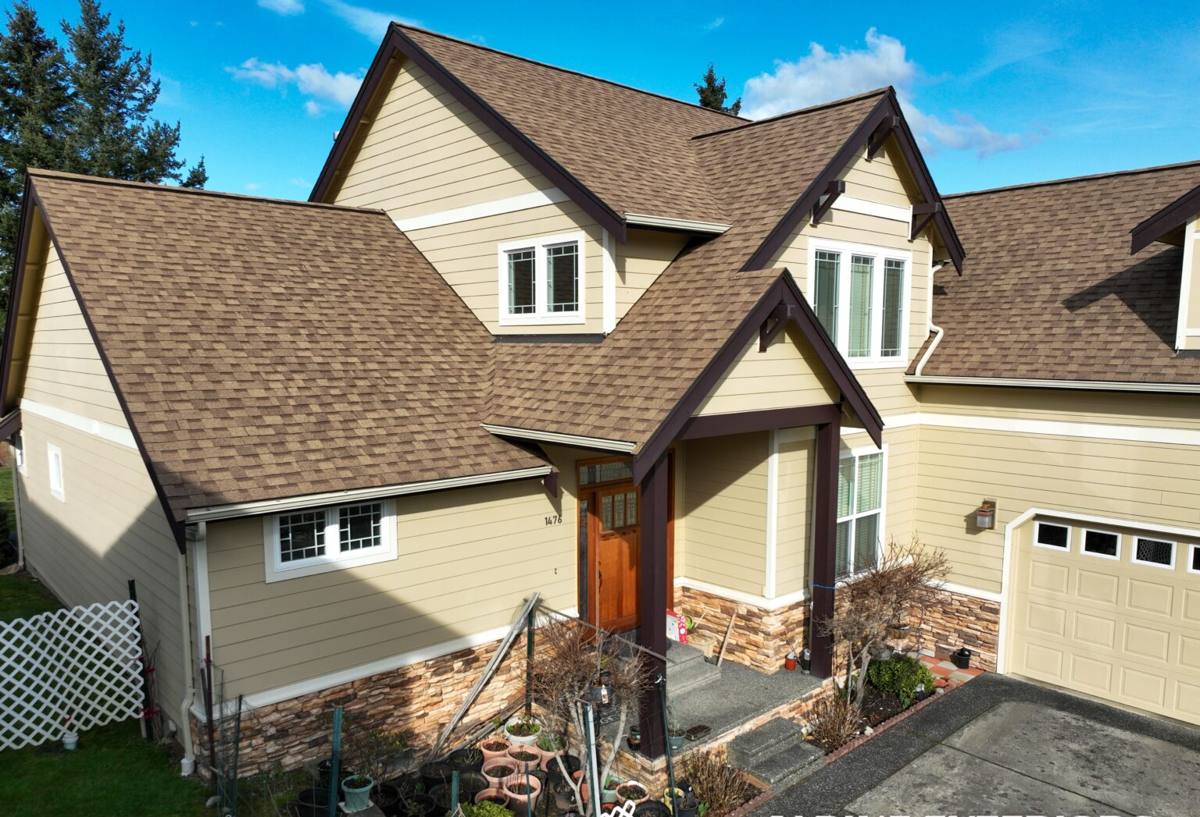
What Storm Damage Actually Looks Like Here
Not every storm-damaged roof looks dramatic from the ground. In our experience working Bellingham and the surrounding Whatcom County neighborhoods, the damage we're called out for usually falls into a few categories:
- Wind-lifted or torn shingles — tabs that have been peeled back or snapped off at the nail line, often on the windward slope facing the water
- Moss-related fastener failure — moss holding moisture against shingles and decking long enough that nails back out or the wood underneath softens
- Flashing displacement — step flashing, valley flashing, or chimney flashing knocked loose by wind or by a falling branch
- Gutter and downspout damage — sections pulled away from the fascia by wind load or the weight of wet debris, which then backs water up under the roof edge
- Impact damage — bruised or punctured shingles from wind-driven branches or debris, common where homes sit near mature trees
- Hidden deck damage — soft or delaminating sheathing found only once the surface material is pulled back, usually where moss or standing water sat for a long time before the storm finished the job
The last one is the category that separates a fast patch job from a proper repair. A crew that doesn't check the decking underneath a damaged area is guessing, not repairing.
What a Correct Storm Damage Repair Actually Involves
Inspection Before Anything Else
We start on the roof, not from photos or a drive-by. That means checking the decking for soft spots, tracing water stains in the attic back to their actual entry point (which is often several feet from where the stain shows on the ceiling), and looking at flashing, valleys, and penetrations — not just the obviously damaged shingles.
Temporary Protection When It's Needed
If a roof has active leaks or exposed decking, the first job is stopping water intrusion — tarping, temporary flashing, or sealing exposed areas — before we plan the permanent repair. In a wet climate like Bellingham's, a roof left open for even a day or two during a rain system can turn a shingle repair into a decking replacement.
Matching Materials, Not Just Covering Damage
Shingle color, profile, and granule wear change with age and sun exposure. We try to match existing material as closely as possible and explain honestly when an exact match isn't realistic, rather than letting a patch stand out or blending mismatched courses in a way that hides a future leak point.
Ventilation and Moisture Checks
Because moss and prolonged dampness are such a factor in this area, a storm repair is also a chance to check attic ventilation and confirm moisture isn't being trapped from the inside as well as the outside. A repair that ignores ventilation can look fine for a year and still fail early.
Our Process, Start to Finish
- Call or estimate request — you describe what happened; we ask enough questions to know whether it's urgent (active leak) or can be scheduled normally
- On-site inspection — we get on the roof, check the decking, flashing, and attic, and document what we find
- Honest scope and written estimate — what needs to happen, what it will cost, and what we'd recommend if it were our own house
- Temporary protection if needed — tarping or emergency sealing to stop water intrusion while repair materials are sourced
- The repair itself — decking replacement where needed, matched roofing material, correct flashing detail, cleanup
- Final walkthrough — we show you what was done and why, in plain terms
Repair vs. Replace: How We Help You Decide
Not every storm-damaged roof needs a full replacement, and not every roof is a good candidate for another patch. The right call depends on the roof's age, how widespread the damage is, and what we find once we open things up.
| Factor | Leans Toward Repair | Leans Toward Replacement |
|---|---|---|
| Roof age | Under 12–15 years, no prior major repairs | Near or past expected shingle lifespan |
| Extent of damage | Isolated to one slope or section | Multiple slopes, widespread moss or wear |
| Decking condition | Solid, dry sheathing found on inspection | Soft, delaminated, or repeatedly wet decking |
| Material availability | Existing shingle style/color still matchable | Discontinued material, poor match likely |
| Repair history | First storm-related repair in this area | Same section has been patched before |
We'll tell you plainly which category your roof falls into. If a repair is the honest answer, we won't push a replacement — and if the damage is bigger than it looks from the ground, we won't downplay it either.
Insurance Claims: What's Worth Knowing
Many storm damage repairs in Whatcom County involve a homeowners insurance claim, especially after a named wind event. A few things worth knowing going in:
- Document damage with photos before any temporary repairs are made, where it's safe to do so
- A written, itemized estimate from an inspection is generally more useful to an adjuster than a verbal description
- Emergency tarping to prevent further water intrusion is typically expected by insurers and shouldn't be delayed to "wait for the adjuster"
- We provide documentation and estimates to support a claim, but the claim itself is between you and your insurer — we won't promise a specific coverage outcome, because that's not our call to make
Materials We Use and Why
For storm repair work, we generally recommend architectural (laminated) asphalt shingles over older 3-tab styles when a section needs enough replacement to justify the choice. Architectural shingles have a heavier profile and tend to hold up better against the wind-driven rain typical of this area, though they cost more per square than 3-tab. For flashing, we use metal detail work rather than relying solely on sealant, since sealant alone degrades faster in a climate this wet and isn't a substitute for correct flashing geometry.
We're selective about materials that trap moisture against the deck or require more maintenance than a homeowner is likely to keep up with, given how much moss pressure this climate puts on a roof. That's a professional standard we hold ourselves to, not a claim that every alternative product is unusable — just a trade-off we're upfront about.
Why a Crew That Already Works Birchwood Matters
Birchwood's mix of mature tree cover, sloped lots, and proximity to the water means roofs here deal with shade, debris, and moisture in a fairly specific combination compared to more open, sunnier parts of Bellingham. A crew that regularly works this neighborhood recognizes that combination on sight — where moss tends to build up fastest, which slopes take the worst of the wind off the bay, and what a normal amount of granule wear looks like versus early storm-related failure.
There's also a practical side: familiarity with Bellingham's permitting expectations and typical residential roof construction in this part of Whatcom County means fewer surprises mid-job. A local crew isn't guessing at material availability or driving in from out of the area to handle a callback if something needs a second look.
What to Do Right After a Storm
If you suspect storm damage, a few simple steps in the first day or two make a real difference:
- Check the attic (if accessible) for new water stains, damp insulation, or daylight through the decking
- Look at the yard and gutters for shingle granules, torn shingle pieces, or displaced flashing — often the first visible clue
- Photograph anything you can see safely from the ground; don't get on the roof yourself after a storm
- Address active leaks with a bucket or temporary interior measure, but don't attempt roof-level repairs alone
- Call for an inspection sooner rather than later — a small leak left through another Bellingham rain system rarely stays small
If a recent storm has left you with a damaged roof, or you're just not sure whether that missing shingle is a problem, we're glad to take a look. Estimates are free, there's no pressure to book on the spot, and you'll get a straight answer about what your roof actually needs.