 Bellingham Exterior
 Windows Built for Silver Beach's Weather, Not Just Any Weather
Silver Beach is one of those Bellingham neighborhoods where the house and the weather are always negotiating with each other. Homes here sit close enough to the water to catch salt-laden air off the wind, take driving rain straight off Whatcom County's wet season, and spend a good chunk of the year under a shade canopy that keeps moss and moisture around longer than it should be. Windows take the brunt of all three. A window that's rated fine for a dry inland climate can still fail early here, not because it was a bad window, but because it was never matched to this kind of exposure.
We replace windows in Silver Beach the way we'd want it done on our own house: matched to the direction the weather actually comes from, sealed and flashed correctly the first time, and installed by people who already know what this neighborhood's homes tend to look like under the siding.
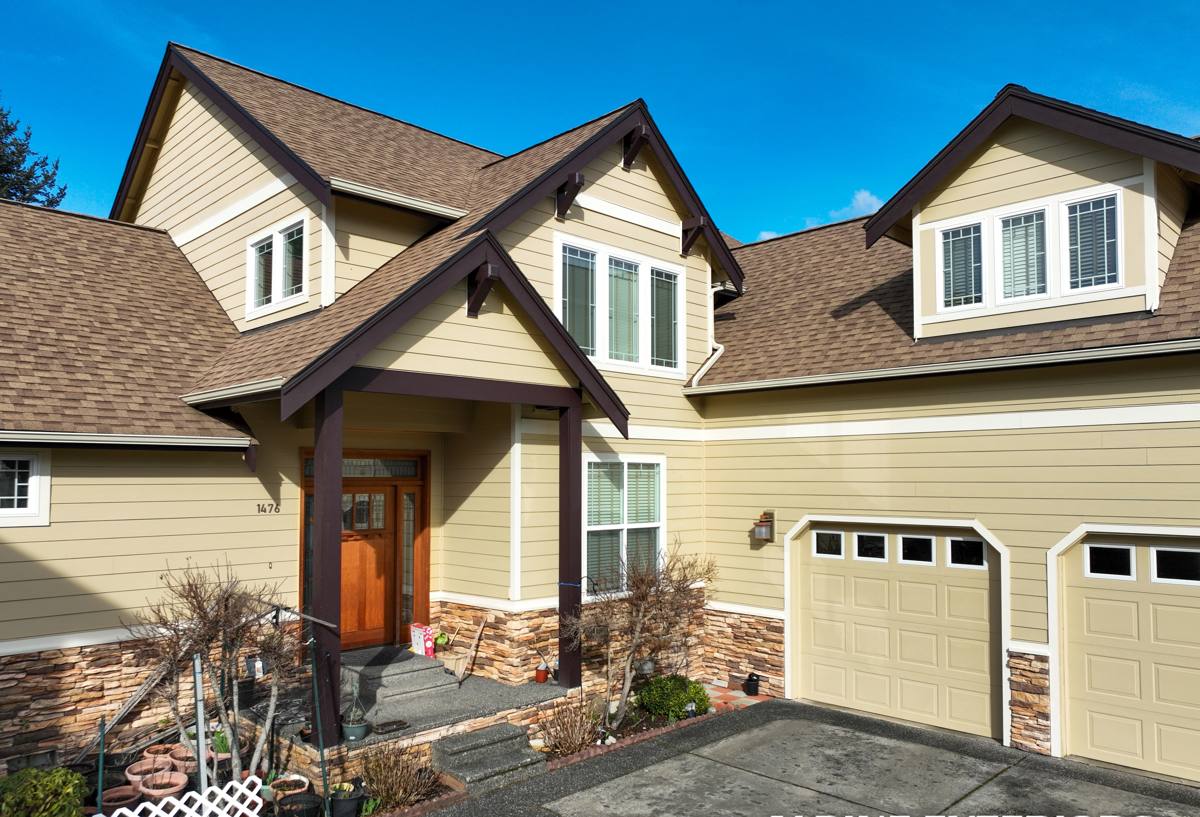
How Bellingham's Climate Wears Down Windows Over Time
Salt air and metal fatigue
Coastal air carries fine salt particles that accelerate corrosion on window hardware — hinges, balances, cranks, and lock mechanisms. On older aluminum-frame windows especially, this shows up as pitting, stiff operation, and hardware that seizes up years before the glass itself gives out.
Driving rain and wind-driven moisture
Bellingham's storms don't always come straight down. Wind-driven rain gets pushed sideways into window assemblies, testing flashing and seals in ways a calm, vertical rain never would. Any gap in the water management around a window — even a small one — becomes an entry point over enough storm cycles.
A long moss and shade season
Tree cover and persistent damp shade around many Silver Beach lots mean moss and algae get a long runway to establish themselves on sills, trim, and anywhere water sits instead of shedding. That green growth isn't just cosmetic — it holds moisture against wood and paint far longer than a sunnier, drier lot would.
None of this means Silver Beach homes need something exotic. It means the material choices, the flashing details, and the sealing work have to be done with this specific combination of conditions in mind, not a generic "window replacement" checklist.
Signs Your Windows Are Already Losing the Fight
Most homeowners don't call about windows until something is obviously wrong. By that point, the damage is often bigger than the window itself. Here's what we'd want you to catch earlier:
- Fogging or a permanent haze between panes — the seal has failed and the insulating gas is gone
- Visible gaps or daylight around the frame when the window is closed
- Soft, spongy, or discolored wood on the sill or interior trim
- Windows that are noticeably harder to open, close, or lock than they used to be
- Persistent condensation on the inside of the glass, especially in cooler months
- A cold draft near the window even when it's fully latched
- Moss, black streaking, or paint failure concentrated right around the window opening
Any one of these on its own might just mean the window needs attention. Several at once, especially on the same wall, usually means moisture has been getting behind the window for a while.
What a Correct Window Replacement Actually Involves
Removal and what's underneath
Pulling the old window is when we find out what's really going on — whether the framing is sound, whether there's hidden rot, and whether previous flashing was done correctly or just caulked over. This step matters more in a climate like ours, where problems tend to hide behind trim rather than announce themselves.
Flashing and the water management plane
The window itself is only part of keeping water out. The flashing tape, sill pan, and house wrap integration around it are what actually direct water away from the framing. In a driving-rain climate, a window installed without proper sill pan flashing or with flashing installed in the wrong order relative to the house wrap will eventually leak — it's a matter of when, not if.
Fitting, shimming, and sealing
A window needs to be level, plumb, and square in the opening, shimmed correctly so it isn't stressed out of shape, and sealed with the right sealant in the right locations — not just a bead of caulk around the outside trim. Over-sealing the wrong spots can trap moisture just as easily as under-sealing lets it in.
Interior and exterior finish work
The trim, interior stops, and exterior casing get reset or replaced so the finished look matches the rest of the house, and so there are no exposed gaps for moisture or insects to find later.
Choosing Window Materials and Glass for This Neighborhood
There isn't one "correct" window brand or material for Silver Beach, but there are trade-offs worth understanding before you decide. We'll walk through these against your specific exposure — which direction the wall faces, how much shade it gets, and how close it is to the water side of the property.
| Frame Material | Coastal/Moisture Performance | Maintenance | Typical Trade-off |
|---|---|---|---|
| Vinyl | Won't corrode or rot; handles salt air well | Low — occasional cleaning | Fewer color/finish options; can flex on very large sizes |
| Fiberglass | Excellent — very stable in wet, salty conditions | Low | Higher upfront cost than vinyl |
| Wood (unclad) | Needs consistent upkeep to avoid moisture damage | High — repainting/sealing on a schedule | Classic look, but a real maintenance commitment in this climate |
| Aluminum-clad wood | Good exterior protection if flashed correctly | Moderate | Interior warmth of wood with better weather-facing durability |
On glass, most Silver Beach homes do well with a dual-pane, low-E unit with an argon fill — it balances insulation and moisture control for our winters without pushing cost into diminishing returns. Triple-pane can make sense on a north-facing wall that takes the worst of the wind and rain, or where road or neighbor noise is a real factor, but it's not automatically the right call on every elevation. We'll tell you plainly when we think it's worth it and when it isn't.
Our Process, Start to Finish
- On-site assessment — we look at each window opening individually, not just count "how many windows," since exposure varies wall to wall
- Honest options — material, glass, and flashing recommendations based on what that specific wall actually deals with
- Written estimate — clear line items, no vague allowances
- Careful removal — old windows out, framing inspected before anything new goes in
- Proper flashing and installation — sill pan, house wrap integration, and sealing done in the correct order
- Finish work — trim and casing matched to the home, interior and exterior
- Final walkthrough — every window operated, checked, and explained before we consider the job done
Why It Matters That We Already Work in Silver Beach
A crew that's replaced windows elsewhere in Bellingham and Whatcom County isn't starting from zero on your street. We've already seen how homes in this kind of setting — close tree cover, damp shade, wind off the water — tend to develop problems, and where builders in this area typically cut corners on flashing or trim. That's not a guess; it's pattern recognition from doing this work locally and repeatedly.
It also matters for the practical side of the job: knowing how Whatcom County's permitting and inspection process works for window replacements, understanding typical lot access and driveway constraints in this neighborhood, and being realistic about scheduling around our wetter months so installation isn't happening in the middle of a storm system.
What Drives Cost on a Silver Beach Window Job
We don't publish a flat price because window replacement cost depends on real variables, not marketing. Here's what actually moves the number:
| Factor | Why It Affects Cost |
|---|---|
| Number and size of windows | More glass and larger openings mean more material and labor |
| Frame material chosen | Vinyl, fiberglass, and clad-wood carry different material costs |
| Condition behind the old window | Rot or moisture damage found during removal adds repair scope |
| Access and height | Second-story or hard-to-reach openings take more time and equipment |
| Trim and casing work | Full trim replacement costs more than reusing sound existing trim |
| Glass package | Dual-pane vs. triple-pane, and any upgraded coatings, shift the per-window cost |
As a broad range, single window replacements in this area commonly run from the low thousands up into the several-thousand range per window depending on size and material, with whole-home projects scaling from there. We'll give you real numbers for your actual windows rather than a number pulled from a national average that doesn't reflect Whatcom County labor or coastal-grade materials.
How to Get Your Home Ready for an Estimate Visit
- Note which windows are hardest to open, close, or lock
- Point out any rooms with recurring condensation or drafts
- Mention any past water intrusion or repairs near window openings, even old ones
- Have a rough idea of which rooms matter most if you're phasing the project
- Clear interior access to windows so we can check operation and sill condition
After Installation: Keeping Moss and Moisture From Coming Back
New windows don't remove the climate — they just handle it correctly. A quick rinse of sills and trim during the wetter months, keeping gutters and downspouts clear so water isn't sheeting across the wall near a window, and trimming back vegetation that's shading a window and keeping it damp will all extend the life of the work. None of this is heavy maintenance, but skipping it is how a well-installed window still ends up with moss creeping back in a few years.
If you're dealing with drafty, foggy, or aging windows on a Silver Beach home, we're happy to come take a real look — no pressure, no sales script, just a straight assessment of what your windows need and what it would cost to fix it right. Use the form below to request a free estimate.