 Bellingham Exterior
 Window Replacement Built for Barkley's Weather, Not Just Its Views
Barkley sits close enough to Bellingham Bay and the Puget Sound air to catch salt-laden wind, and far enough into Whatcom County's wet belt to get months of low-angle rain driven sideways by winter storms. That combination is hard on windows in ways that don't show up right away. A window that looks fine from the curb can already be losing the fight against moisture behind the trim, and by the time you see it — soft wood, bubbled paint, a musty smell in the room — the damage has usually spread past the frame into the wall itself. Replacing windows in this neighborhood isn't just a cosmetic upgrade; it's a chance to correct water and air paths that were never detailed right the first time, or that have simply worn out after years of Bellingham's weather.
We work on homes throughout Barkley regularly, alongside the rest of Bellingham and greater Whatcom County, so we're not guessing at how this climate treats a window system — we're accounting for it in every install.
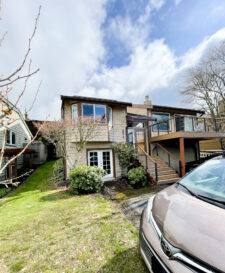
What Local Homes Are Up Against
Three regional factors drive almost everything about how we spec and install windows here:
- Salt air: Proximity to the water accelerates corrosion on metal hardware, fasteners, and lower-grade window components — especially on west- and south-facing elevations that catch prevailing wind.
- Driving rain: Bellingham's storms rarely fall straight down. Wind-driven rain finds any gap in flashing, caulking, or window-to-wall transitions and pushes water uphill and sideways, not just down.
- Long moss season: Extended damp periods keep exterior wood trim, sills, and siding wet for weeks at a time, which speeds up rot wherever water is already getting trapped instead of shed.
None of these factors mean you need exotic materials — they mean the installation details (flashing sequence, sealant choice, drainage path) matter more here than they would in a drier climate. A window can be top-of-the-line and still fail early if it's installed without those details right.
Signs a Barkley Home Needs Window Replacement
Homeowners usually call us for one of two reasons: a comfort problem or a visible damage problem. Both are worth acting on before they compound.
Comfort and Efficiency Signs
- Noticeable draft near the frame, even with the window latched
- Condensation forming between panes (a sign the seal has failed) or heavy condensation on the inside glass every morning
- Rooms that are hard to heat evenly compared to the rest of the house
- Windows that are difficult to open, close, or lock — often a sign the frame has shifted or swollen
Moisture and Damage Signs
- Soft or spongy wood at the sill or lower frame corners
- Paint that's bubbling, peeling, or won't hold near the window opening
- Visible moss, algae, or dark staining building on trim below the window
- A musty smell in the room, especially after a rainy stretch
Any one of these can be an isolated issue. Several together, especially on the same wall, usually point to a window that's been letting water in for a while.
Choosing Materials That Actually Hold Up in This Climate
There's no single "best" window material — the right choice depends on your home's exposure, budget, and how much upkeep you want to take on. Here's how the common options compare for a home in Barkley's conditions:
| Material | How It Handles Salt Air & Moisture | Maintenance | Typical Fit |
|---|---|---|---|
| Vinyl | Won't corrode or rot; performs well near the water | Low — occasional cleaning | Most homes, especially where budget and durability matter most |
| Fiberglass | Very stable in moisture and temperature swings; strong against salt exposure | Low | Homes wanting a higher-end finish with minimal upkeep |
| Wood-clad | Good if the cladding and flashing details are done correctly; interior wood needs protection from any interior moisture | Moderate | Homes prioritizing a traditional wood interior look |
| Aluminum | More prone to corrosion in salt air unless well-coated; conducts cold, which can lead to condensation | Moderate to high | Less common for residential use in this specific climate |
As a matter of professional standard, we steer homeowners away from window systems with a history of trapping moisture behind cladding or that rely on field-applied coatings to resist corrosion — not because any one product is "bad," but because in a climate with this much sustained moisture, the margin for installation error is thinner, and callbacks are harder to fix once trim and siding are closed back up. We'd rather set you up with a system that forgives small variables over the next twenty years than one that only performs if everything downstream is perfect.
Glass Packages Worth Considering
Beyond frame material, the glass package affects comfort and condensation resistance more than most homeowners expect:
- Double-pane with Low-E coating: The standard baseline for our region — reduces heat loss and UV fading
- Argon or krypton gas fill: Improves insulating performance between panes at modest added cost
- Triple-pane: Worth considering for north-facing rooms, street noise, or homes aiming for maximum efficiency, though it adds weight and cost
Full-Frame Replacement vs. Insert Replacement
This decision matters more here than in drier climates, because it determines whether hidden moisture damage gets addressed or covered up.
Insert (Pocket) Replacement
The new window fits inside the existing frame, which stays in place. It's faster and less invasive to trim and siding — a reasonable option when the existing frame is solid and dry.
Full-Frame Replacement
The entire window unit, including the frame, is removed down to the rough opening. This is slower and costs more, but it's the only way to inspect and repair the sheathing, framing, and flashing behind the window — which matters a great deal if there's any history of leaks, or if the home hasn't had its flashing updated to current standards.
We won't recommend an insert replacement over a suspected wet or rotted opening just to save time. If we open a wall and find damage, we'll show you what we're seeing and walk through the honest options before closing it back up.
How Our Window Replacement Process Works
- On-site assessment: We inspect existing windows, framing, and any visible moisture damage, and measure openings precisely.
- Product selection: We walk through material, glass package, and frame vs. insert options based on your home's exposure and budget — no upselling for its own sake.
- Removal and inspection: Old windows come out carefully; on full-frame jobs, we check the sheathing and framing before anything new goes in.
- Flashing and drainage detailing: Proper flashing tape, sill pans, and weather-resistive barrier integration come before the window is ever set — this is the step that determines whether water sheds outward or works its way in over time.
- Setting and shimming: The window is leveled, plumbed, and shimmed so it operates smoothly and seals evenly around the full perimeter.
- Sealing and insulating: Low-expansion foam or appropriate insulation fills the gap around the frame without bowing it, followed by exterior sealant rated for our climate.
- Trim and finish: Interior and exterior trim is reinstalled or replaced, and paint or caulking lines are finished cleanly.
- Walkthrough: We test operation, check the seal, and go over care and warranty details with you before we consider the job done.
Why Flashing and Sealing Deserve More Attention Than the Window Itself
Homeowners often focus on brand and glass, but in a driving-rain climate, the window is only as good as the flashing behind it. Water that gets past a poorly lapped flashing detail doesn't dry out quickly here — the long moss season means wall cavities can stay damp for weeks, which is exactly the environment rot and mold need. Correct flashing sequencing (each layer overlapping the one below it, so water always sheds outward and down) plus a properly sloped sill pan are what actually keep water out, not the sealant bead alone. Caulk is a backup, not a strategy.
What to Expect on Cost
Costs vary by size, material, glass package, and whether the job is insert or full-frame. Rather than quote a number that won't fit your home, here's what actually moves the price:
| Factor | Effect on Cost |
|---|---|
| Insert vs. full-frame replacement | Full-frame costs more due to added labor, trim, and siding work |
| Frame material | Vinyl is typically the most budget-friendly; fiberglass and wood-clad run higher |
| Glass package | Triple-pane and gas-fill options add cost per window |
| Existing damage | Rotted framing or sheathing found during removal adds repair cost |
| Window size and count | Larger openings and whole-home projects have per-unit efficiencies but higher total cost |
| Access and site conditions | Upper stories or tight access can add labor time |
We give a firm, written quote after seeing the actual windows and openings — not a phone estimate — because guessing on a job like this does nobody any favors once the walls are open.
A Practical Checklist Before You Hire
- Ask whether the quote includes full-frame or insert replacement, and why that's the recommendation for your home
- Confirm flashing and sill pan details are part of the scope, not just "install the window"
- Get the warranty terms in writing — both the manufacturer's and the installer's labor warranty
- Ask how moisture or rot found during removal is handled and priced
- Check that the crew is licensed and insured for work in Washington State
- Ask for a firm, itemized written quote rather than a rough verbal number
Why a Crew That Already Works in Barkley Matters
Bellingham and Whatcom County's building conditions aren't uniform — a home a few blocks closer to the water deals with more salt exposure, and a home tucked under mature trees deals with more sustained shade and moss. A crew that works this specific area regularly has already seen how these variables play out on real houses nearby, which means fewer surprises and fewer assumptions borrowed from a drier or milder climate. We show up knowing what Barkley's weather does to a window over the years, and we install accordingly.
If you're weighing whether it's time to replace your windows, or just want a straight answer about what's actually going on with a draft or a stuck sash, we're glad to take a look. Reach out for a free, no-pressure estimate using the form below.