 Bellingham Exterior
 Birchwood's Roofs Work Harder Than Most People Realize
Birchwood sits close enough to Bellingham Bay and the surrounding wetlands that homes here deal with a specific combination of weather stress: salt-tinged marine air, driving rain that comes in sideways off the water, and a wet season that stretches long enough to keep roofs damp for weeks at a time. None of that is dramatic on its own, but stacked together year after year, it adds up to accelerated wear on shingles, flashing, and the wood underneath them.
We've replaced and repaired enough roofs in this neighborhood to know the failure patterns aren't random. They show up in the same places: north-facing slopes that never fully dry out, valleys that collect debris and hold moisture, and edges where wind-driven rain gets pushed uphill under poorly sealed shingles. An asphalt shingle roof built for a drier inland climate simply isn't specified the same way as one built for Birchwood.
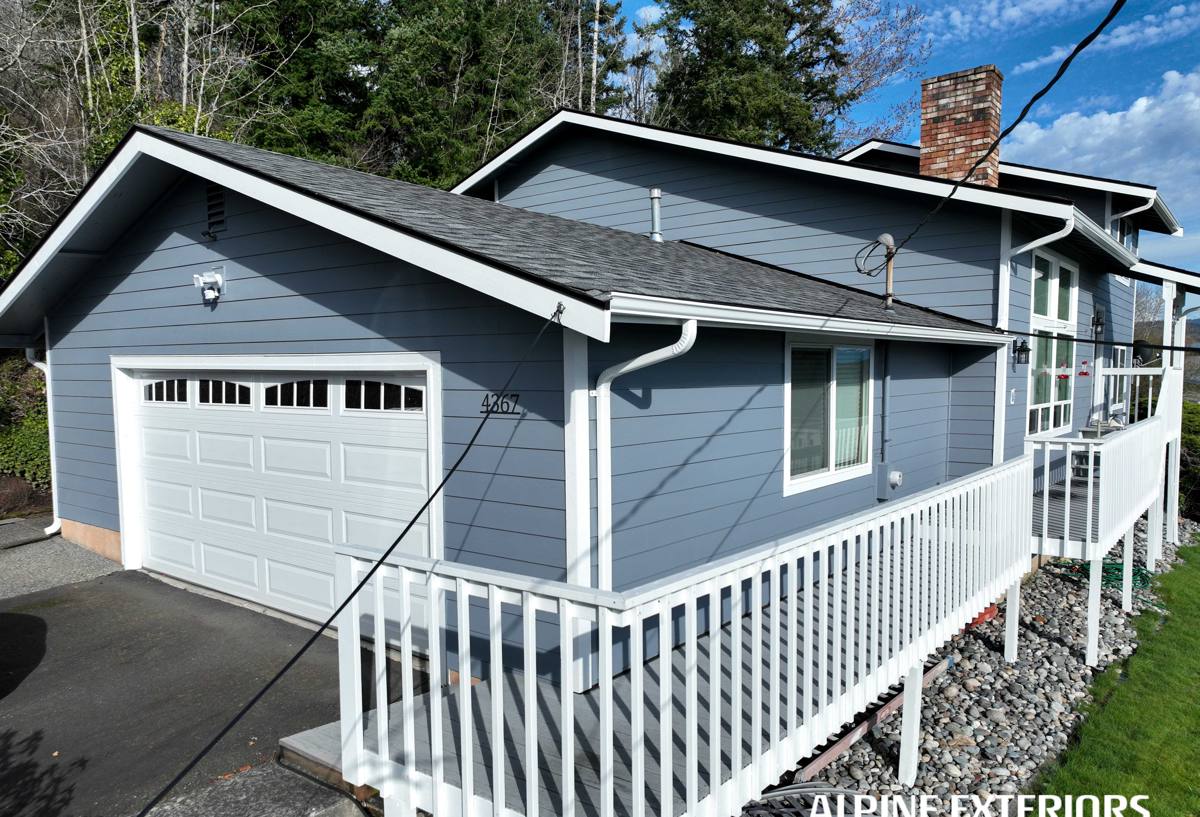
What Birchwood Homes Actually Need From a Shingle Roof
A correct roofing job here isn't about picking a shingle color and nailing it down. It's about matching the whole system — underlayment, ventilation, flashing, and the shingle itself — to conditions that include prolonged moisture exposure, moss and algae growth, and gusty coastal wind. A few specifics that matter more in this area than in drier parts of Whatcom County:
- Algae-resistant shingles to slow the black streaking that shows up fast in humid, shaded, moss-prone conditions
- Full ice-and-water membrane at eaves and valleys, not just the code-minimum strip, since driving rain can push water further uphill than a light drizzle ever would
- Balanced attic ventilation so trapped moisture from the inside doesn't rot the decking from underneath while the outside stays wet from rain
- Wind-rated shingles and proper nailing patterns for the gusts that roll through during winter storms
- Metal flashing sized and lapped correctly at every valley, wall intersection, and penetration, since this is where the vast majority of leaks actually start
Why "Standard" Isn't Good Enough Here
A shingle roof installed to bare minimum code in a dry climate can look identical to one built for Birchwood — until year three or four, when the difference becomes obvious. Underlayment that's too light lets moisture wick into the deck during a long soaking rain. Ventilation that's undersized traps humid air against the underside of the roof, encouraging rot and mold that homeowners don't see until there's a stain on a ceiling. None of this shows up on install day. It shows up later, which is exactly why it pays to get it right the first time.
What a Correct Asphalt Shingle Roofing Job Involves
Tear-Off and Deck Inspection
We remove the old roofing down to the deck rather than layering over it. That's the only way to actually see the condition of the plywood or plank sheathing underneath — soft spots, old leak damage, and rot don't show up until the old shingles are off. Any damaged decking gets replaced before anything new goes down; roofing over a compromised deck just hides the problem and shortens the life of the new roof.
Underlayment and Water Barrier
Synthetic underlayment goes down across the full deck, with self-adhered ice-and-water membrane at eaves, valleys, and any low-slope transitions — the spots where wind-driven rain and ponding water are most likely to find a way in. This step matters more in Bellingham's marine climate than almost anywhere else in the state.
Ventilation
We check and correct intake and exhaust ventilation as part of the job, not as an afterthought. A roof that can't breathe traps moisture, which shortens shingle life from the inside out and can lead to sheathing rot that's expensive to fix later.
Flashing and Valleys
Step flashing at walls, counter-flashing at chimneys, and properly lapped valley metal are installed before shingles go anywhere near them. Flashing is the least glamorous part of a roofing job and the most common source of callbacks industry-wide when it's rushed or reused from the old roof.
Shingle Installation
Shingles are installed to the manufacturer's nailing pattern and exposure specs, not "close enough." Proper nail placement is what keeps a roof performing in wind, and it's one of the easiest things for a rushed crew to get wrong without it being visible from the ground.
Ridge, Hip, and Final Detailing
Ridge caps, hip caps, and any remaining vents or boots get sealed and finished last, along with a full site cleanup — magnetic sweep for nails included.
Comparing Asphalt Shingle Options for This Climate
Not every asphalt shingle performs the same way in a wet, salt-air environment. Here's how the common tiers generally compare for a Birchwood application:
| Shingle Type | Typical Lifespan | Moss/Algae Resistance | Best Fit |
|---|---|---|---|
| 3-Tab (standard) | 15-20 years | Lower unless algae-resistant granules specified | Budget-conscious projects, secondary structures |
| Architectural / Laminate | 25-30+ years | Good, especially with algae-resistant granules | Most Birchwood primary homes |
| Impact-Rated (Class 4) | 25-30+ years | Good | Homes wanting extra durability against debris and hail |
For most homes in this neighborhood, architectural shingles with algae-resistant granules hit the right balance of durability, appearance, and value. Straight 3-tab shingles are lighter-duty and tend to show streaking and wear faster in a shaded, damp environment.
Moss, Algae, and the Long Wet Season
Whatcom County's wet season isn't just longer than drier parts of the state — it's persistent enough that shaded roof sections can stay damp for days between rain events. That's exactly what moss and algae need to take hold. Left unmanaged, moss growth lifts shingle edges, holds moisture against the roof deck, and shortens the life of the roofing system.
A few things we build into the job, or recommend as ongoing maintenance:
- Zinc or copper strips near the ridge on shaded or north-facing slopes, which release trace metals that discourage moss regrowth as rain washes over the roof
- Keeping overhanging branches trimmed back so shaded, damp sections get more light and airflow
- Gentle, low-pressure moss removal rather than aggressive pressure washing, which can strip granules and shorten shingle life
- Keeping gutters and valleys clear so water doesn't pool against shingle edges
None of this eliminates moss entirely — it's a fact of life in this climate — but it slows regrowth significantly and protects the investment in a new roof.
Our Process, Start to Finish
- On-site inspection. We look at the whole roof system, not just the shingles — decking, ventilation, flashing, and any trouble spots specific to your home's exposure.
- Written estimate. A clear, itemized quote so you know what you're paying for and why, with no vague allowances.
- Scheduling around the weather. We plan tear-off and dry-in around Bellingham's rain patterns to minimize the window your home is exposed.
- Tear-off, deck inspection, and repair. Old roofing comes off, the deck gets inspected, and any damaged sheathing is replaced.
- Installation. Underlayment, flashing, ventilation corrections, and shingles go in to manufacturer spec.
- Final walkthrough. We review the finished roof with you before calling the job complete.
What Affects the Cost of a Birchwood Roofing Project
Every roof is priced based on its own specifics, but the same factors tend to move the number up or down on most jobs in this area:
| Factor | Why It Matters |
|---|---|
| Roof size and pitch | More square footage and steeper slopes mean more material and labor time |
| Number of layers to remove | Tear-off of multiple old layers takes longer and adds disposal cost |
| Deck condition | Rotted or soft sheathing needs replacement before new roofing goes down |
| Shingle tier chosen | 3-tab, architectural, and impact-rated products carry different material costs |
| Roof complexity | Valleys, dormers, and chimneys all add flashing work and labor time |
| Access | Steep sites, tight lot lines, or limited driveway access can affect setup and disposal logistics |
Signs Your Birchwood Roof May Need Attention
- Granules collecting in gutters or at the base of downspouts
- Curling, cupping, or cracked shingles, especially on south- or west-facing slopes
- Dark streaking or visible moss patches, particularly on shaded sections
- Soft spots or noticeable sagging when walking the roof or viewing from the attic
- Daylight visible through the roof deck from inside the attic
- Water stains on interior ceilings or upper-level walls after heavy rain
- Roof age approaching or past 20-25 years, even with no visible damage yet
Why a Crew That Already Works Birchwood Matters
Roofing specs written for a generalized climate don't always account for the specific combination of conditions this neighborhood deals with — the salt air off the bay, the intensity of driving rain during winter storms, and a moss season long enough to matter. A crew that's already worked roofs in this area knows which slopes tend to hold moisture, which valleys collect the most debris, and where wind-driven rain typically finds its way in on a poorly detailed roof.
That familiarity also means fewer surprises during the estimate. We're not guessing at how Bellingham's climate affects a given roof design — we've seen the failure patterns firsthand and build the job to avoid repeating them.
If your Birchwood home needs a roof inspection, a repair, or a full asphalt shingle replacement, we're happy to take a look and walk you through what we find — no pressure, no obligation. Use the form below to request a free estimate.