 Bellingham Exterior
 Why Birchwood Homes Take a Different Kind of Weather Beating
Birchwood sits close enough to Bellingham Bay and the surrounding waterways that homes here deal with a specific combination of punishment most siding was never designed for: salt-tinged air, wind-driven rain that hits siding sideways instead of straight down, and a moss season that can stretch from October well into spring. Add Whatcom County's marine humidity, and you have a climate that finds every weak seam, every unsealed nail hole, and every piece of trim that wasn't flashed correctly.
Most of the siding failures we get called out to look at in this neighborhood aren't dramatic. They're slow. A little bit of moisture gets behind a butt joint one winter, doesn't fully dry out before the next round of rain arrives, and by year six or seven you're looking at soft trim boards, peeling paint, or siding that's swollen at the bottom edge. None of that is inevitable — it's almost always a product or installation choice that didn't account for how wet this part of Washington actually stays.
What Birchwood Siding Actually Needs to Do
For a house in this neighborhood, siding has three jobs, in order of importance:
- Shed wind-driven rain without letting water track behind the panels at laps, joints, and penetrations
- Resist moss and algae growth on north- and shade-facing walls without constant homeowner upkeep
- Hold paint and color through repeated wet-dry cycles instead of chalking, fading, or peeling within a few years
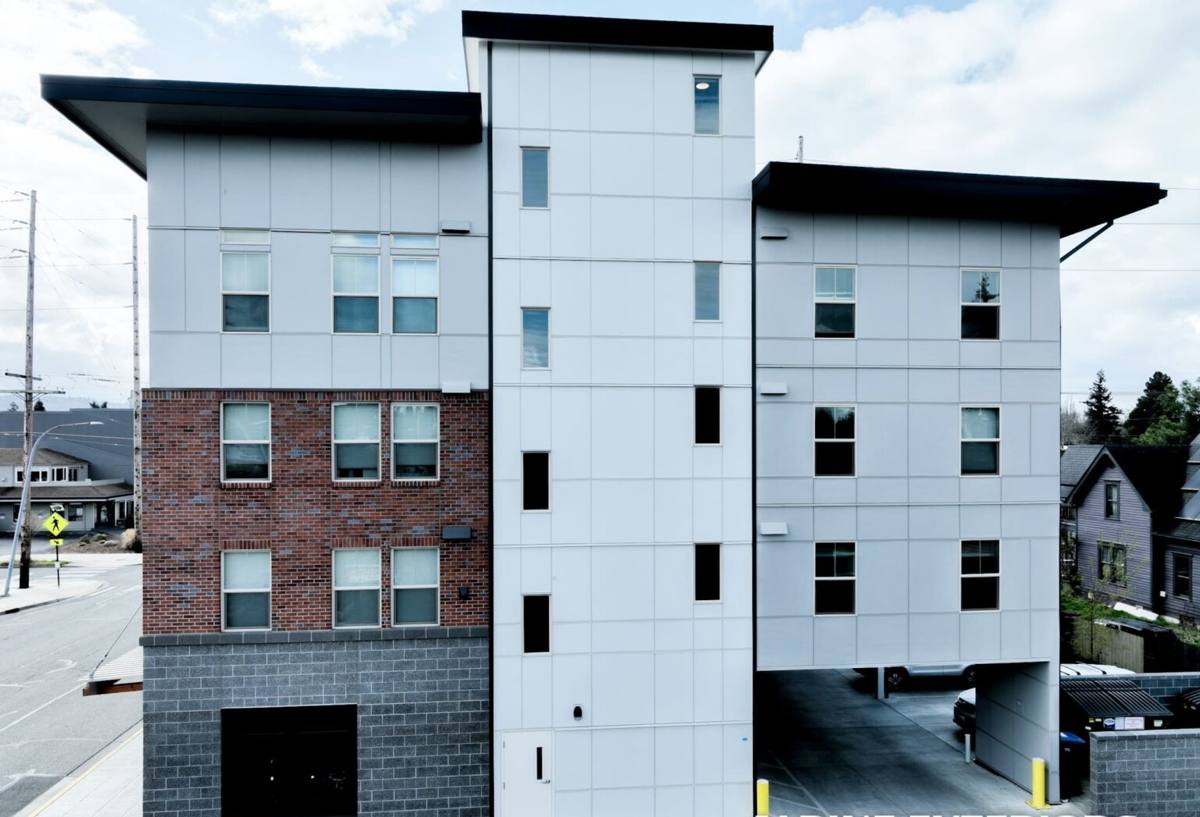
Fiber cement, specifically James Hardie's product line, does all three better than the alternatives we get asked about. It's dimensionally stable when wet or dry (unlike wood, which swells and shrinks), it's inert enough that moss and mildew don't feed on it the way they do on some other materials, and the factory-applied ColorPlus finish is baked on under controlled conditions rather than field-applied — which matters enormously in a climate where you rarely get more than a few consecutive dry days to paint in.
Why We Don't Install Everything on the Market
We get asked from time to time about vinyl siding or engineered wood products as a lower-cost option. We don't install those, and we're upfront about why: vinyl can warp and gap in sustained wind-driven rain, and it doesn't hold up structurally the way fiber cement does over a 30-plus year horizon. Engineered wood siding performs fine when the manufacturer's moisture-management details are followed exactly, but the margin for installation error is thin, and callbacks on wood-based products in wet marine climates are common enough that we chose not to build our business around them. James Hardie fiber cement gives us a product we can stand behind on every home we touch in this area, backed by a real transferable warranty instead of one full of moisture-exposure exclusions.
What a Correct Installation Actually Involves
Fiber cement siding is only as good as the details underneath it and around it. A rushed or undertrained install can leave a house looking right for a year or two while moisture problems build behind the surface. The parts that matter most on a Birchwood home:
- Weather-resistive barrier and rainscreen gap: A drainage plane behind the siding gives incidental moisture somewhere to go and lets the wall assembly dry — critical in a climate that rarely gets a long dry stretch.
- Flashing at every horizontal transition: Window heads, door heads, roof-to-wall intersections, and deck ledgers all need step or head flashing installed before siding goes on, not caulk applied after the fact as a substitute.
- Correct fastener pattern and clearance: James Hardie specifies fastener spacing, minimum ground clearance, and minimum clearance from roof lines and decks — clearances that are frequently ignored on lower-bid jobs and are exactly where rot and moss growth start.
- Joint treatment: Butt joints need to be flashed or sealed per the manufacturer's detail, not just butted together and caulked. Caulk is maintenance, not waterproofing.
- Field-cut edge sealing: Any cut edge that isn't factory-finished needs to be sealed with an approved product before installation, or that edge becomes the first place moisture gets in.
Our Process on a Birchwood Home
1. Walk-Through and Assessment
We start by looking at the whole wall assembly, not just the visible siding — checking for existing moisture damage, past patch jobs, trim condition, and how the house is oriented relative to prevailing wind and rain. Shaded, north-facing walls usually need a different conversation about moss than south-facing ones.
2. Removal and Substrate Check
Old siding comes off and we inspect sheathing before anything new goes up. If we find soft sheathing or trim, we flag it and price the repair separately rather than covering it up — a new siding job over rotten sheathing is a problem deferred, not solved.
3. Water Management Layer
Weather-resistive barrier, flashing at every penetration and horizontal transition, and a rainscreen gap where the wall assembly calls for one.
4. Hardie Installation to Manufacturer Spec
Correct fastener spacing and type, correct clearances from grade, roofline, and decks, factory-finished ColorPlus panels with sealed field cuts.
5. Final Walk-Through
We go over the finished job with you, register the warranty paperwork, and point out anything you'll want to keep an eye on — an overhanging tree limb, a downspout that needs redirecting, whatever's specific to your lot.
James Hardie Product Lines for This Climate
James Hardie makes climate-engineered HZ product lines, and for a coastal Whatcom County property we typically spec toward the HZ5 line, which is built for wetter, cooler climate zones like ours rather than the hotter, drier HZ10 line built for the southern half of the country. The difference isn't cosmetic — it's about how the product is engineered to handle sustained moisture exposure.
| Consideration | What It Means for Birchwood |
|---|---|
| HZ5 climate engineering | Built for the moisture and freeze-thaw pattern of the Pacific Northwest rather than a hot-dry climate |
| ColorPlus factory finish | Baked-on finish means no waiting for a rare dry stretch to field-paint, and stronger fade and moisture resistance than site-applied paint |
| Non-combustible core | Doesn't feed moss or mildew the way organic materials can, and holds up to sustained damp exposure without swelling |
| Transferable warranty | Coverage that follows the house if you sell, which matters in a market where buyers ask about siding age and condition |
What Drives Cost on a Birchwood Project
| Factor | Why It Matters Here |
|---|---|
| Existing sheathing condition | Homes with past moisture intrusion may need sheathing repair before new siding goes on |
| Trim and detail work | Older Birchwood homes often have more window and roofline detail than a simple rectangular wall, which adds flashing and cutting time |
| Siding profile and color | Lap width, shingle-style panels, and ColorPlus color selection affect material cost |
| Access and site conditions | Lot slope, tree cover, and how close the home sits to neighboring structures affect setup and staging time |
| Scope of tear-off | Full re-siding versus siding over sound existing substrate changes labor significantly |
We give firm, itemized quotes after the walk-through — not a rough number based on square footage alone, since the details above swing the price more than square footage does.
Signs a Birchwood Home Needs Siding Attention Now
- Persistent moss or dark streaking on north- or shade-facing walls that comes back within weeks of cleaning
- Paint that's peeling, bubbling, or chalking rather than just fading evenly
- Soft or spongy spots when you press on siding or trim, especially near the bottom courses or under windows
- Visible gaps or separation at butt joints and corner boards
- Rising utility bills or noticeably colder rooms along exterior walls in winter
Maintenance After Installation
Fiber cement is low-maintenance, not no-maintenance. A yearly rinse to knock down surface moss and organic buildup, prompt attention to any caulk lines that crack or shrink, and keeping gutters clear so water isn't sheeting down the wall face will keep a correctly installed Hardie system performing for decades. None of this is heavy work — it's the kind of thing that takes an afternoon and saves you from a much bigger repair down the road.
Why Hiring a Crew That Already Works in Birchwood Matters
Siding installation isn't one-size-fits-all across Whatcom County. A crew that regularly works this specific area already knows which orientations tend to hold moisture longest, how local moss growth patterns behave through the wet season, and what inspectors and permitting expect for this jurisdiction. That's the kind of familiarity that shows up in the small decisions — where to add extra flashing, which wall needs a wider rainscreen gap, how to sequence a job around a wet Bellingham forecast — rather than in anything you'd notice from the curb until years later when it either holds up or doesn't.
What to Ask Before You Hire
- Are you a certified James Hardie installer, and can you explain the fastening and clearance specs you follow?
- Will you inspect and address sheathing condition before installing new siding, not just cover it?
- What's your plan for flashing at windows, doors, and roof-to-wall intersections?
- Is the warranty transferable if the home is sold?
- Can you walk me through why you'd spec HZ5 versus another product line for this specific wall orientation?
If a siding contractor can't answer those questions specifically, that's worth knowing before a contract gets signed, not after the siding is up.
If your Birchwood home is showing any of the wear signs above, or you're just planning ahead, we're happy to walk the property with you and give you a straight, no-pressure estimate — no obligation, no pressure, just an honest look at what your siding actually needs.