 Bellingham Exterior
 Birchwood's Siding Problem Isn't Like Everyone Else's
Every neighborhood in Bellingham deals with rain, but Birchwood homes take a particular combination of punishment: damp marine air drifting in off the water, wind-driven rain that finds every seam and gap, and a moss season that runs long and heavy under the tree cover common to this part of Whatcom County. None of these forces are dramatic on their own. The damage they cause builds slowly, over years, which is exactly why so many homeowners don't notice a siding problem until it's a bigger job than it needed to be.
We work on homes throughout Bellingham, and Birchwood siding calls tend to share a pattern: moisture-related failure at seams, corners, and low areas where moss and debris hold water against the wall longer than the material was ever meant to tolerate. Understanding that pattern is the first step to fixing it correctly instead of just patching the symptom.
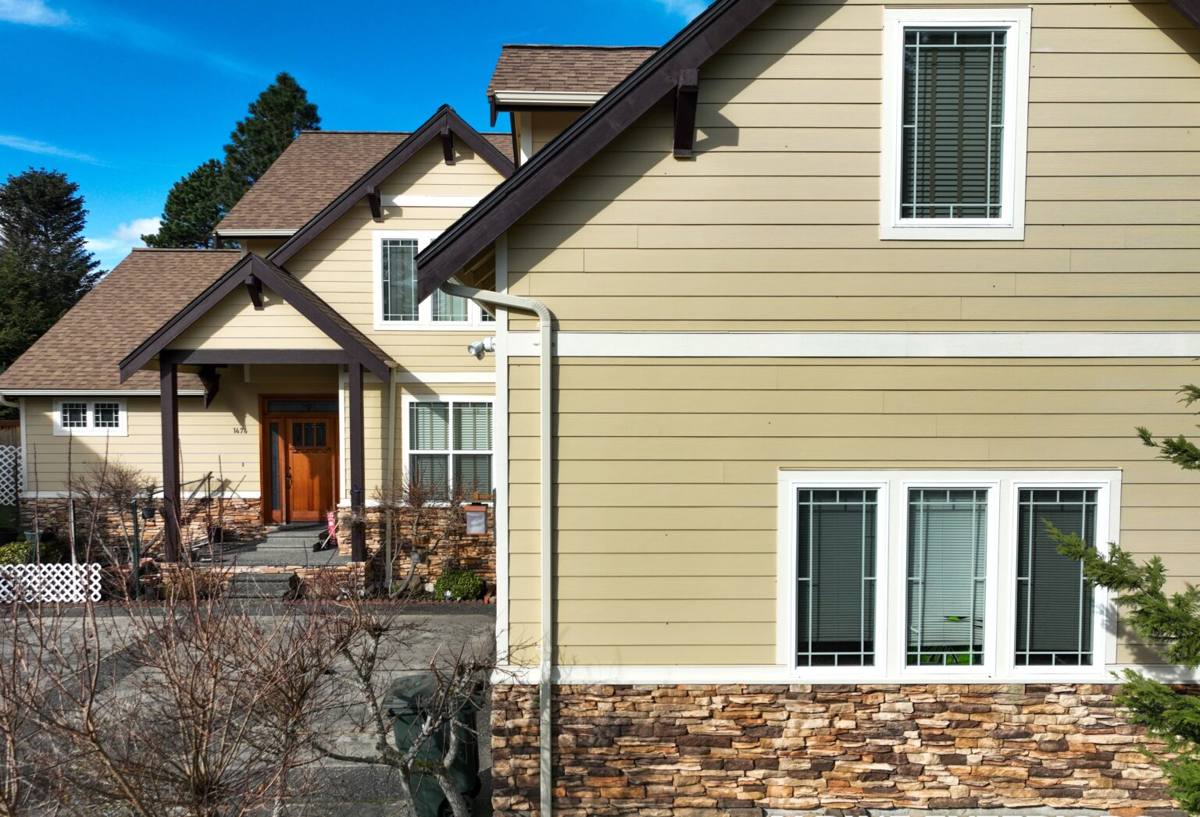
What Salt Air, Rain, and Moss Actually Do to Siding
Salt Air
Bellingham sits close enough to the water that airborne salt is a real factor, even inland from the immediate shoreline. Salt is hygroscopic — it pulls moisture out of the air and holds it against a surface. On wood-based siding products, that means panels and trim stay damp longer than they would in a drier climate, which accelerates rot, paint failure, and fastener corrosion. Metal flashing, nail heads, and hardware corrode faster too, and once a fastener starts to fail, the panel it's holding starts moving, and movement opens gaps.
Driving Rain
Wind-driven rain doesn't just fall on siding, it gets pushed sideways and upward into laps, seams, and butt joints. On a still day, a siding system with a small gap or a missing bead of caulk might never let water in. In a wind-driven storm off the Sound, that same gap is an entry point. Over time, repeated wind-driven events force water behind panels, where it's invisible from the street and does the most damage — to sheathing, framing, and insulation — before it ever shows up as a visible stain.
Moss and Organic Growth
Whatcom County's tree cover and shade patterns mean moss, algae, and lichen get a long growing season, and Birchwood's mix of mature trees and shaded lot lines makes it a good candidate for organic growth on north-facing walls and anywhere siding stays shaded and damp. Moss isn't just cosmetic. It holds moisture against the siding surface around the clock, which is the exact condition that causes wood siding to rot and paint to fail, and it works its way into seams and laps where it can trap water rather than let it drain.
Signs Your Siding Needs Repair — Not Just a Paint Job
- Soft or spongy spots when you press on the siding, especially near the bottom courses or below windows
- Paint that's bubbling, peeling, or chalking in patches rather than evenly across the wall
- Visible gaps at seams, corners, or trim joints that weren't there when the siding was new
- Moss or algae buildup that keeps returning even after cleaning
- Dark streaking or staining below seams, which usually means water is tracking down from a failure point above
- Warped, cupped, or buckled panels — a sign moisture has already gotten behind the siding
- Increased pest activity (ants, in particular) around the base of exterior walls
- Interior signs: musty smell, peeling interior paint, or soft drywall on an exterior wall
If you're only seeing the first two items on that list, you may genuinely be looking at a repair. If you're seeing the items further down — buckling, staining, soft sheathing — that's usually a sign the damage has moved past the siding itself and into the wall assembly, which changes the scope of the job.
What a Correct Siding Repair Actually Involves
A repair done right is not just cutting out a bad piece and nailing in a new one. It's a diagnostic process:
1. Find the Real Cause
Damaged siding is usually a symptom, not the root problem. Before we replace anything, we look at what let water in — a missing kick-out flashing, a caulk joint that failed, a window or door flashing detail that was never installed correctly, grade or landscaping pushing water up against the wall. Replacing the panel without fixing the cause just buys a few more years before the same spot fails again.
2. Check What's Behind the Siding
Once the damaged section is opened up, we check the sheathing, house wrap, and framing underneath. Sometimes it's dry and intact and the repair really is limited to the siding. Sometimes there's soft sheathing or rot in the framing, and that has to be addressed before new siding goes back on — covering rotten framing with a new panel just hides a structural problem.
3. Match the Material and Correct the Detail
Repairs should disappear, not stand out as an obvious patch. That means matching profile, reveal, and finish as closely as possible, and correcting whatever detail caused the failure — proper flashing, correct fastener pattern, appropriate clearances at grade and at trim, and a drainage path so water that does get behind the cladding can get back out instead of sitting there.
4. Address the Moisture Source Going Forward
If moss or organic buildup contributed to the failure, we'll talk about what can reasonably be done — grading, gutter and downspout adjustments, or simply a maintenance rhythm — to keep that section of wall from staying wet in the same way again.
Repair, Partial Replacement, or Full Replacement?
Not every damaged section needs a full re-side, but at a certain point patch repairs stop making financial sense. Here's how we think through it with homeowners:
| Situation | Likely Right Call | Why |
|---|---|---|
| Isolated damage at one or two spots, siding elsewhere in good shape | Targeted repair | Root cause is local; no reason to disturb sound siding |
| Repeated failures at the same location over several years | Repair the cause, then reassess | Recurring failure means the underlying detail was never fixed |
| Damage scattered across multiple walls or elevations | Evaluate for full replacement | Widespread failure usually points to an aging or under-built original system, not one bad spot |
| Siding is original wood, LP, or older composite nearing end of service life | Full replacement worth pricing out | Patching an aging product often costs nearly as much as replacing it, with a shorter payoff |
| Rot or moisture found behind more than a small area | Full replacement of that elevation | Once framing and sheathing are compromised broadly, piecemeal repair won't hold |
We'll always tell you honestly which category your job falls into rather than defaulting to the bigger scope. A lot of Birchwood siding calls really are contained repairs — we just want to make sure the repair addresses the actual cause instead of just the visible damage.
Our Process for a Birchwood Repair Call
- Inspection. We walk the exterior, check moisture readings where relevant, and identify every affected area, not just the spot you called about.
- Honest assessment. We tell you whether it's a repair, a partial replacement, or something bigger, and why.
- Written scope and pricing. No vague verbal estimates — you get a clear scope of work before anything starts.
- The repair itself. Removal of damaged material, inspection and repair of anything found underneath, correction of the failed detail, and installation of matched material.
- Finish and cleanup. Paint or finish matched as closely as possible, site cleaned up, and a walkthrough so you know exactly what was done and what to watch for going forward.
Why We Repair With — and Recommend — James Hardie
When a repair calls for new material, or when a homeowner asks us to look at a broader re-side, we install James Hardie fiber cement exclusively. We don't install vinyl, LP SmartSide, Cemplank, Allura, or bare cedar or spruce siding, and in a climate like Bellingham's that decision matters more than it might in a drier region. Fiber cement doesn't absorb water the way wood-based products do, so it isn't feeding the same rot cycle that salt air and driving rain create on organic materials. It's also non-combustible, which is worth something regardless of climate. Hardie's ColorPlus factory finish holds up to UV and moisture cycling better than field-applied paint, which matters directly for moss and algae resistance since a consistent, well-adhered finish gives organic growth less to grip onto. And Hardie's HZ product lines are engineered specifically for wet climates like ours, not adapted from a product built for a dry one.
None of that means every product we've named is a bad product — it means we made a standard, and we stand behind it, including when we're just repairing a small section of your wall.
Why It Matters to Hire a Crew That Already Works Birchwood
Siding repair looks straightforward from a distance, but the failure points are specific to how a home was built, how it's oriented to wind and rain, and what the immediate site conditions are doing to it — shade, drainage, tree cover, proximity to salt air. A crew that regularly works Bellingham and Whatcom County neighborhoods like Birchwood has already seen the common failure patterns for this specific climate and building stock, which means less time spent diagnosing and more time spent fixing the actual cause. It also means we're not guessing at how local moisture and moss conditions behave over a full year — we're working from what we've already seen hold up and what hasn't.
A Simple Self-Check Before You Call
- Walk your home's north and shaded sides — that's where moss and prolonged dampness show up first
- Press gently on siding near the bottom of walls and below windows to check for softness
- Look at caulk joints around windows, doors, and trim for cracking or separation
- Check for staining or streaking below any seam or joint
- Note any areas where landscaping, mulch, or grade sits close to or above the bottom of the siding
If anything on that list gives you pause, it's worth getting a professional opinion before the next wet season adds to the damage. If you'd like us to take a look at your Birchwood home, we're happy to provide a free, no-pressure estimate — just fill out the form below and we'll get in touch.