 Bellingham Exterior
 Columbia Roofs Work Harder Than Most
Columbia sits close enough to Bellingham Bay to catch salt-laden air off the water, and far enough into the older, tree-shaded part of the city that shade, moisture, and organic debris are a permanent part of the equation. That combination is tough on roofing. Salt air accelerates corrosion on fasteners, flashing, and any exposed metal. Mature tree cover keeps roof surfaces shaded and damp longer after a storm than a roof out in the open would stay. And Whatcom County's long, wet stretch of fall through spring means roofs here rarely get a real chance to dry out before the next system rolls in.
None of that is unusual for Bellingham as a whole, but Columbia's mix of older housing stock, dense tree canopy, and proximity to the bay puts it on the higher end of roof stress for the area. A repair that would hold up fine on a newer roof in a drier, more open part of the county can fail early here if it doesn't account for those conditions.
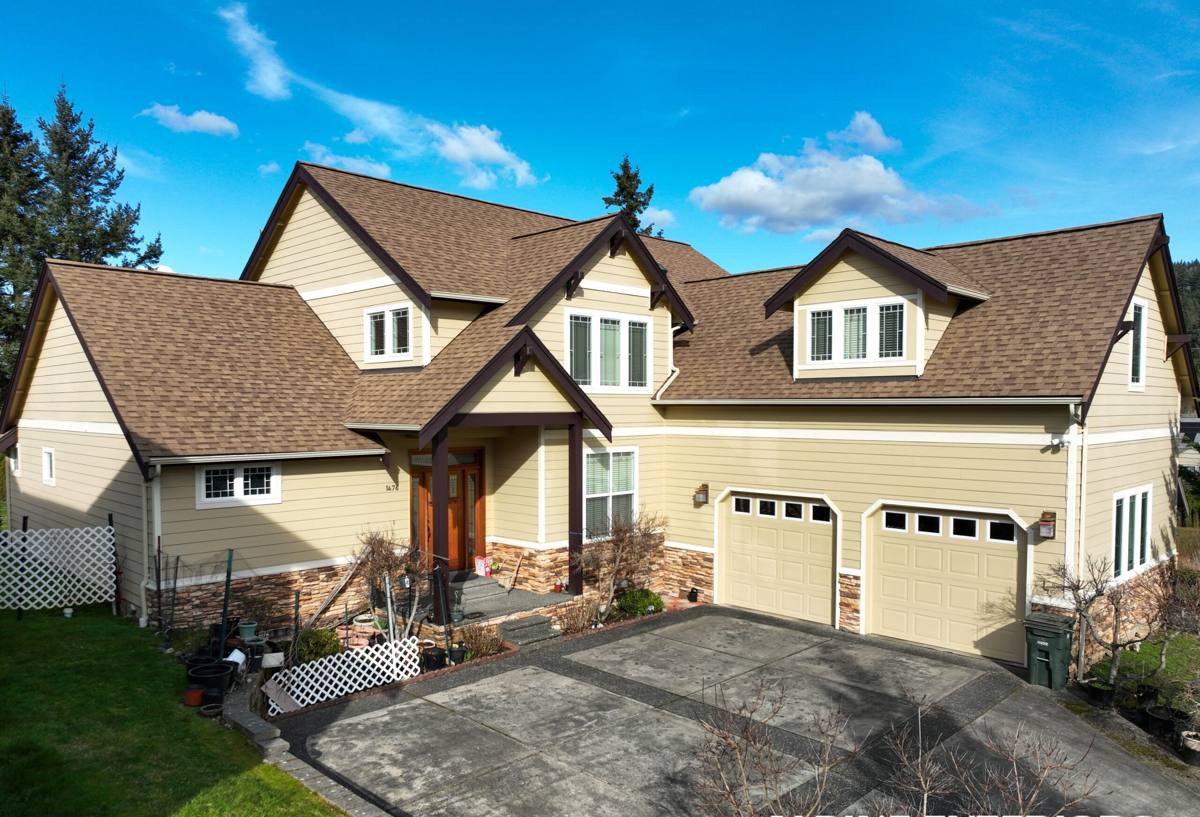
What the Local Climate Actually Does to a Roof
Moss and Organic Growth
Moss doesn't just sit on top of shingles looking bad — it holds moisture against the roof surface around the clock, works its way under shingle edges and into granule layers, and lifts shingle tabs as it grows. Once moss gets a foothold in a shaded, moist spot, it spreads. On north-facing slopes and anywhere tree cover blocks sun and airflow, that season can run most of the year.
Driving Rain and Wind-Driven Water
Straight-down rain is manageable for almost any roof. Driving rain, pushed sideways by wind off the water, finds every weak point — a lifted shingle tab, a gap in flashing, an aging pipe boot — and pushes water uphill under the roofing material instead of letting it run off. This is where a lot of "small" roof problems turn into interior leaks, because the water isn't going where gravity alone would take it.
Salt Air and Metal Fatigue
Flashing, fasteners, gutter hardware, and any exposed metal roofing components corrode faster in coastal air. A nail or flashing seam that would last two decades inland can start failing well before that this close to the bay, especially if it wasn't rated or installed with that exposure in mind.
Freeze-Thaw and Temperature Swings
Whatcom County doesn't get brutal winters, but it does get repeated freeze-thaw cycles — cold nights, damp days, occasional hard frosts. Water that's worked its way under a shingle or into a crack can freeze, expand, and widen the damage, then thaw and let more water in. It's a slow, cumulative process that turns minor wear into real damage over a few seasons.
Signs a Columbia Home Needs Roof Repair
Most roof problems give warning signs well before there's a leak inside the house. Worth checking for, or asking a contractor to check for, on a regular basis:
- Shingles that are cracked, curling, or missing, especially after a windy storm
- Visible moss or dark green/black streaking on shaded slopes or roof edges
- Granules collecting in gutters or at downspout outlets
- Sagging or soft-feeling spots when walked on (a sign of underlying deck damage)
- Rust staining or gaps at flashing around chimneys, vents, and skylights
- Water stains, discoloration, or peeling paint on interior ceilings or upper walls
- Daylight visible through the roof deck from inside the attic
- Gutters pulling away from the fascia or overflowing during heavy rain
Any one of these on its own might be minor. Several together, or any sign paired with an active leak, means it's time for a proper inspection rather than a guess.
What a Correct Repair Actually Involves
Diagnosis Before Anything Else
A repair is only as good as the diagnosis behind it. Water that shows up as a stain on a bedroom ceiling didn't necessarily enter the roof directly above that spot — it can travel along rafters, sheathing, or underlayment before dripping somewhere else entirely. A repair that patches the visible symptom without tracing the actual entry point often looks fine for a season and then fails again in the same spot, or a new spot, the next time it rains hard.
Matching Materials, Not Just Covering the Hole
Shingles fade and weather over time, and roofing profiles change from year to year. A patch that uses the wrong shingle style, weight, or exposure can create a new weak point — a mismatched seam, a slightly different water path — even if it seals the original problem. On a repair, matching the existing roofing as closely as possible matters both for how the roof performs and how it looks.
Flashing, Underlayment, and the Parts You Don't See
Most roof leaks in this climate trace back to flashing and underlayment failures rather than the shingles themselves. Flashing around chimneys, skylights, dormers, and roof-to-wall transitions takes the brunt of driving rain and is the first thing that should be inspected and, if needed, replaced during a repair — not just resealed with caulk as a stopgap.
Ventilation and Moisture Balance
A repair that ignores attic ventilation is treating half the problem. Trapped moisture from poor airflow contributes to the same rot, mold, and shingle degradation that rain intrusion causes, and it accelerates moss growth from underneath as well as above. Part of doing a repair correctly is checking that intake and exhaust ventilation are actually balanced, not just present.
Repair or Replace? How to Think About It
Not every roof problem calls for a full replacement, and not every leak can be fixed with a patch. The right call usually comes down to the roof's age, how widespread the damage is, and what's underneath the surface layer.
| Factor | Leans Toward Repair | Leans Toward Replacement |
|---|---|---|
| Roof age | Under 15-20 years, depending on material | Near or past expected service life |
| Extent of damage | Isolated area (one slope, one flashing point) | Widespread across multiple slopes |
| Deck condition | Solid, no rot or soft spots | Soft decking, visible rot, sagging |
| Moss/algae coverage | Light to moderate, treatable | Heavy, embedded growth across the roof |
| Repair history | First or second repair on this roof | Repeated repairs to the same or nearby areas |
A roof with one damaged section and a sound deck is usually a straightforward repair. A roof with a failing deck, chronic leaks in different spots each year, or moss that's colonized most of the surface is often better served by replacement — patching that kind of roof tends to become a recurring expense rather than a fix.
Our Process for Columbia Repairs
Inspection and Honest Assessment
We start by getting on the roof, not just looking at it from the ground. That means checking the deck, flashing, ventilation, and the general condition of the roofing material, not just the spot where the leak showed up inside. We'll tell you plainly whether we're looking at a repair or something bigger — including if we think replacement is the more cost-effective long-term choice.
Clear Scope Before Work Starts
You'll know what's being repaired, with what materials, and roughly what it will cost before anyone starts work. No surprise add-ons once we're up there.
The Repair Itself
Work is done to match the existing roofing as closely as possible, with attention to the flashing and underlayment details that actually determine whether the fix holds. Where moss or organic growth contributed to the damage, we address the growth itself, not just the resulting damage, so the same spot isn't back on our schedule next season.
Cleanup and Follow-Up
Debris, old materials, and stray fasteners get cleared from the roof, gutters, and ground. If we see something else developing — a flashing point that's a year or two from failing, ventilation that's undersized — we'll flag it so you can plan for it rather than get surprised by it.
Why Hiring a Crew That Already Works in Columbia Matters
A roofer who works Bellingham and Whatcom County regularly has already seen how this specific combination of salt air, tree cover, and driving rain plays out on real roofs, season after season. That's different from general roofing knowledge. It means knowing which flashing details tend to fail first in this climate, which shaded roof sections need extra attention for moss, and how to sequence a repair around the area's wet stretches instead of guessing.
It also matters for accountability. A crew that's planning to be working in the same neighborhoods next year, and the year after, has a real incentive to get the repair right the first time — not just get through the job.
Keeping a Repaired Roof in Good Shape
A repair is a good long-term fix when it's paired with basic upkeep. After a repair, a few habits go a long way in this climate:
- Have gutters cleared at least twice a year, more often under heavy tree cover
- Keep overhanging branches trimmed back to reduce shade and debris buildup
- Check for moss regrowth on shaded slopes each fall
- Look at flashing points after major windstorms
- Schedule a roof inspection every year or two, even with no visible problems
Skipping these doesn't undo a good repair overnight, but it shortens how long that repair holds up — especially in a spot like Columbia where moss and moisture have every advantage.
Get a Straight Answer on Your Roof
If you're dealing with a leak, moss buildup, or storm damage on a Columbia-area roof, we're happy to take a look and give you an honest read on what it actually needs — repair, monitoring, or something more. Use the form below to request a free, no-pressure estimate.