 Bellingham Exterior
 Siding Replacement for Bellingham's Columbia Neighborhood
Columbia is one of Bellingham's older, established residential neighborhoods, and that means a lot of its homes are wearing siding that was installed decades ago — under different codes, with different materials, and often without a proper water-resistive barrier behind it. When we get called out to a Columbia property, we're usually looking at either wood siding that's finally reached the end of its paintable life, old vinyl that's cracked and faded, or a previous fiber cement job that wasn't detailed correctly. Whatever the starting point, the same regional facts apply: this is a marine climate, this house is going to see a lot of rain, and whatever goes back on the wall needs to handle that for the next several decades, not just look good on installation day.
This page is specifically about full siding replacement in Columbia — not a general overview of siding options, and not a repair job. If your siding is still structurally sound and the damage is limited to a section or two, repair may be the right call and we'll tell you that. This page is for homeowners who are past that point.
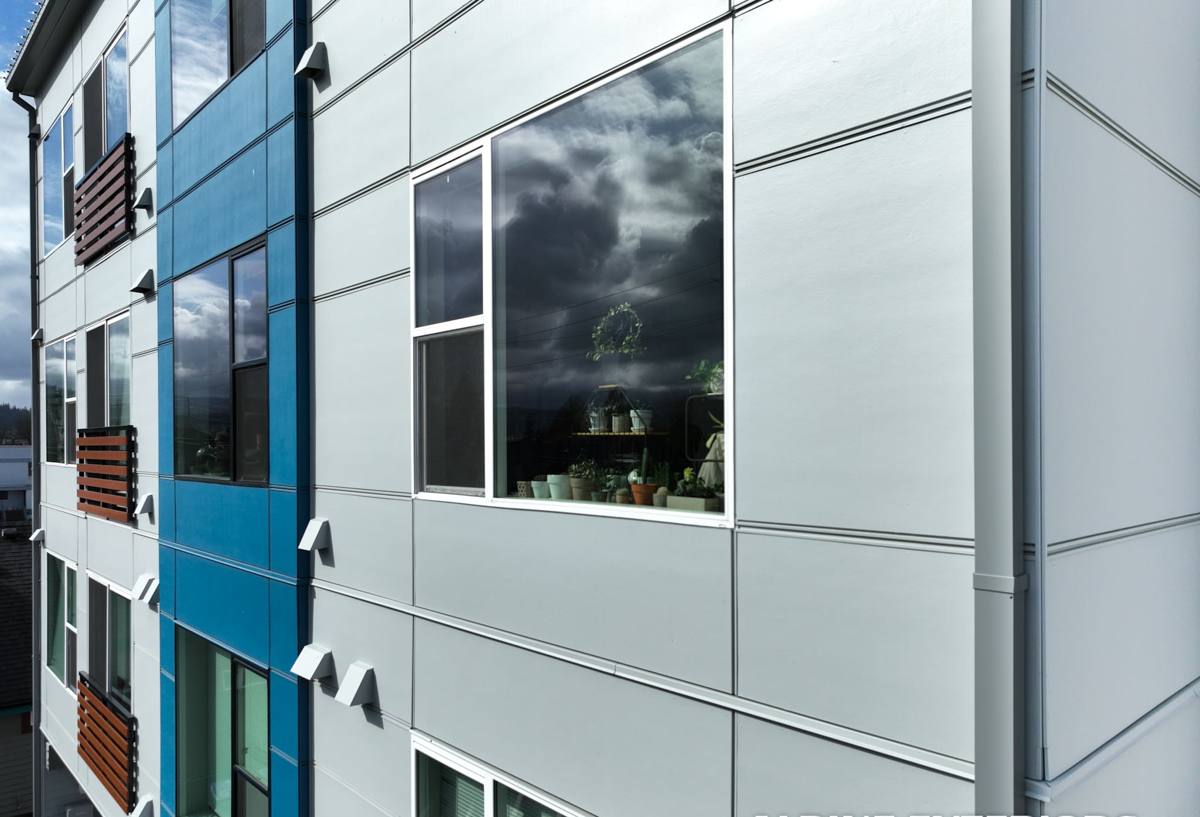
What Bellingham's Climate Actually Does to Siding
Whatcom County sits close enough to the water that salt-laden air is a real factor on siding, trim, and fasteners, even a few miles inland. Add in driving rain that comes sideways off Pacific storms for months at a time, and a moss season that can run from fall through spring on any wall that stays shaded and damp, and you have a climate that's unusually hard on exterior materials compared to drier parts of the country.
Three things matter most for a Columbia home specifically:
Moisture Intrusion Over Time
Wood siding, in particular, absorbs water at cut edges, nail penetrations, and lap joints. Once moisture gets behind the surface paint film, it doesn't dry out quickly in our climate — the swelling, cupping, and rot that follows is almost always a moisture problem that started small and was never addressed.
Moss and Organic Growth
Moss doesn't just look bad. It holds moisture directly against the siding surface for extended periods, which accelerates whatever decay process is already underway. North-facing walls and anything shaded by mature trees — common in an established neighborhood like Columbia — are the first places we see it take hold.
Salt Air and Fastener Corrosion
Salt air corrodes lower-grade fasteners and metal trim faster than it does further inland. Fastener failure is one of the quieter causes of siding problems — nails or staples that rust and lose their grip let panels shift, which opens gaps for water.
Signs a Columbia Home Needs Replacement, Not Repair
Homeowners often ask us to "just fix the bad spots." Sometimes that's the right answer. Other times, what looks like a localized problem is really evidence that the whole wall system has aged out. Here's how we tell the difference on a walkthrough:
- Soft or spongy siding when pressed, especially near the bottom courses or around window trim
- Paint that won't hold anymore even after proper prep — a sign the substrate underneath is failing
- Visible cupping, warping, or delamination across multiple sections rather than one isolated area
- Persistent moss or algae staining that returns within a season or two of cleaning
- Gaps opening up at seams, corners, or butt joints that weren't there a few years ago
- Interior signs — musty smell, peeling interior paint, or damp drywall near exterior walls
- Siding style or material that's simply original to the house and reaching the end of its realistic service life
If you're seeing two or more of these across the exterior rather than in one spot, replacement is almost always the more honest recommendation — patching a house that's failing broadly just delays a bigger cost later.
What a Correct Siding Replacement Job Involves
A siding replacement is only as good as what happens underneath the new material. Skipping this part is the single biggest reason siding jobs fail early, regardless of what brand went on the wall. Our process on every tear-off includes:
Full Tear-Off and Substrate Inspection
We remove the old siding completely rather than covering over it, because that's the only way to actually see the sheathing underneath. Any rot, soft spots, or water damage gets found and repaired before anything new goes up — covering existing problems just traps them.
Water-Resistive Barrier and Flashing
A correctly lapped weather-resistive barrier, properly integrated window and door flashing, and drainage detailing at the bottom of the wall are what actually keep water out — not the siding material itself. Given the rain volume this region sees, this step is not optional.
Correct Fastening and Clearances
Fiber cement has specific fastener, spacing, and clearance requirements from grade and roofing that James Hardie publishes for a reason — get them wrong and you introduce the exact moisture entry points the barrier was supposed to prevent. We follow manufacturer installation instructions to the letter, not "close enough."
Trim, Caulking, and Finish Details
Corners, trim boards, and joints are where most callbacks originate on any siding job. We detail these with the same care as the field siding itself.
Why We Install Only James Hardie Fiber Cement
We made a decision as a company to install James Hardie fiber cement siding exclusively — not vinyl, not LP SmartSide, not cedar or primed spruce, not other fiber cement brands. That's a deliberate standard, not a sales preference, and it matters most in a climate like this one.
Wood products, even engineered ones, depend on an intact factory coating and diligent long-term maintenance to keep moisture out; once that coating is compromised in a wet marine climate, deterioration can move faster than most homeowners expect. Vinyl is low-maintenance but it's a thin material that can warp in temperature swings and doesn't offer the impact resistance or paintable permanence some homeowners want. James Hardie fiber cement is non-combustible, holds its factory-applied ColorPlus finish for years without repainting, and is manufactured in HZ product lines engineered for specific climate zones — the HZ5 formulation used in this region is built around freeze-thaw and moisture exposure, not generic "one product fits everywhere" thinking. It also carries a strong, transferable manufacturer warranty, which matters when a home changes hands.
None of this means other products are junk — plenty of them perform fine when installed and maintained correctly. It means that after weighing the maintenance burden, moisture behavior, and long-term cost against the alternatives, Hardie is what we're willing to put our name behind and the only material we install.
Our Process, Start to Finish
- Walkthrough and assessment — we inspect the current siding, trim, and any accessible sheathing to scope the real extent of the work.
- Written estimate — a clear breakdown of material, labor, and any substrate repair we expect to encounter.
- Tear-off — full removal of existing siding and inspection of what's underneath.
- Substrate repair — any damaged sheathing or framing addressed before anything new is installed.
- Barrier and flashing installation — the weatherproofing layer that does the real work of keeping water out.
- Hardie installation — siding, trim, and accessories installed to manufacturer spec.
- Final walkthrough — we review the finished job with you before calling it complete.
What Affects the Cost of a Siding Replacement
Every Columbia home is different, so we're not going to throw out a number that doesn't mean anything — but these are the real variables that move the estimate up or down:
| Cost Factor | Why It Matters |
|---|---|
| Home size and number of stories | More square footage and taller walls mean more material and more labor, including staging for upper stories |
| Condition of existing sheathing | Rot or water damage found during tear-off adds repair work that can't be scoped until the old siding is off |
| Amount of trim and architectural detail | Corners, window casings, and decorative trim take more time per square foot than flat wall runs |
| Siding profile chosen | Lap siding, shingle-style panels, and board-and-batten each have different material and labor costs |
| Access and site conditions | Mature landscaping, fencing, or tight lot lines common in older neighborhoods can add labor time |
| Paint or color program | Factory ColorPlus finishes avoid future painting costs but may price differently than field-painted options |
Why a Local Crew That Works Columbia Matters
Siding work isn't generic, and a crew that's spent real time on homes in this specific part of Whatcom County brings something a traveling or out-of-area contractor doesn't: familiarity with how the local climate has actually treated houses like yours. We know what a Columbia-area home built decades ago is likely to have behind its original siding, we know which orientations tend to hold moss and moisture the longest, and we know how to sequence a tear-off around this region's rain patterns instead of getting caught mid-project by a storm. That local pattern-recognition shortens surprises during the job and shows up in the quality of the finished result.
Protecting Your Investment After Installation
James Hardie siding is low-maintenance, not no-maintenance. A short annual routine keeps it performing the way it's designed to in this climate:
- Rinse the exterior once or twice a year to clear pollen, salt residue, and organic buildup before it takes hold
- Check caulking at trim joints and penetrations annually and touch up if it's cracking or pulling away
- Trim back vegetation and tree limbs that keep a wall section shaded and damp longer than the rest of the house
- Watch gutters and downspouts — overflow running down a wall is a common cause of premature staining
- Address any impact damage or exposed edges promptly rather than letting them sit through a wet season
If you're weighing a siding replacement for a Columbia-area home, we're happy to take a look and give you an honest read on what your home actually needs — no pressure, no upsell. Use the form below to request a free estimate.