 Bellingham Exterior
 Windows Built for Columbia's Corner of Bellingham
Columbia sits close enough to Bellingham Bay that homes here take a different kind of weather beating than houses further inland in Whatcom County. Salt-tinged air off the water, wind-driven rain that finds its way sideways into window frames, and a wet season that stretches long enough to grow moss on anything that stays damp too long — all of it adds up to windows that fail faster here than the manufacturer's brochure suggests. We've installed and replaced windows on Columbia's mix of older bungalows, mid-century homes, and newer infill construction long enough to know which failure points show up first in this neighborhood and how to build around them.
This page is about one job: installing windows correctly on Columbia homes, not just selling a window. The product matters, but in a climate like this, the installation details — flashing, sealant sequencing, drainage paths — decide whether a window lasts fifteen years or thirty-five.
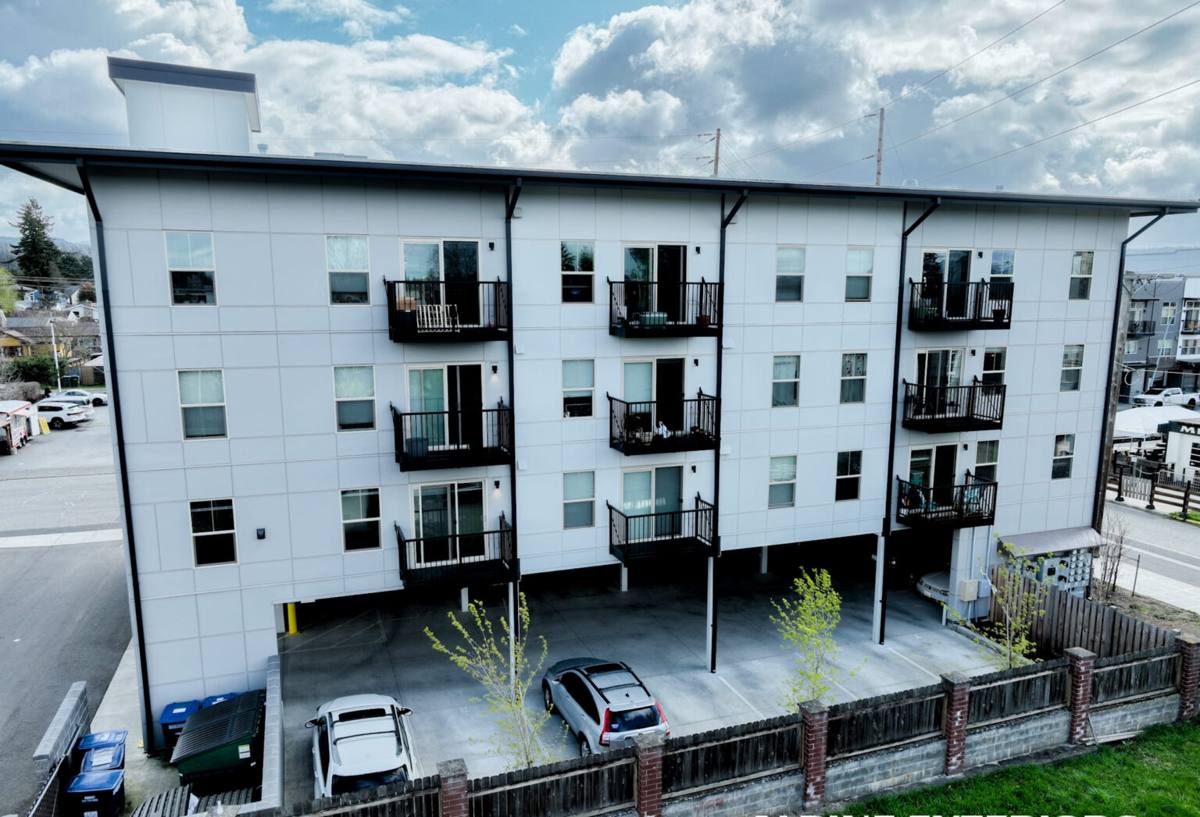
What Bellingham's Climate Does to Windows Over Time
Whatcom County doesn't get extreme weather, but it gets persistent weather, and persistent is what breaks windows. A few specific stressors matter most for Columbia:
- Salt air corrosion: Proximity to the bay means airborne salt settles on metal hardware, aluminum cladding, and fasteners. Over years this accelerates corrosion on lower-quality hinges, locks, and cladding screws — especially on window sides facing the water.
- Driving rain: Storms here often come in at an angle, not straight down. That means water gets pushed up and under trim, sills, and poorly lapped flashing in ways that vertical rain never would. Older installations built for straight-down rain assumptions are the ones we see failing.
- Moss and organic growth: Anything that stays damp for extended stretches — a sill with poor drainage, a shaded north-facing wall, a window buried under overhanging trees — grows moss and algae. That growth holds moisture against wood trim and finishes, which speeds up rot underneath even when the surface looks fine.
- Temperature swings and condensation: Mild but damp winters mean a lot of interior-exterior temperature differential across glass, which shows up as condensation on older single-pane or failed double-pane units — a sign the seal is gone, not just a cosmetic issue.
None of these are dramatic events. They're slow, cumulative, and they punish shortcuts. That's the real argument for doing the installation right the first time rather than treating it as a quick swap.
What a Correct Window Installation Actually Involves
A lot of window replacement work in this region is really just "pull the old one, drop in the new one, caulk the edges." That approach can look fine for a year or two and then leak. A correct installation, especially in a wet, salt-exposed area like Columbia, follows a specific sequence:
1. Opening Inspection Before Anything Goes In
Once the old window is out, the rough opening gets inspected for hidden rot, soft sheathing, or prior water intrusion. This is the point where problems that have been building for years — often invisible from outside — actually get found. Skipping this step and installing straight into a compromised opening just seals the damage inside the wall.
2. Flashing and Drainage Path
Flashing has to be layered so water sheds outward and downward at every level — sill pan first, then side flashing lapped over it, then a header flap lapped over the sides. In driving rain conditions, the sill pan detail matters most: it needs a back dam and a clear path for any water that gets past the window to drain back outside instead of pooling against the frame.
3. Air and Water Sealing — Not Just Caulk
Sealant tape or liquid-applied flashing around the perimeter, paired with backer rod and sealant at the interior and exterior joints, does the real work. Caulk alone, especially on wood or fiber-cement siding, is a maintenance item that will eventually crack and need attention — it should never be the only barrier.
4. Insulation and Air Sealing of the Gap
The gap between the window frame and rough opening gets filled with low-expansion foam or backer rod and sealant, not stuffed with fiberglass. An improperly sealed gap is a common source of both drafts and condensation on the interior trim in winter.
5. Final Weatherproofing and Trim
Exterior trim, sill nosing, and any decorative casing go back on last, sealed at the top edges especially, since that's where driving rain gets pushed up and under.
Choosing the Right Window for a Columbia Home
Frame material, glass package, and hardware all affect how a window performs against salt air and sustained moisture. Here's how the common options stack up for this specific environment:
| Frame Material | How It Handles Local Climate | Maintenance Reality |
|---|---|---|
| Vinyl | Good moisture resistance, doesn't corrode from salt air, stable cost | Low maintenance; check weep holes for debris seasonally |
| Fiberglass | Excellent dimensional stability in temperature swings, strong moisture and salt resistance | Low maintenance; higher upfront cost, longer expected service life |
| Wood (clad or unclad) | Classic look, but bare wood is vulnerable to rot in a damp climate; exterior cladding protects it | Unclad wood needs regular repainting/sealing; clad wood is easier but cladding seams need checking |
| Aluminum | Prone to salt-air corrosion and poor thermal performance unless thermally broken | Requires corrosion-resistant hardware and coatings near the bay; we're selective about where we recommend it |
For most Columbia homes within a mile or two of the water, we steer clients toward vinyl or fiberglass with corrosion-resistant (often stainless or coated) hardware, and double- or triple-pane glass with a warm-edge spacer that resists seal failure from repeated condensation cycling. Wood-clad windows still make sense on homes where matching historic character matters, as long as the cladding and flashing details are done right.
Our Process, Start to Finish
- On-site assessment: We look at existing window condition, framing, siding type, and sun/rain exposure on each elevation — a south or west wall facing the bay gets different attention than a sheltered north wall.
- Honest scoping: We tell you plainly if we find rot or prior water damage during the assessment, and what it will take to fix it before new windows go in. We don't install over a known problem and hope it holds.
- Product selection: We walk through frame material, glass package, and hardware options based on your budget and that specific wall's exposure, not a one-size-fits-all recommendation.
- Installation: Full removal, opening inspection, flashing, sealing, insulation, and trim as outlined above — done to manufacturer specs so warranties stay valid.
- Final walkthrough: We check operation, seals, and finish work with you before we call the job done.
Signs a Columbia Home Needs New Windows
- Condensation or fogging between the panes — the seal has failed and the insulating gas is gone
- Visible gaps, drafts, or noticeable temperature difference near the window when it's windy
- Wood trim or sills that feel soft, spongy, or show paint bubbling
- Moss or dark staining building up on sills or lower frame edges that doesn't fully dry between rain events
- Difficulty opening, closing, or locking — often a sign the frame has shifted or swollen
- Visible corrosion on hinges, cranks, or locking hardware, especially on walls facing the water
Any one of these on its own might not mean full replacement is urgent, but a few together — especially combined with the home's age — usually means it's worth having a look before the next wet season.
Why a Crew That Already Works Columbia Matters
Window installation isn't identical everywhere in Whatcom County. A crew that mostly works drier, inland areas can do fine work and still miss the specific flashing sequence that matters when rain comes in sideways off the bay, or under-spec hardware that looks fine for the first year before salt air starts working on it. Working regularly in Columbia and the surrounding Bellingham neighborhoods means we've already seen how these homes age under this exact weather pattern — which sills rot first, which walls need extra flashing attention, which hardware holds up and which doesn't. That's not a guess; it's pattern recognition from doing the work here repeatedly.
It also means we're a known, reachable local business if a question comes up two years after installation — not a crew that worked the area once and moved on.
What Affects the Cost
Window installation pricing varies by opening size, frame material, glass package, and how much of the surrounding trim, siding, or framing needs repair. As a rough guide, straightforward vinyl replacements tend to sit at the lower end of the range, fiberglass and larger or custom-shaped openings sit higher, and any job that uncovers rot or structural repair during removal adds cost proportional to the extent of that damage. We give firm, itemized numbers only after the on-site assessment — anything quoted sight unseen for a job like this isn't a real number.
If your Columbia home needs a window looked at — whether it's one failing unit or a full-house replacement — we're glad to come take a look and give you a straightforward, no-pressure estimate using the form below.