 Bellingham Exterior
 Composite Decking Built for Cordata's Climate
Cordata sits on the north side of Bellingham, close enough to the water and the Nooksack lowlands that decks here take a real beating over the course of a year. It's not one big storm that wrecks a deck in Whatcom County — it's the slow grind of driving rain soaking into end grain, salt-tinged air off Bellingham Bay working into fasteners, and a moss season that runs longer here than almost anywhere else in the state. A deck that looks fine going into November can be a slick, green hazard by February if it wasn't built with that cycle in mind.
We install composite decking for homeowners throughout Cordata and the surrounding neighborhoods, and the approach we use is shaped directly by what we see failing on older decks in this area: trapped moisture, undersized ventilation, and hardware that wasn't rated for our wet-dry cycling. This page covers what a correctly built composite deck actually involves here, not just the product itself.
Why Whatcom County Weather Is Hard on Decks
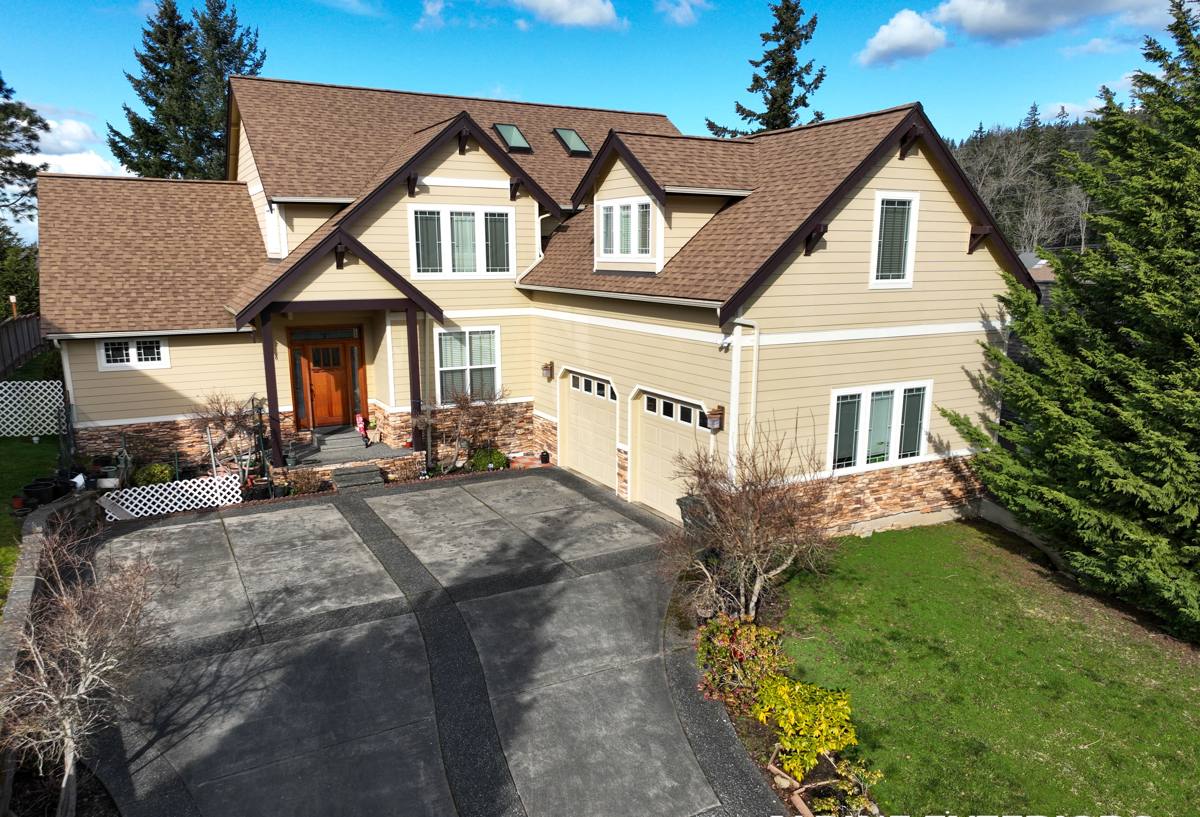
Bellingham gets a lot of rain, but it's the pattern of that rain — long stretches of light, steady moisture rather than short heavy downpours — that causes the most damage. Wood fibers stay damp for days at a time, which is exactly the condition mold, rot, and moss need to take hold. Add in the cooler, shaded microclimates common in Cordata's tree-lined lots, and you get decks that rarely get a full day of direct sun to dry out.
The Three Local Stressors
- Driving rain: Wind-driven moisture gets under railings, into fastener holes, and behind ledger boards if flashing wasn't done right the first time.
- Salt air: Proximity to Bellingham Bay means airborne salt accelerates corrosion on any hardware that isn't stainless or coated for coastal exposure.
- Moss and algae: Our extended wet season and shaded lots create ideal conditions for surface growth, which is as much a slip hazard as it is a cosmetic problem.
What a Correct Composite Deck Build Involves
Composite decking solves the surface-level wood problems — no staining, no re-sealing, no splintering board faces. But composite is not a substitute for a well-built substructure, and in our climate the substructure is where most long-term problems start. A composite deck is only as good as what's underneath it.
Framing and Substructure
We frame with pressure-treated lumber rated for ground contact where it's within range of soil or heavy splashback, and we use joist tape or a comparable flashing membrane on top of every joist. That single step is one of the most commonly skipped details on older or budget decks, and it's the reason we see joists rotting out from the top down even when the composite boards on top still look brand new.
Fasteners and Hardware
Given the salt air off the bay, we spec stainless steel or coated coastal-grade fasteners and structural hardware — joist hangers, ledger bolts, post bases. Standard galvanized hardware can hold up fine inland, but closer to the water it corrodes faster than most homeowners expect, often well before the decking itself needs attention.
Ledger Attachment and Flashing
Where a deck attaches to the house, correct flashing is what keeps water from working its way into the rim joist and, eventually, the wall assembly behind it. This is a detail that's easy to shortcut and expensive to fix later, so we treat it as non-negotiable on every ledger-attached deck we build.
Airflow Underneath
Low-clearance decks are common on lots around Cordata where grade changes are gradual. When clearance is tight, we adjust joist spacing, add ventilation gaps, or recommend a skirting approach that still allows airflow, because stagnant, damp air under a deck is a direct path to premature substructure failure — no matter how good the decking on top is.
Choosing the Right Composite Product for This Area
Not all composite decking performs the same in a wet, low-sun climate. We steer homeowners toward capped composite boards — where a polymer shell fully encloses the wood-plastic core — because fully capped boards resist moisture absorption and surface mold far better than uncapped or partially capped alternatives. In a drier climate that distinction matters less. Here, it's one of the most important decisions in the whole project.
| Decking Type | Moisture Resistance | Moss/Algae Resistance | Maintenance |
|---|---|---|---|
| Uncapped composite | Moderate — core can absorb moisture at cut ends | Fair, more prone to surface staining | Occasional cleaning |
| Fully capped composite | High — polymer shell resists absorption | Good, easier to keep clean | Low, periodic rinse |
| Traditional wood | Low — requires sealing to resist moisture | Poor without regular treatment | Annual staining/sealing |
We also pay attention to surface texture. A board with too smooth a finish can actually become more slippery once moss or algae film builds up, while a textured, embossed surface sheds water better and keeps more grip underfoot through our wetter months.
Our Process for Cordata Deck Projects
- On-site assessment: We look at drainage, existing structure (if replacing a deck), sun exposure, and how close the site is to grade or standing water.
- Design and material selection: We walk through capped vs. uncapped options, color and board profile, and railing systems that hold up to our coastal air.
- Permitting: Most deck projects in Bellingham require a permit, especially for elevated structures or ledger-attached decks. We handle this as part of the project.
- Demolition (if applicable): Removal of the old deck, with an honest look at whether the existing footings and framing are sound enough to reuse.
- Framing with moisture protection: Joist tape, proper flashing, and coastal-rated fasteners as standard practice, not an upsell.
- Composite installation: Hidden fastener systems where the product allows, correct expansion gaps, and attention to board orientation for drainage.
- Final walkthrough: We go over care basics — mainly seasonal cleaning — so the deck stays looking right through its first few wet seasons.
Maintenance Realities for Composite Decking Here
One of the reasons homeowners in Cordata move to composite is to get away from annual staining and sealing. That part is real — composite doesn't need refinishing. But "low maintenance" doesn't mean "no maintenance" in a climate like ours.
- Sweep debris and fallen leaves regularly, especially under trees, since trapped organic matter holds moisture against the board surface.
- Rinse or lightly scrub the deck a couple of times a year to keep moss and algae from getting a foothold, particularly on shaded sections.
- Check railing posts and stair connections annually for any looseness, which can be an early sign of moisture getting into a connection point.
- Clear gutters and downspouts near the deck so runoff isn't being directed straight onto or under the decking.
- Confirm skirting or under-deck areas still have clear airflow paths after any landscaping changes.
Why a Crew That Already Works Cordata Matters
A lot of what makes a composite deck last in this specific area isn't in the product spec sheet — it's in the build details that account for our rain patterns, our salt air, and how long moss season actually runs here compared to other parts of the state. A crew that builds mostly in drier inland climates may not default to coastal-grade hardware or joist-top flashing unless a homeowner specifically asks for it. We build this way as standard practice because we see, firsthand, what happens to decks in Whatcom County that were built without those steps.
We're also familiar with Bellingham's permitting process and typical inspection expectations, which keeps projects moving without avoidable delays.
What Affects Cost on a Cordata Composite Deck
| Factor | Why It Matters |
|---|---|
| Deck size and shape | Complex angles, multiple levels, or built-in seating add labor and material |
| Substructure condition | Reusing sound existing framing costs less than a full rebuild |
| Composite tier | Fully capped, premium-line boards cost more upfront than entry-level composite |
| Railing system | Composite, metal cable, or glass railings vary widely in price |
| Site access | Tight lots or elevated decks can increase labor time |
| Permitting requirements | Elevated or ledger-attached decks typically require permit review |
Composite decking generally costs more upfront than pressure-treated wood, but the gap narrows over the life of the deck once you factor in the yearly staining and sealing wood requires to hold up in this climate.
Signs It's Time to Replace an Existing Deck
If you're in Cordata and weighing whether to repair or replace, a few signs point toward a full rebuild rather than patching: soft or spongy spots in the decking, rot visible at the ledger or post bases, persistent moss that returns within weeks of cleaning, or hardware showing heavy rust. Any of these usually means the problem is in the structure, not just the surface, and composite boards laid over a compromised frame won't hold up any better than the wood did.
If you're planning a new deck or replacing one that's not holding up to Bellingham's weather, we're happy to take a look and give you a straightforward estimate — no pressure, just an honest read on what your project needs. Use the form below to get started.