 Bellingham Exterior
 Roof Repair Built for Cordata's Weather
Cordata sits in north Bellingham, close enough to Bellingham Bay and the Salish Sea that salt-laden air is a real factor in how roofing materials age here, and far enough into Whatcom County's marine climate that moss, moisture, and driving rain define the maintenance calendar for every homeowner in the neighborhood. A roof in Cordata isn't dealing with hail or ice dams the way roofs in other parts of the country are. It's dealing with something slower and easier to underestimate: months of damp air, shaded rooflines that never fully dry out, and wind-driven rain that finds every weak seam.
That combination is exactly why roof repair here is its own discipline, not a smaller version of roof replacement. A repair done well accounts for how the specific slope, shade pattern, and exposure of a Cordata home behaves through a wet Bellingham winter and a mossy spring. A repair done poorly — matched wrong, flashed wrong, or rushed — tends to fail again within a season or two, right where it was "fixed."
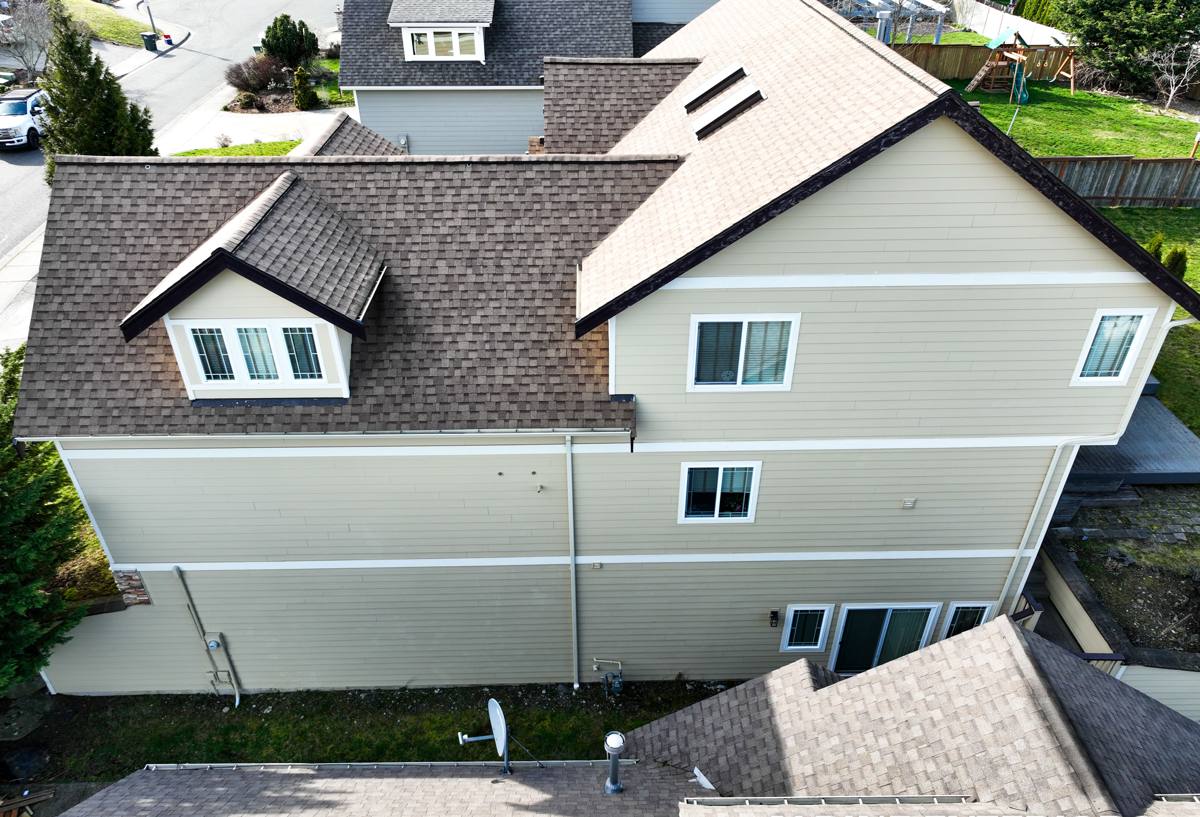
Why Roofs in This Part of Bellingham Wear the Way They Do
Moss Season Runs Long
Whatcom County's mild, wet winters and cool, damp shoulder seasons give moss and lichen a long runway to establish on north-facing slopes and shaded sections of roof — which is most roofs in a tree-lined neighborhood like Cordata. Moss holds moisture directly against roofing material, works into shingle edges and granule layers, and lifts tabs enough for wind-driven rain to get underneath. Left alone, a light moss dusting becomes a mat that's actively holding water against the deck.
Salt Air Adds Up Over Time
Proximity to the bay means metal components — flashing, fasteners, vent caps, gutter hardware — are exposed to airborne salt more than they would be further inland. That accelerates corrosion on lower-grade or aging metal, which is often where a "small" roof leak actually starts: not the shingles themselves, but a rusted-through flashing seam or a fastener that's lost its grip.
Driving Rain Finds Weak Points
Bellingham doesn't get the heaviest rainfall totals in the Northwest, but wind-driven rain off the water pushes water sideways and upward under eaves, around chimneys, and into valleys in a way that straight-down rain never tests. Underlayment, flashing laps, and sealant that were installed with only vertical rain in mind tend to show it first during a windy fall storm.
Signs a Cordata Roof Needs Repair Now
Most roof problems in this climate give warning signs well before a homeowner sees an active leak indoors. Catching them early is almost always the difference between a repair and a much larger job.
- Dark streaking, green tinge, or visible moss growth on north-facing or shaded slopes
- Granules collecting in gutters or at downspout outlets
- Shingles that look cupped, curled, or lifted at the edges
- Soft or spongy spots when walking a low-slope section
- Rust staining below metal flashing, vents, or valleys
- Daylight visible through the attic roof deck
- Water stains on interior ceilings, especially after a windy rainstorm
- Sagging or discoloration along gutter lines and fascia boards
- Missing or displaced shingles after a wind event
Any one of these on its own might be minor. Several together, or any sign paired with an interior stain, means the repair window is closing.
What a Correct Repair Actually Involves
A Real Inspection First
A repair estimate should start on the roof, not from the ground with binoculars. That means checking the deck condition, flashing at every penetration, valley construction, and the underlayment where it's exposed — not just patching the spot a homeowner pointed to. In Cordata specifically, we pay close attention to shaded north- and east-facing slopes where moss and trapped moisture do the most damage, and to any metal flashing showing early corrosion from salt exposure.
Matching Materials, Not Just Covering the Hole
Shingles fade and weather over time, and a patch using mismatched material or the wrong shingle profile stands out and can also create a seam that doesn't shed water correctly. A correct repair uses compatible materials and ties new work into the existing roof system — proper shingle coursing, correct nail placement, and flashing that laps the right direction for water flow.
Flashing and Underlayment Get Fixed, Not Just Sealed
It's common to see a prior "repair" that's just a bead of roofing cement over a flashing problem. That buys a season, maybe two, before the real issue resurfaces. Where flashing has failed — around chimneys, skylights, vent pipes, or in valleys — we replace and re-integrate it rather than caulking over it.
Moss and Debris Get Cleared Before Anything Is Patched
Repairing over moss or trapped debris just seals moisture in. Any repair on a moss-affected slope starts with careful removal and a check of the deck underneath for soft spots before new material goes on.
Repair or Replacement? What We Actually Look At
Not every roof issue in Cordata means a full replacement, and we don't push one when a repair will hold up. The decision comes down to a few honest factors.
| Factor | Leans Toward Repair | Leans Toward Replacement |
|---|---|---|
| Age of roofing material | Under roughly 12-15 years, materials still flexible | Near or past manufacturer lifespan, brittle or widely cupped |
| Extent of moss/moisture damage | Isolated slopes or sections | Widespread moss history across most slopes |
| Deck condition | Solid decking under affected area | Soft, delaminating, or repeatedly wet decking |
| Number of prior repairs | First or second repair in this area | Same spot patched multiple times already |
| Flashing condition overall | Localized corrosion or failure | Widespread rust or failing flashing throughout |
When a repair is the right call, we say so plainly. When the underlying material or deck is past the point where a repair holds value, we'll explain exactly why — with what we found, not a guess.
Our Process for a Cordata Repair
Inspection and Straight Answer
We walk the roof, document what we find with photos, and explain the cause of the problem, not just the symptom. You get a clear scope and a written estimate before any work starts.
The Repair Itself
Work is scheduled around dry weather windows, which matters in a climate where a rushed repair started in the wrong conditions can trap moisture instead of solving the problem. We remove and address the actual failure point, whether that's deck, flashing, underlayment, or shingle, and tie the repair into the surrounding roofing correctly.
Cleanup and a Straight Report
Debris, old material, and moss removed from the roof are cleared from the property, gutters are checked for blockages caused by the original problem, and you get a clear rundown of what was done and what to watch going forward.
Why Local Experience in This Neighborhood Matters
A roofing crew that works Cordata and the rest of Bellingham regularly knows which slopes in this kind of tree cover hold moss the longest, how salt air from the bay treats different flashing metals over time, and what wind-driven rain from a Whatcum County storm actually does to a roof versus what the textbook says. That's not marketing — it changes real decisions, like where to focus moisture prevention, what flashing metal holds up better long-term in this air, and which repairs are worth doing now versus monitoring through one more wet season.
It also means faster, more accurate estimates. A crew that already understands the typical roof ages, construction styles, and common trouble spots in this part of Bellingham doesn't need to guess at what's normal for the area.
Keeping a Repaired Roof in Good Shape
A repair holds up longer with a small amount of seasonal attention, especially in a moss-prone, wet climate like this one.
- Have moss growth removed before it mats and holds moisture against the roof, not after
- Clear gutters and downspouts each fall so water isn't backing up under the roof edge
- Trim back overhanging branches that keep sections of roof shaded and damp
- Have the roof looked at after any major windstorm, even if nothing looks obviously wrong
- Address small flashing or sealant issues while they're still small
If you're seeing moss, a stain on a ceiling, or just want an honest read on where your roof stands after another wet Bellingham winter, we're glad to take a look. Fill out the form below for a free, no-pressure estimate — we'll tell you what we actually find, not what sells the biggest job.