 Bellingham Exterior
 Roof Replacement for Cordata's Wet, Mossy Climate
Cordata sits in north Bellingham, a mostly newer neighborhood of subdivisions and townhomes built up over the last few decades along the I-5 corridor. Newer construction doesn't mean roofs get a pass here — Whatcom County's weather is hard on any roof regardless of the age of the house underneath it. The combination of salt-laden air drifting in off Bellingham Bay and the Strait of Georgia, wind-driven rain that comes in sideways during fall and winter storms, and a moss season that can stretch eight months or more, wears roofing systems down in ways that dry-climate installers rarely have to think about. A roof replacement done right in this neighborhood has to account for all three.
This page covers what actually goes into a correct roof replacement for a Cordata home — not a generic roofing overview, but the specific decisions, materials, and sequencing that matter for this location and this climate.
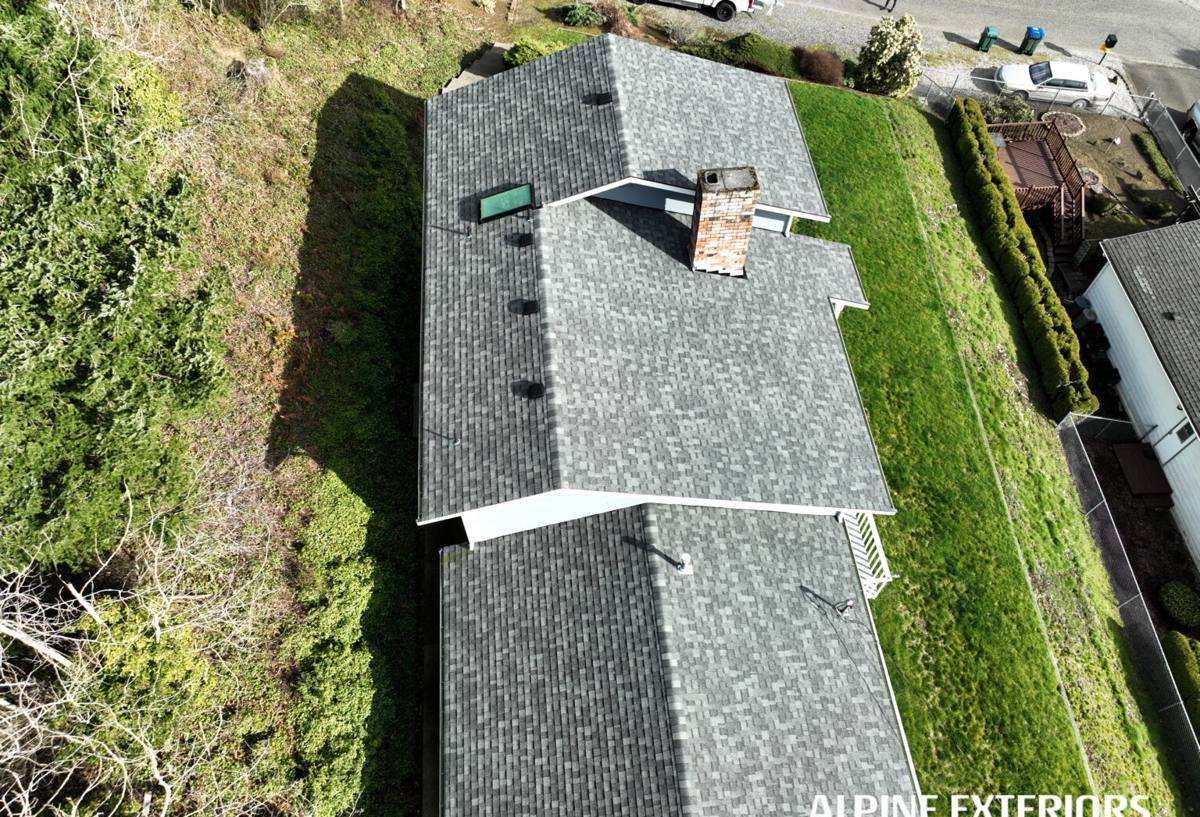
Why Roofs Age Faster in This Part of Whatcom County
Salt Air and Corrosion
Homes in Cordata aren't waterfront, but they're still close enough to Bellingham Bay that salt-laden moisture rides in on prevailing winds and settles on roofing metal — flashing, fasteners, vent caps, and gutter hardware. Over years, ungalvanized or poorly coated metal components corrode faster than manufacturer literature written for inland climates ever accounts for. This is one of the most overlooked failure points in a mediocre roof replacement: contractors reuse or under-spec metal flashing because the roof "looks fine" on installation day, and the corrosion damage shows up five or ten years later as rust streaks and leaks at the valleys and penetrations.
Driving Rain
Storms coming off the water tend to push rain sideways rather than straight down, which means water gets forced up and under shingle tabs, around chimney flashing, and into any gap that a fair-weather installation would never expose. A roof that would perform fine in a calmer inland climate can leak here if the underlayment, flashing laps, and fastening pattern aren't built for wind-driven water rather than just gravity.
Moss and Constant Moisture
Between tree cover, marine humidity, and long stretches of overcast, damp weather, moss gets a real foothold on Whatcom County roofs for most of the year. Moss isn't just cosmetic — its root structure lifts shingle granules and edges, holds moisture against the roof deck long after a storm has passed, and accelerates the rot and delamination that eventually force an early replacement. A roof designed for this climate needs a plan for moss resistance built in from day one, not a bag of zinc strips added as an afterthought.
Signs a Cordata Roof Is Telling You It's Done
Most roofs don't fail all at once — they send signals for a year or two before a full replacement becomes unavoidable. Homeowners who catch these signs early save money by avoiding interior water damage and by scheduling the work on their own timeline instead of during an emergency.
- Granules collecting in gutters and at downspout outlets, especially after a hard rain
- Shingles that look cupped, curled at the edges, or visibly thinner than the rest of the roof
- Dark streaking or thick moss growth that comes back within weeks of cleaning
- Soft spots in the decking you can feel when walking the roof, or sagging visible from the street
- Daylight visible through the roof deck from inside the attic
- Interior ceiling stains, especially near chimneys, skylights, or valleys
- Flashing that's visibly rusted, lifted, or separated from the roof plane
- A roof already past 20–25 years old on asphalt shingle, regardless of appearance
What a Correct Roof Replacement Actually Involves
Full Tear-Off, Not a Cover-Over
Layering new shingles over old is sometimes legal and sometimes cheaper up front, but it hides deck problems instead of fixing them, traps moisture between layers, and voids most manufacturer warranties. In a climate this wet, we don't consider it an honest way to do the job. A full tear-off is the only way to actually inspect the deck, sheathing, and framing underneath for rot or moisture damage before it's covered up again for another 25 years.
Deck Inspection and Repair
Once the old roofing is off, every section of decking gets checked for soft spots, delamination, and water staining that points to a slow leak. Any compromised sheathing gets replaced before anything new goes down — installing new roofing over a damaged deck is one of the most common corners cut in this trade, and it guarantees problems within a few years.
Underlayment Built for Wind-Driven Rain
Given how often storms here push rain sideways instead of straight down, underlayment choice and lap direction matter more than they would in a drier climate. Self-adhered ice-and-water membrane at eaves, valleys, and around penetrations, combined with a synthetic underlayment across the rest of the field, gives a second line of real defense if wind ever drives water past the shingles themselves.
Flashing That Won't Corrode
Every chimney, skylight, sidewall, and valley gets new flashing rather than reused metal — and given the salt air exposure in this part of the county, we favor corrosion-resistant metals and coatings over the cheapest stock option. This is a small material cost difference that matters far more here than it would fifty miles inland.
Ventilation Correction
A huge share of premature roof failures we see in this area trace back to poor attic ventilation rather than bad shingles. Moist attic air condensing against the underside of the deck rots sheathing from the inside, regardless of how good the roofing above it is. A proper replacement includes checking intake and exhaust venting and correcting it if the existing setup is undersized or blocked — not just installing new shingles over the same broken airflow.
Choosing Materials for This Climate
There's no single "best" roofing material for every home — the right choice depends on the roof's pitch, the home's style, budget, and how much long-term maintenance the homeowner wants to take on. Here's how the common options actually perform under Whatcom County conditions:
| Material | Typical Lifespan Here | Moss & Algae Resistance | Wind-Driven Rain Performance | Maintenance |
|---|---|---|---|---|
| Architectural asphalt shingle | 25–30 years | Good with algae-resistant granules; still needs periodic moss removal | Strong when properly flashed and fastened | Low — occasional cleaning |
| Standard 3-tab shingle | 15–20 years | Fair; moss takes hold faster on thinner tabs | Adequate but less margin than architectural | Low, but shorter service life |
| Standing seam metal | 40–50+ years | Excellent — little surface for moss to grip | Excellent | Low, but higher upfront cost |
| Cedar shake | 20–30 years with upkeep | Poor without diligent maintenance in this moisture level | Good if properly installed | High — regular treatment needed |
We don't discourage cedar shake outright, but we're honest with homeowners about the maintenance commitment it demands in a marine climate like this one — moss and moisture management on cedar isn't optional here, it's ongoing. For most Cordata homeowners looking for the best balance of cost, appearance, and low maintenance, a quality architectural asphalt shingle with algae-resistant granules is the practical choice, with standing seam metal as the upgrade option for homeowners who want to stop thinking about their roof for decades at a time.
Cost Factors Worth Understanding Before You Get Quotes
Two roofs of the same square footage can price out very differently once these factors are accounted for. Knowing them ahead of time helps you compare quotes honestly instead of just comparing bottom-line numbers.
- Roof pitch and access — steep or multi-story roofs take longer and require more safety setup
- Number of layers to remove — tearing off two layers of old roofing costs more than one
- Deck condition — hidden rot found during tear-off adds material and labor, but should be priced transparently, not buried in a vague allowance
- Number of penetrations — chimneys, skylights, and vents each need individual flashing work
- Material choice — architectural shingle, metal, and cedar sit at very different price points
- Ventilation corrections — adding or upgrading intake/exhaust venting is a small add-on during a full tear-off, far cheaper than fixing rot later
Be cautious of any quote that's dramatically lower than the others without a clear explanation — it usually means a layer isn't being removed, flashing is being reused instead of replaced, or ventilation work is being skipped entirely.
How Our Process Works
1. On-Site Estimate
We walk the roof (or use appropriate equipment where walking isn't safe), check the attic for ventilation and moisture issues, and give you a written scope and price — not a verbal ballpark.
2. Material Selection
We go over the material options above in the context of your specific roof, budget, and how long you plan to stay in the home, so the decision is yours and informed.
3. Scheduling Around Local Weather
Whatcom County's rain windows mean roofing work here gets scheduled with real attention to forecasts, not just a calendar date. We stage the job so the deck isn't left exposed longer than necessary.
4. Tear-Off, Deck Repair, and Installation
Full removal, deck inspection and repair, ventilation correction, new flashing, underlayment, and final roofing material, installed in sequence with the property protected throughout.
5. Cleanup and Walkthrough
Magnetic sweep for nails, full site cleanup, and a walkthrough so you can see the finished work and ask questions before we consider the job done.
Why a Crew That Already Works Cordata Matters
A roofing crew that regularly works this neighborhood already knows what this climate does to a roof over time, because they've torn enough of them off to see the pattern repeat — the same corrosion points on flashing, the same moss buildup in shaded valleys, the same rot that starts at poorly vented attics. That local pattern recognition is the difference between a crew that installs to a generic national spec and one that builds in the extra margin this climate actually demands. It also means faster response for follow-up questions or minor adjustments after the job, since we're not driving in from another county to get back to you.
If your roof is showing any of the signs above, or you just want an honest read on how much life is left in it, we're happy to take a look. Reach out for a free, no-pressure estimate — we'll walk the roof, tell you what we actually find, and give you a straight answer, whether that's a full replacement or a few more years of maintenance.