 Bellingham Exterior
 Why Cordata Siding Wears the Way It Does
Cordata sits in north Bellingham, close enough to Bellingham Bay and the broader Puget Sound corridor that homes here take on the same coastal weather pattern as the rest of Whatcom County — just with the added exposure that comes from being near open ground along the I-5 and airport corridor, where wind has fewer trees and structures to break it up before it hits a house. That combination shows up on siding faster than most homeowners expect: salt-laden air corrodes fasteners and trim, wind-driven rain finds its way behind poorly lapped panels, and the long gray stretch from fall through spring keeps north- and shade-facing walls damp long enough for moss and algae to take hold and stay.
None of that is unique to one street or subdivision — it is the general climate reality for this part of Bellingham. What matters for a homeowner is that siding chosen and installed for a drier, milder climate will not hold up the same way here. This page covers what siding replacement actually requires in Cordata, what we look for on an assessment, and why we install one product system — James Hardie fiber cement — on every job we do.
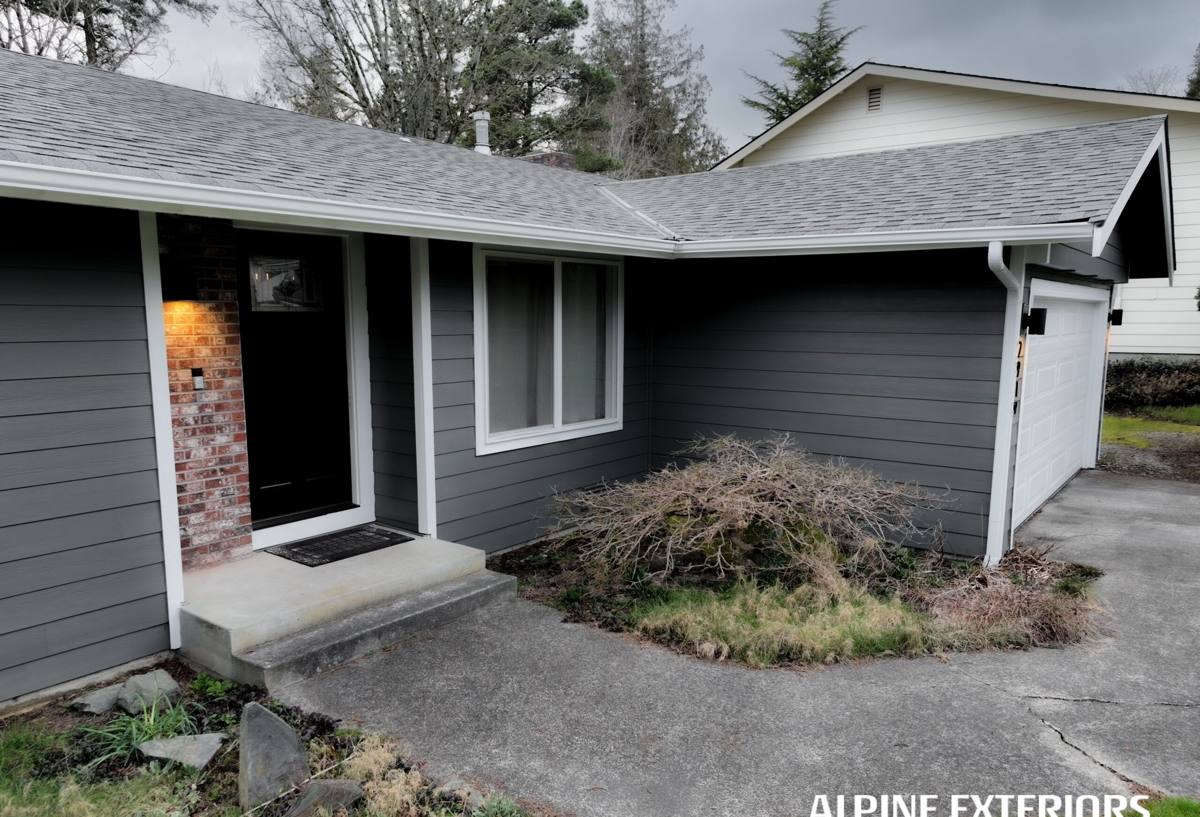
Signs Your Siding Has Reached the End of Its Service Life
Siding failure in this climate is rarely sudden. It shows up gradually, and by the time it is visible from the street, there is usually already moisture damage underneath. Walk your exterior and look for the following:
- Soft or spongy spots when you press on siding, especially near the bottom courses and around window trim
- Paint that is peeling, bubbling, or needs repainting more often than every 6-8 years
- Visible cupping, warping, or buckling panels, particularly on walls that get the most wind and rain
- Persistent green or black staining that comes back within a season or two of cleaning
- Gaps opening up at seams, corners, or where siding meets trim, doors, and windows
- Rust streaks below nail heads or fasteners
- A musty smell or visible staining on interior walls that back up to exterior siding
Any one of these on its own might just mean a repair. Several at once, especially combined with soft spots, usually means the underlying substrate is compromised and replacement is the honest recommendation rather than another round of patching.
What a Correct Siding Replacement Actually Involves
It Starts Underneath the Siding, Not With It
The siding itself is the least important part of keeping water out of a wall — the weather-resistive barrier and flashing details behind it do the real work. A correct tear-off exposes the sheathing so we can check for rot, confirm the house wrap or building paper is intact and properly lapped (upper layers over lower, shingle-style, so water sheds down and out), and replace anything compromised before a single new panel goes up. Skipping this step is the single most common cause of "new siding, same leak" complaints, and it is invisible once the wall is closed back up — which is exactly why it has to be done right the first time.
Flashing and Water Management
Every penetration in the wall — windows, doors, hose bibs, light fixtures, vents — needs proper flashing integrated with the weather barrier, not just caulked over. Caulk is a maintenance item, not a waterproofing strategy; it degrades and needs to be re-applied over time, while correctly lapped flashing keeps working even after the caulk skin dries out. Given how much of the year Cordata sees rain, this detail matters more here than it would in a drier climate.
Fastening, Clearances, and Manufacturer Spec
James Hardie publishes specific installation requirements — fastener type and spacing, minimum clearance from grade, roof lines, and decks, gaps at butt joints for expansion, and required paint or caulk at cut edges. These specs exist because the manufacturer's warranty depends on them, and because they are what actually keeps moisture from wicking into the board over time. An installer who does not follow them is not saving you money — they are shortening the life of the siding and putting the warranty at risk.
Our Process for a Cordata Siding Replacement
- On-site assessment: We walk the full exterior, check soft spots, look at trim and flashing condition, and identify any wall sections with more serious moisture history.
- Written scope: You get a clear breakdown of what is being removed, what substrate repair is included, and which Hardie products and colors are being installed — no vague allowances.
- Tear-off and substrate inspection: Old siding and trim come off, sheathing is inspected and repaired as needed, and we do not close the wall back up over a problem we found.
- Weather barrier and flashing: New house wrap and flashing go in per manufacturer spec at every window, door, and penetration.
- Hardie installation: Panels, trim, and fasteners installed to James Hardie's published requirements, with proper clearances and joint treatment.
- Final walkthrough: We review the finished job with you before calling it complete, including cleanup of the site.
Why Product Choice Matters More in This Climate
We install James Hardie fiber cement siding exclusively — we do not install vinyl, LP SmartSide, or other engineered wood or fiber-cement alternatives. That is a deliberate standard, not a sales preference, and it is worth explaining honestly rather than just asserting.
| Factor | Vinyl | Engineered Wood (LP-type) | James Hardie Fiber Cement |
|---|---|---|---|
| Moisture/moss resistance | Doesn't rot, but traps moisture behind it if installed too tight; can warp in heat | Vulnerable at cut edges and seams if moisture gets in; requires diligent maintenance | Non-combustible, engineered for moisture exposure, holds paint well in wet climates |
| Coastal/salt air durability | Can become brittle and discolor over years of UV and salt exposure | Coatings and seams need regular inspection near coastal exposure | Formulated for harsh climate exposure, including coastal conditions |
| Finish longevity | Color is baked in but can chalk and fade; cannot easily be repainted a different color | Factory or field-primed, needs repainting on a normal cycle | ColorPlus factory finish is baked on and warrantied separately from the substrate |
| Fire resistance | Can melt/deform in high heat | Combustible wood-based product | Non-combustible fiber cement |
| Typical warranty structure | Varies by manufacturer, often prorated | Varies, moisture-related claims often scrutinized closely | Long-term, transferable manufacturer warranty on both substrate and ColorPlus finish |
Vinyl has real advantages — it is inexpensive and low-maintenance in the right conditions. Engineered wood products have improved a great deal and look good when maintained on schedule. But in a climate that stays wet for months at a stretch and adds salt air and driving rain into the mix, we would rather stand behind one product system we know performs and that we can install, warranty, and service consistently, than offer several options with different failure modes and maintenance demands. That is the reasoning behind our standardization, not a claim that other products can't work anywhere.
James Hardie Product Lines We Install
Hardie makes several siding profiles, and the right one depends on the home's style and exposure:
- HardiePlank lap siding — the most common choice, available in smooth and cedarmill textures, standard for traditional Pacific Northwest home styles
- HardiePanel vertical siding — used for board-and-batten look or modern facades
- HardieShingle — a shingle-style profile for accent walls or full shingle-style homes
- HardieTrim — matching trim boards for a consistent, factory-finished look at corners, fascia, and window/door surrounds
Hardie's HZ5 product line is engineered for climates with more moisture and freeze-thaw cycling, which is the more appropriate specification for this part of Whatcom County than a warmer-climate formulation. We spec the product line based on actual exposure, not a one-size-fits-all default.
Cost Factors on a Cordata Siding Job
We don't quote pricing sight-unseen, but the honest cost drivers on a siding replacement are consistent from house to house:
| Factor | Why it moves the price |
|---|---|
| Substrate condition | Rot or water damage found during tear-off means sheathing repair before new siding goes on |
| Home size and wall complexity | More corners, dormers, and roof lines mean more trim, flashing, and cutting |
| Siding profile chosen | Lap, panel, and shingle products differ in material and labor |
| Story height and access | Two- and three-story walls require more scaffolding/staging time |
| Trim and detail work | Full trim replacement with HardieTrim adds labor but keeps the finished look consistent |
A written, itemized estimate after an on-site walkthrough is the only reliable way to get real numbers — anything quoted without seeing the house is a guess.
Why a Crew That Already Works Cordata Matters
Siding installation is detail work, and the details that matter here are climate-specific: how tight to run clearances given the rain load, how to handle flashing on walls exposed to prevailing wind, and how to sequence a tear-off so exposed sheathing isn't sitting open during a wet stretch. A crew that works this part of Whatcom County regularly has already worked out those judgment calls on other homes with the same exposure Cordata sees. That experience shows up in fewer callbacks, not in anything flashy — it's the boring, unglamorous parts of the job done correctly the first time.
Maintaining New Siding in This Climate
Even the right product needs basic upkeep. A yearly rinse-down to keep moss and algae from establishing, prompt attention to any caulk lines that start to crack, and keeping gutters clear so runoff doesn't sheet down a wall will keep new Hardie siding performing for decades. None of this is heavy maintenance — it's the kind of seasonal check most homeowners already do for other parts of the house.
If your siding is showing wear, or you're planning ahead for a replacement, we're happy to walk the exterior with you and give an honest, no-pressure assessment of what your home actually needs. Use the form below to request a free estimate.