 Bellingham Exterior
 Why Cordata Homes Need a Climate-Smart Window Replacement
Cordata sits in north Bellingham, close enough to the water and the open lowlands that homes here take a steady beating from Pacific weather most of the year. Windows in this neighborhood aren't just letting in light and framing a view — they're the first line of defense against wind-driven rain, salt-laden air moving in off Bellingham Bay, and long stretches of gray, damp months where wood, seals, and sills rarely get a chance to fully dry out. A window that's a good fit for a drier inland climate can start failing here years ahead of schedule.
When we replace windows in Cordata, we're not just swapping old glass for new. We're accounting for how this specific mix of moisture, wind exposure, and moss growth interacts with the building envelope around each opening. That's the difference between a replacement that looks good on install day and one that's still performing tight, dry, and efficient a decade later.
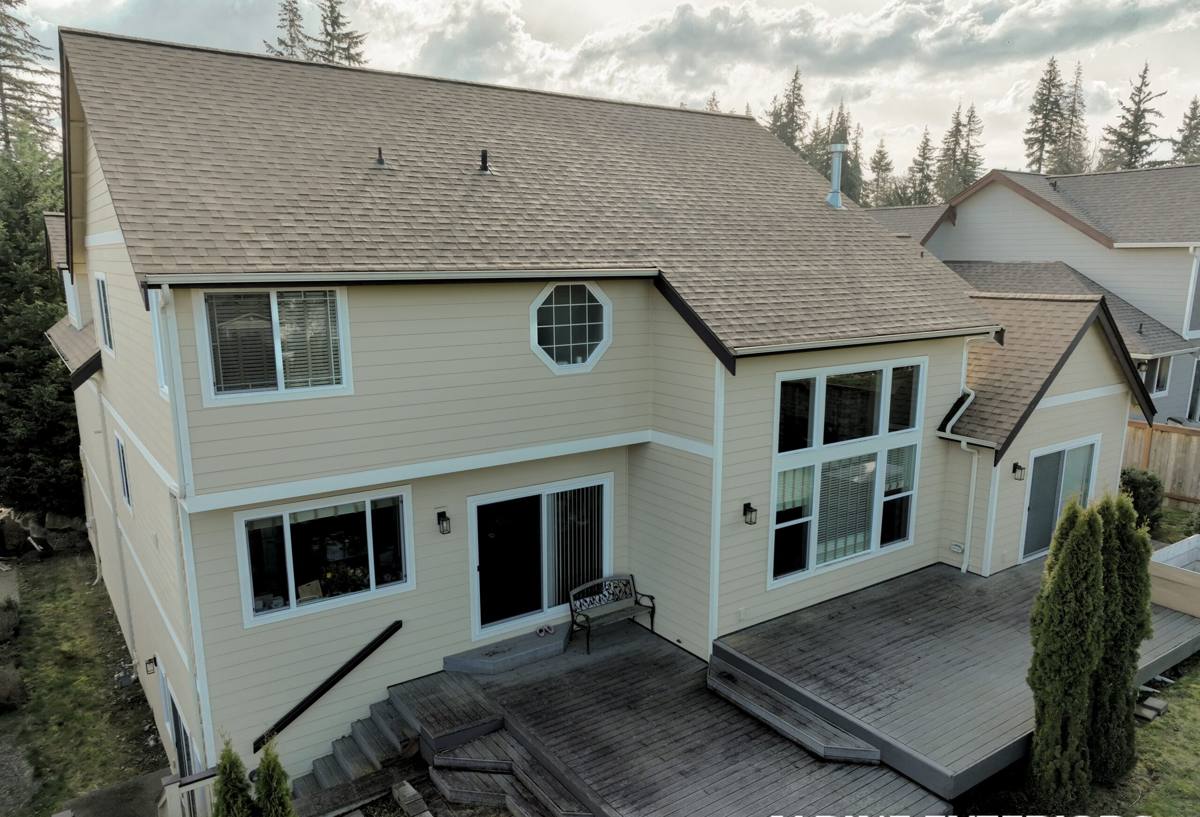
What Bellingham's Climate Actually Does to Windows Over Time
Whatcom County doesn't get extreme weather in the way some regions do — no hurricanes, no hail the size of golf balls. What it gets instead is relentless, low-grade exposure, and that's its own kind of hard on a house.
Driving Rain and Wind-Loaded Water
Rain here rarely just falls straight down. Wind off the water pushes it sideways and up under trim, sills, and poorly sealed frames. Over years, that pattern finds any weak point in flashing, caulking, or the window's own weep system and turns it into a slow leak — often invisible until there's staining, soft trim, or a musty smell near the wall.
Salt Air and Metal Fatigue
Homes closer to the bay deal with airborne salt that accelerates corrosion on aluminum hardware, screws, and older aluminum-frame windows. It's a slower process than storm damage, but it's cumulative — locks stick, balances wear out, and finishes chalk or pit faster than they would twenty or thirty miles inland.
Moss, Algae, and Prolonged Dampness
Bellingham's moss season isn't a few weeks — it's most of the year on north-facing and shaded elevations. Moss and algae hold moisture directly against wood sills, trim, and caulk lines. That constant dampness is one of the biggest reasons wood window components rot from the outside in, well before the glass or hardware itself has a problem.
Signs a Cordata Home May Need Window Replacement Soon
Most window failures don't happen all at once. They show up as small annoyances first, then compound. Here's what we tell homeowners to watch for between now and their next inspection:
- Visible condensation or fogging between the panes of a double- or triple-pane window (a failed seal, not a cleaning issue)
- Soft, discolored, or spongy wood on the sill or bottom trim, especially on north- or west-facing walls
- Windows that are noticeably harder to open, close, or lock than they used to be
- Persistent drafts you can feel with a hand near the frame on a windy day
- Green or black staining that keeps returning within weeks of cleaning
- A noticeable jump in heating costs without any other explanation
- Visible daylight or gaps around the frame from outside
- Peeling paint or bubbling finish concentrated around the window opening rather than the whole wall
Any one of these on its own might just need a repair or a re-caulk. Several together, especially on an older window, usually means the frame or seal system has reached the end of its useful life.
What a Correct Window Replacement Job Actually Involves
Window replacement gets treated like a simple swap-and-caulk job more often than it should. In a climate like ours, the parts you can't see after the trim goes back on matter more than the window itself.
Removal and Opening Inspection
Every old window comes out fully so we can see the rough opening — the sheathing, framing, and any existing flashing. This is the point where hidden rot or old water damage gets found and dealt with, not covered up and sealed in behind a new window.
Flashing and Water Management
Proper flashing directs any water that gets past the window itself back out, not into the wall cavity. This includes sill pan flashing, side flashing that laps correctly with the weather-resistive barrier, and head flashing above the opening. Given how much wind-driven rain Cordata homes see, this step is non-negotiable — it's the single biggest factor in whether a window stays dry for the next twenty years.
Air Sealing and Insulation
The gap between the new window frame and the rough opening gets sealed with the right combination of backer rod, sealant, and low-expansion foam — enough to stop air movement without bowing the frame out of square.
Interior and Exterior Finish Work
Trim, casing, and paint or stain get restored to match the surrounding wall, and every exterior seam gets sealed with a sealant rated for our wet, temperature-swinging climate.
Choosing the Right Window Material for This Climate
There's no single "best" window material — the right choice depends on the home's exposure, style, and budget. Here's how the common options actually perform in a Whatcom County setting:
| Material | Moisture Performance | Maintenance | Typical Fit |
|---|---|---|---|
| Vinyl | Excellent — won't rot, resists salt air well | Low — occasional cleaning | Most homes; best value for full replacements |
| Fiberglass | Excellent — very stable in wet/dry cycling | Low | Homes wanting a stronger frame with a painted or wood-look finish |
| Wood (clad exterior) | Good if the exterior cladding is intact; interior wood still needs care | Moderate to high — exterior clad reduces rot risk, but seals need monitoring | Historic or high-end homes prioritizing interior wood aesthetics |
| Aluminum | Fair — prone to corrosion and thermal transfer near the coast | Moderate | Rarely our first recommendation for this area given salt exposure |
For most Cordata homes, we lean toward vinyl or fiberglass because they hold up to the combination of salt air and constant damp without the ongoing maintenance that wood or aluminum demand. Where a wood-look interior matters for the home's style, a clad-exterior wood window can still make sense — we just make sure the client understands the maintenance commitment going in, not after a problem shows up.
Our Process, From Estimate to Cleanup
- On-site assessment — we look at every window being considered, check for existing rot or flashing issues, and take accurate measurements.
- Honest recommendation — we tell you which windows genuinely need replacement now, which can wait, and which just need a repair or re-seal.
- Written estimate — clear pricing with the material, install approach, and timeline spelled out, no vague allowances.
- Scheduled installation — work sequenced to keep openings covered and protected if weather rolls in mid-project, which it often does here.
- Finish and walkthrough — trim, paint, and sealant completed, then a walkthrough so you can see and operate every window before we call the job done.
Why Local Experience in Cordata Matters
A crew that mainly works drier, more sheltered regions can install a technically fine window and still get the flashing or sealant detail wrong for this specific climate — the kind of mistake that doesn't show up as a problem until year three or four, when water finds the gap. Working regularly in Bellingham and across Whatcom County means we've seen how the local combination of wind direction, rainfall pattern, and moss growth actually plays out on real houses over time, not just in a manufacturer's install manual.
It also means practical things: we know what permitting typically looks like locally, we're not guessing at how a given product line has held up on homes with similar exposure nearby, and we're not learning the region's weather quirks on your project.
What Affects the Cost of a Window Replacement
Every project is different, but these are the main factors that move the price up or down:
| Factor | Why It Matters |
|---|---|
| Number and size of windows | More openings and larger units mean more material and labor |
| Frame material | Vinyl is generally the most budget-friendly; fiberglass and clad wood cost more |
| Condition of the rough opening | Hidden rot or old water damage adds repair work before the new window can go in |
| Glass package | Double- vs. triple-pane, and coatings for energy performance, affect both cost and comfort |
| Access and height | Second-story or hard-to-reach windows take more time and equipment |
| Trim and finish complexity | Custom trim profiles or paint matching add labor beyond the window itself |
We'd rather walk a Cordata homeowner through these factors on-site and give a real number than throw out a broad range that doesn't mean much once we see the actual windows and openings involved.
Get a Free, No-Pressure Estimate
If you're noticing drafts, fogged glass, or trim that's starting to look tired on your Cordata home, it's worth getting a straight answer on whether you need full replacement or just a repair. We're happy to take a look, walk you through what we find, and give you an honest estimate — no pressure, no sales tactics, just the information you need to decide. Fill out the form below to get started.