 Bellingham Exterior
 Fairhaven's Weather Is Tougher on Decks Than People Think
Fairhaven sits close to Bellingham Bay, and that proximity to saltwater changes what a deck has to survive. Salt-laden air corrodes unprotected metal fasteners and hardware faster than it would a few miles inland, driving rain off the Pacific drives moisture into any gap or seam that isn't properly flashed, and Whatcom County's long, wet stretch of fall through spring gives moss and algae months to get established on any surface that stays damp. A deck built without those three factors in mind can look fine for a year or two and then start showing soft spots, rust streaks, or a slick green film that never fully dries out.
None of this means a deck in Fairhaven has to be high-maintenance or short-lived. It means the framing, fasteners, drainage details, and surface material all need to be chosen and installed with this specific climate in mind, not a generic build that would work fine somewhere dry and sunny.
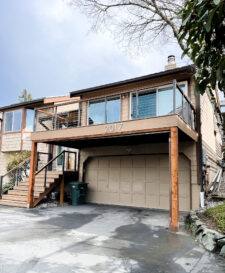
What a Deck Built for This Climate Actually Needs
Framing and Fasteners
Structural framing should be pressure-treated lumber rated for ground contact even where it won't touch soil, because sustained dampness behaves a lot like ground contact over time. Fasteners matter just as much as the wood itself — in a coastal-influenced climate we use hot-dip galvanized or stainless steel structural screws and connectors rather than standard coated deck screws, which can start showing corrosion within a few seasons this close to the bay.
Drainage and Airflow
Water needs somewhere to go, both on top of the deck and underneath it. That means correct board spacing for surface drainage, a sloped ledger connection so water sheds away from the house rather than pooling against the siding, and open enough framing underneath that airflow can dry out the joists between rain events instead of trapping moisture against the wood. Joist tape over the top of pressure-treated framing is a small add that meaningfully slows rot at the point where screws penetrate the lumber.
Footings and Frost Depth
Footings need to be sized and set to local frost-depth requirements, not guessed at. Undersized or shallow footings are one of the more common problems we find when we're called out to look at an older deck that's developed a noticeable bounce or lean — the structure above may look fine while the foundation underneath was never adequate for the load or the soil conditions.
Framing and Fasteners
Choosing Decking Material for Salt Air and Moss
There's no single "best" decking material for Fairhaven — there's a best material for your specific deck, based on how much sun and shade it gets, how close it is to the water, and how much upkeep you actually want to do. Here's how the common options actually perform in this climate:
| Material | Salt Air / Moisture Behavior | Moss & Algae Resistance | Typical Maintenance |
|---|---|---|---|
| Pressure-treated pine | Good structurally; surface can gray and check over time | Moderate — needs regular cleaning and sealing | Annual wash, reseal every 1–2 years |
| Cedar | Naturally moisture- and insect-resistant; still needs sealing | Moderate — cedar's natural oils help but don't fully prevent growth in deep shade | Clean and reseal every 1–2 years |
| Composite decking | Excellent — doesn't absorb moisture like wood | Good; capped composites resist staining better than uncapped | Periodic wash, no sealing or staining |
| Tropical hardwoods (e.g. ipe) | Very good density and moisture resistance | Good, but can still get slick when shaded and wet | Occasional oiling to maintain color; low structural upkeep |
Shaded, north-facing decks under tree cover collect moisture longer than open, sun-exposed decks, and that's usually the deciding factor we walk homeowners through — a beautiful cedar deck tucked under evergreens is going to need more attention than the same wood in full sun. We'll give you an honest read on your specific site rather than pushing whatever's easiest to install.
Permits, Codes, and Structural Requirements in Bellingham
Most new decks and deck replacements in Fairhaven require a permit through the City of Bellingham, and for good reason — guardrail height, baluster spacing, stair rise and run, and ledger attachment to the house are all safety-critical details that inspectors check for. Ledger attachment in particular is one of the most common failure points on older decks: a ledger board that's face-nailed instead of properly bolted and flashed can pull away from the house under load, which is a life-safety issue, not just a cosmetic one.
We handle the permit application and coordinate inspections as part of the build so you're not left figuring out city requirements on your own. If your deck is more than a simple ground-level platform — meaning it has guardrails, stairs, or is attached to the house — assume a permit is needed and plan the timeline accordingly.
Moss, Mildew, and Long-Term Deck Maintenance in a Wet Climate
Whatcom County's moss season effectively runs from early fall through late spring, and any horizontal wood or composite surface that stays shaded and damp during that stretch is a candidate for growth. Moss isn't just cosmetic — it holds moisture against the decking surface, and on wood that accelerates rot; on any material it also makes the surface slippery, which is a real fall hazard on stairs and near doorways.
A well-built deck reduces this problem with drainage and material choice, but no deck in this climate is entirely maintenance-free. A simple seasonal routine keeps most decks in good shape for years:
- Sweep debris (leaves, needles, seed pods) off the deck regularly through fall — trapped organic matter is what moss and mildew feed on
- Wash the surface at least once a year with a deck-safe cleaner, more often on shaded sections
- Check and clear gaps between boards so water keeps draining rather than pooling
- Reseal or restain wood decking on the manufacturer's recommended schedule, typically every 1–2 years
- Inspect fasteners, railings, and stair connections annually for rust, looseness, or soft wood
- Trim back overhanging branches to let more sun and airflow reach shaded sections
Our Process for Building a Custom Deck in Fairhaven
We keep the process straightforward and try to remove the guesswork for homeowners who haven't gone through a deck build before:
- Site visit and assessment — we look at sun exposure, shade, slope, drainage patterns, and how the deck will connect to your home before recommending materials.
- Design and material selection — we walk through the material comparison above based on your specific site, budget, and how much maintenance you want to take on.
- Permit and engineering — we prepare and submit the permit application and handle any structural details the city requires.
- Demolition and framing — old decking is removed if applicable, footings are set to code, and framing goes in with corrosion-resistant hardware.
- Decking, railing, and finish work — surface material and railings are installed, and any staining or sealing is completed.
- Final walkthrough — we go over the finished deck with you, including basic maintenance guidance specific to your material and site conditions.
Why a Contractor Who Already Works in Fairhaven Matters
Fairhaven's mix of hillside lots, older homes, and tighter urban lots near the bay means access and staging can be more involved than a typical suburban build — narrow driveways, limited street parking, and grade changes between the house and yard all affect how a crew plans the job. A contractor who's built decks in this neighborhood before knows to plan for that upfront instead of running into it mid-project.
Local experience also means familiarity with the City of Bellingham's permitting process and typical inspection timelines, so there are fewer surprises on scheduling. And because we're not travelling in from out of the area, follow-up — whether that's a warranty question or a maintenance check a couple of years down the road — is easy to arrange.
Cost Factors for a Fairhaven Deck Project
Every deck project is different, but the same handful of factors drive most of the cost variation we see:
| Factor | How It Affects Cost |
|---|---|
| Size and shape | Larger square footage and complex shapes (multiple levels, angles) increase material and labor |
| Decking material | Composite and hardwood typically cost more upfront than pressure-treated pine but require less ongoing maintenance |
| Height and footings | Elevated decks need deeper footings, additional framing, and often stairs and extra railing |
| Railing style | Cable, glass, or custom railing systems cost more than standard wood or metal baluster railing |
| Site access and grade | Sloped lots or limited equipment access can add labor time |
| Permit and engineering needs | Attached, elevated, or larger decks generally require more design and inspection work |
We'll give you a clear, itemized estimate before any work starts, so you know exactly what you're paying for and why — no vague allowances that turn into surprise costs later.
Signs Your Existing Deck Needs Replacing, Not Just Repair
Homeowners often call us thinking they need a repair when the deck actually needs to come out and be rebuilt. A few signs point toward replacement:
- Soft, spongy decking boards, especially near the ledger or stair stringers
- Visible rust streaking or corrosion around fasteners and connectors
- A noticeable bounce, sway, or looseness when walking on it
- Persistent moss or dark staining that comes back quickly after cleaning
- A ledger board that's separating from the house or shows gaps behind the flashing
- Footings that are cracked, heaved, or clearly undersized for the deck above them
If you're only seeing one or two of these and the framing underneath is sound, targeted repair is often reasonable. If several apply at once, it's usually more cost-effective in the long run to rebuild correctly than to keep patching a deck that's fighting its foundation.
Getting Started
If you're planning a new deck in Fairhaven or trying to figure out whether your current one is worth repairing, we're happy to take a look and give you a straight answer. Reach out for a free, no-pressure estimate using the form below.