 Bellingham Exterior
 Edgemoor's Siding Challenge: Salt Air, Shade, and a Long Moss Season
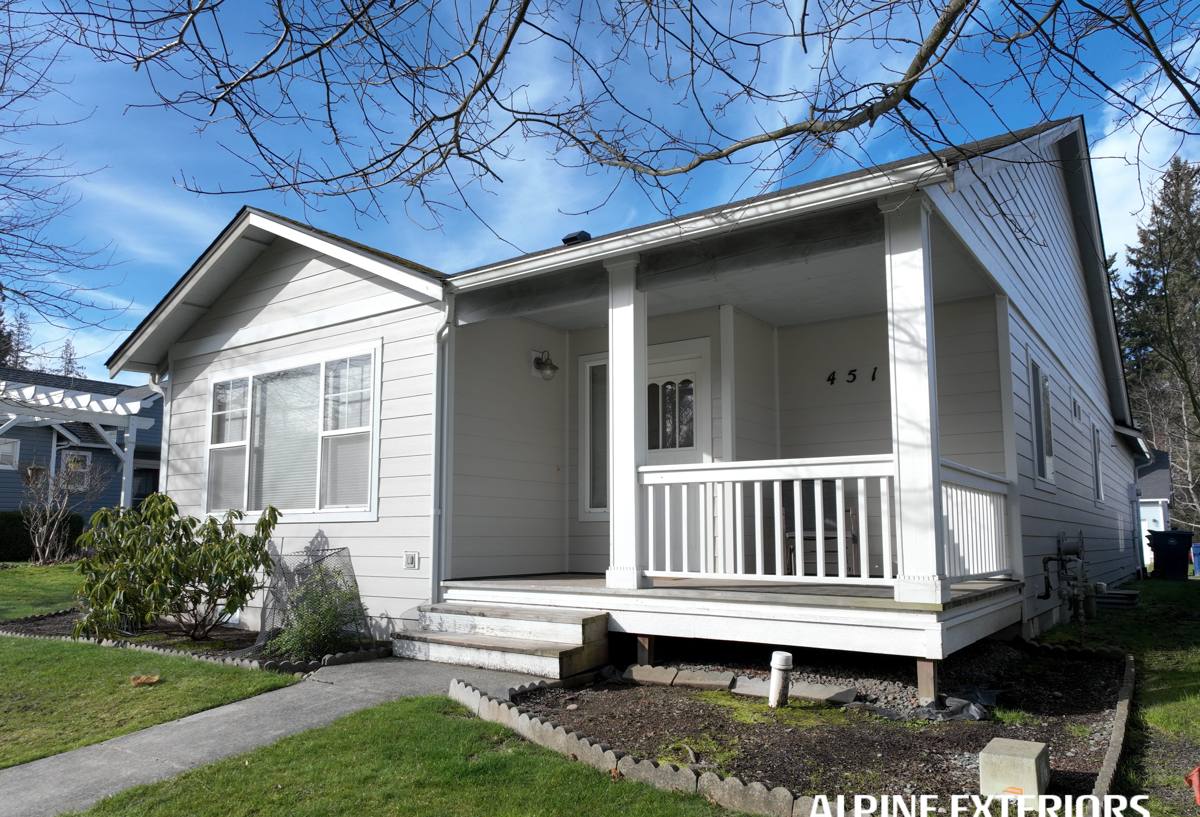
Edgemoor sits close enough to Bellingham Bay that salt-laden air and wind-driven rain are a normal part of the weather here, not an occasional event. Add in the tree cover that gives the neighborhood its character — mature conifers and hardwoods shading many lots — and you get siding conditions that are tougher than what a typical inland Whatcom County home deals with. Shade keeps siding wet longer after every storm, and that extended dampness is exactly what moss, algae, and mildew need to take hold.
Salt air accelerates corrosion on fasteners and metal trim. Driving rain off the Bay finds every gap in flashing and caulking. And Bellingham's wet season isn't a few weeks — it's months of siding that rarely gets a full chance to dry out between rain events. Siding on an Edgemoor home has to handle all three at once: salt, shade, and sustained moisture. Products and installation methods that work fine in a drier, sunnier part of the state don't always hold up the same way here.
Why Fiber Cement Is the Right Match for This Neighborhood
We install James Hardie fiber cement siding exclusively, and Edgemoor is a good example of why. Fiber cement doesn't rot, and it doesn't feed mold or moss the way wood-based products can — it's not an organic food source for the fungi and algae that thrive in shaded, damp environments. It's also non-combustible, which matters on tree-covered lots where wildfire risk has become a bigger conversation across Western Washington in recent years.
We use Hardie's HZ5 formulation, engineered specifically for climates that cycle through freeze-thaw and heavy, sustained moisture — which describes a Bellingham winter well. The factory-applied ColorPlus finish is baked on under controlled conditions, giving it better adhesion and fade resistance than field-applied paint, and it holds up to salt air exposure better than a job-site paint job ever will. That finish is also why touch-up and repainting cycles are longer, which matters on a shaded lot where scaffolding and access aren't simple.
We don't install vinyl, LP SmartSide, Cemplank, Allura, or primed wood siding. Each of those has legitimate uses elsewhere, but for a marine, shaded, moss-prone environment like Edgemoor, we've made Hardie our standard because of how it performs over decades, not just how it looks in year one.
What About Vinyl or Engineered Wood?
Vinyl can warp and become brittle with UV and temperature cycling, and its seams and J-channels give wind-driven rain more places to get behind the cladding. Engineered wood products depend on an intact factory coating to keep moisture out — any breach at a cut edge, fastener, or joint gives water a path into the wood substrate, and in a shaded, wet environment that substrate doesn't get much chance to dry. Fiber cement doesn't share that vulnerability, since the material itself isn't organic.
What "Correct" Installation Actually Looks Like Here
Fiber cement is only as good as the installation behind it. In a climate like this, a handful of details separate siding that lasts thirty-plus years from siding that causes problems in five.
- Drainage plane and rainscreen gap: A code-compliant weather-resistant barrier plus an air gap behind the siding lets any moisture that does get past the cladding drain and dry out, instead of sitting against the sheathing.
- Flashing at every penetration: Windows, doors, hose bibs, light fixtures, and roof-to-wall transitions all need proper flashing and kickout flashing where a roofline meets a wall — this is where driving rain finds its way in if it's skipped or done wrong.
- Correct fastening: Hardie specifies fastener type, spacing, and embedment depth. In a salt-air environment, using the wrong fastener metal invites corrosion and staining well before the siding itself would fail.
- Sealed cut edges: Every field cut exposes raw fiber cement that needs to be sealed per manufacturer spec, especially at butt joints and trim returns.
- Proper clearance: Siding held above grade, decks, and roof lines per code keeps splashback and standing moisture away from the bottom edge of the boards.
- Ventilation behind the cladding: On heavily shaded elevations, that rainscreen gap is doing extra work — it's often the difference between siding that dries out after a storm and siding that stays damp for days.
Skipping any one of these doesn't usually show up right away. It shows up two or three winters later, as a moisture problem behind siding that still looks fine from the street.
Our Process for Edgemoor Homes
1. Inspection and Assessment
We start by walking the exterior and identifying shaded elevations, moisture-prone areas, existing moss or algae growth, and any signs of damage to the current siding or the sheathing behind it. Trees and landscaping close to the house factor into this — they affect both drying conditions and how we stage the work.
2. Tear-Off and Substrate Check
Old siding comes off and we check the sheathing underneath for rot, soft spots, or prior moisture intrusion before anything new goes up. Catching a hidden problem now is far cheaper than covering it up and dealing with it later.
3. Weather-Resistant Barrier and Flashing
We install a code-compliant water-resistant barrier and rainscreen system, then detail flashing at every window, door, and penetration before a single piece of siding goes on.
4. Installation to Manufacturer Spec
HardiePlank and trim go up following James Hardie's fastening, spacing, and clearance requirements — not shortcuts that happen to look fine at the walkthrough.
5. Final Walkthrough
We review the completed work with you, cover care and maintenance for a shaded, coastal-exposed home, and make sure you understand your warranty coverage.
Fiber Cement vs. Other Siding in a Marine Climate
| Factor | James Hardie Fiber Cement | Vinyl | Engineered Wood (LP-type) |
|---|---|---|---|
| Moisture/rot resistance | Not an organic food source; holds up to sustained damp | Doesn't rot, but seams can let water behind panels | Depends entirely on intact factory coating |
| Moss/algae resistance | Doesn't feed growth; cleans up easily | Can host surface growth in shaded areas | Vulnerable if coating is compromised |
| Salt air / coastal durability | Strong, especially with correct fasteners | Can become brittle over time with UV/salt exposure | Coating wear speeds up substrate exposure |
| Fire resistance | Non-combustible | Combustible | Combustible |
| Finish longevity | Factory ColorPlus finish, long repaint cycle | Color molded in, but can fade and chalk | Field or factory coating, shorter repaint cycle |
What Affects the Cost of Your Project
| Factor | Why It Matters in Edgemoor |
|---|---|
| Tree cover and access | Mature trees and tighter side yards can affect staging, scaffolding, and equipment access |
| Home size and story height | More square footage and taller walls mean more material and labor time |
| Existing damage | Rotted sheathing found during tear-off adds repair scope before new siding goes up |
| Trim and architectural detail | Custom trim, multiple gables, and detailed elevations take more time to flash and finish correctly |
| Siding profile and finish selection | Lap width, shingle-style accents, and color selection all factor into material cost |
We give straightforward, honest estimates based on a real walkthrough of your home — not a generic per-square-foot number that ignores the specifics of your lot and layout.
Signs Your Edgemoor Home May Need New Siding
- Moss or dark streaking that comes back soon after cleaning, especially on shaded north- or west-facing walls
- Soft spots, bubbling, or visible warping in current siding
- Paint that's failing faster on some elevations than others
- Gaps opening up at trim, corners, or butt joints
- A musty smell or visible staining on interior walls near exterior corners
- Siding that's original to an older home and has never been fully inspected behind the surface
Why Hiring a Crew That Already Works Edgemoor Matters
A siding crew that regularly works in Edgemoor already understands what a tree-shaded, water-adjacent lot demands — where moisture tends to collect, how to stage a job around mature landscaping, and which elevations need extra attention to drainage and flashing. That's different knowledge than a crew that mostly works open, sunny lots on the other side of town.
Local experience also means familiarity with City of Bellingham permitting requirements and a realistic sense of Whatcom County's weather windows for tear-off and installation — timing the work so your home isn't sitting exposed during a stretch of driving rain. None of that replaces correct installation technique, but it does mean fewer surprises and a crew that's seen your specific set of conditions before.
If you're considering new siding for your Edgemoor home, we're happy to walk the property, look at what your current siding is telling us, and put together a straightforward, no-pressure estimate using the form below.