 Bellingham Exterior
 Siding Repair Built for Edgemoor's Waterfront Exposure
Edgemoor sits close enough to Bellingham Bay that its homes take on a different kind of weather than siding a few miles inland ever has to handle. Salt-laden air off the water, wind-driven rain that gets pushed sideways into wall assemblies, and a moss season that can run most of the year on shaded, north-facing elevations — all of it works on siding constantly, not just during the occasional storm. A repair job here has to account for that exposure, not just patch what's visible.
We work on homes throughout Bellingham and Whatcom County, and Edgemoor's mix of mature tree cover, sloped lots, and proximity to the water puts it near the top of the list for siding wear we see repeatedly. This page covers what siding repair actually involves in this neighborhood, what a correct repair looks like, and how to tell a real fix from a cosmetic one.
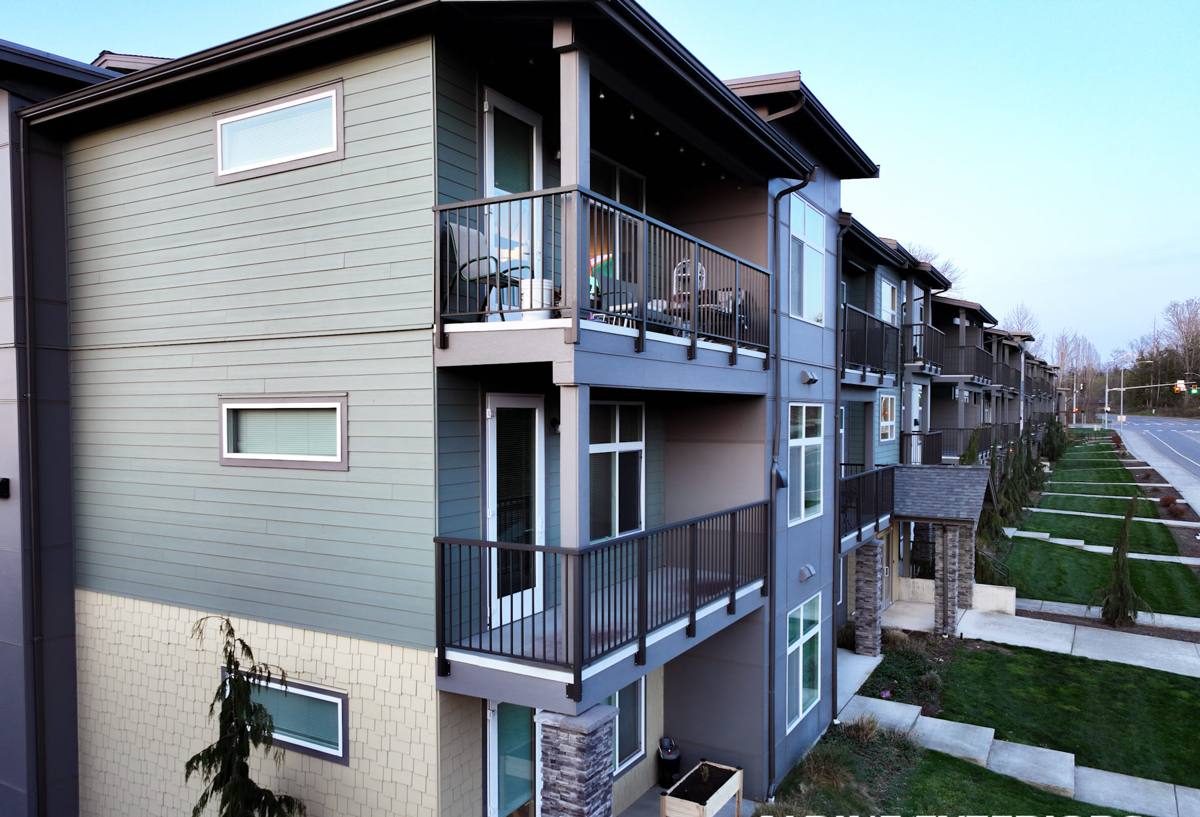
Why Edgemoor Siding Wears the Way It Does
Salt Air and Coastal Moisture
Airborne salt doesn't just affect metal fasteners and flashing — it changes how moisture behaves on a wall surface. Salt residue holds humidity against siding longer than it would on a drier, inland home, which keeps seams, laps, and butt joints damp for extended stretches. On wood-based products, that's a direct path to swelling and rot. On any siding, it's a driver of premature caulk failure and finish breakdown at the joints.
Driving Rain Off the Bay
Bellingham gets a lot of rain generally, but Edgemoor's exposure to wind coming off the water means rain doesn't just fall — it's pushed into the wall. That matters most at horizontal laps, corner boards, and anywhere siding meets a window or door. A lap that would shed water fine in calm rain can take on water when wind drives it uphill against the seam. Repairs in this neighborhood need to address that directional exposure, not just reseal the obvious gap.
Moss, Shade, and Slow Drying
Mature trees and sloped, shaded lots are part of what makes Edgemoor desirable — they're also why moss and algae take hold on siding here faster than on an open, sunny lot. Moss holds moisture against the surface, keeps it there long after the rest of the house has dried out, and creates a low-grade, constant dampness that accelerates whatever underlying problem already exists. A section of siding sitting under moss for a full season is a different repair than one that's been dry and exposed.
What "Correct" Siding Repair Actually Means
A lot of siding repair is done as a patch: cut out the bad board, nail in a new piece, caulk the edges, paint it to match. That approach hides a problem instead of fixing it, especially in an exposure like Edgemoor's. A correct repair starts by figuring out how water got in and where it went before it caused visible damage.
- Identify the actual water path — often not directly above the damage, since water travels downward and sideways behind siding before it shows
- Check the condition of the water-resistive barrier and flashing underneath the removed section, not just the siding itself
- Inspect adjacent boards and framing for softness, staining, or moisture readings before deciding how much to remove
- Match replacement material correctly — mixing product types or thicknesses at a repair seam creates a new failure point
- Re-flash and re-lap the repair so water sheds the way it did on the original installation, not just where it's caulked shut
- Match the factory finish where possible rather than field-painting a visibly different patch
Skipping any of these steps is how a repair looks fine for a season or two and then fails again, usually worse, because the underlying moisture problem was never addressed.
Signs an Edgemoor Home Needs Siding Repair
- Soft or spongy spots when pressed, especially near the bottom courses or under windows
- Persistent moss or algae growth that returns quickly after cleaning
- Visible gaps, cracking, or separation at butt joints and corners
- Paint or finish that's bubbling, peeling, or discolored in a localized area rather than evenly across the wall
- Staining on interior walls or ceilings near exterior corners, which often traces back to a siding or flashing failure
- Warping or buckling on wood-based or engineered wood siding, particularly on shaded elevations
Why Repair Material Matters as Much as Technique
What you repair with matters as much as how carefully you do it. This is where a lot of "repair now, deal with it later" jobs go wrong — patching a moisture-prone product with more of the same material just resets the clock on the same failure.
| Material Being Repaired | Common Failure Mode in This Exposure | Repair Consideration |
|---|---|---|
| Untreated or primed wood siding | Swelling, rot, and finish failure from sustained moisture exposure | Often the damage extends further than visible; full section replacement is usually more honest than a small patch |
| Engineered wood (OSB-based) siding | Edge swelling and delamination where moisture gets into the substrate | Swollen edges rarely return to their original shape — replacement is typically required, not just resealing |
| Vinyl siding | Cracking, warping, and gaps at laps from wind exposure and temperature swings | Repairs can be quick, but underlying water intrusion at gaps often goes unaddressed |
| James Hardie fiber cement | Failure is rare and usually installation-related (caulk joints, fastener placement) rather than material breakdown | Non-combustible, moisture-stable material means repairs are typically isolated and don't signal a wider material problem |
This is also why we only install James Hardie fiber cement on full replacements. When we're called out to repair a home with wood-based or engineered wood siding, we'll fix what's there and tell you honestly whether it's a one-time repair or the first of several — that assessment is part of the job, not an upsell.
Our Siding Repair Process
- On-site inspection. We look at the damaged area and the surrounding siding, checking for softness, moisture, and signs the problem extends beyond what's visible from the ground.
- Diagnosis of the water path. Before any siding comes off, we form a working theory of how water got behind it — a flashing gap, a failed caulk joint, a missing kick-out, or wind-driven rain finding a lap that wasn't built for this exposure.
- Removal and underlying inspection. Once we open the wall, we check the water-resistive barrier, sheathing, and framing before deciding on the repair scope.
- Repair or replace, honestly scoped. We replace only what needs it, but we don't stop short of the actual damage just to keep the job small — a repair that leaves compromised material in the wall isn't a repair.
- Correct re-flashing and lapping. The repaired section is integrated back into the wall's drainage plane so water sheds past it, not into it.
- Finish match. We match color and profile as closely as the existing siding allows so the repair doesn't stand out any more than necessary.
Why a Crew That Works Edgemoor Regularly Matters
Siding repair in this neighborhood isn't the same job as siding repair on a dry, open, inland lot. A crew that doesn't regularly work in this kind of coastal, tree-shaded exposure can miss what's driving the damage — they'll patch the visible spot and leave the actual moisture path untouched. We work across Bellingham and Whatcom County regularly, including Edgemoor, and we look for the same handful of failure patterns here every time because they show up here more than almost anywhere else in the area: salt-driven joint failure, wind-driven rain at laps, and shade-driven moss retention.
That familiarity changes what we check first, how we scope a repair, and whether we flag a bigger problem before it becomes an expensive one.
When Repair Isn't the Right Answer Anymore
Not every siding problem should be repaired. If damage is spread across multiple elevations, if the underlying material has a pattern of moisture failure (common with older wood-based and engineered wood products after years in this exposure), or if repairs have already been done more than once in the same area, patching again is usually just delaying a full replacement at a higher eventual cost. Part of an honest repair visit is telling you when that point has been reached — and if it has, explaining what James Hardie fiber cement offers for a home in this specific exposure: a non-combustible material that doesn't swell or rot the way wood-based products can, a factory-applied ColorPlus finish that holds up to sustained coastal moisture better than field-applied paint, and a product line engineered for exactly this kind of climate.
Get an Honest Look at Your Siding
If you're seeing soft spots, recurring moss, or damage near a window or corner on your Edgemoor home, it's worth having someone look at it before the next storm season adds to it. We offer free, no-pressure estimates — we'll tell you plainly whether it's a straightforward repair, a sign of a bigger issue, or something in between.