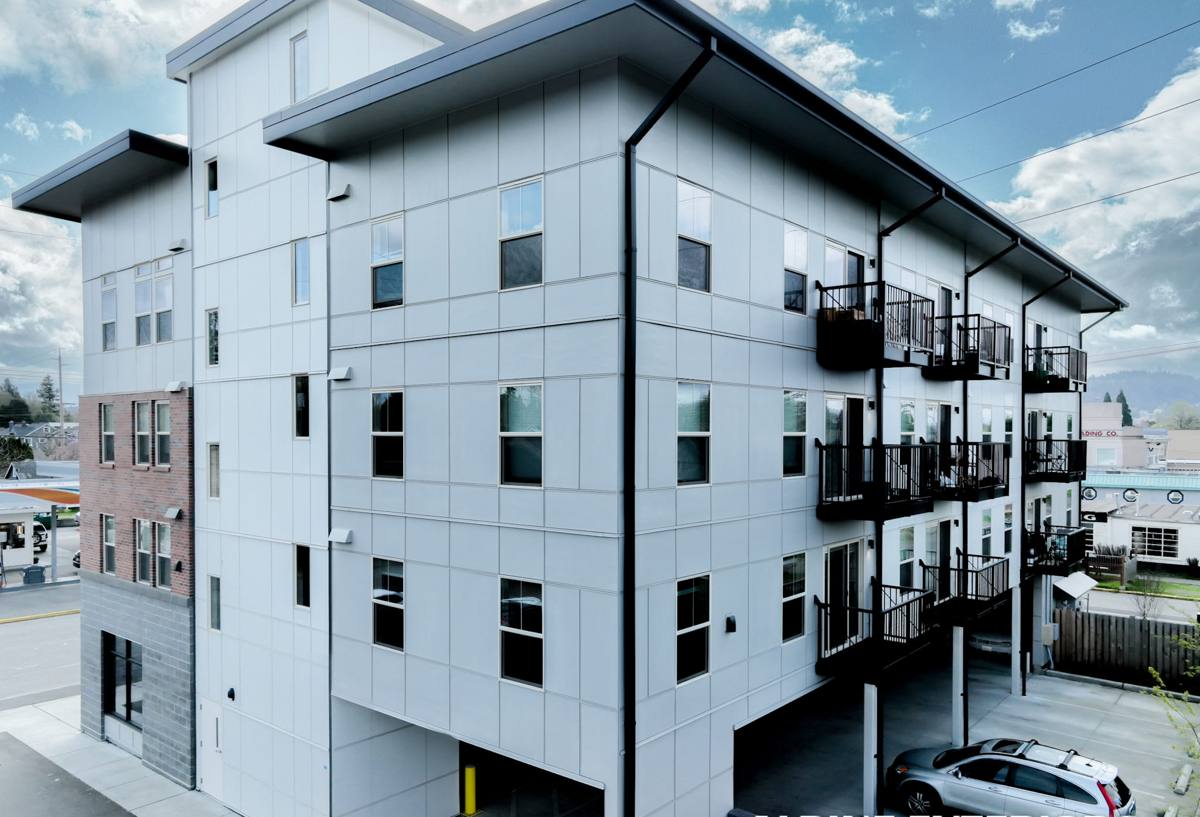
 Bellingham Exterior
 Windows Built for Birchwood's Weather, Not Just the Catalog Photo
Birchwood sits close enough to Bellingham Bay and the Nooksack lowlands that its homes take a steady beating from moisture year-round. It's not one dramatic storm that wears out a window — it's the accumulation of salt-tinged air off the water, wind-driven rain that finds every gap in a poor seal, and a moss season that can stretch from October well into spring. A window that's rated "energy-efficient" on paper but installed without accounting for that combination will underperform within a few years, no matter what the label says. In Birchwood, the installation details matter as much as the glass.
When we talk about energy-efficient windows for this neighborhood, we're talking about two things at once: a product spec suited to Whatcom County's marine climate, and an installation that actually seals out the moisture this area is known for. Get either one wrong and you lose the benefit of the other.
What Birchwood's Climate Actually Does to Windows
Salt Air
Proximity to Bellingham Bay means airborne salt is a real factor, even a few miles inland. Salt exposure accelerates corrosion on hardware — hinges, locks, balance mechanisms — and can degrade lower-grade finishes on metal components over time. It's a slow process, but it's constant, and it's one reason hardware quality matters as much as the glass package.
Driving Rain
Storms coming off the Strait of Georgia and the Salish Sea don't just fall straight down — wind pushes rain sideways into window assemblies, testing every seal, flashing detail, and sill pan on the house. A window that would be fine in a drier climate can leak here if the flashing and sealant work isn't done correctly, regardless of how good the window unit itself is.
Long Moss Season
Whatcom County's wet stretch means moss and algae get a long runway to establish themselves on window sills, trim, and anywhere water sits instead of draining. Beyond being unsightly, sustained moisture against wood trim or poorly sealed frames is what eventually causes rot and lets air infiltration creep in around the window opening.
Signs Your Birchwood Home's Windows Are Underperforming
Most window failures don't show up as a dramatic leak — they show up as a slow drain on comfort and energy bills. Homeowners in this area should watch for:
- Cold drafts near the window frame even when the window is fully latched
- Condensation or fogging between double-pane glass (a sign the seal has failed)
- Visible gaps, cracked caulking, or soft/spongy trim around the frame
- Moss or dark staining building up on sills or lower trim that never fully dries out
- Windows that are difficult to open, close, or lock — often a sign the frame has shifted or hardware has corroded
- A noticeable rise in heating costs without another explanation
- Outside noise (traffic, wind) that seems louder than it should be for the window's age
Any one of these on its own isn't necessarily urgent. Several at once, especially on a home's north or west-facing walls where wind-driven rain hits hardest, usually means the windows are past the point where caulking and weatherstripping alone will fix the problem.
What "Energy-Efficient" Actually Means in a Window
The term gets used loosely, but for a marine climate like Bellingham's, a handful of specs actually matter:
| Spec | What It Does | Why It Matters in Birchwood |
|---|---|---|
| U-Factor | Measures how well the window resists heat loss (lower is better) | Keeps heating costs down through our long, damp, mild-but-chilly winters |
| Solar Heat Gain Coefficient (SHGC) | Measures how much solar heat passes through the glass | Less critical here than in sunnier climates, but still affects comfort on south-facing rooms |
| Frame Material | Vinyl, fiberglass, wood-clad, or aluminum — each with different moisture and corrosion behavior | Frame durability against salt air and constant moisture is as important as the glass rating |
| Gas Fill (Argon/Krypton) | Inert gas between panes improves insulation | Adds meaningful efficiency without changing the look of the window |
| Weatherstripping & Seal Design | Compression seals that block air and water infiltration | The single biggest factor in whether driving rain stays outside |
Notice that only two of these five rows are about the glass. The rest are about the frame, the seal, and how the whole assembly holds up to weather — which is exactly where a lot of window jobs go wrong, even with a good product.
Frame Material Trade-Offs Near the Water
We don't push one frame material as universally "best" — each has real trade-offs, and the right call depends on the specific house. Vinyl frames handle moisture well and need very little maintenance, which is a genuine advantage in a climate this wet, though color and stiffness options are more limited. Fiberglass holds up well to temperature swings and resists warping, generally at a higher price point. Wood-clad windows can look excellent and perform well, but the exposed wood interior needs upkeep, and any failure in the cladding seal lets moisture reach the wood underneath — a real risk given how long our wet season runs. Aluminum conducts heat and cold efficiently, which works against energy efficiency unless it's thermally broken. We'll walk through the honest trade-offs for your specific window openings rather than default to whatever's easiest to sell.
What a Correct Installation Looks Like Here
In a climate that gets pounded with driving rain, the installation is where most window performance is won or lost. A correct job in Birchwood includes:
- Removing the old window and inspecting the rough opening for hidden rot, moisture damage, or prior flashing mistakes before anything new goes in
- Installing a proper sill pan so any water that does get past the window has somewhere to drain instead of sitting against the framing
- Flashing the opening correctly — integrated with the home's existing weather-resistive barrier, not just caulked over the top
- Setting the window level, plumb, and square so the sash operates properly and the seals compress evenly
- Sealing and insulating the gap between the frame and the rough opening without over-compressing the frame, which can cause it to bow
- Finishing exterior trim and caulking with materials rated for continuous UV and moisture exposure
Skip the sill pan or cut corners on flashing integration, and even a top-tier window will eventually let water into the wall assembly. This is the step where an experienced local crew earns its keep — it's not visible once the trim is on, but it's the difference between a window that performs for decades and one that needs attention again in five years.
Moss, Trim, and Long-Term Upkeep
Because Whatcom County's moss season runs so long, window trim and sills need a design that sheds water rather than holding it. Sloped sills, proper drip caps above the window, and trim materials that don't wick moisture all reduce the conditions moss needs to take hold. On existing windows, keeping sills and trim clear of built-up moss and debris — and addressing any soft or discolored wood promptly — goes a long way toward protecting the investment in a new window before it's even due for one.
Our Process for Birchwood Window Projects
Every home in this neighborhood has its own exposure — some are more sheltered, others take the full brunt of west winds off the bay. Our process starts with an on-site look at your specific windows, not a generic quote:
- Assess each window opening for current condition, framing health, and exposure to wind-driven rain
- Discuss frame material and glass package trade-offs honestly, based on your home and budget
- Provide a written estimate with clear scope — no vague line items
- Protect landscaping and interior spaces during removal and installation
- Install with proper sill pans, flashing integration, and sealing appropriate for this climate
- Walk the finished job with you before we consider it done
Cost Factors Homeowners Should Understand
Window project costs vary widely based on real factors, not just the sticker price of the window unit. Broadly, expect the range to move based on:
| Factor | Impact on Cost |
|---|---|
| Frame material | Vinyl is typically the most budget-friendly; fiberglass and wood-clad run higher |
| Number of openings | Whole-house projects generally bring a better per-window cost than one-off replacements |
| Condition of the rough opening | Hidden rot or prior water damage adds repair work before installation can proceed |
| Window size and configuration | Large picture windows, bays, or custom shapes cost more than standard sizes |
| Glass package | Upgraded low-E coatings and gas fills add cost but improve long-term efficiency |
We'd rather give you an honest range after seeing the actual openings than quote a number over the phone that doesn't hold up once we're on-site.
Why Hire a Crew That Already Works in Birchwood
Window installation isn't a one-size-fits-all trade, and it shows most in coastal-adjacent neighborhoods like Birchwood. A crew that regularly works homes in this part of Bellingham already knows which walls tend to take the worst of the driving rain, how the local moss and moisture cycle affects trim over time, and what a correctly flashed opening needs to look like to hold up to another Whatcom County winter. That's not something you get from a crew that installs windows the same way regardless of region — it comes from doing the work here, repeatedly, and paying attention to what actually fails and what doesn't.
If your Birchwood home has drafty, foggy, or hard-to-operate windows, we're happy to take a look and give you a straightforward assessment. Reach out for a free, no-pressure estimate using the form below.