 Bellingham Exterior
 Why Fairhaven's Climate Is Hard on Windows
Fairhaven sits close enough to the water that salt-laden air is a daily fact of life, not an occasional nuisance. Combine that with Whatcom County's long wet season — months of driving rain off the Strait, low winter sun, and the kind of persistent damp that keeps moss growing on roofs, siding, and window sills well into what other regions would call spring — and you get a set of conditions that are genuinely tougher on windows than what homeowners a few miles inland deal with.
Salt air accelerates corrosion on hardware, hinges, and lesser-grade metal components. Driving rain finds any gap in flashing or sealant and pushes water sideways and upward, not just straight down, which is why window leaks in this area often show up at the top corners of a frame rather than the sill. And the moss and algae that thrive in constant moisture don't just look bad on a roof — they hold water against wood trim and sills, which is exactly the kind of sustained dampness that causes rot in window framing over a handful of seasons.
Custom windows done right for a Fairhaven home have to account for all three of these things at once: material choices that resist salt corrosion, installation details that shed wind-driven rain instead of just rain falling straight down, and trim and sill design that doesn't trap moisture against wood.
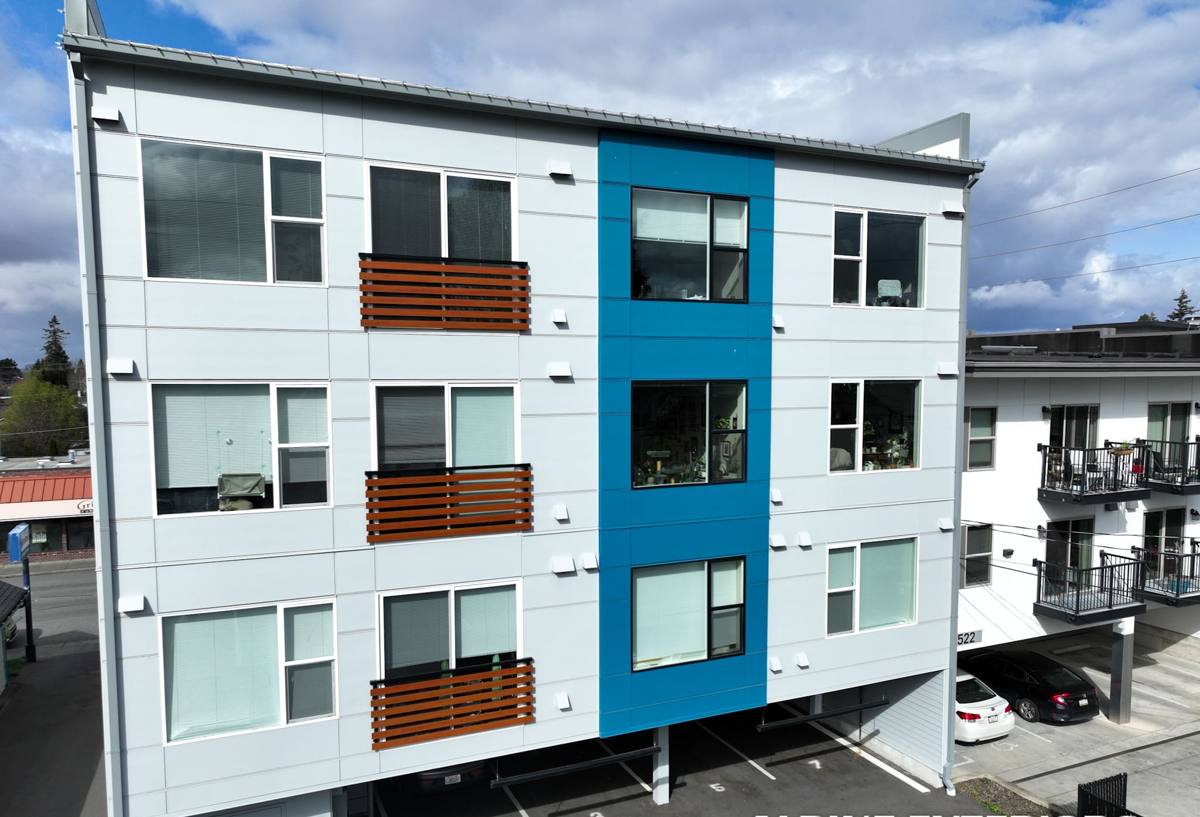
Signs Your Fairhaven Home Needs New or Replacement Windows
Most homeowners don't think about their windows until something goes visibly wrong, but by the time you can see the problem, the damage underneath is usually further along than it looks. Watch for these:
- Fogging or a hazy film between panes on double-glazed windows — the seal has failed and the insulating gas or dead air space is gone
- Soft or spongy wood at the sill or lower corners of the frame, often hidden under paint
- Visible gaps between the window frame and siding or trim, especially after a windy winter
- Windows that are difficult to open, close, or lock — frames can warp from repeated wet/dry cycling
- Drafts you can feel by hand on a windy day, even with the window latched
- Streaking, staining, or moss/algae growth on exterior trim directly below or beside the window
- Noticeably higher heating bills in a home whose windows are original or older than 15-20 years
Any one of these on its own isn't necessarily an emergency, but a home with two or three of them usually has moisture already working its way into the wall assembly, not just the window unit.
What a Correct Custom Window Installation Involves
Accurate Measuring and Ordering
Custom windows are built to the exact rough opening of your home, which means the measurement step isn't a formality — it determines whether the finished window sits square, seals properly, and operates smoothly for decades. Older Fairhaven homes, especially those built before modern framing standards, often have openings that are slightly out of square or have settled unevenly, and that has to be accounted for before an order ever goes in.
Removal and Opening Prep
Once the old window comes out, the opening gets inspected before anything new goes in. This is the point where hidden rot, old failed flashing, or water staining on the framing becomes visible. A rushed installer covers this up and moves on; a correct installation stops here, addresses any damaged framing, and only proceeds once the opening is sound.
Flashing and Moisture Management
This is the single most important — and most often shortcut — part of window installation in a wet, wind-driven climate like Bellingham's. Proper flashing creates a layered path (sometimes called shingle-style or weather-lap flashing) so that any water that does get behind the siding is directed out and away from the wall, never trapped against the framing. Head flashing above the window and correctly lapped sill pan flashing below it matter more here than in drier climates, because wind-driven rain routinely tests these details in ways a calm, straight-down rain never would.
Insulation, Air Sealing, and Sill Design
The gap between the new window frame and the rough opening gets insulated and air-sealed with materials rated for exterior use — not just stuffed with fiberglass, which can hold moisture. Sill design and slope matter too: a sill that doesn't shed water cleanly becomes the exact kind of standing-moisture spot where moss and mildew take hold.
Finish Work
Interior and exterior trim gets reinstalled or replaced, caulked, and finished so the seal is continuous. On the exterior, the caulk and paint or stain used should be rated for a marine climate — standard interior-grade sealants degrade faster under UV and salt exposure than most homeowners expect.
Choosing the Right Window Style and Frame Material
There's no single "best" window for every Fairhaven home — it depends on your home's age, style, budget, and how exposed the elevation is to wind and salt spray. Here's how the common frame materials stack up for this specific climate:
| Frame Material | Salt-Air Durability | Maintenance | Typical Fit |
|---|---|---|---|
| Vinyl | Good — won't corrode, some UV fading over many years | Low | Budget-conscious replacements, rentals, additions |
| Fiberglass | Very good — dimensionally stable, resists warping in wet/dry cycles | Low | Homeowners wanting durability without wood upkeep |
| Wood (clad exterior) | Good on the exterior face if properly clad; interior wood needs care | Moderate | Historic and craftsman-style homes where wood interior trim matters |
| Solid wood | Requires diligent upkeep — most exposed to rot and moss in this climate | High | Strict historic-accuracy projects only |
| Aluminum | Prone to corrosion near salt air unless marine-grade and properly coated | Moderate | Modern/commercial-style openings, used selectively here |
For most Fairhaven homes, we steer people toward vinyl or fiberglass for straightforward replacements, and clad-wood for period homes where the interior sightline and trim profile matter. We're honest about solid uncladded wood on exterior-facing elevations here — it can look great, but it demands a maintenance schedule most homeowners underestimate given how much moisture this area sees.
Our Process, From Estimate to Final Walkthrough
- On-site assessment: We look at each window opening individually — sun exposure, wind exposure, and any visible signs of past moisture issues affect the recommendation.
- Honest scope and estimate: You get a written estimate that separates window unit cost from installation, flashing, and any framing repair that turns out to be needed.
- Ordering and lead time: Custom windows are built to your exact openings, so we set realistic expectations on manufacturing lead time up front rather than promising a date we can't hit.
- Installation: Removal, opening inspection, any needed repair, flashing, setting the window, insulating, and finish work — done in that order, not skipped.
- Final walkthrough: We check operation, seals, and finish work with you before calling the job done.
What Drives the Cost of a Custom Window Project
Every project is different, but the cost factors are consistent. Understanding them helps you read an estimate instead of just looking at the bottom line:
| Factor | Why It Matters |
|---|---|
| Frame material | Vinyl is generally the most affordable; fiberglass and clad-wood cost more but hold up differently over time |
| Number and size of openings | Larger or unusually shaped windows (bays, custom shapes) take more time and material |
| Condition of the existing opening | Rot or old flashing failures found during removal add repair time — this is the most common source of surprise cost, and the reason we flag it before proceeding rather than after |
| Access and elevation | Upper-floor or hard-to-reach windows on a sloped Fairhaven lot may need staging or extra labor |
| Glass package | Double vs. triple pane, and coatings for energy performance, affect both cost and long-term utility bills |
Why a Fairhaven-Familiar Crew Matters
Window installation isn't identical everywhere, and a crew that mostly works drier, inland conditions doesn't always default to the flashing details and material choices that this specific stretch of Bellingham's coastline demands. A crew that already works Whatcom County's wetter neighborhoods knows, without having to relearn it on your house, where wind-driven rain actually tests a window installation, which sealants and finishes hold up against salt exposure over years rather than months, and what the moss and algae growth in this climate does to trim and sills left unmaintained.
That familiarity also shows up in smaller, practical ways: knowing which openings on an older Fairhaven home are likely to be slightly out of square, recognizing early-stage moisture damage before it's obvious, and setting realistic timelines that account for the region's weather windows for exterior work.
Maintaining Custom Windows in a Marine Climate
A well-installed window still needs some ongoing attention in this climate to get its full lifespan. This isn't a heavy maintenance list, but skipping it entirely shortens how long your investment lasts:
- Rinse salt residue off exterior frames and hardware a few times a year, especially after storms
- Check and clear moss or debris buildup on sills and tracks before it holds moisture against the frame
- Inspect exterior caulking annually and re-caulk any cracked or separated joints before wet season
- Lubricate hardware (locks, hinges, rollers) periodically to prevent salt-air corrosion from seizing moving parts
- Watch for early signs of trim paint failure — it's cheaper to repaint than to replace rotted trim later
If you're weighing whether it's time to replace windows on a Fairhaven home, or you're planning a renovation and want the openings done right the first time, we're glad to come take a look. We offer free, no-pressure estimates — just fill out the form below to get started.